
Why Every Trail Running Vest Suddenly Looks Different
by Gene Han
There was a time when a trail running vest was little more than a way to carry water.
Designed to hold a pair of soft flasks, a handful of gels, and the bare essentials, early hydration vests were functional but forgettable. They existed to solve a problem, not inspire one. For years, nearly every model looked and worked the same.
Today, the trail running vest has quietly become one of the most innovative—and culturally significant—categories in outdoor equipment.
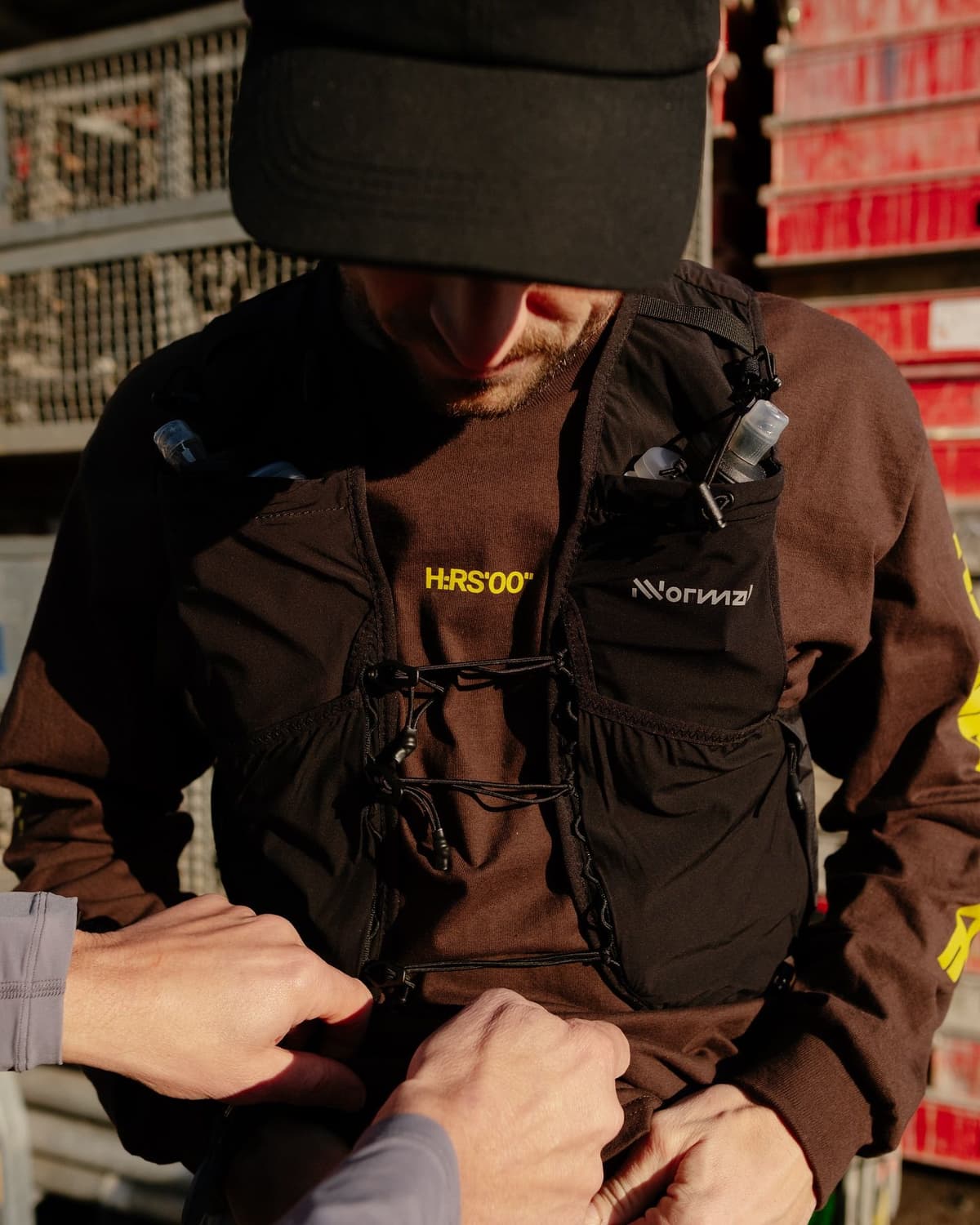
Every season brings lighter materials, smarter storage, more adaptive fit systems, and increasingly refined ways to carry everything needed for a full day outside. The best vests disappear against the body like technical apparel while carrying hydration, layers, nutrition, trekking poles, cameras, and emergency gear with almost no compromise in comfort.
But this transformation isn't really about hydration.
It's about how we spend time outside.
As trail running has expanded beyond ultramarathons into fastpacking, photography, travel, run clubs, and all-day exploration, the vest has evolved alongside it. What was once race equipment has become a platform for movement—designed for people whose weekends rarely follow a fixed itinerary and whose adventures often blur the lines between running, hiking, climbing, and simply wandering farther than planned.
Like gravel bikes before them, today's trail running vests reflect a broader shift in outdoor culture. Performance is still essential, but versatility, thoughtful design, and adaptability have become just as important.
The modern running vest isn't simply carrying more gear.
It's carrying a different idea of what it means to spend time outside.


From Hydration Pack to Wearable System
1990s: Early hydration packs prioritized carrying water over comfort. They were essentially miniature backpacks with reservoirs, designed for mountain biking and endurance sports rather than running.
2000s: Lightweight racing vests emerged as ultramarathons grew in popularity. Brands began replacing reservoirs with front-mounted bottles and reducing unnecessary weight.
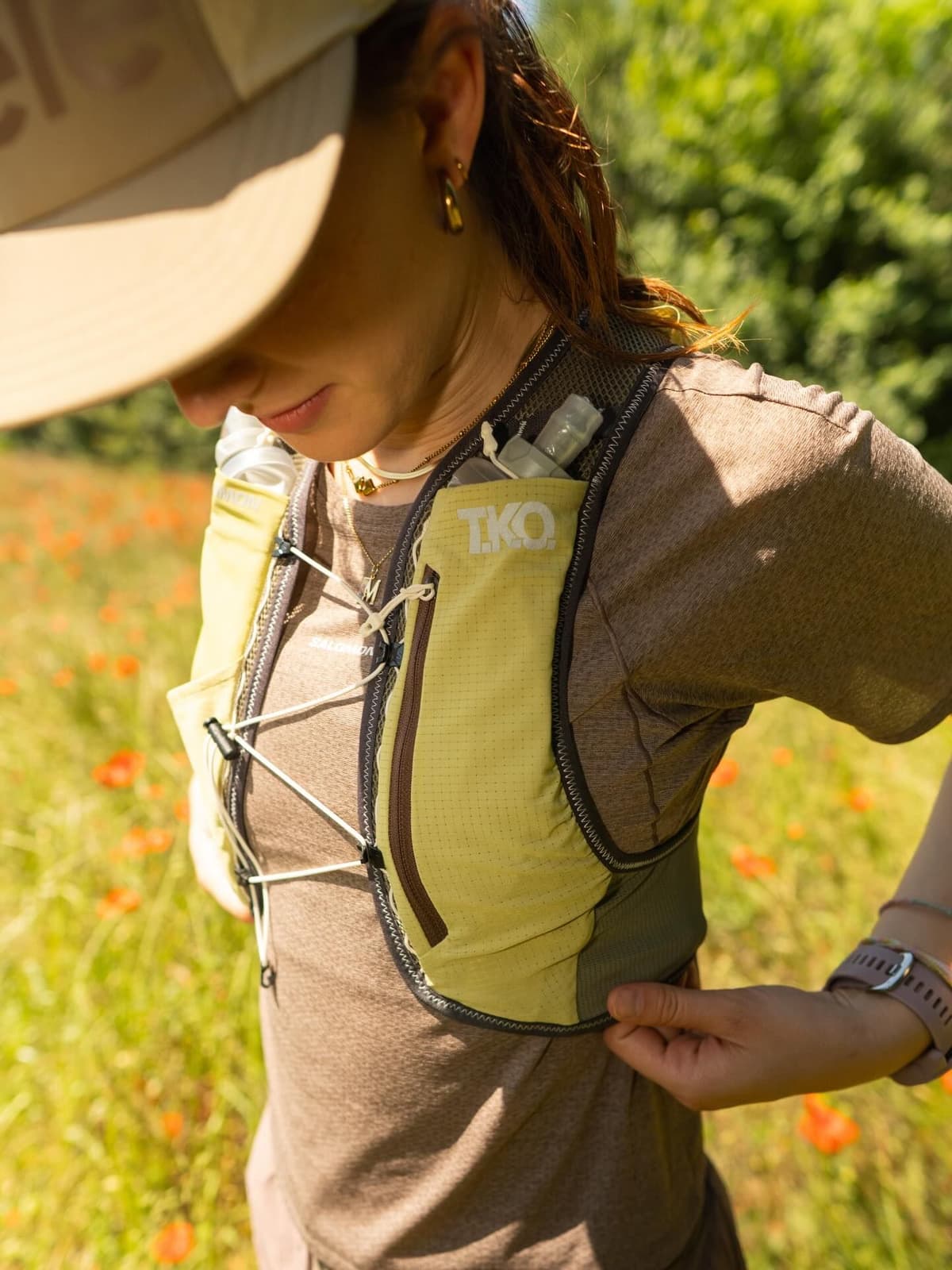
2010s: Salomon fundamentally reshaped the category by introducing body-hugging stretch construction that made a vest feel more like apparel than a pack. This became the template for nearly every modern running vest.
Today: The category has expanded beyond racing. Independent brands are designing vests for run clubs, fastpacking, photography, travel, and everyday exploration, reflecting a broader shift in outdoor culture.

Designing for Movement
Ask almost any trail runner what they want from a vest and the answer is surprisingly simple.
"I don't want to notice it."
That seemingly modest expectation has driven nearly every major innovation in the category over the past decade.
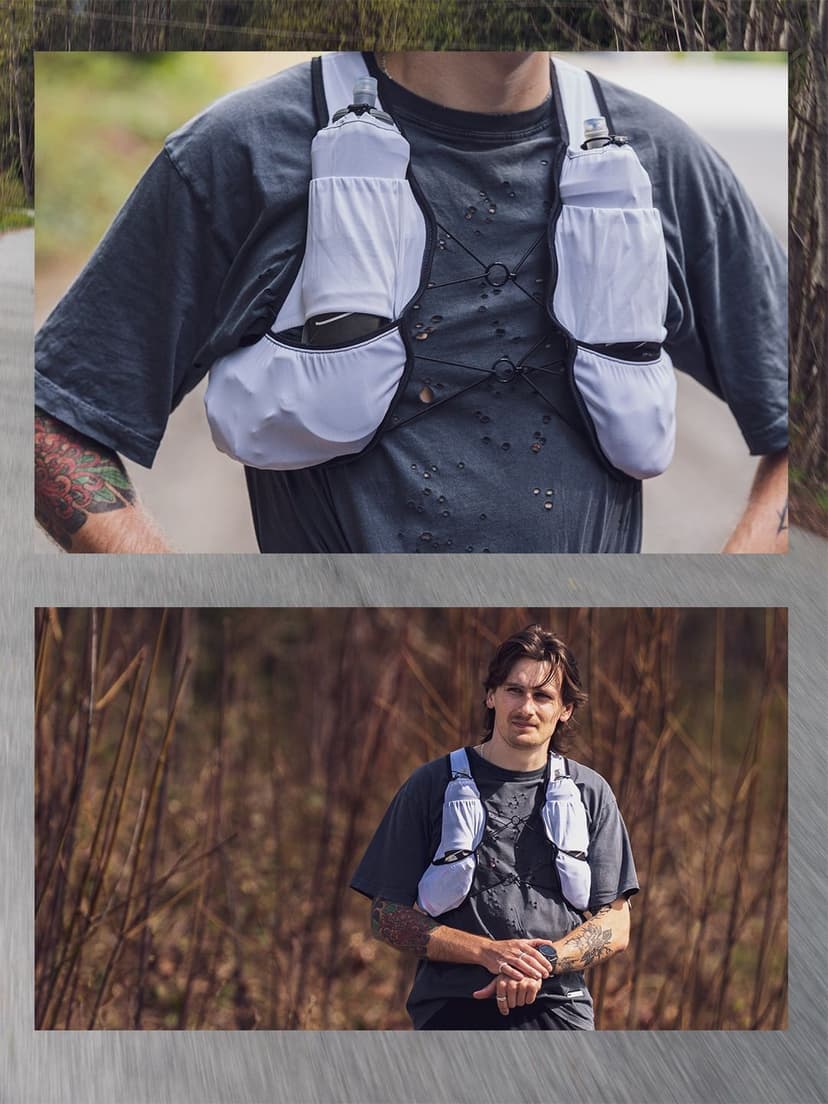
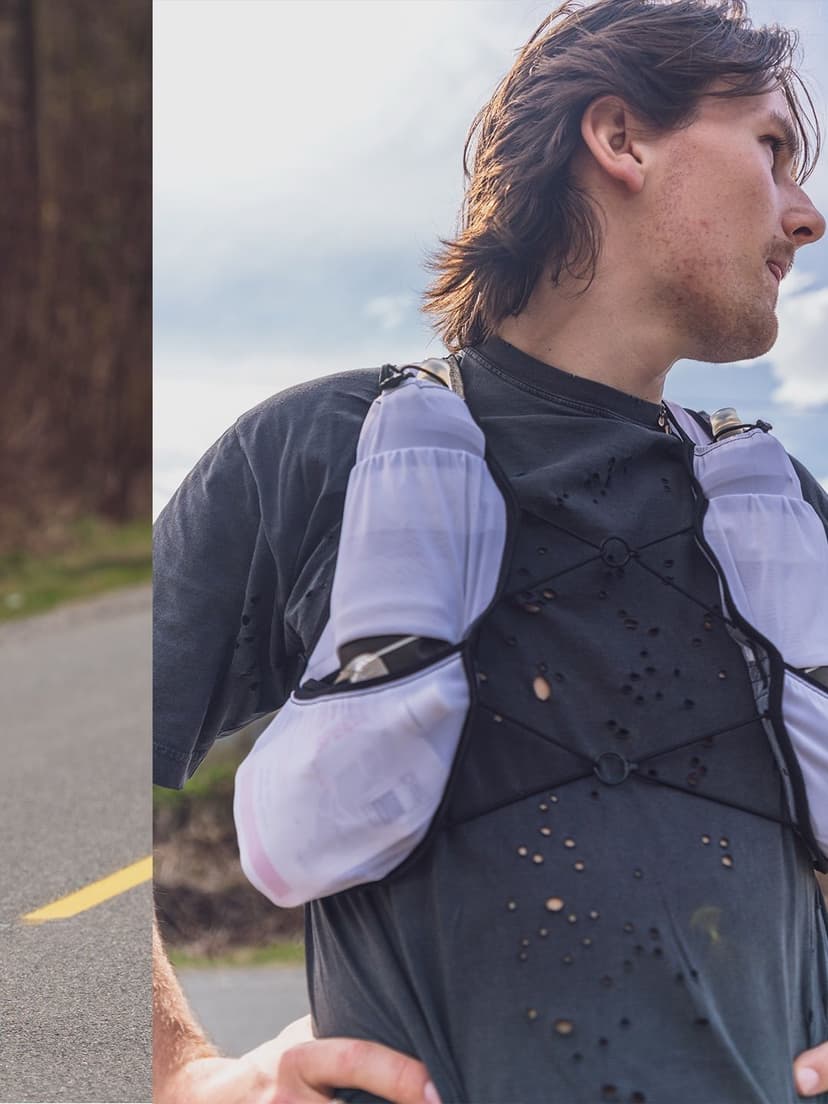
Early hydration packs solved stability with compression straps, hip belts, and rigid structures. They carried water well enough, but often felt restrictive, hot, and prone to shifting over technical terrain. Modern trail running vests take a fundamentally different approach. Rather than hanging from the shoulders like miniature backpacks, they wrap around the torso using highly elastic fabrics that move with the body itself. The vest becomes part of your stride rather than something attached to it.
That same philosophy extends beyond fit.
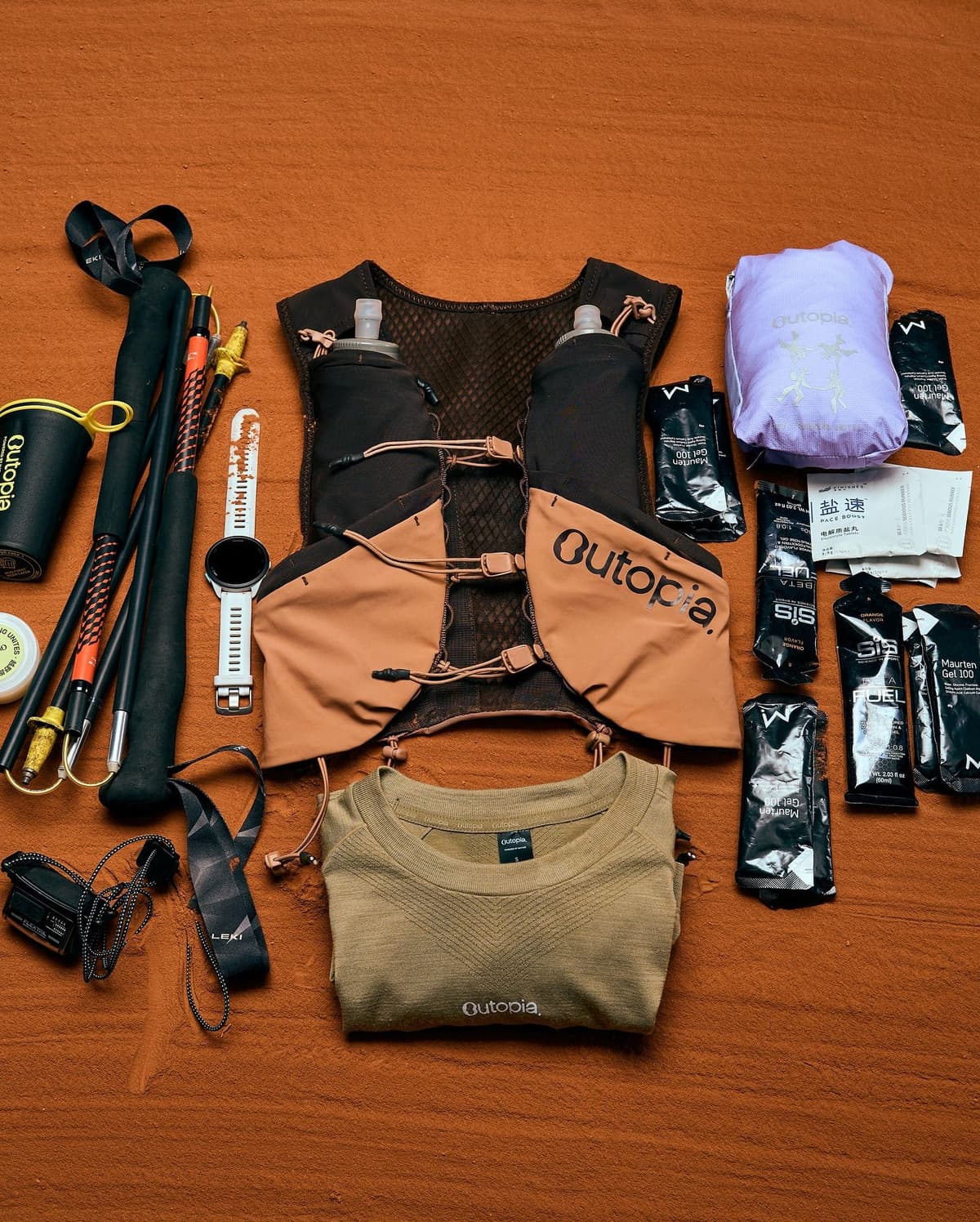
Storage has evolved from simple capacity to accessibility. Today's best vests aren't judged by how much they carry, but by how little they interrupt movement. Nutrition, hydration, poles, weather layers, cameras, and safety equipment are all positioned to be reached without breaking stride or removing the vest. Pocket layouts have become one of the clearest expressions of a brand's design philosophy, reflecting the many ways people now experience the trail.
Some runners move nonstop for hours. Others stop to take photographs, filter water, or linger at a summit. Some train for ultramarathons, while others simply spend long weekends exploring unfamiliar mountains. The best trail running vests recognize that no single layout serves every runner, which is why the category has become more diverse than ever before.
At the same time, carrying more no longer means wearing more. Many of today's highest-capacity vests weigh little more than a lightweight windbreaker while comfortably supporting enough equipment for an entire day outside. That balance of stability, accessibility, and minimal weight is what separates the modern running vest from the hydration packs that came before it.
The result is equipment that quietly disappears, allowing runners to focus on the landscape instead of the gear they're carrying.




The Materials Revolution
That transformation wouldn't have been possible without equally dramatic advances in materials.
While redesigned pocket layouts and cleaner silhouettes are immediately visible, the real innovation lies in the textiles and construction methods hidden beneath the surface. Modern trail running vests are lighter, stronger, cooler, and more durable because the materials themselves have fundamentally changed.
One of the biggest breakthroughs has been the adoption of monofilament mesh. Unlike traditional stretch mesh, which can absorb moisture and lose its shape over time, monofilament fabrics maintain their structure while dramatically improving airflow. They help reduce heat buildup during long efforts and keep the vest feeling consistent, even when fully loaded.

Durability has advanced just as quickly. Many premium models now reinforce high-wear areas with UHMWPE fibers, including materials such as Dyneema®, delivering exceptional tear and abrasion resistance with almost no weight penalty. Areas that once wore through after seasons of rubbing against trekking poles, flasks, or rock now remain remarkably resilient.
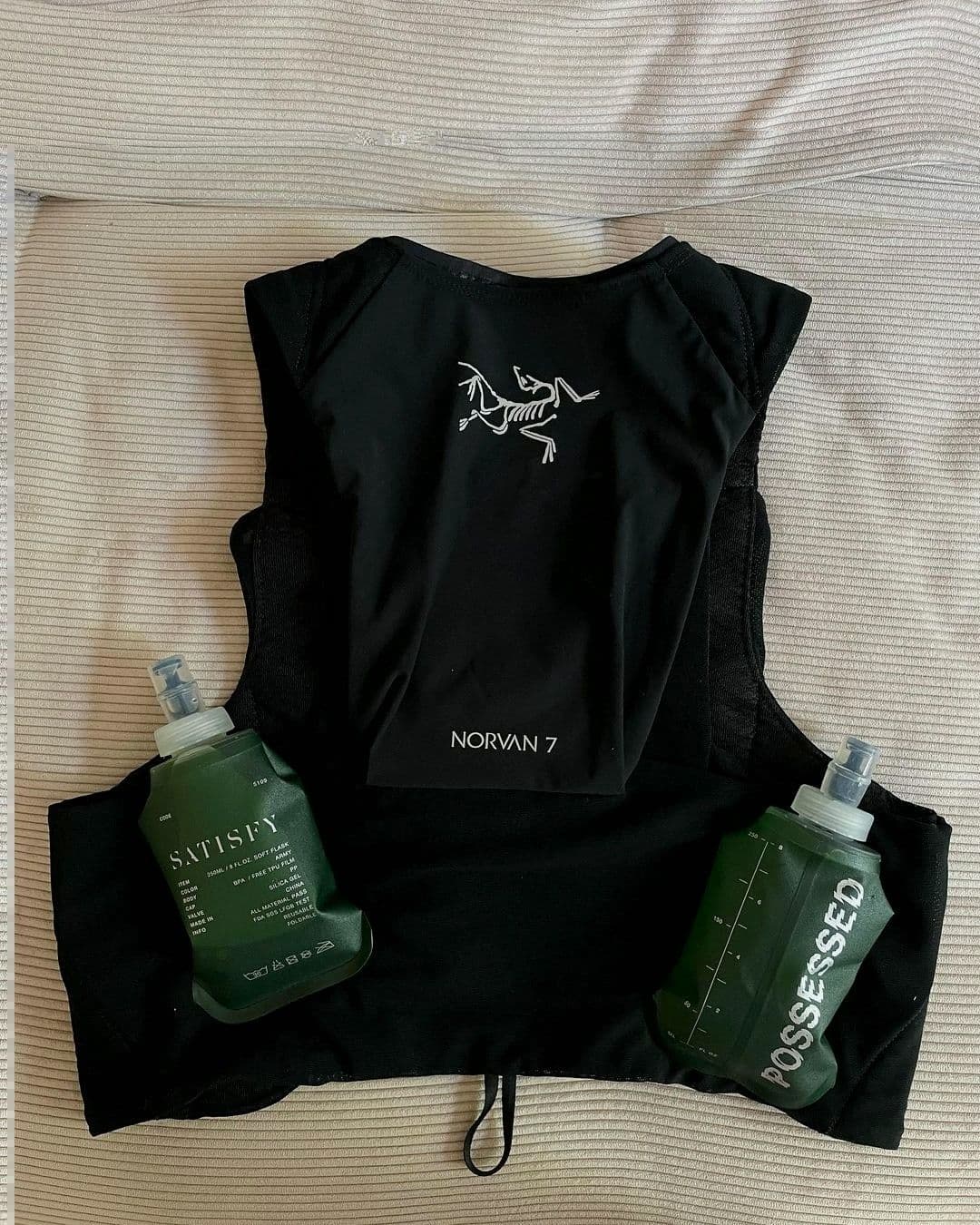
Fit has also become a function of fabric rather than hardware. Four-way stretch woven textiles allow the vest itself to become part of the suspension system, conforming to the runner's body as it twists, climbs, and descends. Instead of relying on heavy compression straps, the materials absorb movement naturally, reducing bounce while improving long-term comfort.
Construction techniques have followed the same trajectory. Bonded panels replace bulky stitched seams to minimize chafing, while laser-cut ventilation improves breathability without sacrificing durability. Combined with compressible soft flasks that eliminate sloshing as water is consumed, these advances have fundamentally changed how hydration is carried and how vests are designed.
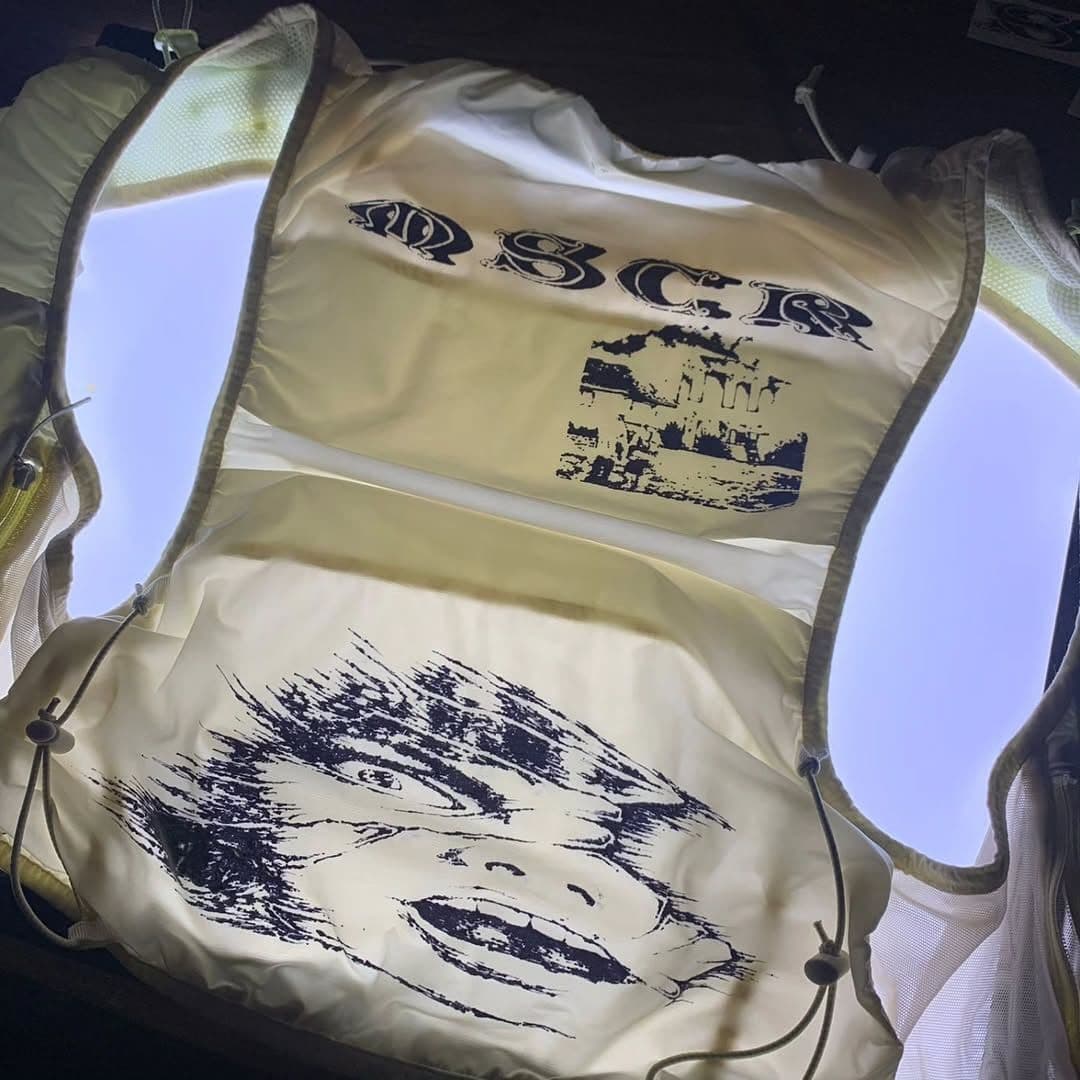
Sustainability has become part of the equation as well. Recycled nylon fabrics, PFAS-free water-repellent treatments, solution-dyed textiles, and repairable construction are increasingly common as brands look beyond performance alone.
The remarkable part is that most runners never notice any of this.
They simply notice that today's vests feel lighter. Cooler. More stable. More comfortable.
That's the hallmark of great product design. The more advanced the engineering becomes, the less you think about it. And when the vest disappears, your attention returns to where it belongs—the trail ahead.

The Vests Defining the Category
No two trail running vests feel exactly the same anymore. While they all solve the same problem—carrying essentials while moving efficiently—the philosophies behind them have diverged significantly. Some prioritize race-day speed. Others lean toward all-day adventure. Some feel like apparel. Others prioritize exploration. Some are built for ultramarathons. Others maximize versatility. Others feel like minimalist packs.
Here's how five of the most influential models compare.
Together, they paint a picture of where trail running—and outdoor culture—is headed.
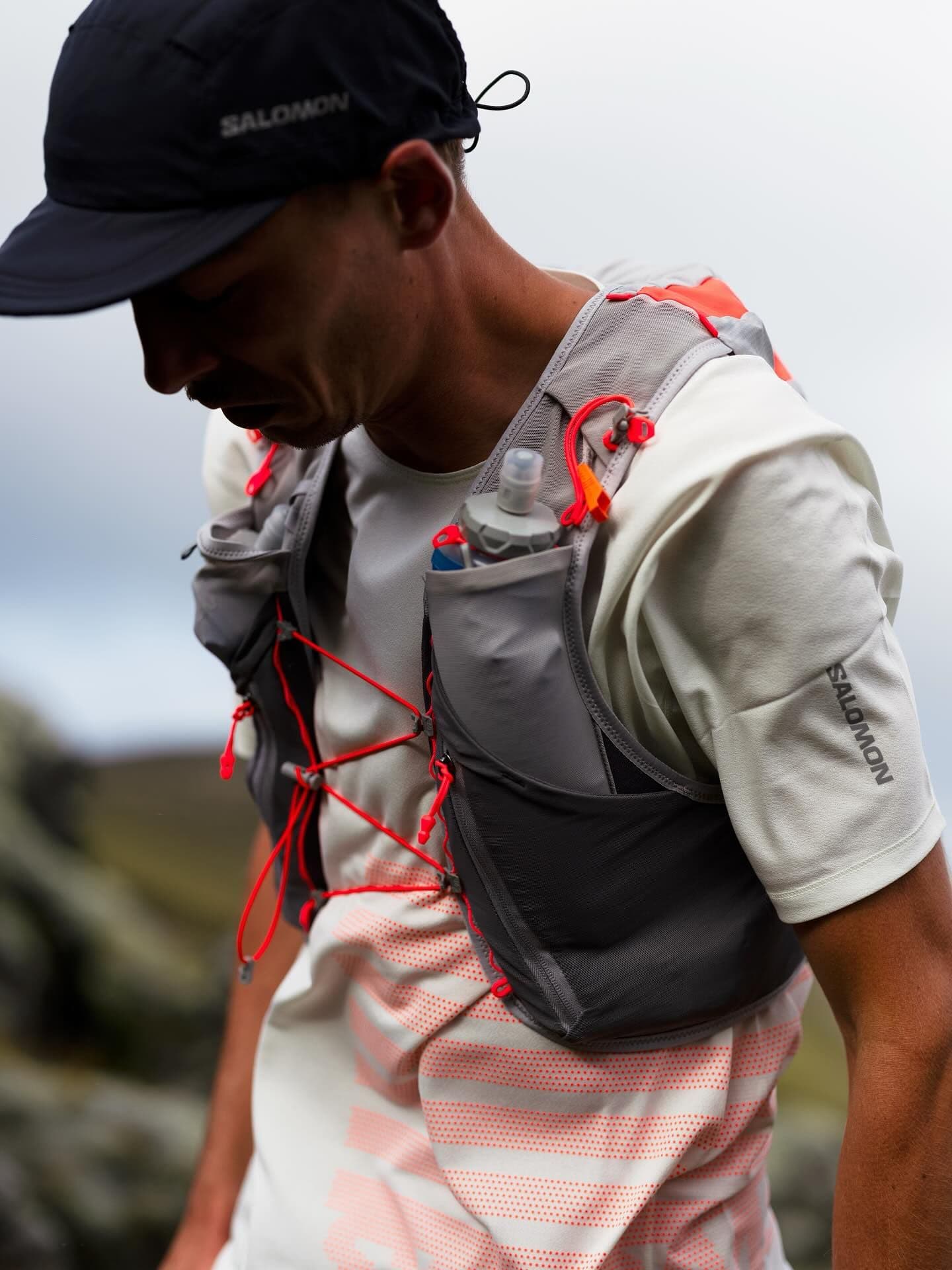
Salomon ADV Skin
The Industry Benchmark
The ADV Skin remains the vest against which every other model is measured. Its body-hugging fit, intuitive storage, and exceptional stability helped redefine what a running vest could be, setting the template for nearly every modern design. Equally capable on short training runs and all-day mountain missions, it remains one of the category's most versatile options.
Best For: Runners who want one vest that does everything well.
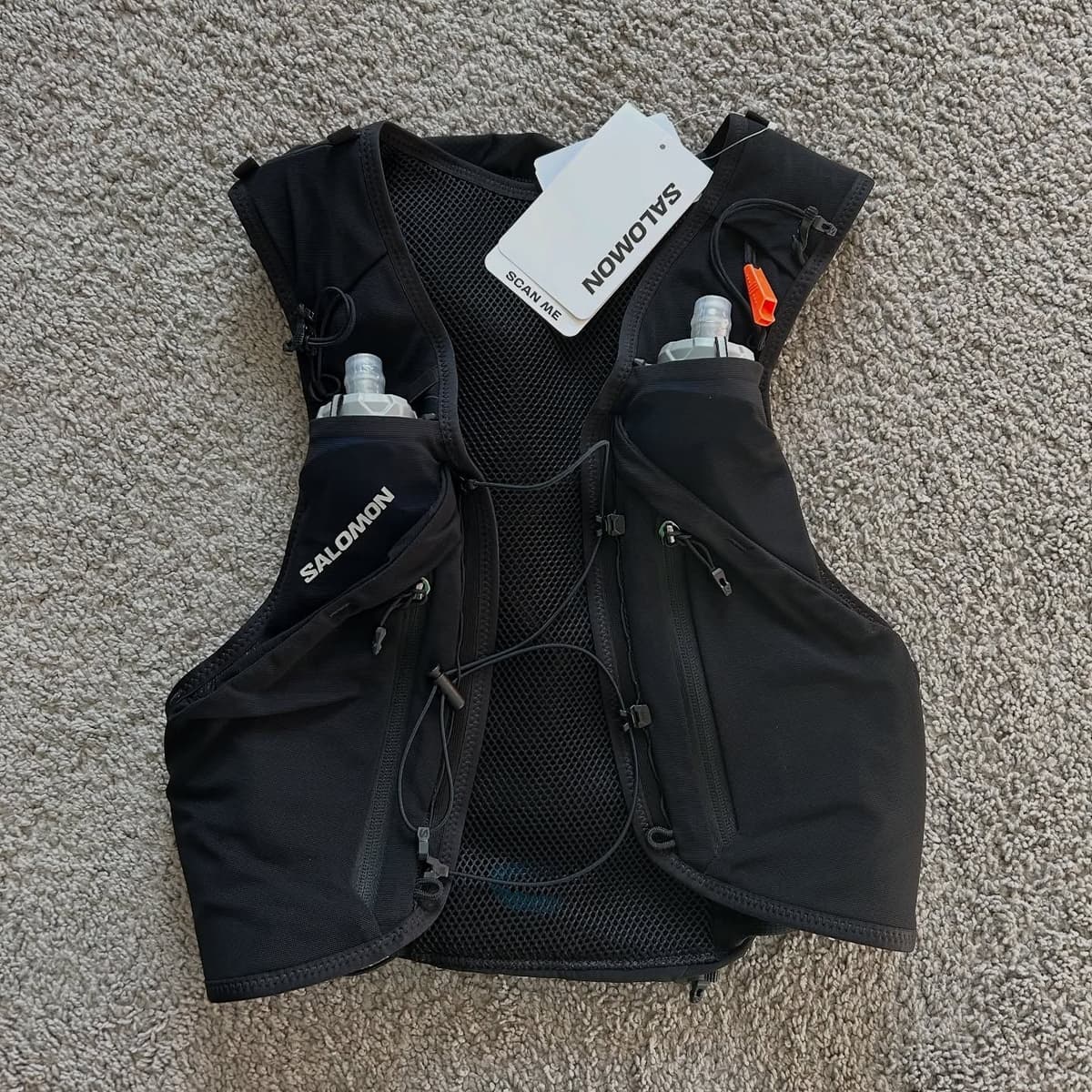
NNormal Race Vest
Minimalism with Purpose
Co-developed with Kilian Jornet, the NNormal Race Vest strips away everything unnecessary. Lightweight, precise, and intentionally simple, it prioritizes efficient movement over excess storage. Every detail serves a purpose, making it an excellent choice for runners who value speed and simplicity.
Best For: Race-focused runners and minimalists.

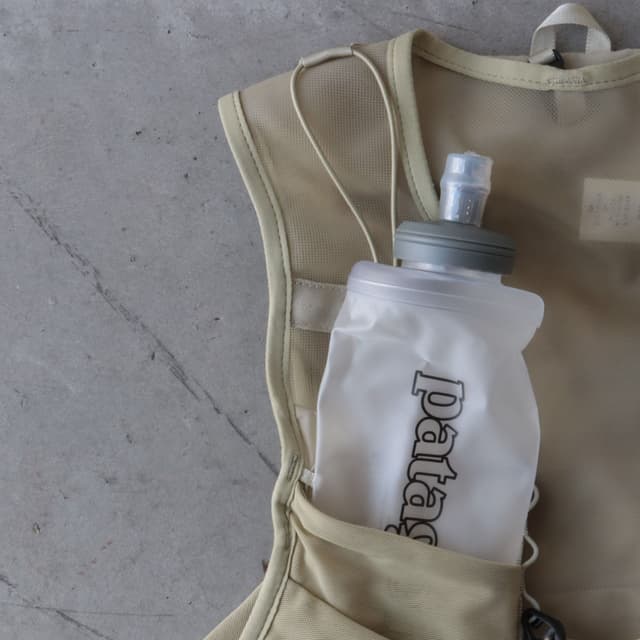
Patagonia Slope Runner
Built to Go Beyond Running
The Slope Runner reflects Patagonia's broader approach to outdoor gear: versatile, durable, and built to last. While capable on race day, it feels equally at home hiking, fastpacking, or tackling long mountain days. It's a vest designed for adventures that don't always follow a plan.
Best For: Runners seeking versatility and long-term durability.

Black Diamond Distance Pack
Mountain-Ready Performance
Influenced by Black Diamond's climbing heritage, the Distance Pack blurs the line between running vest and alpine pack. Extra durability, larger carrying capacity, and thoughtful attachment points make it ideal for technical terrain, fastpacking, and big mountain objectives.
Best For: Mountain runners and fastpackers.

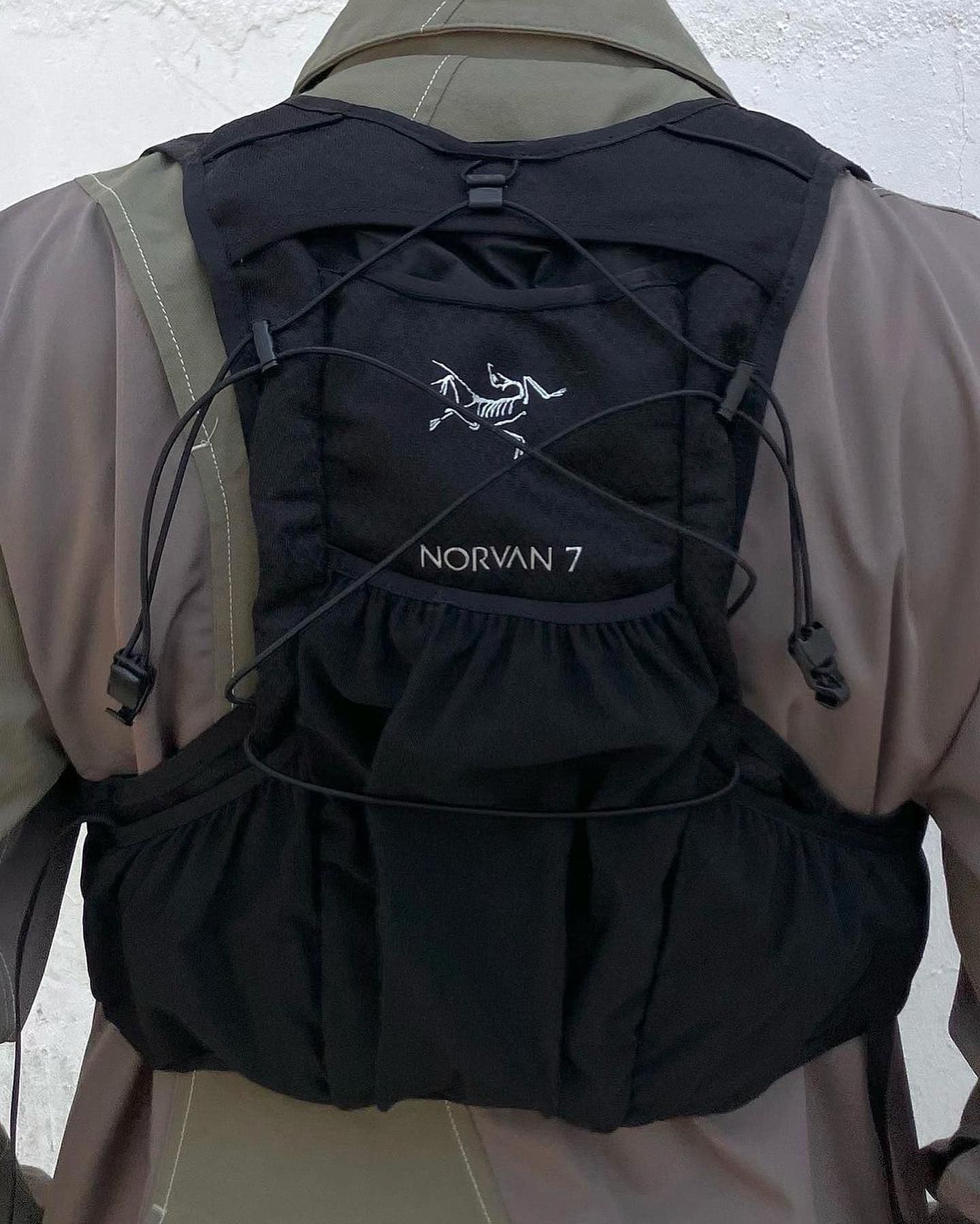
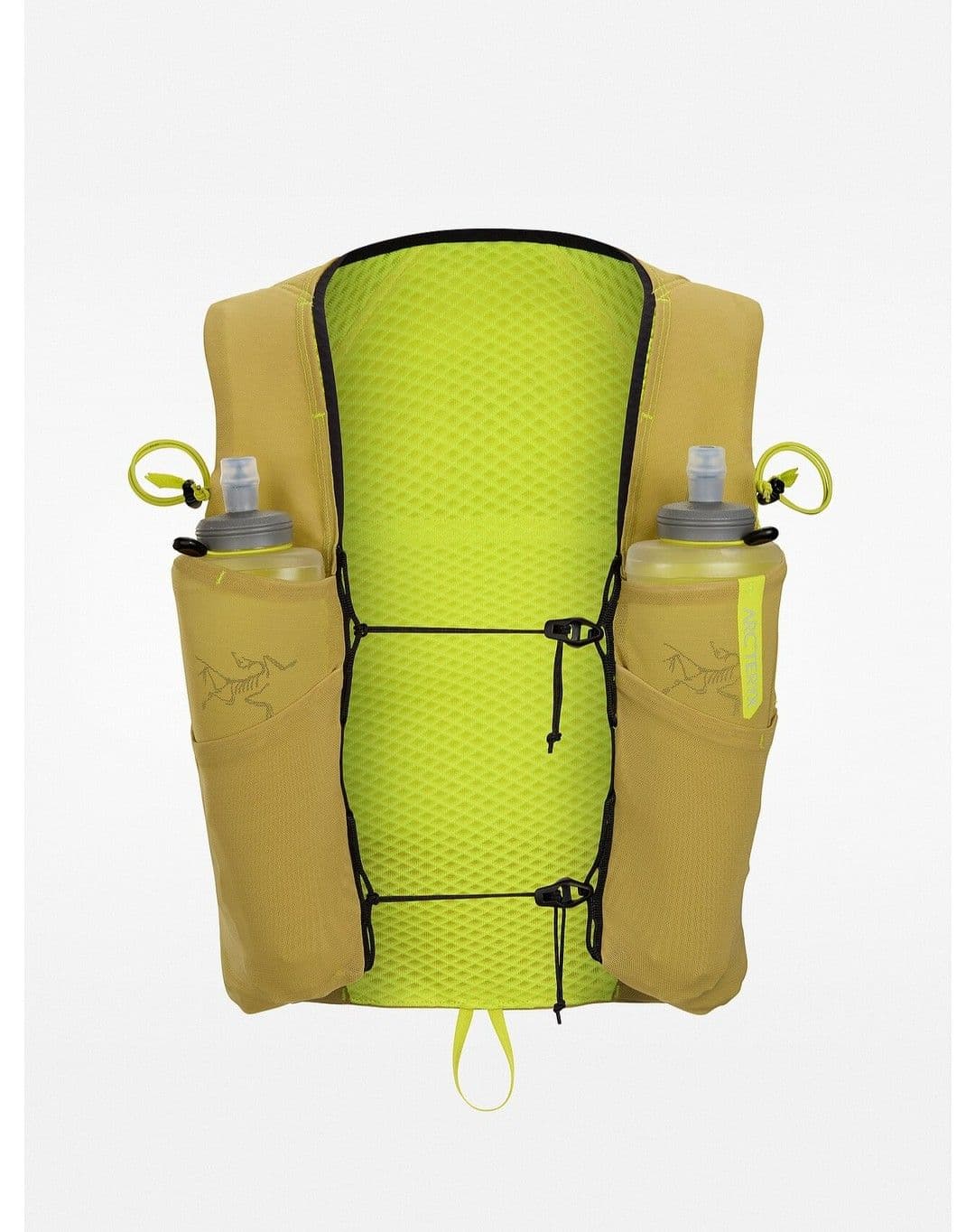
Arc'teryx Norvan Vest
Minimalism Refined
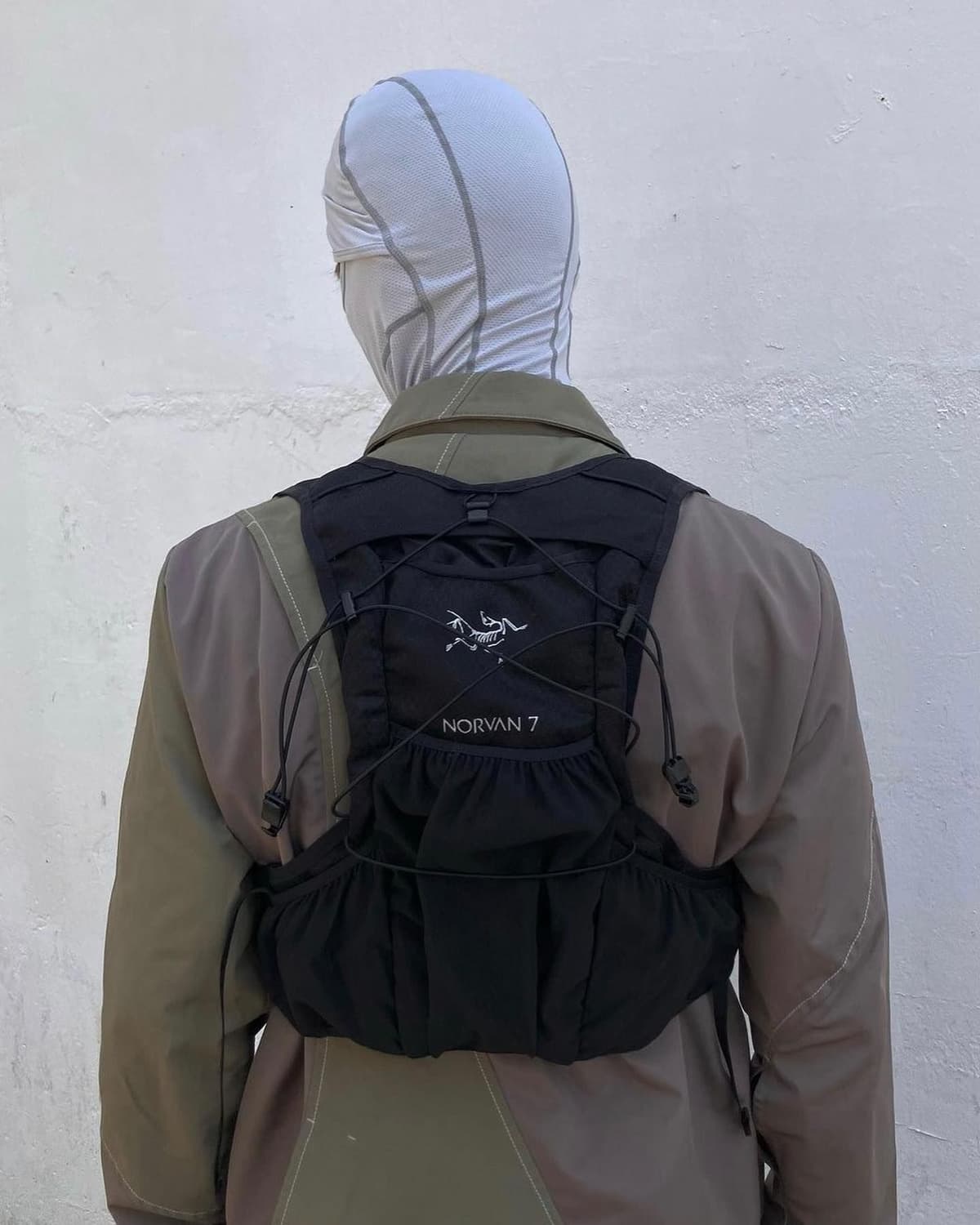
The Norvan embodies Arc'teryx's design philosophy: remove everything unnecessary and perfect what remains. Premium materials, exceptional construction, and a dialed fit create one of the cleanest, most refined vests in the category. Less feature-heavy than some competitors, it excels through thoughtful restraint.
Best For: Runners who prioritize fit, craftsmanship, and premium materials.
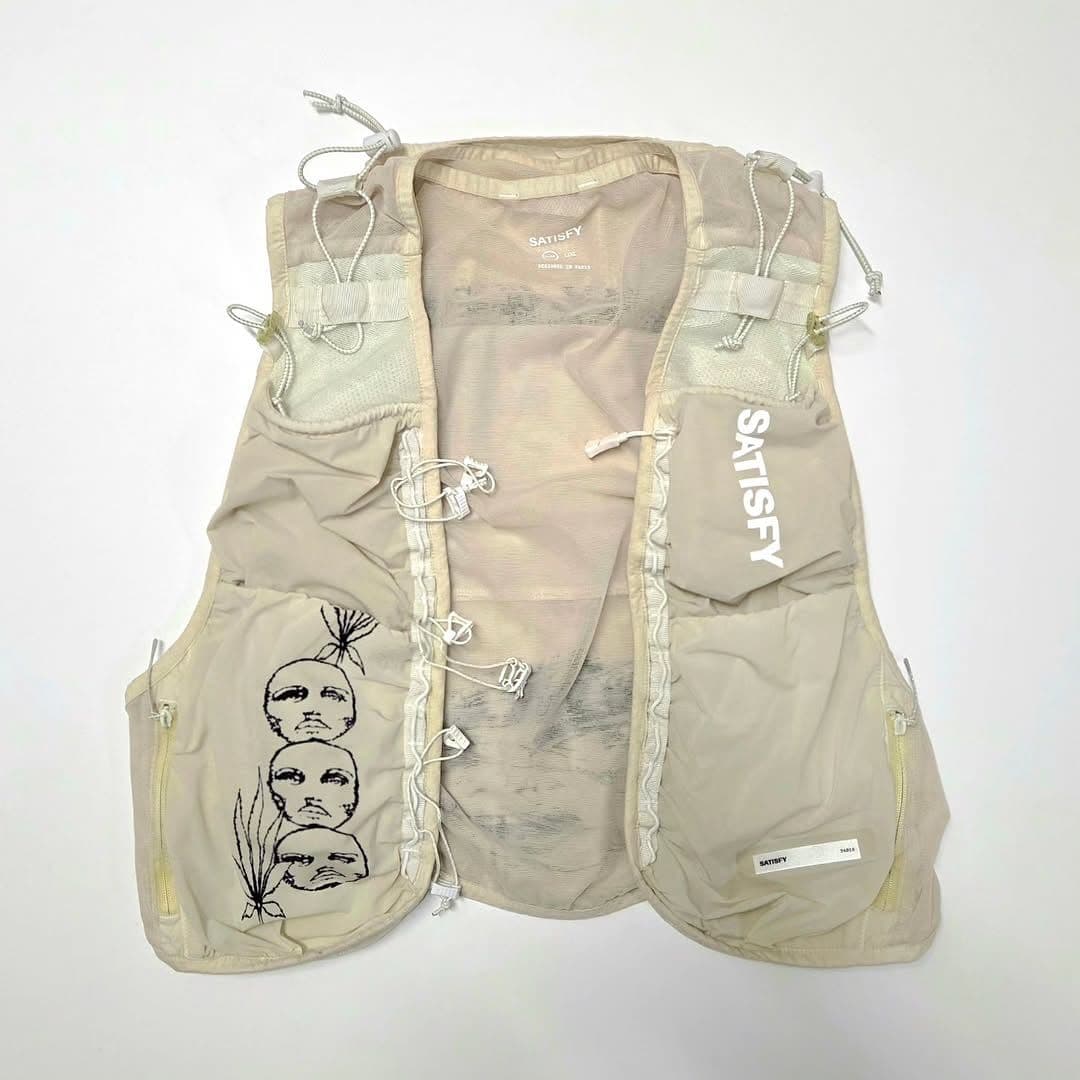
SATISFY Justice™ Cordura® 5L Hydration Vest
Luxury Performance
SATISFY approaches technical running through the lens of craftsmanship. Constructed with premium stretch fabrics and Cordura® reinforcements, the Justice™ Vest combines low-bounce comfort with understated aesthetics and everyday versatility. It performs at the highest level without looking like traditional race equipment.
Best For: Runners seeking premium materials, refined design, and long-distance capability.
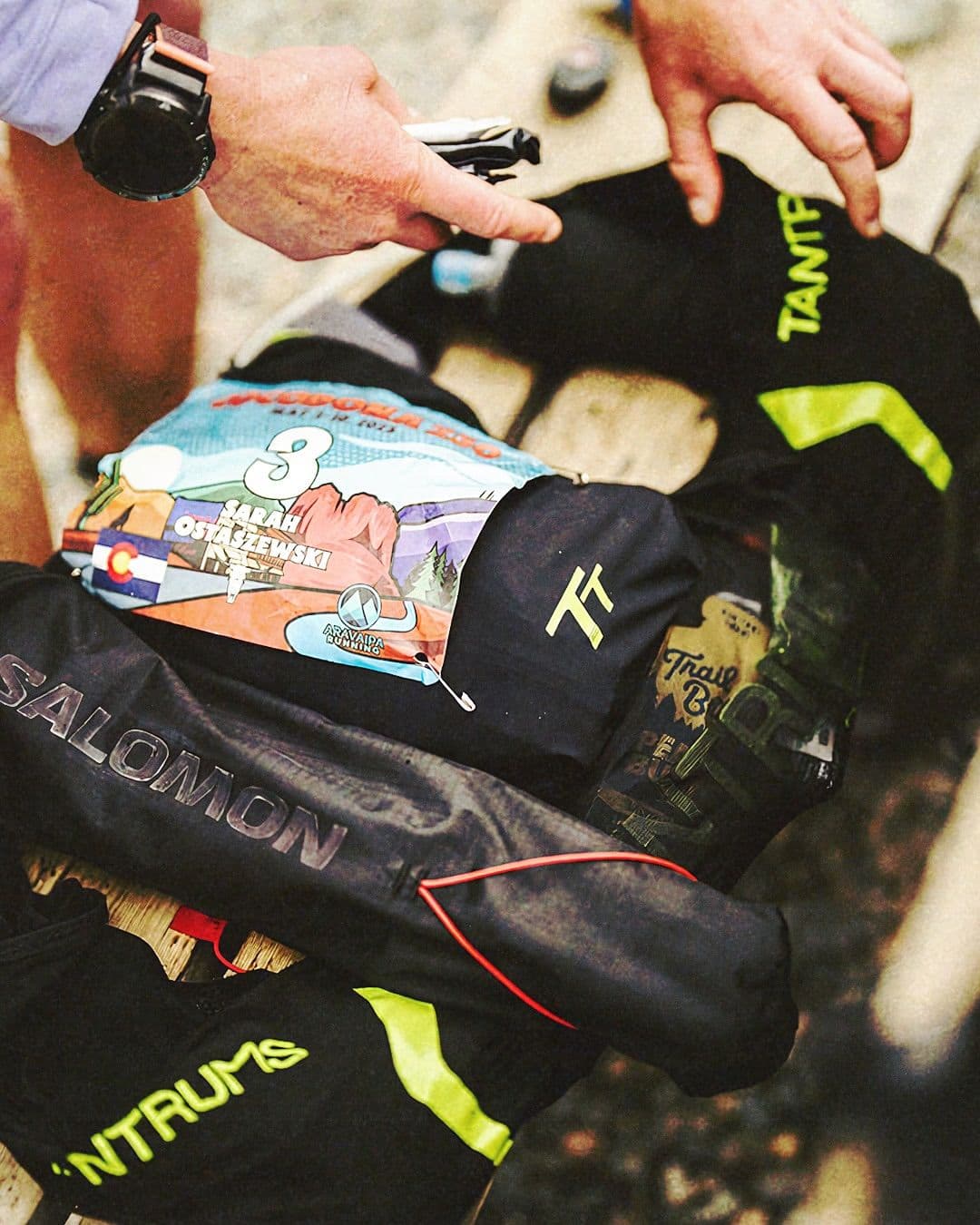
Tantrums Crest 6 Hydration Pack
Built Around Community
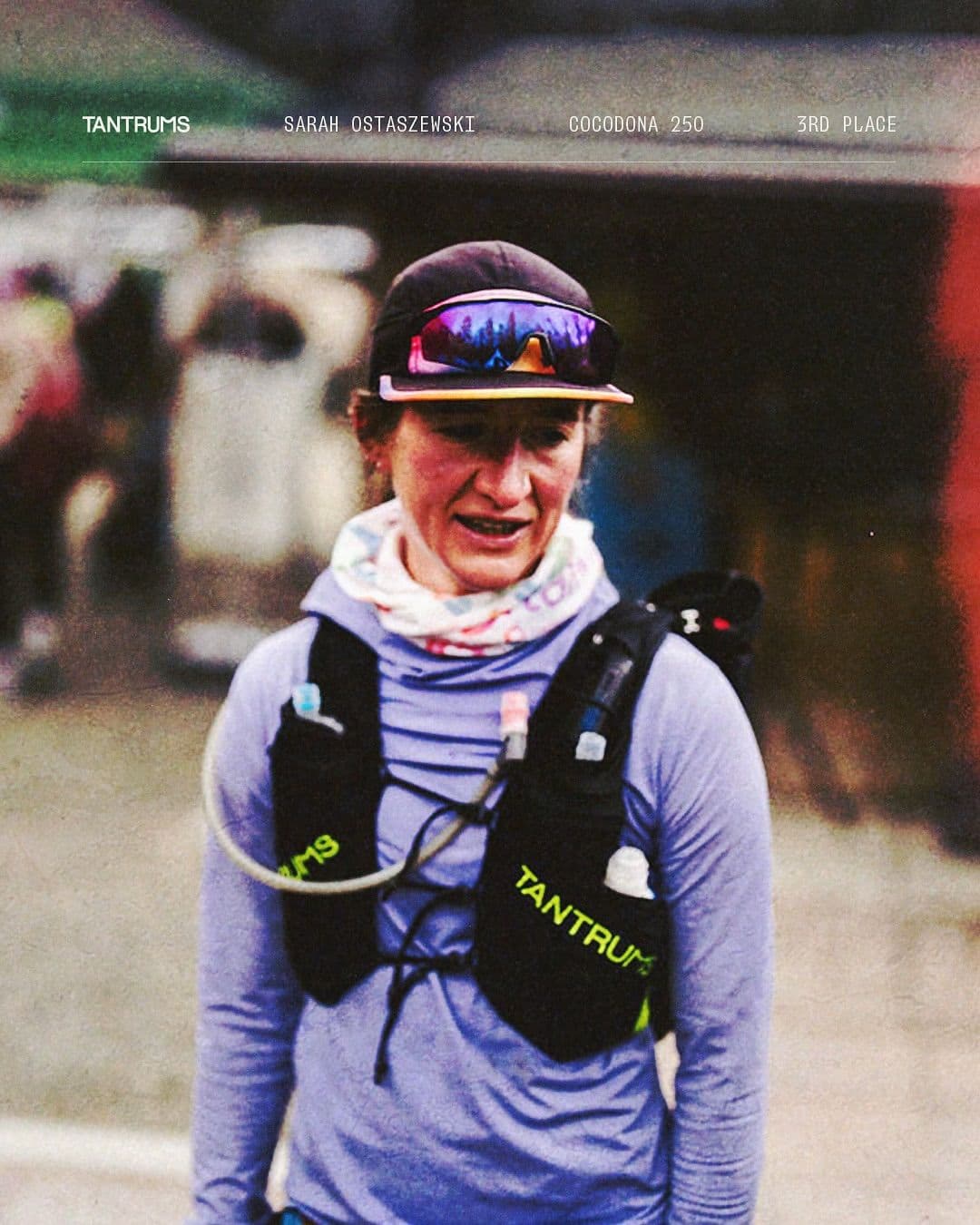
The Crest 6 proves that independent brands can compete with industry giants. Lightweight, breathable, and obsessively refined through athlete feedback, it emphasizes secure fit and intuitive storage while reflecting the community-driven spirit that has made Tantrums one of trail running's fastest-growing brands.
Best For: Trail runners wanting a lightweight, low-bounce vest with modern styling.

CIMORO UL Running Vest V2
Modular by Design
Produced in limited runs, the UL Running Vest V2 is built for runners who move between disciplines. Ultralight UHMWPE construction, modular adjustment, and generous storage make it equally suited to trail running, fastpacking, bikepacking, and travel. It feels less like race gear and more like a versatile carry system for modern exploration.
Best For: Multi-disciplinary adventurers who value ultralight design and independent craftsmanship.

A New Generation of Running Brands
The inclusion of brands like Tantrums Running and CIMORO alongside industry leaders such as Salomon, Patagonia, Arc'teryx, Black Diamond, and NNormal reveals something important about the state of running culture.
The larger brands generally begin with engineering and performance requirements. The design process starts with an athlete, a race, a mountain objective, or a technical challenge.
Independent brands like Tantrums and CIMORO often begin somewhere else entirely—with culture.
Their products emerge from local run clubs, creative communities, and the growing realization that running is no longer just a sport. For many people, it's a social life, a creative outlet, a travel philosophy, and a way of structuring their weekends.

The category is no longer being shaped exclusively by elite athletes and major outdoor companies.
Increasingly, it is being influenced by smaller, independent brands that understand running as a cultural activity rather than simply a competitive one.
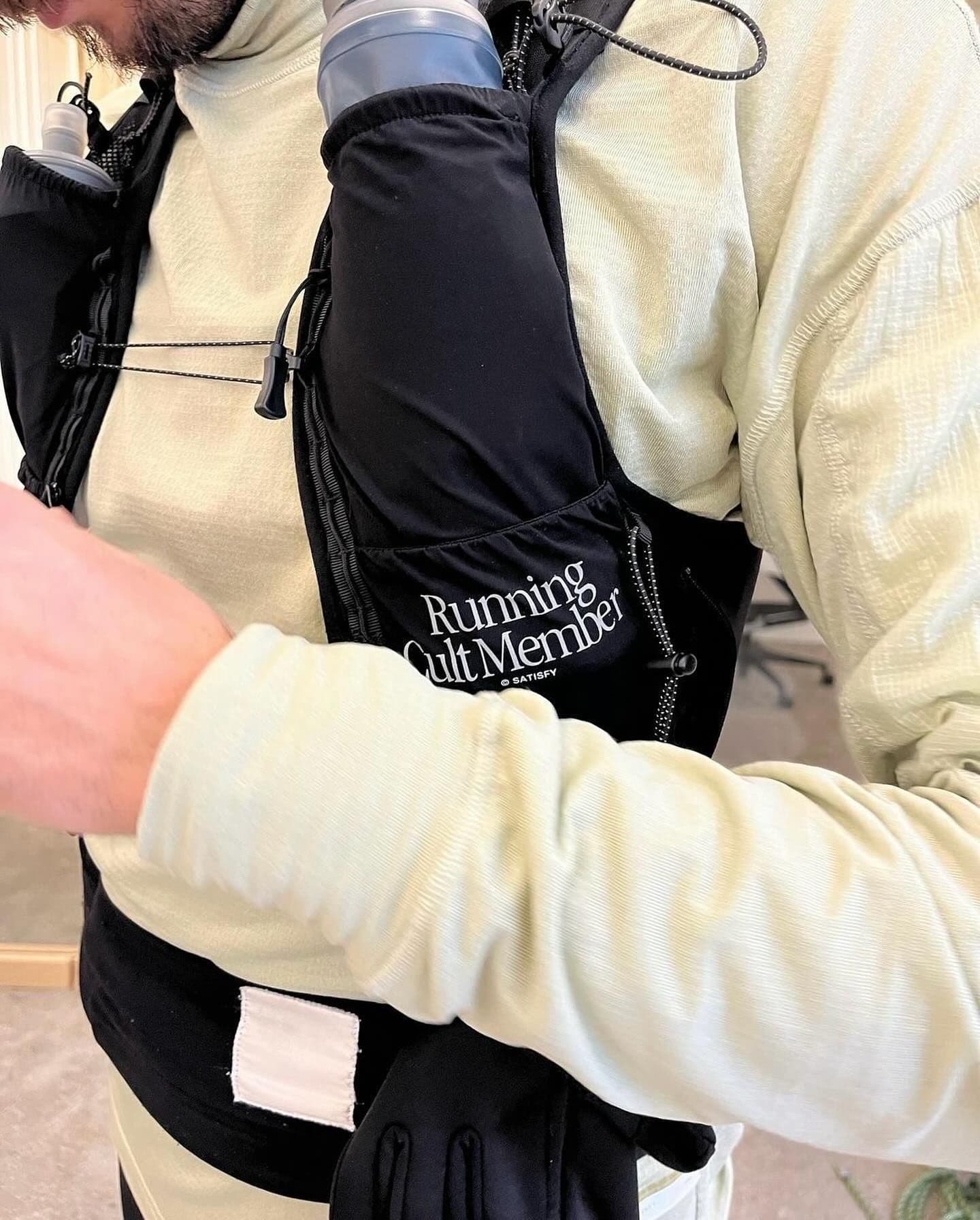
These brands are designing products for people who meet at run clubs before sunrise, travel to trailheads on weekends, document adventures on film cameras, stop for coffee mid-run, and view movement as part of a larger lifestyle.
That's why the modern running vest has become such an interesting object. It sits at the intersection of performance, design, community, and identity.
Choosing the Right Vest
The "best" vest depends less on performance metrics than on how you spend your weekends.
If You're Racing
The priorities are simple: stability, low weight, and immediate access to nutrition.
Every unnecessary feature becomes extra weight.
This is where the NNormal Race Vest excels, along with the lighter versions of the Salomon ADV Skin.
They're purpose-built to disappear while moving fast.
If You Spend Entire Days Outside
Maybe your run turns into a hike.
Maybe you're carrying a camera.
Maybe you'll stop for lunch, explore a side trail, or spend eight hours outside with no particular schedule.
Versatility becomes more important than outright weight.
The Patagonia Slope Runner and Black Diamond Distance Pack are particularly compelling because they remain comfortable when your objectives inevitably evolve.
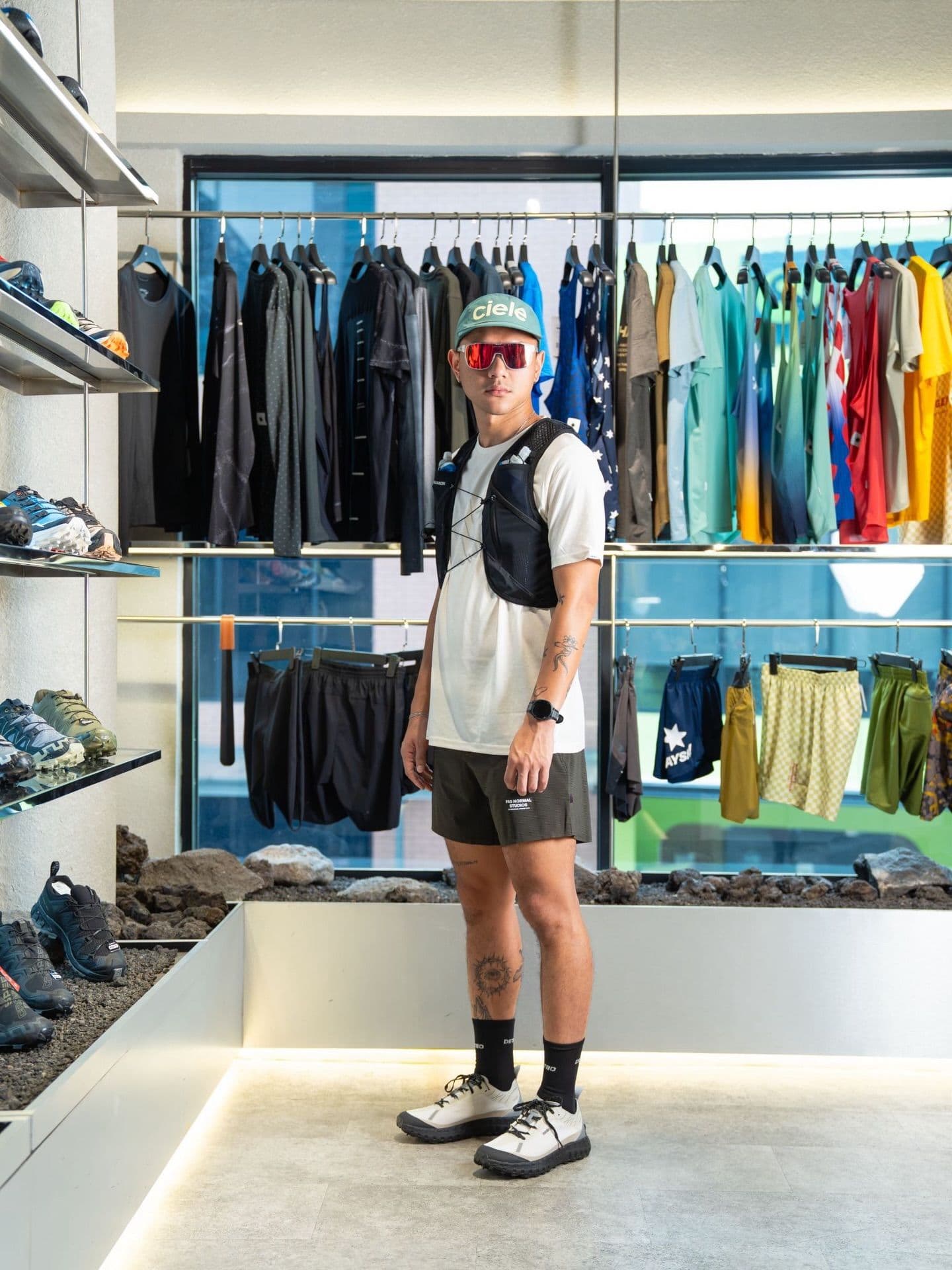
If Design Matters As Much As Performance
Technical gear no longer lives exclusively on mountain trails.
Many runners wear their vests while traveling, commuting to trailheads, photographing landscapes, or simply walking to a neighborhood café after a morning run.
Products like the Arc'teryx Norvan, CIMORO, and Tantrums Running Vest recognize that shift.
Performance remains essential.
But visual restraint, thoughtful materials, and everyday usability matter too.
Increasingly, outdoor equipment is becoming part of daily wardrobes rather than something reserved for race day.

The Vest as a Cultural Object
This may sound strange. But the trail running vest is beginning to occupy a role similar to the backpack did decades ago.
Not everyone carrying a backpack is climbing Everest. Likewise, not everyone wearing a running vest is training for Western States.
It has become a symbol of preparedness. A willingness to leave the pavement. To take the longer route home. To carry enough water for an unexpected detour. To remain outside a little longer than originally planned.
That's a remarkably modern idea. The vest represents possibility more than necessity. It says, "I don't know exactly where today will end, but I'd like to be ready when I get there."
What Comes Next?
The most interesting thing about today's trail running vests isn't how much they've improved.
It's what they're becoming.
For decades, outdoor gear was designed around singular activities. Hiking backpacks were for hiking. Running packs were for running. Cycling bags were for cycling.
That separation no longer reflects how most people spend time outside.
A Saturday might begin with a trail run, continue into a swim, end with coffee in town, and somehow include an impromptu hike to catch sunset. Weekend trips increasingly blend sports rather than revolve around one. We move fluidly between disciplines, and our equipment has started doing the same.


The next generation of running vests will almost certainly become lighter.
Materials will continue improving.
Storage systems will become increasingly modular.
We may see interchangeable pocket systems, integrated safety technology, recycled technical textiles, and products designed equally for running, cycling, hiking, and travel.
But none of those innovations will matter if they lose sight of what made the category exciting in the first place.
The best products don't simply help us move faster. They help us move more. They encourage spontaneity. They extend adventures. They remove excuses.
They quietly make the outdoors feel a little more accessible.

The Final Word
The evolution of the trail running vest isn't really about hydration. Or storage. Or fabrics. It's about freedom.
As outdoor culture has shifted away from narrowly defined sports toward a broader philosophy of movement, our equipment has shifted with it.
The modern runner isn't always chasing finish lines. They're chasing quiet mornings before work. Weekend road trips. Mountain sunrises. Coffee stops with friends. A little more daylight. A little more distance. A reason to take the scenic route.
The best running vests understand that. They aren't designed merely to carry water. They're designed to carry possibility. They aren’t the ones that carry the most gear.

The best running vest is the one that quietly convinces you to stay outside another hour.
And perhaps that's why this once-overlooked piece of gear has become one of the defining products of contemporary outdoor culture.
Because in an era where the boundaries between running, hiking, travel, and everyday life continue to blur, the trail running vest isn't just keeping up.
It's leading the way.
No products available.
Shop trail running vests on WeekEnds today.
Related Articles

August 10, 2026
The Rise of China’s Independent Outdoor Brands
Explore the rise of China’s independent outdoor brands, from UPPERVOID and Aonijie to a new generation reshaping trail, snow, camping, and technical design.
Read →
August 4, 2026
The Future of Outdoor Hardware
The future of outdoor gear is in the details. Discover how independent brands are reinventing buckles, zippers, fasteners, and hardware through design.
Read →
July 30, 2026