
The Future of Outdoor Hardware
by Gene Han
Most people buy a backpack because of its capacity.
They buy a jacket because it's waterproof.
They buy a tent because it's light.
Almost nobody buys outdoor gear because of its zipper.
Or buckle.
Or cord lock.
Or adjustment system.

And yet those tiny pieces of hardware determine how a product feels every single day it's used.
They are the difference between a jacket that adjusts with one gloved hand and one that doesn't. Between a backpack that disappears into the background and one that constantly demands attention. Between gear that feels thoughtfully engineered and gear that merely works.
For decades, hardware was treated as an afterthought—a commodity sourced from the same handful of suppliers and hidden beneath logos and fabrics.
That's changing.
Across the outdoor industry, hardware is becoming one of the most important areas of innovation, shaping everything from sustainability and repairability to user experience and brand identity. And increasingly, the companies pushing the conversation forward aren't necessarily the biggest ones. They're independent brands willing to obsess over details most consumers never notice.
The future of outdoor design may not be made from new fabrics alone.
It may be built one buckle at a time.

Hardware Is Finally Becoming Design
For much of the last two decades, outdoor innovation was measured in fabrics. Waterproof ratings climbed. Breathability improved. Recycled textiles became standard. PFAS-free membranes became the industry's next frontier. Meanwhile, many products continued relying on nearly identical buckles, zipper pulls, and cord locks.
Today, designers are beginning to view hardware differently—not simply as components that hold products together, but as the primary interface between people and products.
The best hardware disappears into muscle memory. You don't think about tightening your pack. You don't think about opening your shell. You simply do it.
That kind of invisible usability requires enormous engineering.
It's why brands like and wander invest as much attention in custom aluminum trims, reflective hardware, and fastening systems as they do in fabrics. Their products feel distinct before you ever notice the logo because every interaction has been considered.


The New Generation Is Designing From the Hardware Out
Many of today's most interesting outdoor brands aren't beginning with fabrics.
They're beginning with interactions.
How quickly can a bike bag detach during a coffee stop?
Can a running vest be tightened without breaking stride?
Can ski pants be vented while wearing gloves?
Can a camera be reached without removing your backpack?
Those questions have led designers to rethink hardware not as supporting pieces, but as the product itself.

Climbing has understood this principle for decades. When Wild Country introduced the original Friend cam, it fundamentally changed how climbers protected routes—not through a new material, but through a new mechanical solution. Today, companies like Petzl, DMM, Black Diamond, and Blue Ice continue that tradition, refining everything from carabiner gates and belay devices to alpine pack attachment systems. Their products remind us that some of the most consequential innovations in the outdoors aren't textiles at all—they're precisely engineered pieces of hardware that inspire confidence hundreds of feet off the ground.

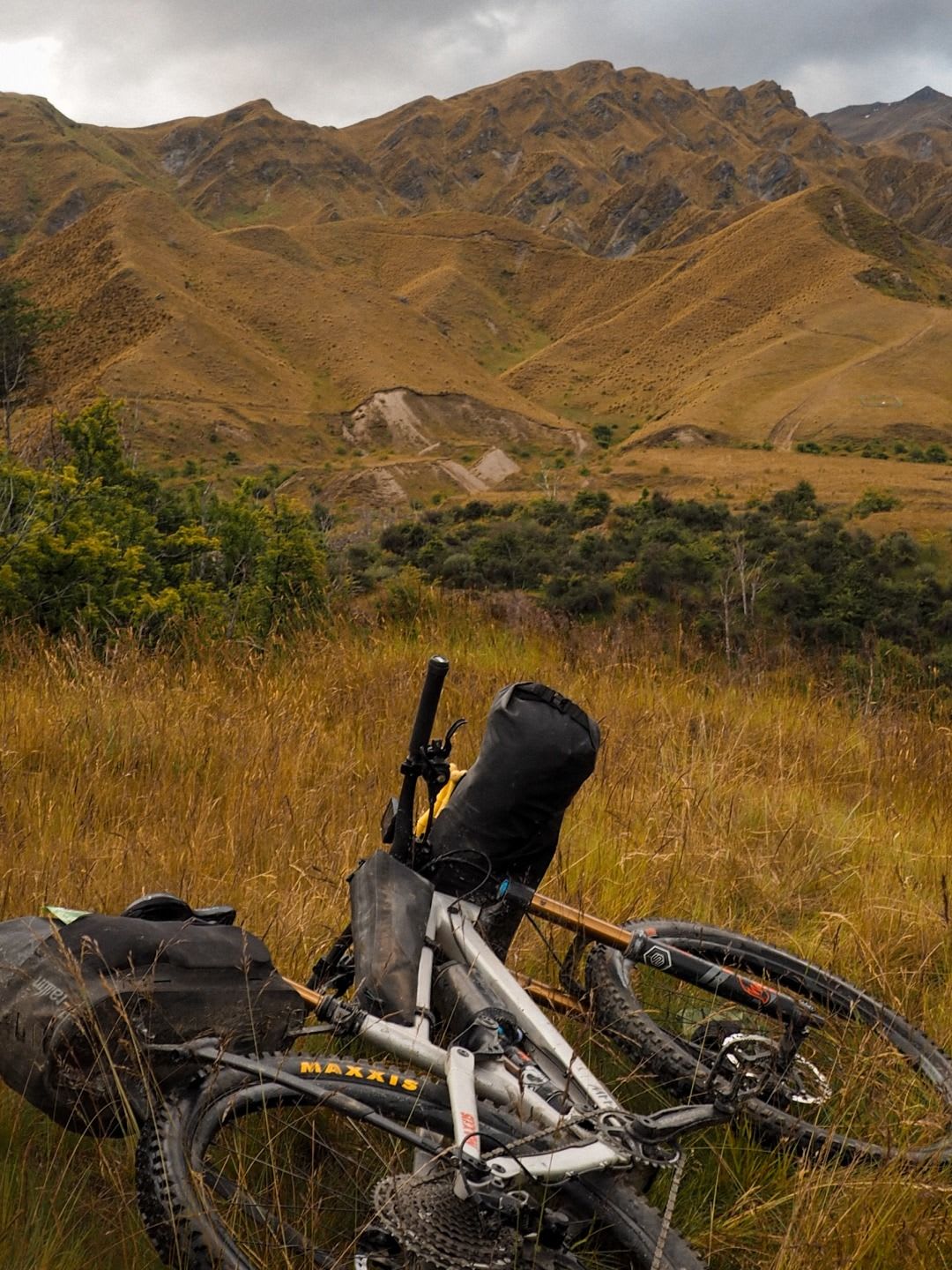
Bikepacking company Tailfin exemplifies this philosophy. Rather than designing another rack, the company engineered an integrated mounting system that installs quickly, remains remarkably quiet over rough terrain, and feels like part of the bicycle instead of an accessory attached to it.

Similarly, Outer Shell has built a following through modular attachment systems that let riders adapt bags to changing trips instead of replacing them altogether.
The innovation isn't flashy.
It's simply better interaction.

Less Hardware, Better Hardware
For years, "technical" often meant adding more. More straps. More clips. More adjustment points.
Today, many independent brands are proving the opposite.
Hyperlite Mountain Gear has become one of the defining voices in ultralight backpacking by eliminating unnecessary hardware while obsessing over every component that remains. Every buckle, compression strap, and attachment point has a purpose.

Japan's Yamatomichi follows a similar philosophy, pairing minimalist construction with hardware that is intentionally repairable and easily replaceable. The goal isn't simply reducing weight—it's creating products that hikers can maintain for years.
The future isn't more hardware.
It's smarter hardware.

Materials Are Evolving Too
Traditional outdoor hardware has long depended on petroleum-based plastics and aluminum. Both remain exceptional engineering materials, but manufacturers are increasingly exploring alternatives. Bio-based polymers. Recycled engineering plastics. Lower-carbon aluminum production. Glass-fiber reinforced composites.
At the same time, brands are becoming more selective about where premium materials actually matter.

Trail-running company Norda pairs Dyneema® uppers with precision lacing systems that help distribute pressure evenly across the foot. The performance isn't created by fabric alone—it comes from how every component works together.


Similarly, Swedish brand Klättermusen has spent years refining proprietary webbing, toggles, and attachment systems that are as durable as the fabrics surrounding them.

Saltwater may be one of the harshest environments for outdoor hardware. Brands like Florence Marine X and Xcel continue refining corrosion-resistant closures and minimalist adjustment systems that survive years of exposure to sun, sand, and salt without sacrificing performance.
The challenge isn't replacing plastic.
Outdoor hardware must survive years of UV exposure, saltwater, freezing temperatures, repeated impacts, and thousands of adjustment cycles.
Reliability still matters more than novelty.

Repairability Is Becoming a Feature
One of the biggest shifts in outdoor product design is the move toward repair rather than replacement. Historically, a broken buckle often meant replacing an entire backpack. Today, more brands are designing hardware users can replace themselves.
Repair buckles.
Field-replaceable ladder locks.
Modular zipper pulls.
Replaceable sternum straps.

Cycling brand Swift Industries has embraced this philosophy by designing products intended to be repaired and adapted over years of use rather than discarded after a single failure.

Hydration company CNOC Outdoors applies similar thinking to collapsible water systems, where seemingly simple caps, threads, and closures become critical to long-term reliability in the backcountry.
As brands embrace circularity, hardware becomes one of the easiest—and most meaningful—places to extend product life.

Hardware Can Define Brand Identity
Outdoor companies once differentiated themselves primarily through colors, fabrics, and logos. Increasingly, they're investing in proprietary hardware.
A custom buckle.
A unique cord adjustment system.
A magnetic closure.
An aluminum hook.
A signature zipper pull.


Brands like Mission Workshop and Code of Bell have made modular attachment systems and magnetic closures central to their identity. Their products don't simply look different—they behave differently.
Consumers may never remember the buckle.
They remember how effortlessly the product worked.
That's becoming a brand advantage that can't easily be copied.
Quiet Innovation
Some of the most influential companies in outdoor hardware aren't consumer brands at all. Manufacturers like YKK, Woojin Plastic, Duraflex, Fidlock, and COBRA by AustriAlpin quietly shape thousands of products across the industry.

But what makes this moment different is the relationship between those suppliers and independent brands.
Few categories demonstrate this better than splitboarding. Karakoram and Spark R&D built entire companies around rethinking clips, touring brackets, and binding interfaces. Their innovations weren't new materials—they were better mechanical solutions to old problems.

Rather than choosing parts from a catalog, smaller companies are increasingly collaborating on custom solutions—new buckles, lighter attachment systems, magnetic closures, and purpose-built fasteners designed around a specific experience instead of a generic specification.
Innovation is becoming collaborative.

Digital Design Changes Everything
Advances in computer simulation are allowing engineers to redesign hardware faster than ever.
Instead of relying on years of physical prototypes, designers can now model stress, fatigue, temperature cycling, and impact resistance before a single mold is cut.
For independent brands, that's transformative.
What once required the resources of a multinational company is increasingly within reach of small teams with a compelling idea and the right manufacturing partners.
That's one reason the pace of innovation feels faster today than it did a decade ago.
The next breakthrough may come from a company with ten employees rather than ten thousand.

The Best Hardware Is Invisible
Consumers rarely remember the buckle that never slipped.
Or the zipper that still worked flawlessly after five years.
Or the adjustment system that became instinctive after the first hike.
That's precisely the point.
Great hardware removes friction.
It allows people to focus on the trail instead of the equipment.
In an era obsessed with breakthrough fabrics and next-generation membranes, some of the industry's most meaningful innovations are happening at a much smaller scale.

Independent brands have realized something the rest of the industry is only beginning to appreciate:
The future of outdoor gear won't be defined solely by what it's made from.
It will be defined by how it works in your hands.
Because when every interaction feels effortless, every adventure feels a little better.
And sometimes the smallest innovations leave the biggest impression.
Related Articles

August 10, 2026
The Rise of China’s Independent Outdoor Brands
Explore the rise of China’s independent outdoor brands, from UPPERVOID and Aonijie to a new generation reshaping trail, snow, camping, and technical design.
Read →
July 30, 2026
Why Every Great Outdoor Town Has One Legendary Sandwich Shop
Discover why every great outdoor town has a legendary sandwich shop, from Bishop and Chamonix to Girona and Canmore. Explore the independent bakeries, delis, and cafés that fuel adventure and define outdoor culture.
Read →
July 22, 2026
Beyond GORE-TEX: The New Generation of Weatherproof Materials
Explore the next generation of waterproof fabrics beyond GORE-TEX, from Futurelight and AscentShell to PFAS-free membranes reshaping outdoor apparel.
Read →