
The Rise of China’s Independent Outdoor Brands
by Gene Han
For decades, China has been one of the most important countries in the outdoor industry.
It just hasn't always received the credit.
Walk into an outdoor shop almost anywhere in the world and there is a good chance that some portion of what you see—shells, packs, tents, shoes, hardware, insulation, technical fabrics—has passed through a Chinese factory. The country's manufacturing ecosystem helped build many of the brands that define modern outdoor culture.

The ideas, however, were generally understood to come from somewhere else.
A jacket might be designed in Vancouver, Portland, Annecy, or Tokyo before being manufactured in Guangdong or Zhejiang. China became exceptionally good at making outdoor equipment while North America, Europe, and Japan remained the places associated with creating outdoor brands.
That relationship is changing.
Across China, a younger generation of designers, runners, hikers, climbers, campers, skiers, and generally outdoor-obsessed people is building something of its own. Companies like UPPERVOID, Repsycle, Loosend Apparel, Outopia, and Blue Monte aren't particularly interested in becoming cheaper versions of Arc'teryx or Snow Peak.
Around them is an expanding ecosystem stretching from technical climbing brands like Kailas to trail-running equipment from Aonijie, ultralight specialists like 3F UL Gear, camping companies like Mobi Garden, and fashion labels increasingly looking toward climbing, trail running, and the outdoors for their next ideas.
They're part of an emerging Chinese outdoor culture that increasingly has its own products, communities, retailers, aesthetics, and ideas about what spending time outside should look like.
And the rest of the outdoor world is only beginning to notice.


China Goes Outside
The easiest way to understand the new generation of Chinese outdoor brands is to look beyond the brands themselves.
China is going outside.
Camping, hiking, trail running, climbing, skiing, cycling, fishing, and other forms of outdoor recreation have become increasingly visible parts of contemporary Chinese life. At the same time, outdoor culture has moved decisively into Chinese cities.
Technical jackets are worn on sidewalks. Trail shoes appear in cafés. Outdoor retailers have become lifestyle destinations. Camping equipment is increasingly approached as industrial design. Fashion and performance clothing borrow from one another.
The transformation resembles what happened in Japan, Europe, and the United States as outdoor participation gradually developed into something broader: outdoor culture.

China is now moving through that process extraordinarily quickly.
The success of international outdoor companies offers some indication of the scale. Arc'teryx has become as much a status symbol in parts of urban China as a piece of mountain equipment, while Salomon, The North Face, HOKA, and other global companies have helped turn technical clothing and footwear into everyday objects. Arc'teryx has become as much a status symbol in parts of urban China as a piece of mountain equipment, while outdoor jackets have become one of the country's rapidly expanding apparel categories. But the more consequential development may be happening underneath the success of those global names.
Consumers rarely stop with the biggest brands.
They get more specific.
Someone buys a shell. Then they start hiking. They buy trail shoes. They discover a specialty shop. They follow runners. They learn about fabrics. They start caring about pack weights, insulation, tent construction, climbing hardware, or the difference between one waterproof membrane and another.
Eventually everyone wearing the same jacket becomes considerably less interesting.
That's when independent brands start to matter.

Shanghai, Chengdu, and Two Sides of the Movement
If there is one city that helps explain where Chinese outdoor culture might be heading, it is Chengdu.
The city occupies an unusual position. It is a major center of fashion, retail, food, nightlife, and youth culture, but it also sits remarkably close to the landscapes that make Sichuan one of China's great outdoor regions. Head west from Chengdu and the terrain changes quickly, eventually rising toward the mountains of western Sichuan and the eastern edge of the Tibetan Plateau.
That proximity matters.
For runners, hikers, climbers, campers, skiers, and cyclists, the outdoors isn't an abstract lifestyle imported through advertising. Serious mountain environments are close enough to influence what people actually do on weekends—and consequently what they wear, buy, and eventually design.

At the same time, Chengdu has the cultural infrastructure necessary to turn participation into something bigger. Independent retail, cafés, fashion, music, design, and creative communities overlap with a growing outdoor scene. A trail run can become a social community. A specialty shop can become a gathering place. Technical clothing can move from the mountains into everyday wardrobes without feeling particularly out of place.
That combination makes Chengdu interesting for the same reason cities like Portland, Vancouver, Tokyo, and Seoul became important to outdoor culture. Great outdoor brands don't necessarily originate in the deepest wilderness. They often emerge in cities positioned close enough to serious landscapes that outdoor activity and urban culture continually collide.
Chengdu has exactly that relationship with western China.
It also offers a useful counterpoint to Shanghai. Shanghai can help explain China's increasingly sophisticated design, fashion, and retail side. Chengdu helps explain why the movement isn't simply gorpcore.
People are actually going outside.
That distinction will matter as China's independent outdoor industry develops. The next generation of brands won't emerge only from factories or design studios. They'll come from running crews, climbing communities, ski trips, campgrounds, specialty shops, cafés, and people repeatedly leaving the city for the mountains and returning with ideas about what their equipment could do differently.
In that sense, Chengdu isn't simply another market for China's outdoor boom.
It could become one of the places that defines it.

That also makes Chengdu an interesting counterpoint to Shanghai.
If Shanghai helps explain how China's outdoor movement is becoming a design culture, Chengdu helps explain how it is becoming an outdoor culture.
Shanghai has the fashion infrastructure, creative studios, experimental retail, international influences, and proximity to the broader manufacturing ecosystem that allow technical clothing to be reconsidered as design. It's the kind of city where the boundaries between an outdoor brand, a fashion label, and an industrial-design project can become increasingly difficult to see. UPPERVOID makes sense in that environment.
Chengdu starts from a different place.
The city has its own formidable creative, fashion, food, music, and retail culture, but its relationship with the outdoors is more immediate. Western Sichuan begins beyond the city, eventually climbing into some of China's most dramatic mountain landscapes. Hiking, trail running, climbing, camping, cycling, skiing, and simply escaping toward the mountains can become part of the rhythm of living there.
Put the two cities together and a more complete picture of China's emerging outdoor industry begins to appear.
Shanghai is where outdoor becomes design. Chengdu is where outdoor becomes culture.
One pushes technical clothing toward fashion, materials, retail, and experimentation. The other connects products back to mountains, participation, communities, and actual use.
The distinction isn't absolute. Shanghai has runners and climbers; Chengdu has designers and fashion. But the tension between the two is useful because great outdoor movements usually need both sides.
They need somewhere to test ideas.
And somewhere to turn those ideas into culture.


From Made in China to Designed in China
There is an obvious advantage Chinese founders possess.
They're building outdoor brands next door to one of the most sophisticated manufacturing infrastructures in the world.
Textile mills, dye houses, cut-and-sew operations, footwear factories, hardware manufacturers, molding facilities, material developers, and packaging suppliers can all exist within the same industrial ecosystem.
For an independent designer, that proximity matters.

The traditional relationship looked something like this:
Western brand → Western design studio → Chinese manufacturer.
The emerging version looks different:
Chinese outdoor community → Chinese designer → Chinese manufacturer → Chinese brand.
The distance between the person using the product and the people developing it suddenly becomes much smaller.
That doesn't automatically produce good design. China has plenty of generic outdoor products, just as every major manufacturing economy does.
But proximity creates opportunities for experimentation.
A designer can obsess over an unusual closure, prototype another pocket configuration, try a different fabric, reconsider the silhouette, and develop something strange enough that a larger company might never bother putting it through a traditional international development cycle.
Increasingly, those experiments don't look like copies.
They look like the beginnings of a design culture.


UPPERVOID and the New Chinese Technical Brand
UPPERVOID might be one of the clearest examples of how far the scene has already moved.
Its philosophy begins with a simple phrase: In Nature We Trust.
Founder Vis spent his adolescent years around the forests and mountains of Canada's Pacific coast before eventually founding UPPERVOID following a solo snowboarding trip to Niigata in 2021. His background included contemporary art alongside years spent skiing, kayaking, diving, dirt biking, and traveling.
The resulting company doesn't present the outdoors primarily as competition or conquest.
UPPERVOID talks about nature almost spiritually—as somewhere humans are returning to rather than somewhere they need to defeat.

That distinction comes through in the product.
The brand combines advanced textiles and technical construction with an aesthetic that can feel futuristic, organic, conceptual, and occasionally strange. It also talks openly about circularity: lifetime warranty programs, trade-ins for used gear, product testing, and the development of equipment intended to remain in use rather than simply be replaced.
Most importantly, UPPERVOID has a worldview.
That's the difference between China's previous outdoor manufacturing era and what is happening now.
Factories make products.
Brands build worlds.
UPPERVOID is building one.

No products available.
Outopia and Shanghai's New Running Culture
Outopia approaches the opportunity from another direction.
Founded in Shanghai in 2021, the company emerged around running and outdoor movement rather than traditional mountaineering. Its founding team brought experience from companies including Lululemon and LVMH, giving the brand an unusual combination of performance-apparel knowledge and luxury-brand thinking.
That combination says something about this generation of Chinese outdoor companies.

The aspiration isn't simply to make technically competent products.
It's to build a recognizable identity around them.
Outopia has focused heavily on running, trail, natural performance materials, and particularly merino wool, positioning itself somewhere between serious athletic apparel and a broader outdoor lifestyle.
Shanghai is important here.
This isn't a brand trying to reproduce the visual language of an American climbing company from the 1970s. It emerges from a city where fashion, international luxury, performance clothing, design, running, and increasingly outdoor culture constantly overlap.
Outopia demonstrates what happens when those influences begin feeding into the same company.
The result feels less like China's answer to an existing outdoor brand and more like evidence that the country's outdoor category is developing its own entrepreneurial class.

No products available.
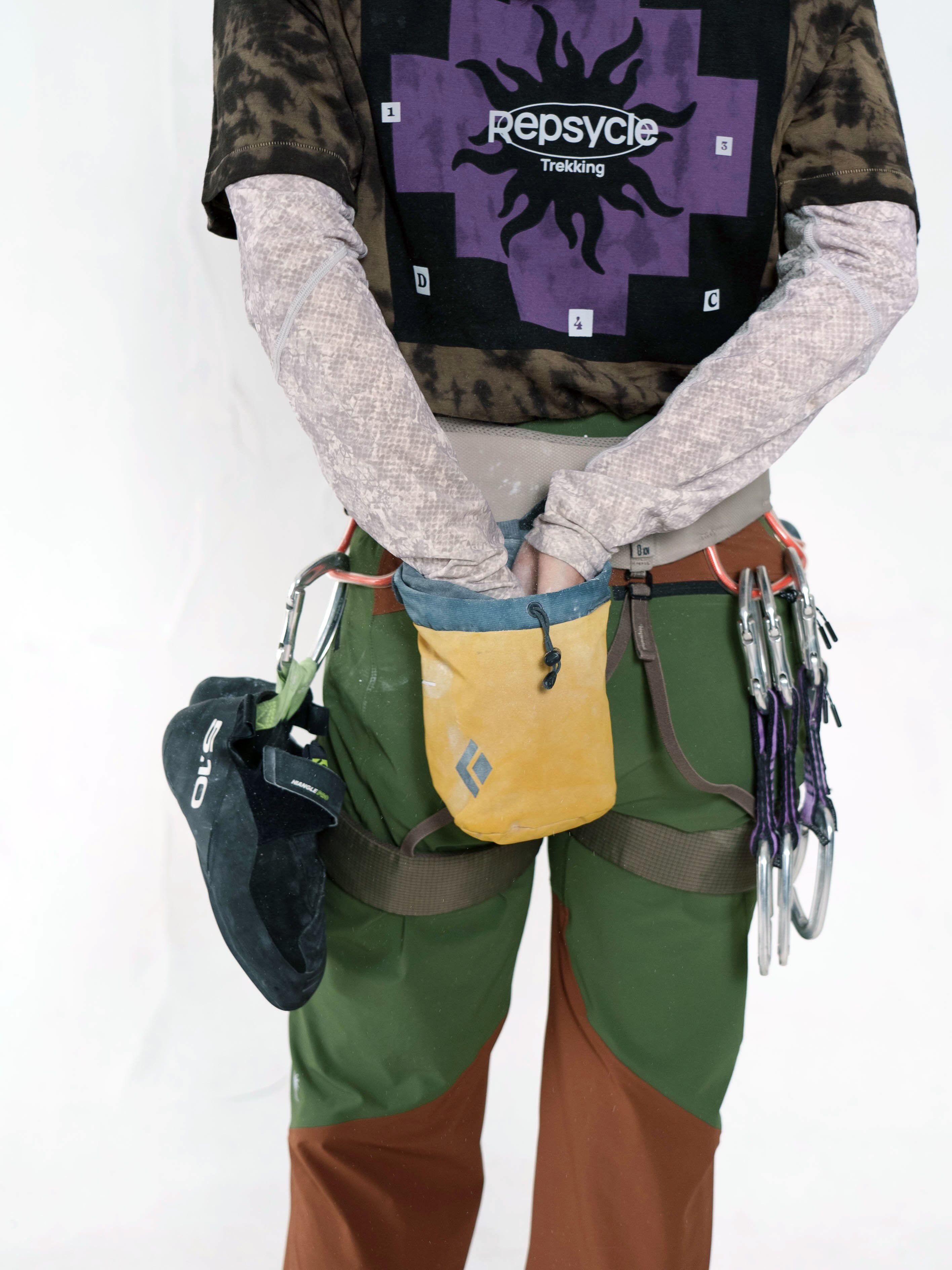
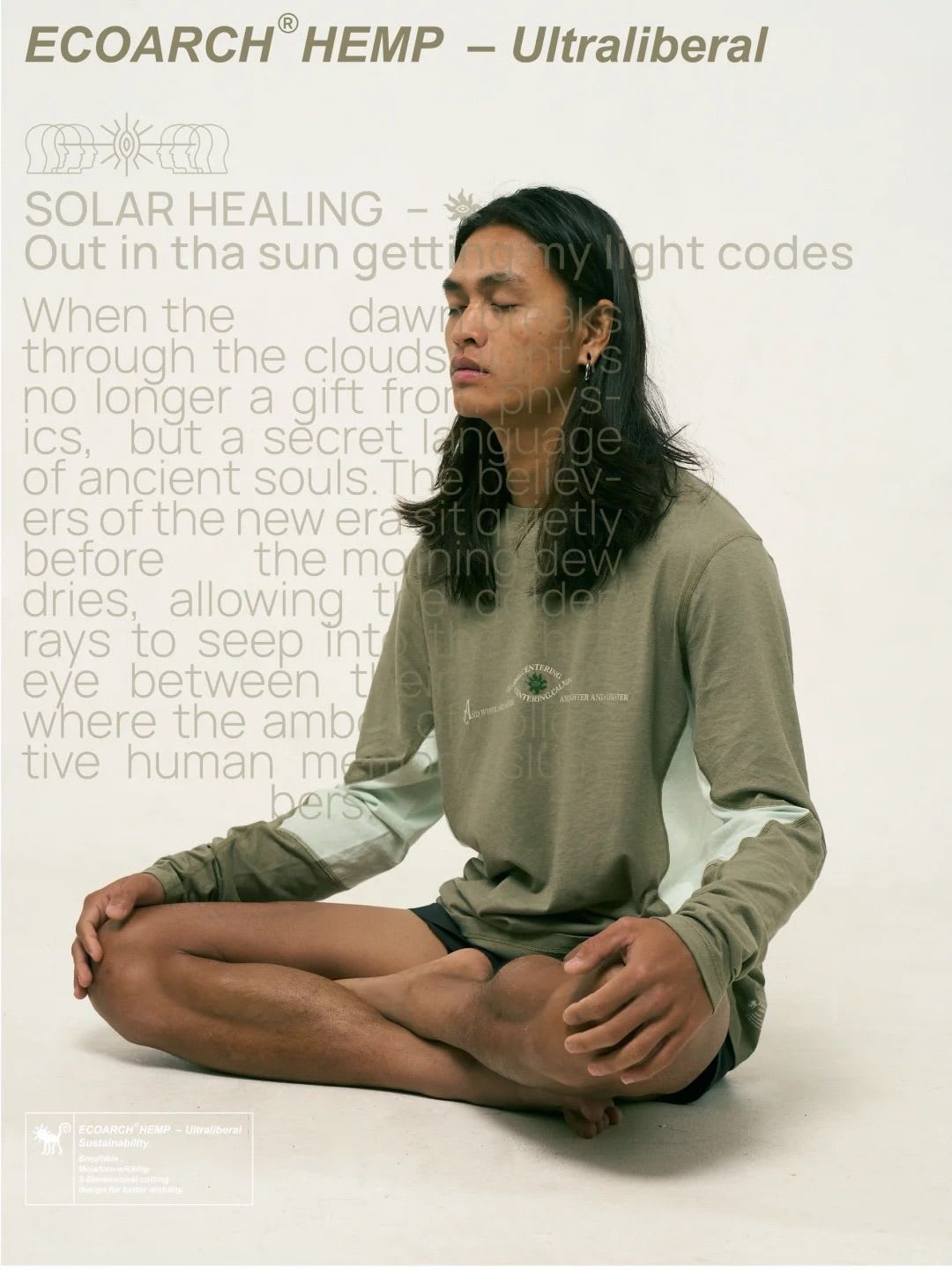
Repsycle Takes a Different Trail
If UPPERVOID represents one direction for China's independent outdoor movement, Repsycle represents another.
Repsycle is built around ideas of nomadic travel and long-distance trekking, but its interpretation of those ideas is unusually relaxed.
The brand draws from nature, freedom, movement, and counterculture, producing outdoor clothing that doesn't immediately resemble traditional mountaineering equipment.

There are technical trousers and performance layers, but also natural fibers, looser silhouettes, unusual dye treatments, and pieces that feel as appropriate for disappearing on a road trip as completing a carefully planned summit attempt.
That's important.
For years, much of outdoor design has been organized around optimization: lighter, faster, more waterproof, more breathable, more packable.
Those improvements have created extraordinary equipment, but they have also produced an outdoor aesthetic that can sometimes feel remarkably uniform.
Repsycle proposes something slightly different.
What if the point isn't getting through the landscape as efficiently as possible?
What if you're simply wandering?
No products available.
Loosend and the Expanding Definition of Outdoor
Loosend Apparel pushes the conversation further toward the increasingly blurry boundary between technical clothing, everyday apparel, and outdoor culture.
And that boundary might be where some of China's most interesting brands ultimately emerge.
The first generation of an outdoor industry usually creates obvious categories: mountaineering jackets, hiking pants, climbing packs, camping tents.
A mature outdoor culture starts dismantling them.
A pair of pants can work for hiking without looking like hiking pants. A shell can be worn every day. A bag can borrow construction ideas from climbing equipment without ever approaching a crag.

Loosend belongs in this story because the rise of China's outdoor scene isn't only producing new equipment companies. It's producing designers who treat outdoor functionality as part of a much larger vocabulary.
That puts the emerging Chinese scene closer to what happened in Japan with And Wander, Snow Peak, South2 West8, Mountain Research, and dozens of smaller labels that never saw much reason to choose between fashion and the outdoors.
The question is no longer whether something is an "outdoor brand."
The more interesting question is what outdoor culture allows a designer to make.


Blue Monte Finds the Space Between City and Trail
Blue Monte is another brand worth watching precisely because it doesn't treat the city and the outdoors as opposing environments.
Its products sit between trail performance and contemporary apparel, with pieces incorporating materials such as Polartec Power Dry and Dyneema alongside a visual identity that feels considerably more design-conscious than traditional running equipment.

A Dyneema hydration vest tells you almost everything about where this part of the Chinese outdoor scene is heading.
It's highly technical.
It's built around a real activity.
But it also exists in a world where the material itself, the construction, and the way the product looks carry cultural value beyond pure performance.
That territory has become enormously fertile internationally. Brands like Satisfy, District Vision, Soar, Norda, and others demonstrated that runners will respond to companies treating performance equipment with the same attention to identity that fashion brands bring to clothing.
Blue Monte suggests Chinese designers are beginning to explore that territory on their own terms.

No products available.
Aonijie Goes Global
Then there is the less conceptual side of Chinese trail running.
Aonijie has spent more than a decade developing hydration vests, packs, trekking poles, apparel, soft flasks, and accessories around trail running and fast-moving mountain sports.
For many Western consumers, the brand initially entered the conversation through value: an inexpensive hydration vest appearing beside dramatically more expensive products from established trail-running companies.
That framing is becoming increasingly outdated.
Aonijie has become deeply involved in trail racing and product development around athletes and events. In 2025, the company became an official UTMB World Series partner for trail-running hydration equipment—the kind of international visibility that would have seemed unlikely for a Chinese trail specialist a decade earlier.

The progression matters.
Aonijie is no longer simply proving that China can manufacture a good hydration vest.
It's attempting to become one of the brands trail runners recognize by name.
And China's rapidly expanding domestic trail culture gives companies like it something every successful running brand ultimately needs:
Runners.
Races.
Community.

Kailas Gets Serious
At the opposite end of the spectrum sits Kailas.
Founded in China in 2003, Kailas is less an emerging fashion-adjacent label than evidence that Chinese technical outdoor companies can compete at a much higher level.

Its territory is climbing, mountaineering, trail running, and genuinely technical equipment. The company has worked with organizations including the International Federation of Sport Climbing and the Chinese Mountaineering Association while developing everything from climbing hardware to ultralight performance apparel.
Kailas also helped cultivate climbing culture rather than simply selling into it, supporting initiatives including the Yangshuo Climbing Festival and programs focused on climbing and mountaineering.
That's a meaningful distinction.
The strongest outdoor companies rarely exist independently of their sports.
They build the culture that eventually builds the market.


3F UL Gear and the Ultralight Underground
Ask Western ultralight backpackers to name a Chinese outdoor company and there's a decent chance someone will mention 3F UL Gear.
The brand became particularly well known through the Lanshan series of trekking-pole shelters—relatively lightweight tents that introduced plenty of hikers to the idea that ultralight equipment didn't necessarily require the prices associated with American cottage manufacturers.
But 3F UL Gear is interesting for reasons beyond affordability.

It represents an entire layer of China's outdoor industry that developed partly outside conventional Western outdoor retail.
These products traveled through AliExpress, enthusiast forums, Reddit, YouTube reviews, and word of mouth rather than appearing first on the shelves of REI or European specialty stores.
Western ultralight communities increasingly discuss 3F UL alongside companies such as Naturehike, Aegismax, Ice Flame, and Asta Gear. The reputation isn't universally glowing—quality and specifications can vary—but that's almost beside the larger point.
Chinese manufacturers are no longer invisible participants in ultralight equipment.
They're becoming brands hikers recognize by name.

Snowboarding Builds Its Own Scene
China's snow-sports story is earlier in its development, but that might make it even more interesting.
The rapid expansion of skiing and snowboarding around Beijing 2022, destinations like Chongli, and China's growing network of indoor snow facilities has created something that barely existed at this scale a generation ago: a large domestic audience thinking about snow sports as culture rather than occasional recreation.
Where that audience goes, brands eventually follow.

NOBADAY offers one example of how international and Chinese snow culture are becoming intertwined.
The brand traces its origins to Seattle snowboarding culture but has developed an international operation that includes Beijing. Its assortment now extends across snowboards, boots, bindings, technical outerwear, protection, base layers, and mountain-lifestyle clothing.
VECTOR represents a scrappier edge of the emerging ecosystem.
Focused heavily on accessible snowboard and ski apparel, the brand has circulated internationally through direct-to-consumer channels and social media rather than conventional specialty outdoor retail.
Not every company emerging from this scene will last.
Some will mature technically. Others will remain fashion-driven. A few may develop the credibility and identity necessary to travel internationally.
The interesting question isn't whether China has already produced its equivalent of Burton.
It's what happens when a generation of Chinese snowboarders decides it doesn't need one.


When Streetwear Starts Looking at the Crag
The influence isn't only moving from outdoor brands into fashion.
Chinese streetwear brands are increasingly looking back toward actual outdoor activities for ideas.
Guangdong-based Crying Center is an interesting example. The brand comes from streetwear rather than traditional outdoor equipment, but climbing has increasingly entered its visual and design vocabulary.
That distinction matters.

For years, fashion's relationship with the outdoors could be relatively superficial: borrow a technical fabric, add a carabiner, reference a climbing jacket, and call it outdoor-inspired. What's more interesting is when a brand begins engaging with the specific culture, equipment, silhouettes, and visual language surrounding an activity.
Climbing offers plenty to work with.
Harnesses create unusual proportions. Chalk bags become accessory references. Climbing trousers prioritize articulation and movement. Webbing, rope, hardware, reinforced panels, utility pockets, and adjustable systems provide an entirely different vocabulary from conventional streetwear.
For a brand like Crying Center, the crag becomes another design reference point.
It also demonstrates how far China's outdoor movement is beginning to travel culturally. Outdoor influence is no longer confined to companies making tents, hydration vests, shells, or climbing hardware. It's reaching designers who may have entered the conversation through streetwear and fashion instead.
That's usually a sign that a subculture is becoming something larger.
Eventually outdoor culture stops producing only outdoor products.
It starts influencing everything around it.


An Ko Rau and the New Outdoor Vocabulary
An Ko Rau belongs to the harder-to-categorize edge of China's emerging outdoor scene.
Rather than approaching outdoor clothing through the familiar visual language of heritage mountaineering, the brand treats technical function as part of a broader contemporary design vocabulary. Utility, layering, adjustable systems, unconventional proportions, and performance-minded details appear without making every piece look like equipment designed exclusively for an expedition.

That ambiguity is what makes An Ko Rau interesting.
Like Blue Monte, Loosend, and UPPERVOID, it reflects a generation of Chinese designers who don't seem particularly concerned with maintaining the old boundary between technical outdoor product and everyday clothing. A piece can reference hiking, climbing, or movement without needing to announce itself as a hiking or climbing garment.
It's another indication that China's emerging outdoor aesthetic may not be defined by a particular jacket, fabric, or silhouette. It may be defined by the willingness to take the functional vocabulary of the outdoors apart and put it back together differently.


Nothomme, Montérest, and Fashion Moving Outside
Nothomme provides another version of the same transition.
Rather than beginning with mountaineering equipment and moving toward fashion, the brand emerged closer to contemporary menswear and streetwear before increasingly incorporating functionality, technical materials, layering, oversized silhouettes, and the language of urban outdoor clothing.
Nothomme pushed that direction further.

Then came Montérest, connected to the same broader brand organization and representing an even more explicit movement toward outdoor design.
The evolution is revealing.
Streetwear becomes functional.
Functional clothing becomes urban outdoor.
Urban outdoor eventually starts looking toward the actual outdoors.
This isn't unique to China, but the speed at which those categories are collapsing there is notable.
Crying Center looks toward climbing.
Nothomme moves toward technical clothing.
Montérest pushes further toward the intersection of city and mountain.
UPPERVOID approaches roughly the same territory from the opposite direction.
Eventually they meet somewhere in the middle.

The Specialists
Look further and the ecosystem becomes more interesting.
Aegismax has become familiar among budget-conscious ultralight backpackers for down sleeping bags, quilts, and insulated apparel. Ice Flame has developed a following for lightweight down sleep systems. Black Ice occupies similar territory domestically, particularly around down sleeping bags and insulation. Fire-Maple specializes in stoves and cookware, representing the less glamorous but enormously important hardware side of outdoor equipment. Nitecore has become a genuine reference point in lightweight lighting and power, with products like its compact headlamps becoming familiar far beyond China. The Free Spirits, or TFS, operates in tents and shelters and is another name that increasingly surfaces among hikers specifically looking for Chinese equipment rather than simply inexpensive equipment.
Together, these companies reveal something that isn't obvious if you only look at outdoor apparel.
China isn't developing a few outdoor fashion brands.
It's developing an outdoor industry.

A Different Outdoor Aesthetic
It's too early—and China is far too large—to declare the existence of a single "Chinese outdoor aesthetic."
But patterns are beginning to appear.
There is experimentation with volume and silhouette, modular systems, oversized pockets, unconventional hardware, technical fabrics used in unexpected contexts, earthy materials sitting beside highly synthetic ones, camping products treated almost like furniture, and performance apparel that can feel closer to conceptual fashion than traditional mountaineering equipment.
The result can be difficult to categorize.
Good.

The most influential outdoor cultures usually become interesting precisely when they stop trying to resemble whatever came before them.
Japan provides an obvious precedent.
Japanese outdoor culture absorbed enormous influence from American climbing, camping, hiking, fishing, military clothing, and Ivy style throughout the twentieth century.
But Japanese designers didn't simply preserve those references.
They mutated them.
Eventually companies like Snow Peak, Montbell, Goldwin, And Wander, South2 West8, White Mountaineering, and countless smaller labels created something recognizably their own.
The same process may now be underway in China.
Not a Chinese version of American outdoor culture.
Not Chinese gorpcore.
Something else.


From OEM to Original Design
There will inevitably be skepticism.
China's manufacturing economy has long been associated with replicas, white-label products, and inexpensive interpretations of successful Western designs. Outdoor equipment isn't exempt from that history.
And some of that criticism remains legitimate.
But focusing exclusively on imitation misses the evolution happening underneath it.
Manufacturing ecosystems learn.
Factories accumulate knowledge, material suppliers improve, engineers move between companies, designers gain experience, consumers become more sophisticated, and eventually the infrastructure originally created to manufacture someone else's ideas becomes capable of supporting entirely new ones.
The progression looks something like this:
Manufacturing → imitation → iteration → innovation.
Outdoor equipment appears to be moving further along that curve.
And there is an interesting advantage to arriving late.
Chinese independent brands don't carry much of the historical baggage of the Western outdoor industry.
They don't necessarily need to pretend everyone is summiting mountains.
They don't need faded 1970s climbing photographs to establish authenticity.
They don't need to make fleece because outdoor brands make fleece.
They can decide what the category means now.

For UPPERVOID, that might mean combining high-performance textiles with spirituality and conceptual design.
For Repsycle, it might mean treating trekking as wandering rather than racing.
For Loosend, it might mean dissolving the distinction between outdoor clothing and clothing entirely.
For 3F UL Gear, it means making ultralight backpacking more accessible.
For Kailas, it means proving Chinese technical equipment belongs on serious mountains and climbing walls.
There isn't one answer.
That's exactly what makes the scene interesting.

The Brands We Haven't Heard About Yet
There is still a strange disconnect between China's enormous role in the outdoor industry and how few Chinese outdoor brands most Western consumers can name.
Part of the reason is structural.
Chinese brands don't necessarily need Instagram, Western outdoor media, or American specialty retailers to develop meaningful audiences. China's own retail and media infrastructure can support a company almost entirely inside the country.
A label can be culturally relevant in Shanghai or Chengdu while remaining virtually unknown in Los Angeles.
That creates a blind spot.
Western consumers tend to encounter Chinese outdoor companies only after they become sufficiently large to export—or when a particular tent, stove, headlamp, or hydration vest escapes through the internet and develops a cult following.
But the interesting part of a culture usually happens before that point.
It's the tiny shops, the strange brands, the running crews, the designers making something that doesn't quite fit into an existing category, and the products people keep asking about because they've never seen them before.
The brands aren't necessarily waiting to exist.
They're waiting to be discovered.

The Next Outdoor Map
For most of the modern outdoor industry's history, its creative geography has been surprisingly predictable.
California. Colorado. Oregon. British Columbia. The Alps. Scandinavia. Japan.
Those places developed powerful outdoor communities, and the brands followed.
China now has many of the same ingredients: extraordinary landscapes, rapidly growing participation, manufacturing expertise, increasingly sophisticated consumers, creative communities, specialty retail, technical knowledge, and enough domestic demand for unusual ideas to find an audience.
The next stage is specificity.

What should a hiking garment designed around Chinese climates look like?
What equipment makes sense for weekends outside Shanghai?
What does a trail-running brand connected to the mountains around Chengdu feel like?
What happens when a designer has direct access to advanced manufacturing but isn't constrained by the visual language of a 50-year-old outdoor company?
What does Chinese outdoor culture look like when it stops needing permission from somewhere else?
Those questions are considerably more exciting than whether someone can make another good waterproof jacket.
The next great Chinese outdoor brand probably won't succeed because it makes a less expensive version of something from Vancouver.
It will succeed because eventually someone in Vancouver wants what they're making in China.
Related Articles
October 6, 2026
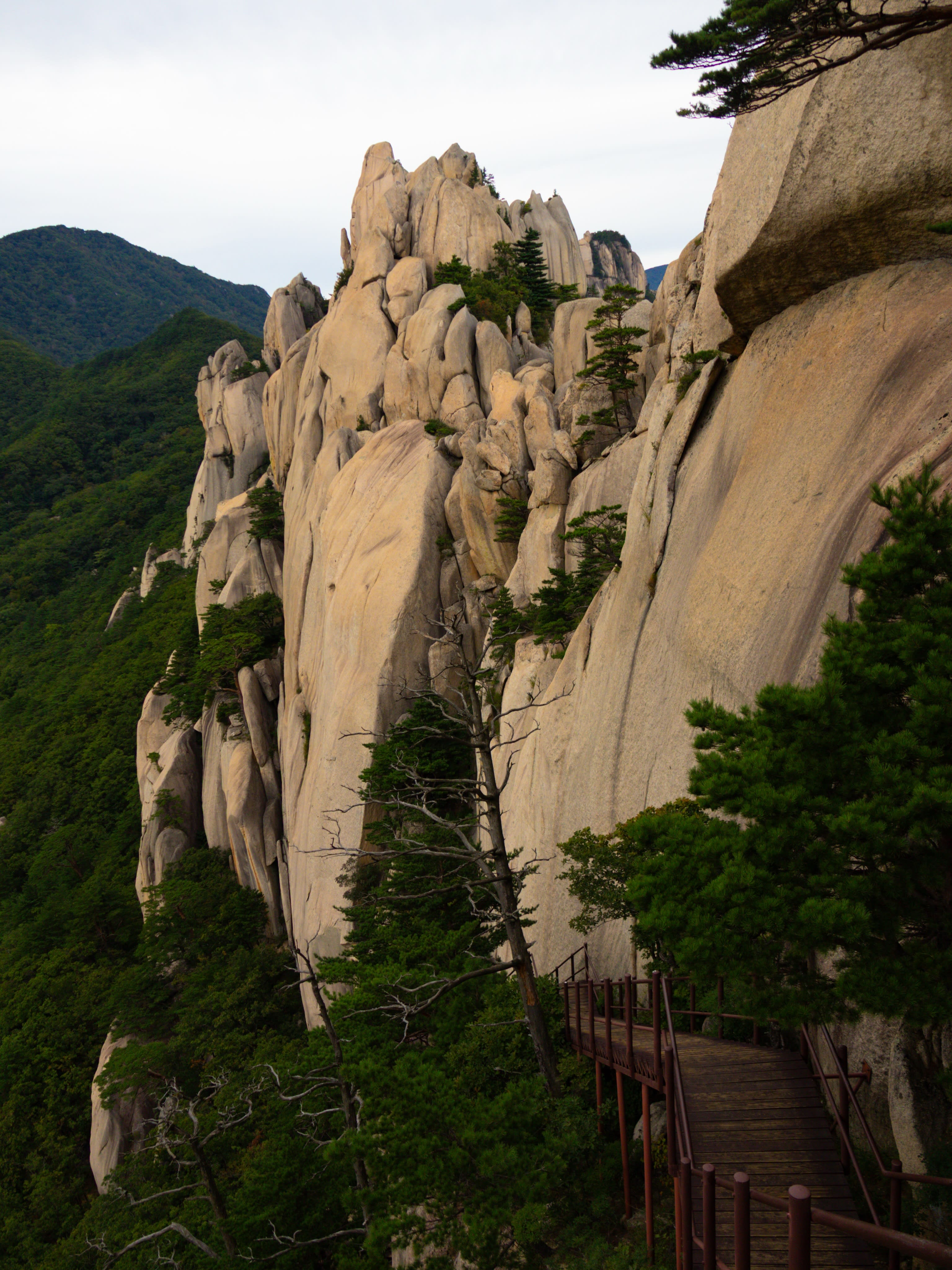
The Korean Outdoors: 8 Brands to Know
Korean outdoor design is having a moment. Meet the brands redefining hiking, climbing and technical clothing from the mountains to the streets of Seoul.
Read →
August 4, 2026
The Future of Outdoor Hardware
The future of outdoor gear is in the details. Discover how independent brands are reinventing buckles, zippers, fasteners, and hardware through design.
Read →
July 30, 2026
Why Every Great Outdoor Town Has One Legendary Sandwich Shop
Discover why every great outdoor town has a legendary sandwich shop, from Bishop and Chamonix to Girona and Canmore. Explore the independent bakeries, delis, and cafés that fuel adventure and define outdoor culture.
Read →