The Outdoors Doesn't Have to Be Earned: Rashad Frazier on Camp Yoshi, Hospitality, and the Art of Belonging
by WeekEnds
The founder of Camp Yoshi is challenging the outdoor industry's obsession with technical expertise, extreme adventure, and expensive equipment. His alternative is deceptively simple: good food, good company, and the belief that everyone already belongs outside.
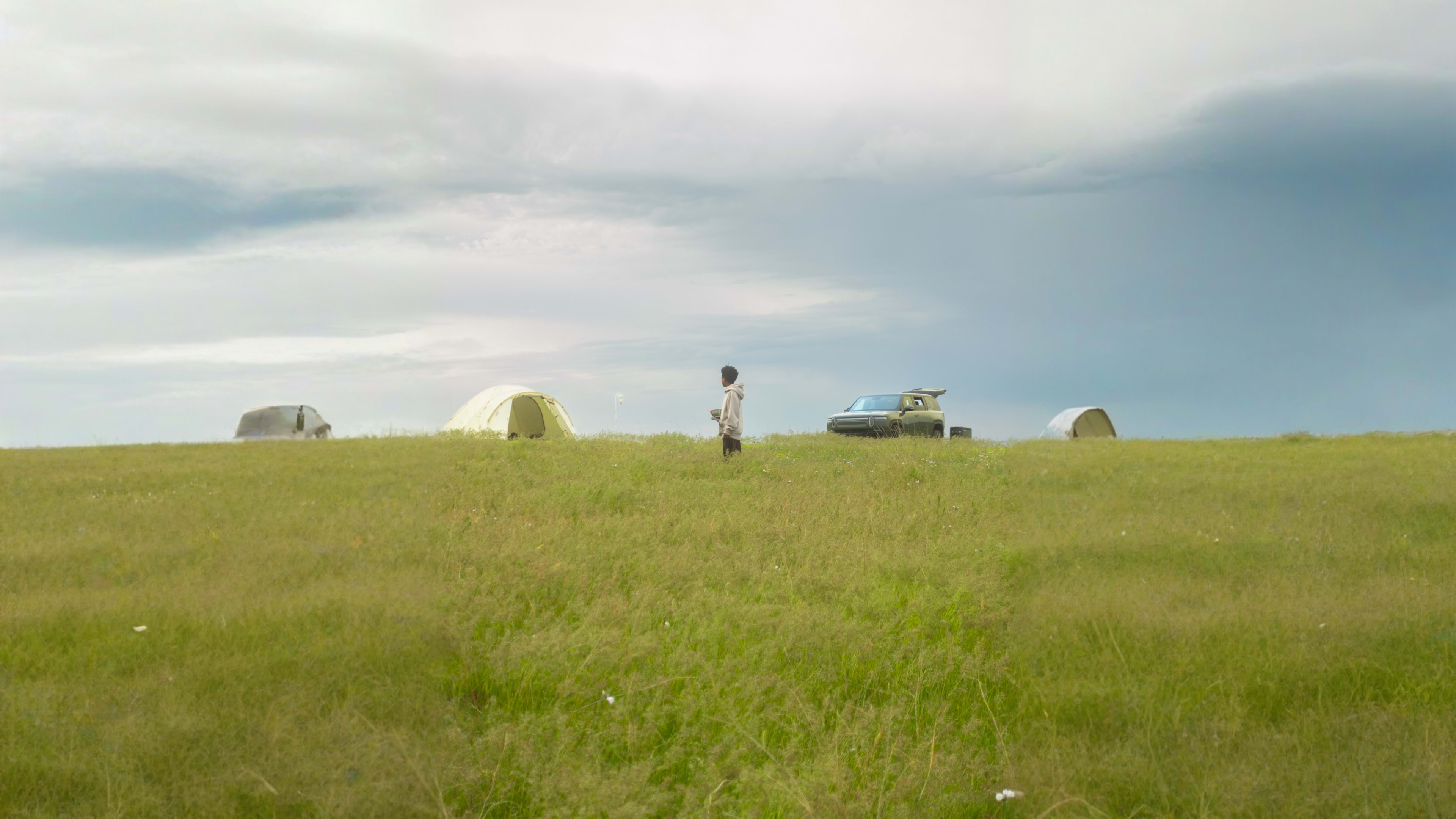
For decades, the outdoor industry has operated on a relatively narrow definition of adventure. The ideal participant is technically proficient, well-equipped, physically capable, and willing to endure a certain amount of discomfort in pursuit of something extraordinary. The imagery is familiar: remote summits, punishing ascents, ultralight equipment, and athletes pushing against the limits of human endurance.
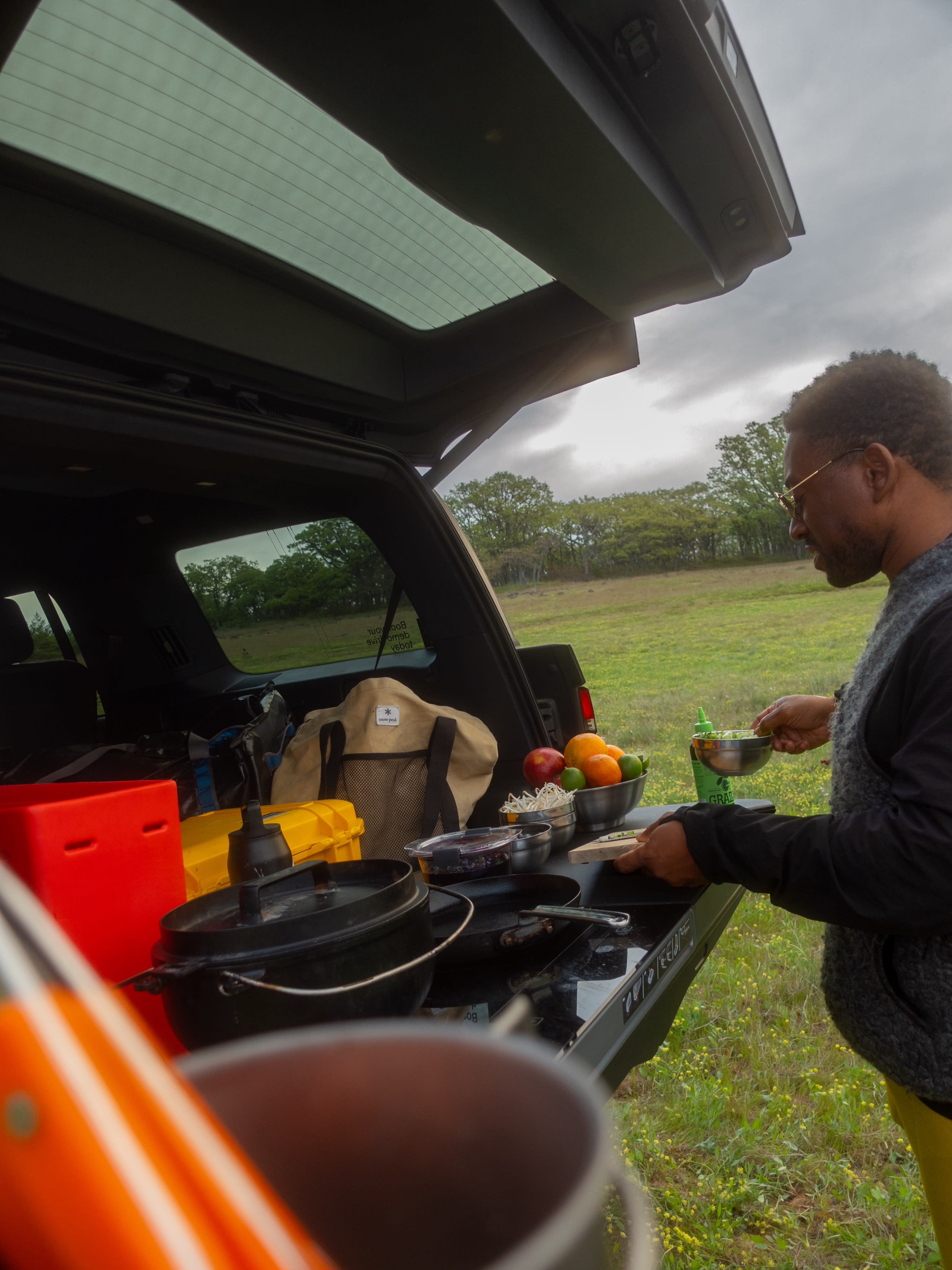
Photo: Camp Yoshi
But what if the industry has confused getting people outside with convincing them to adopt a particular outdoor culture?
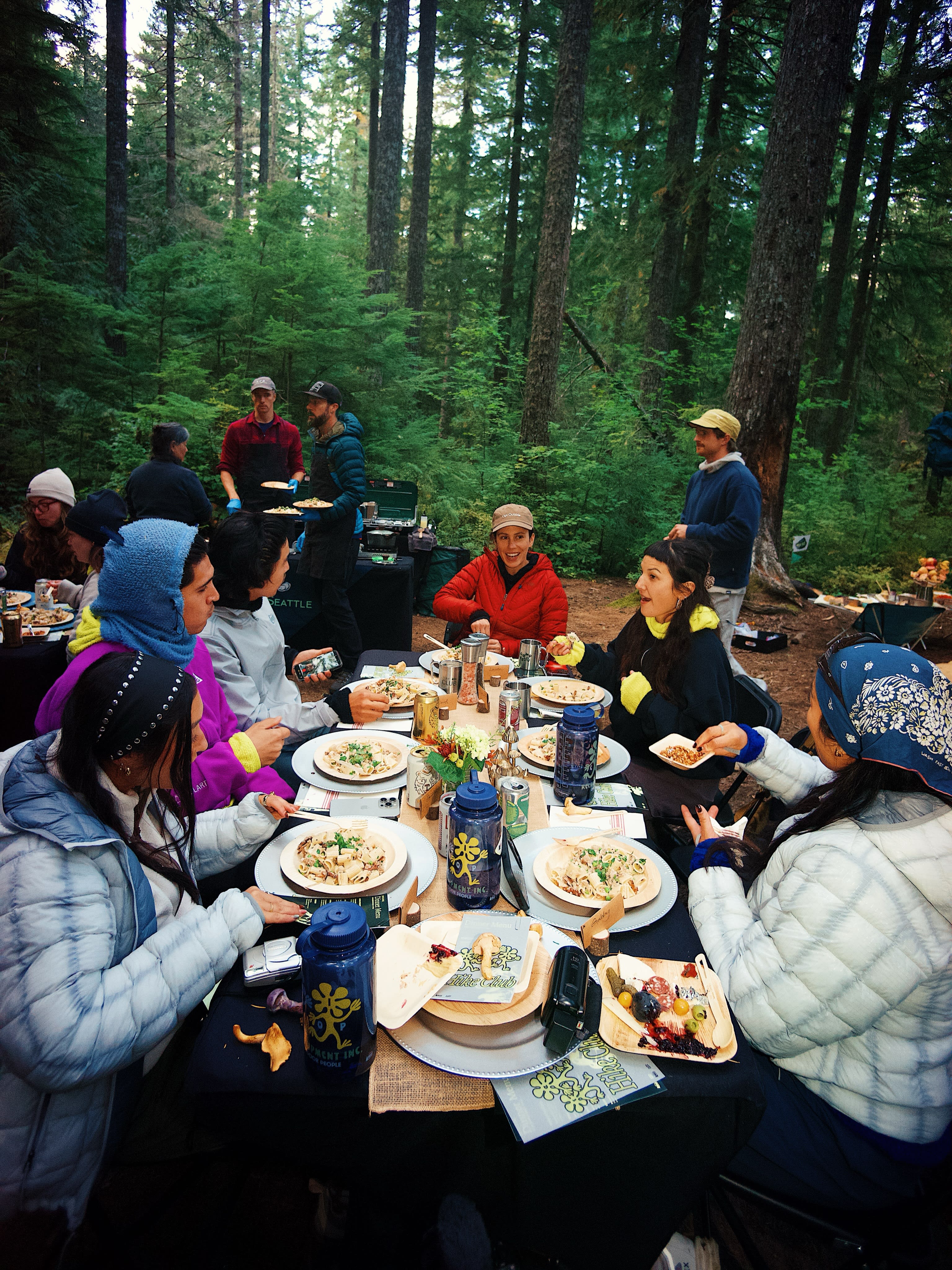
For Rashad Frazier, founder of Camp Yoshi, that distinction is fundamental. His company approaches outdoor recreation through hospitality rather than survivalism, creating carefully considered experiences built around food, comfort, community, and access to nature. The objective isn't to turn everyone into an accomplished outdoorsperson. It's to demonstrate that no particular identity, level of expertise, or appetite for suffering is required to enjoy the natural world.
On a recent episode of WeekDays, Frazier joined WeekEnds co-founders Derek Siegel and Mateo Moreno to discuss the limitations of traditional outdoor culture, the surprising relationship between cooking and adventure, and why the industry's next generation of participants might be more interested in sharing a meal beneath the stars than conquering a mountain.
The conversation revealed something larger than a different approach to camping. It suggested a different way of understanding what outdoor recreation is actually for.
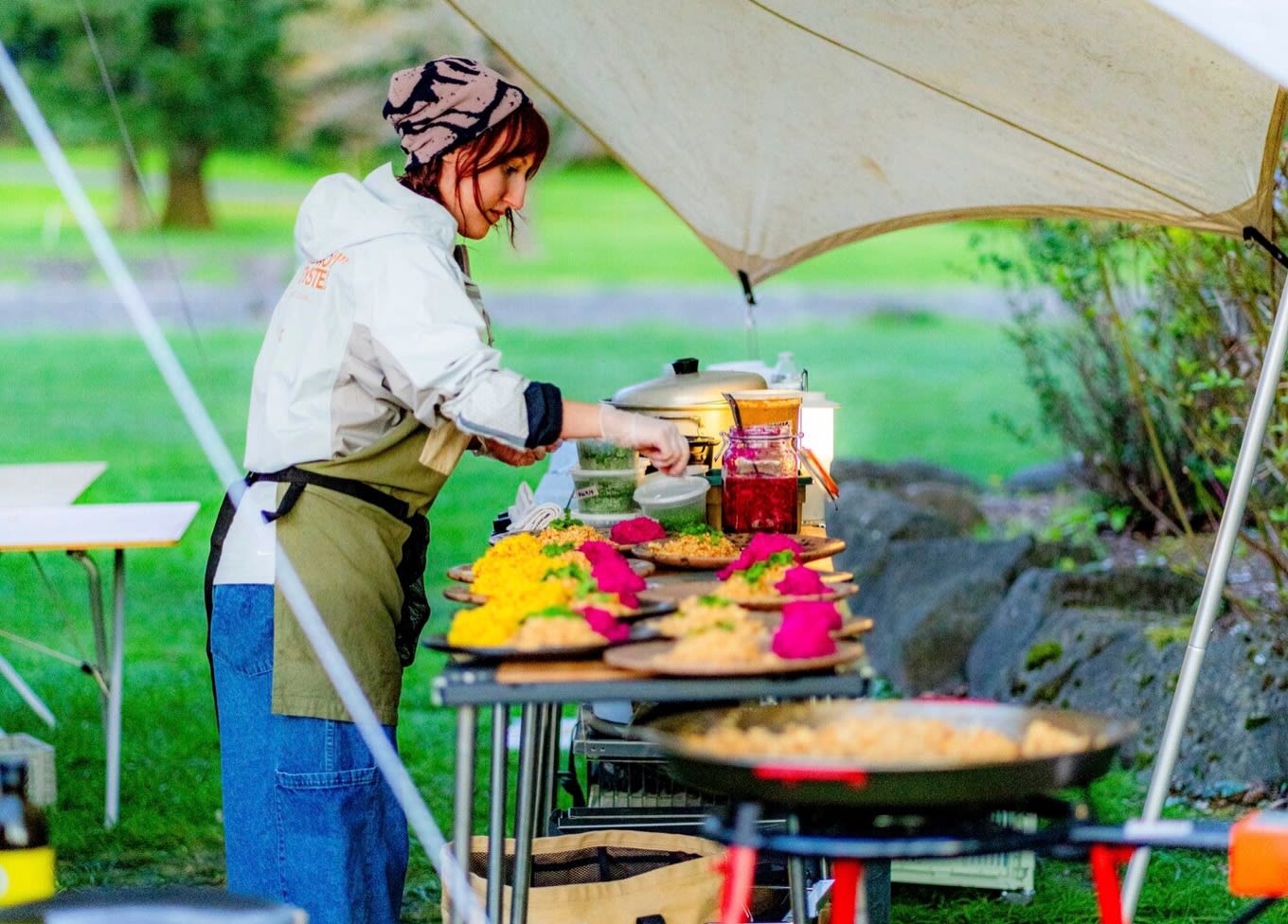
Photo: Camp Yoshi
From the Professional Kitchen to the Wilderness
Frazier's route into the outdoor industry was unconventional, and that may be his greatest advantage.
Growing up in North Carolina, he developed an early relationship with nature through lakes, family gatherings, and the food traditions of the American South. Later, he spent seventeen years in New York, where his culinary career and business, Yoshi Jenkins, taught him the disciplines of preparation, service, and hospitality.
When the pandemic disrupted his business in 2020, he found himself reconsidering what those skills might look like outside a traditional kitchen.
He had already begun exploring the American West with his brother, traveling through Utah and Colorado, cooking outdoors, and discovering landscapes that felt dramatically different from those of his childhood. After moving to Oregon, those experiences became the foundation for Camp Yoshi.
What began as an improvised response to the collapse of his previous business became a new professional direction.
Rather than attempting to compete with established outfitters on technical expertise, Frazier brought an entirely different set of instincts into the wilderness.
Professional kitchens had taught him that successful hospitality depends on anticipating needs, managing countless small details, and making difficult work appear effortless. He realized those principles could be just as valuable at a remote campsite as they were in a restaurant.
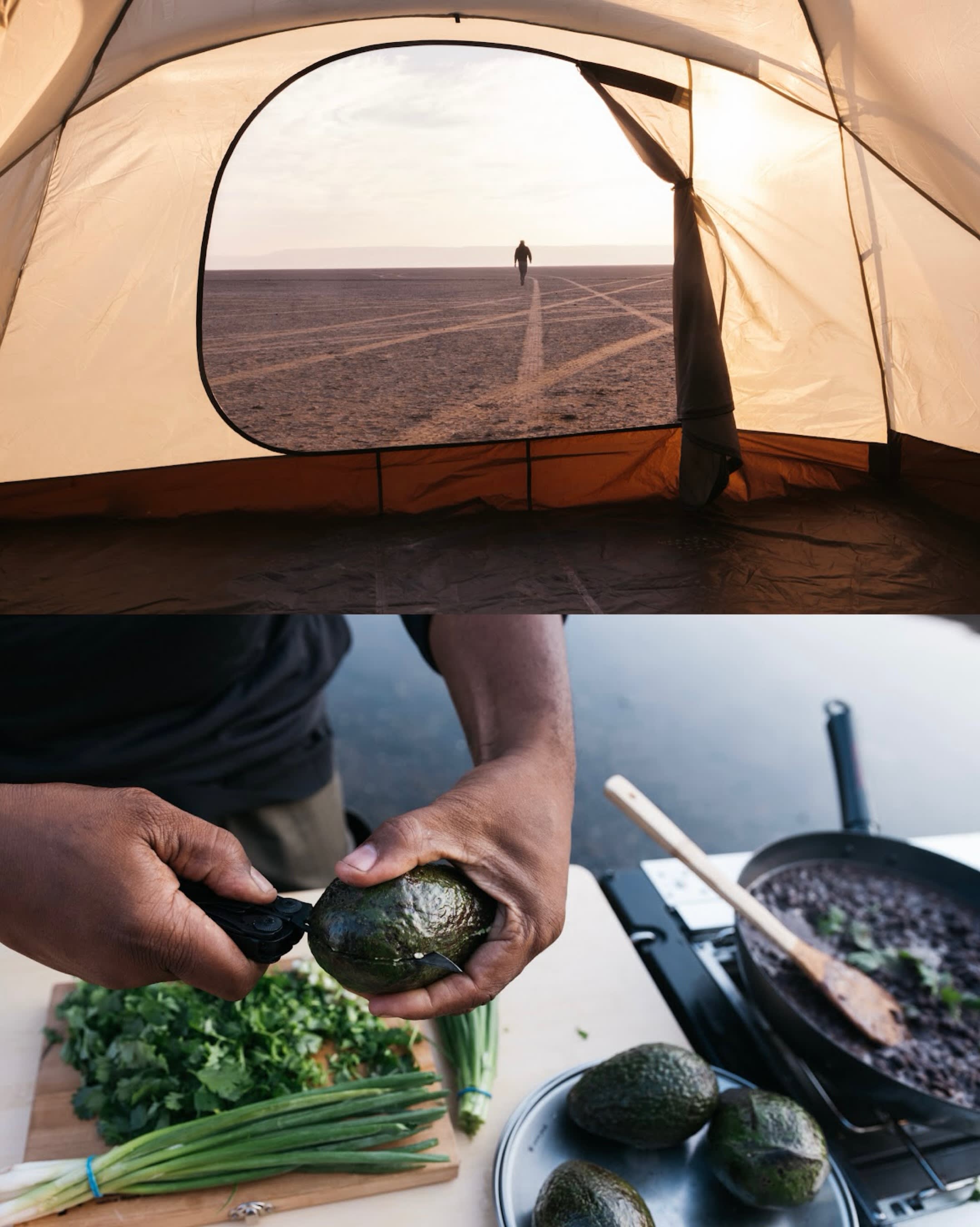
Camp Yoshi's early experiences were almost extravagantly ambitious. The company's first trip included bartenders preparing craft cocktails and a dinner of braised short ribs over heirloom grits. Looking back, Frazier admits that much of the elaborate preparation was unnecessary.
The food was delicious, but the production was excessive. Over time, he discovered that the best outdoor hospitality wasn't necessarily the most complicated. It was the kind that allowed guests to stop thinking about logistics altogether.
That realization became central to Camp Yoshi's identity.
The Case Against Suffering
Traditional outdoor culture has long celebrated self-sufficiency. There is considerable value in learning to navigate difficult terrain, manage risk, and become comfortable in challenging environments. But Frazier questions the assumption that these experiences should define outdoor recreation for everyone.
His argument isn't against difficult adventures. It's against treating difficulty as a prerequisite for belonging.
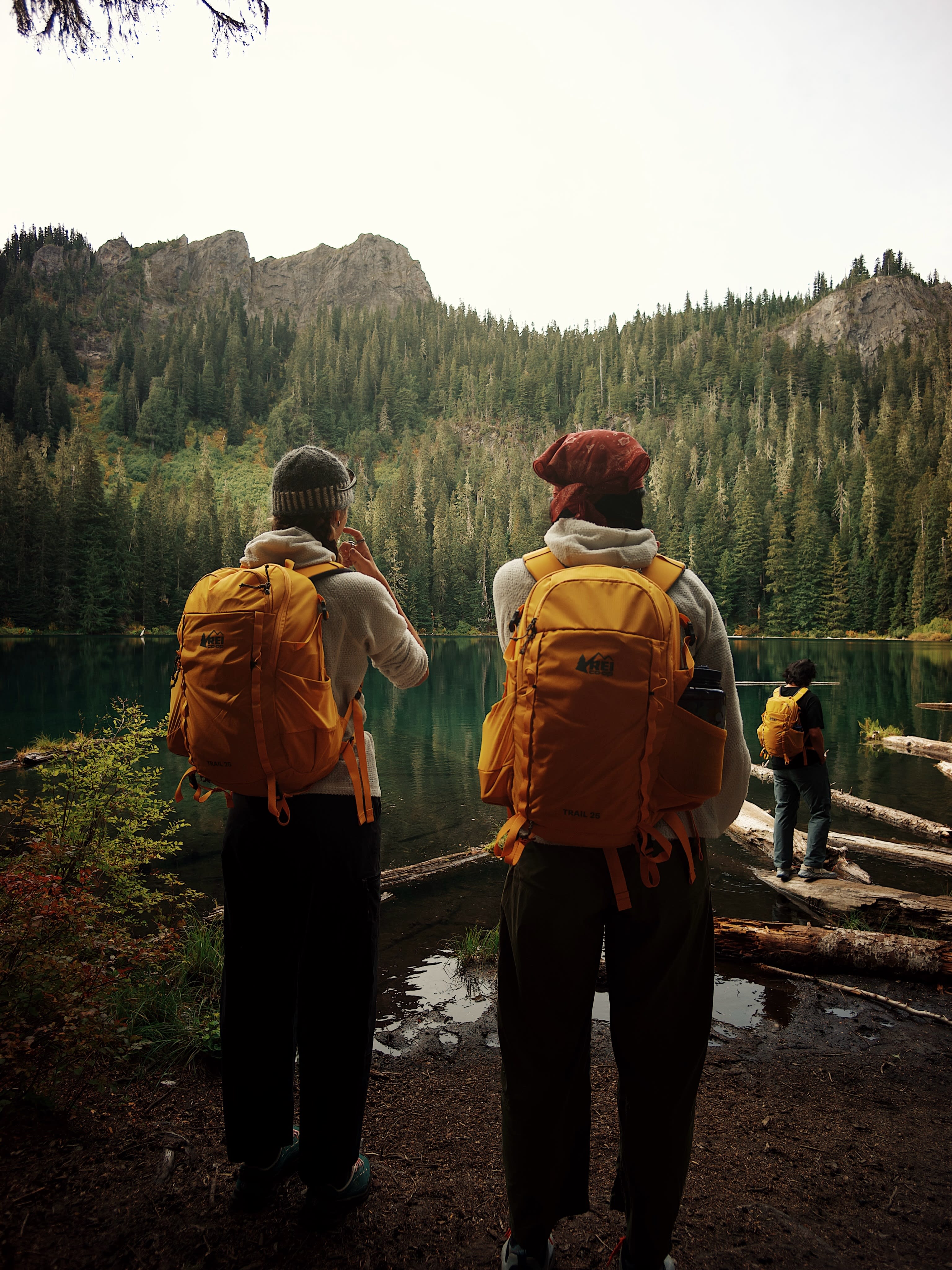
Camp Yoshi's experiences are designed to accommodate different levels of familiarity with the outdoors. Some guests are interested in backpacking and more demanding expeditions. Others want to enjoy a beautiful landscape, sleep comfortably, eat an exceptional meal, and return home feeling restored.
Both are legitimate ways of participating.
As Frazier explained during the conversation, introducing someone to the wilderness requires understanding their confidence and experience. Pushing a newcomer into an unnecessarily difficult situation can discourage them from returning.
A positive first experience, by contrast, can open the door to a lifetime of exploration.
This is where hospitality becomes something more consequential than luxury. Comfortable accommodations, thoughtfully prepared meals, reliable equipment, and attentive guides aren't simply indulgences. They can remove barriers that might otherwise prevent someone from developing a relationship with nature.
The distinction matters because the outdoor industry frequently presents its most demanding activities as its most authentic.
Frazier offers a different proposition: adventure doesn't have to involve suffering to be meaningful.
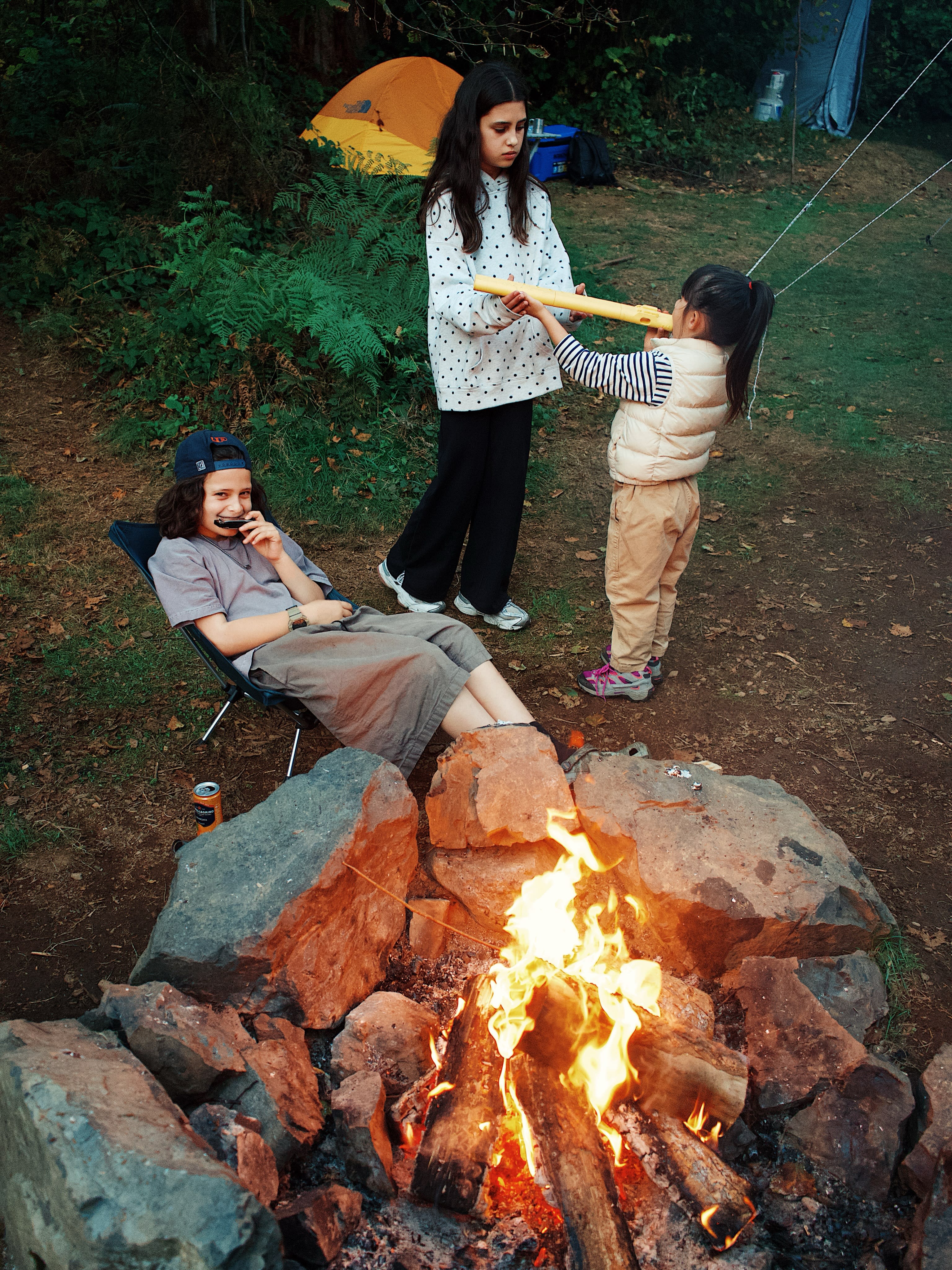
Photo: Camp Yoshi
Why the Campfire Matters More Than the Summit
One of the more revealing moments in the conversation came when Moreno asked what happens around a campfire that doesn't happen on a hike.
Frazier's answer was less about outdoor recreation than human connection.
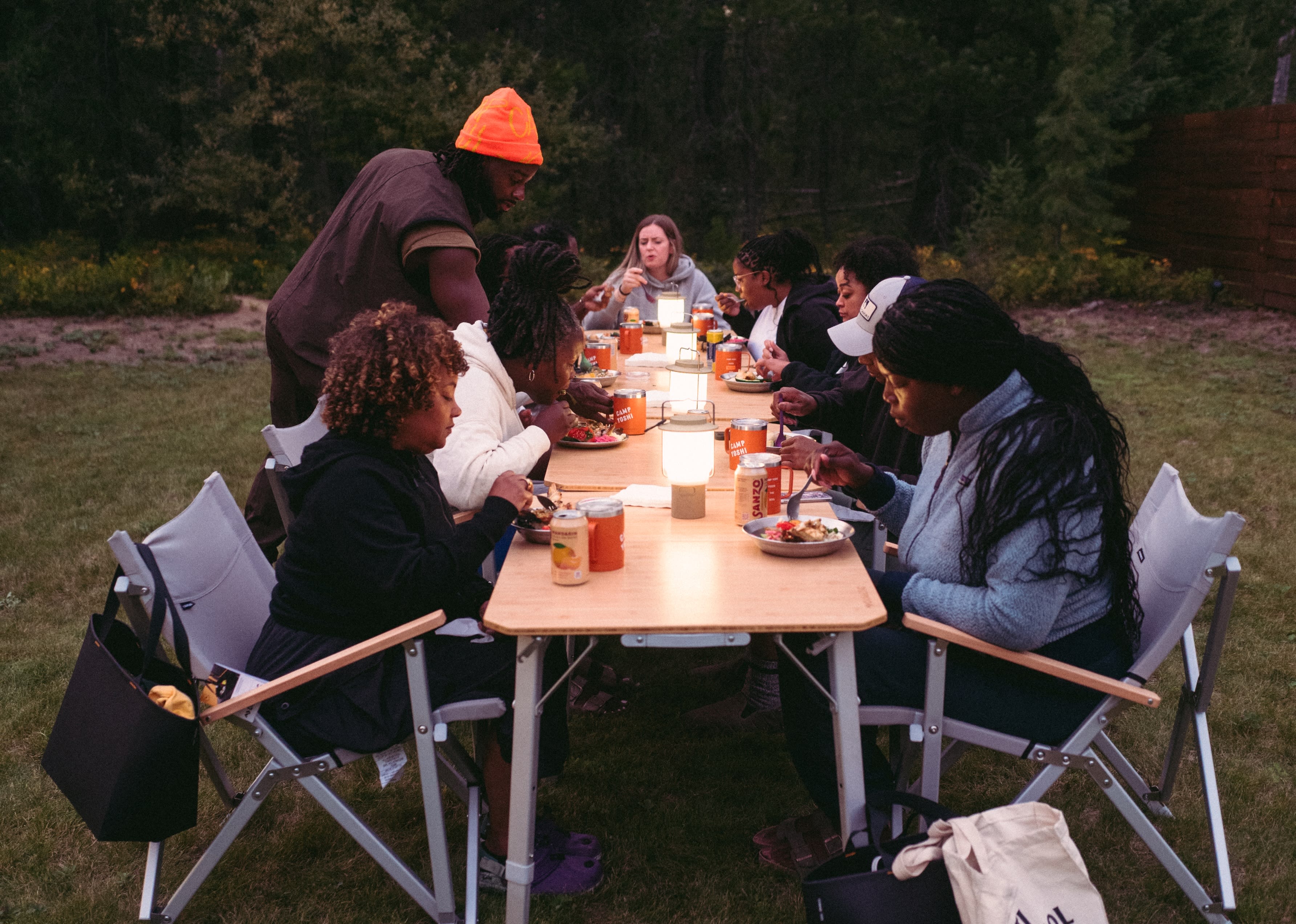
After a day of movement, the campfire becomes a place where people relax, conversations deepen, and the pressure to accomplish something disappears. Guests who might spend their working lives moving between meetings and obligations suddenly find themselves sitting still, looking at the stars, and talking without distraction.
For many Camp Yoshi participants, those quiet moments become the most memorable parts of the trip.
Frazier described receiving messages from former guests who, sitting through another tedious work presentation, find themselves thinking about an evening around the fire.
It raises an interesting question about how the outdoor industry measures a successful experience.
Distances traveled, elevations gained, and destinations reached are easy to quantify. The quality of a conversation, the pleasure of an unhurried meal, or the experience of seeing the Milky Way without light pollution are considerably harder to measure.
Yet those less tangible moments may be precisely what people remember.
Camp Yoshi designs approximately ninety percent of its experiences in advance, according to Frazier. But that preparation exists to create room for spontaneity, rather than eliminate it. The itinerary is a framework, not the point.
The real product is the feeling that emerges when people are comfortable enough to become fully present.

Food as an Invitation to Nature
Frazier's philosophy finds perhaps its clearest expression in his cookbook, Cook Out.
At first glance, a cookbook might seem like an unusual vehicle for challenging the conventions of outdoor recreation. But for Frazier, food offers a more accessible entry point than technical equipment, trail classifications, or the language of adventure.
Everyone understands the pleasure of a good meal.
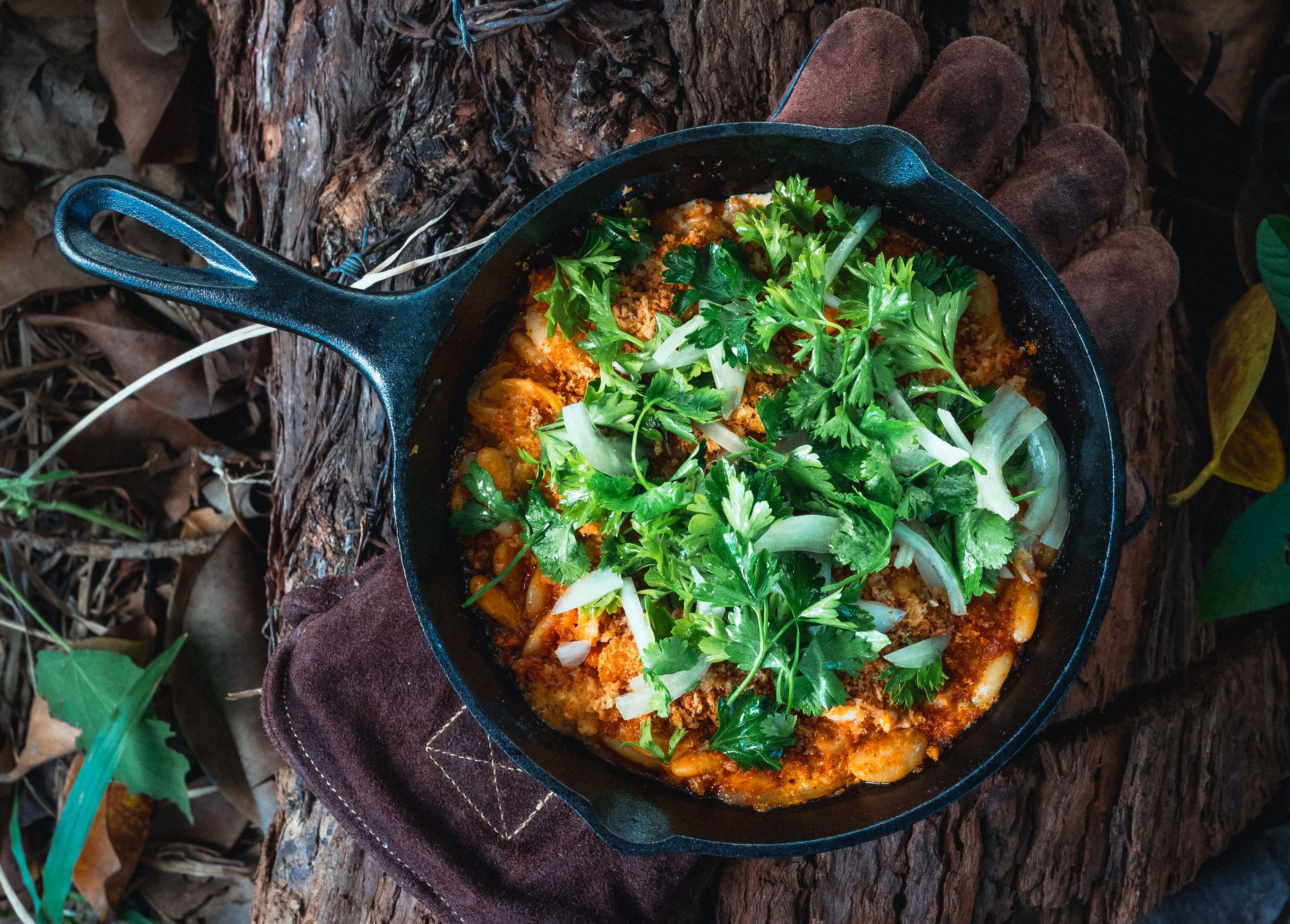
A thoughtfully prepared dinner can make an unfamiliar environment feel welcoming. It creates a common experience among people who might otherwise have little in common. And it provides a compelling reason to venture somewhere new.
The book draws on Frazier's childhood in North Carolina, his years in New York, and the culinary influences he encountered through travel. Its philosophy is rooted in the belief that cooking outdoors shouldn't require sacrificing flavor or creativity.
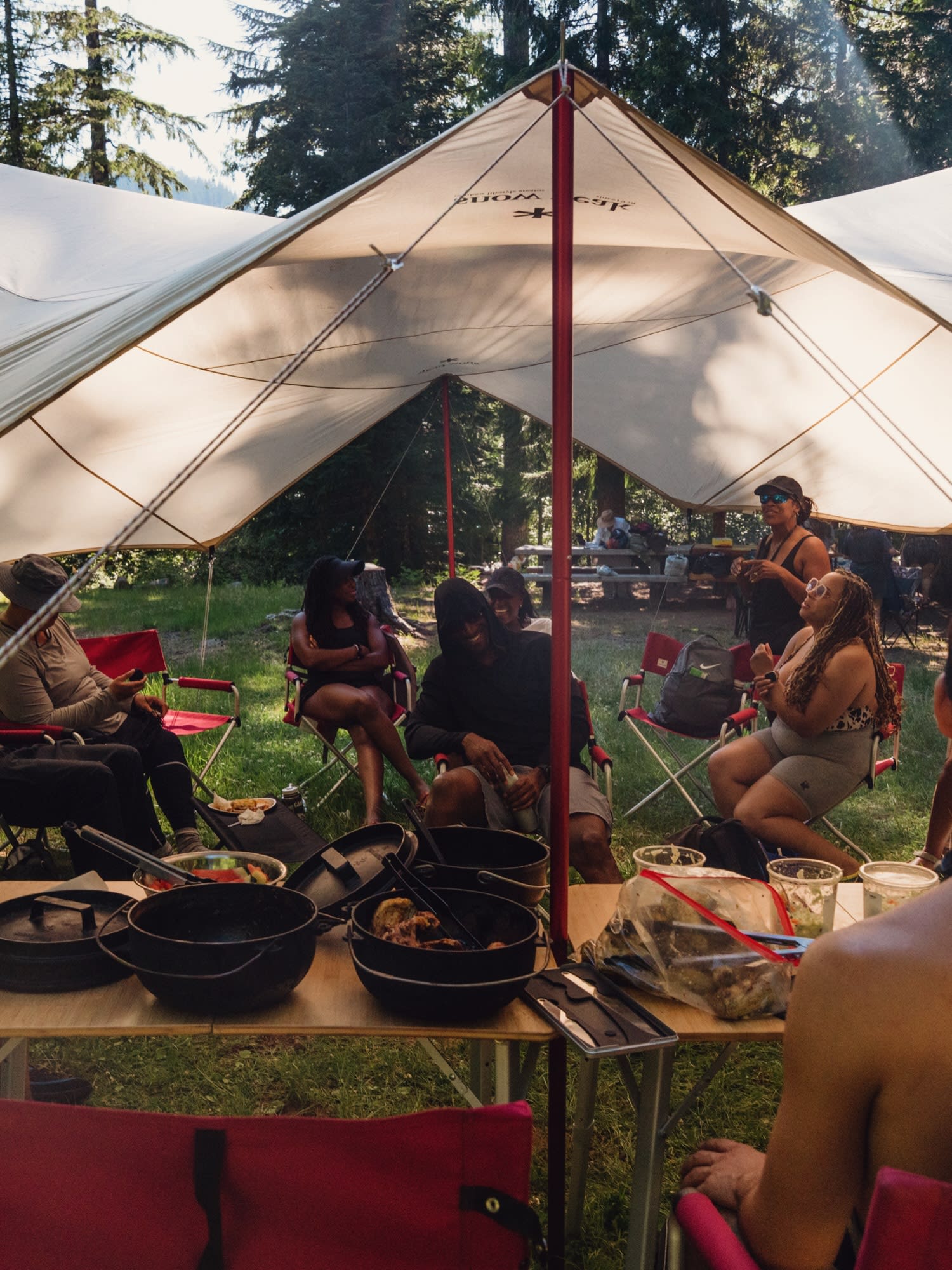
Photo: Camp Yoshi
Nor should it require an enormous collection of specialized equipment.
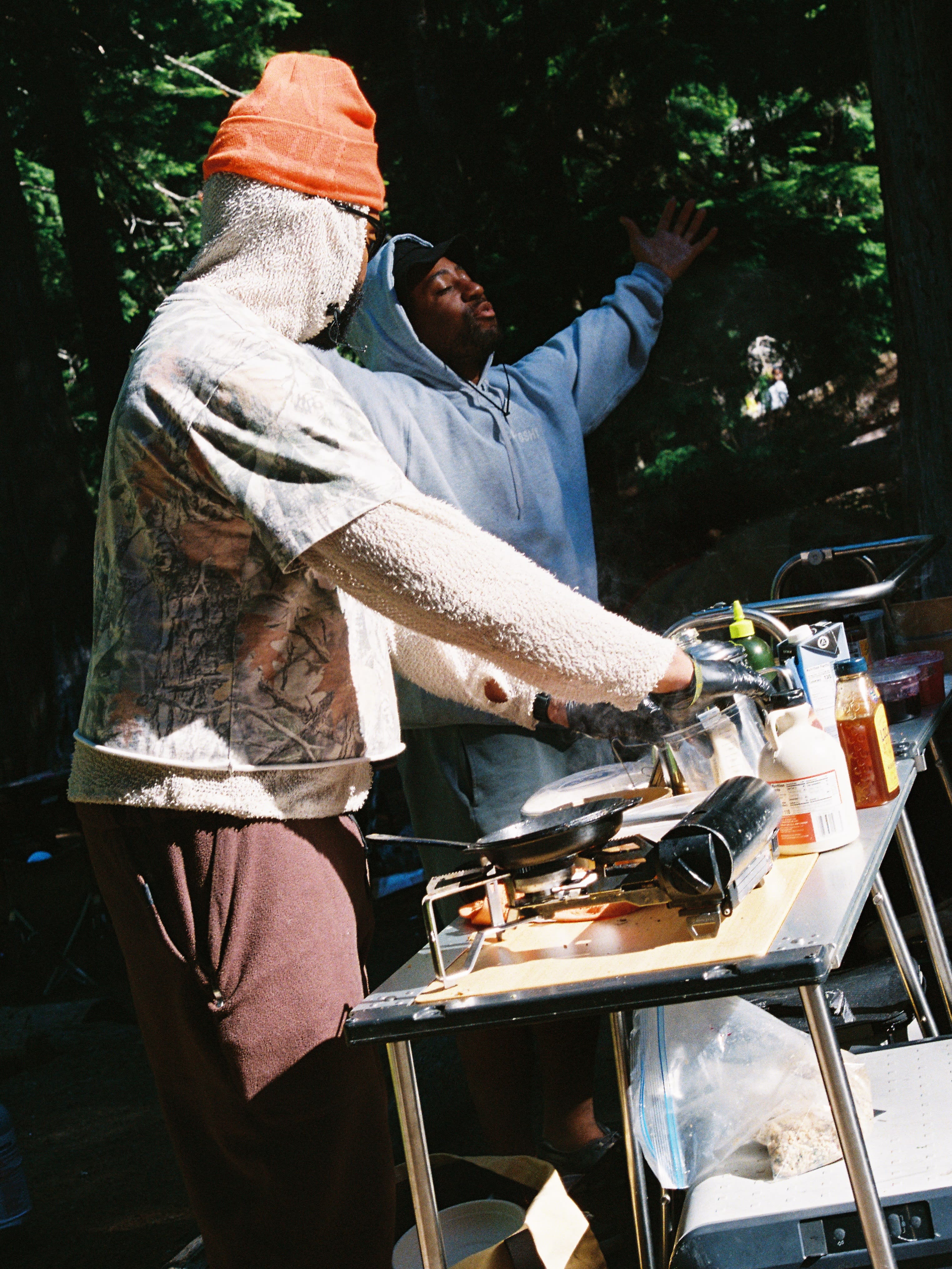
Frazier is particularly skeptical of the tendency to turn outdoor cooking into an exercise in acquiring gear. His own experiences have gradually moved him away from elaborate cooking systems and toward simpler preparations, fewer tools, and better planning.
Much of the work can happen before leaving home. Ingredients can be prepared, packed, and organized so that the actual cooking becomes relatively straightforward.
The goal isn't to reproduce a professional kitchen in the wilderness. It's to preserve the pleasure of cooking while respecting the limitations of the environment.
That distinction becomes especially important when considering the relationship between efficiency and creativity.
During the conversation, Siegel suggested that constraints can actually encourage creativity. Without a fully equipped kitchen or a grocery store nearby, cooks must become more deliberate and inventive.
Frazier agreed, sharing a phrase familiar among his chef friends:
Convenience kills creativity.
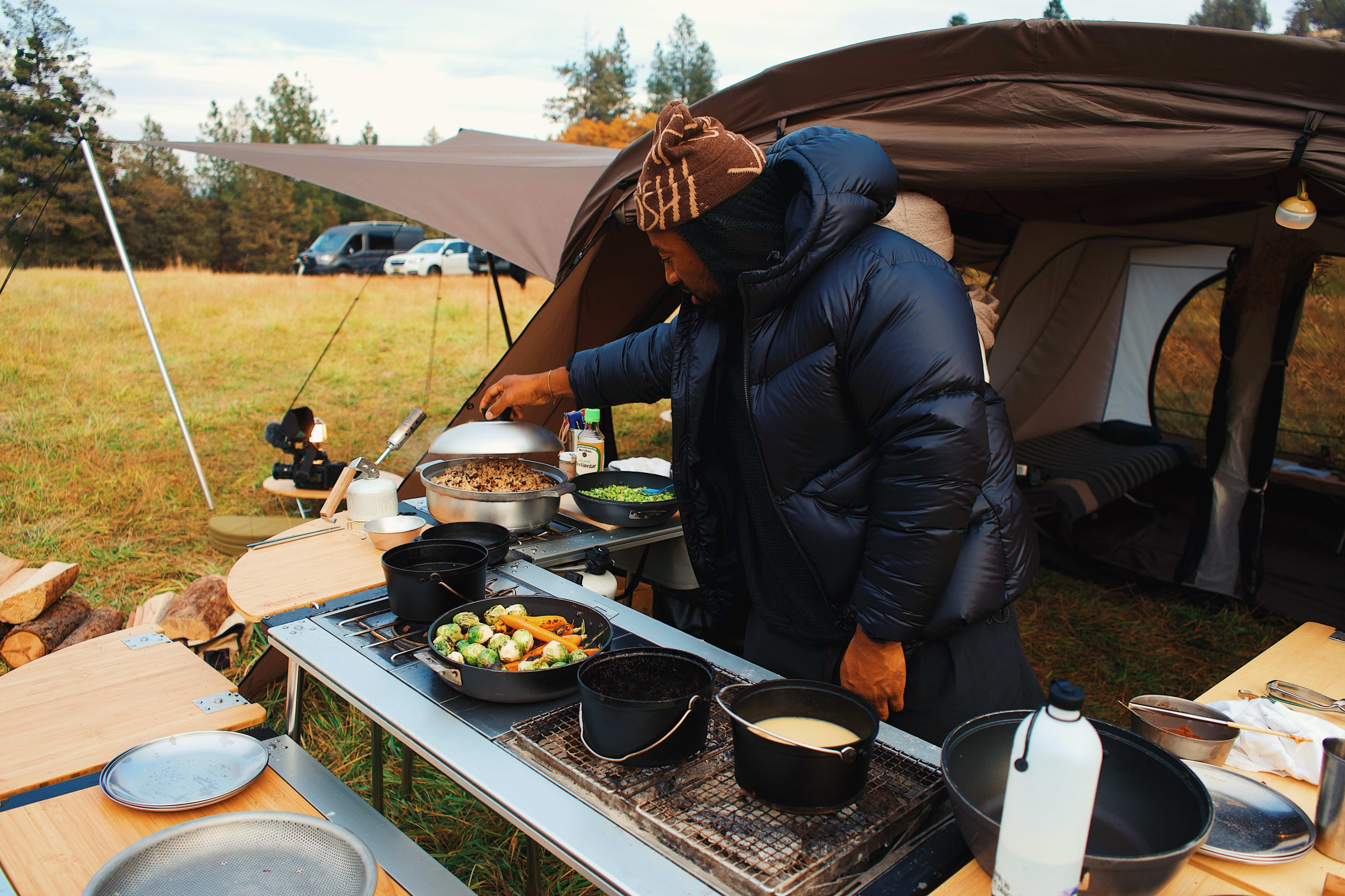
The limitations of outdoor cooking can produce a different kind of satisfaction. There is something rewarding about creating an exceptional meal with a handful of ingredients, limited equipment, and no possibility of running to the store for something forgotten.
Of course, things don't always work.
Frazier recalled an ambitious attempt to prepare freshly harvested duck during a hunting trip in Oregon. Without sufficient time or ingredients to prepare it properly, the meal fell considerably short of expectations.
He also described the consequences of forgetting coffee on a camping trip, and early experiences in which fire restrictions left his team without a practical cooking method.
These mistakes helped shape his approach. Preparation matters, but perfection isn't the objective.
The best outdoor meals are often the ones that leave people satisfied, connected, and free to enjoy the place they've traveled to experience.
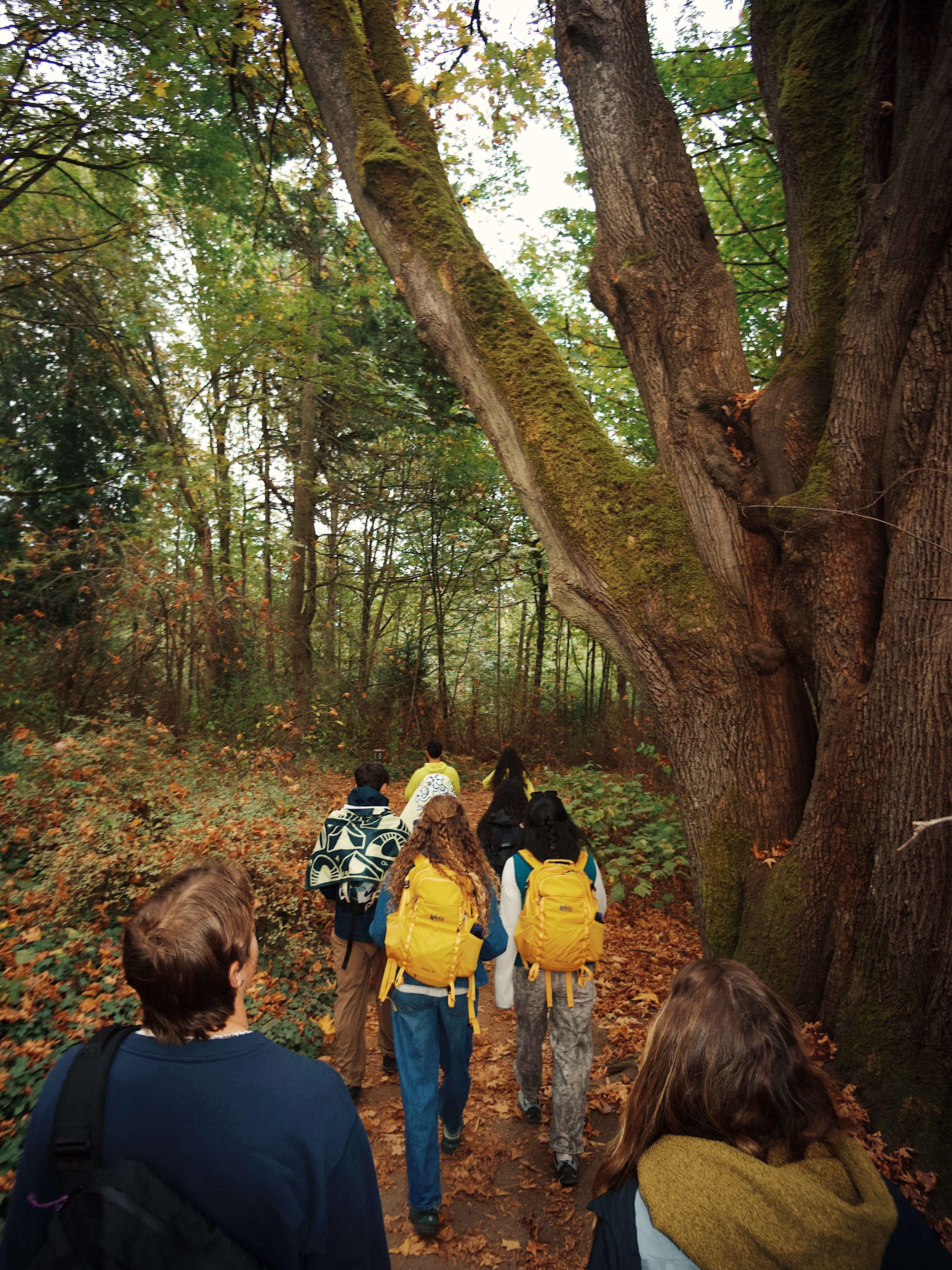
Photo: Camp Yoshi
Representation Is Only the Beginning
Beyond food and hospitality, Camp Yoshi also challenges the cultural assumptions that have historically shaped the outdoor industry.
Frazier argues that outdoor marketing has often presented a narrow image of who belongs in nature. The problem isn't simply that certain communities have been underrepresented in advertising. It's that the activities, experiences, and cultural expectations promoted by the industry haven't always reflected the interests of people it claims to want to reach.
Changing the imagery without changing the underlying experience accomplishes relatively little.
For Frazier, meaningful inclusion requires more than putting different faces in a campaign. It requires investment in people, businesses, and communities that can shape outdoor culture on their own terms.
He is particularly critical of short-term brand partnerships that create a moment of visibility without establishing lasting opportunities.
Instead, he advocates for relationships lasting three to five years, with meaningful budgets, access to expertise, and the independence to develop ideas that established brands might not have considered themselves.
The distinction is between inviting new audiences into an existing culture and allowing those audiences to participate in defining what that culture becomes.
This is where Camp Yoshi's hospitality-led approach becomes especially relevant.
By removing some of the technical and cultural expectations surrounding outdoor recreation, the company creates space for people to engage with nature through their own interests and experiences.
Someone who loves cooking, design, photography, fashion, or simply spending time with friends doesn't need to abandon those interests to become an outdoorsperson.
Those interests can be the reason they go outside in the first place.

The Business of Belonging
Camp Yoshi also represents an interesting alternative to the conventional outdoor business model.
For much of its history, the industry has organized itself around products: jackets, backpacks, tents, footwear, and the technical innovations that distinguish one manufacturer's equipment from another.
Camp Yoshi starts with the experience.
Its consumer trips are intentionally small, typically accommodating ten to twelve guests. Frazier believes that scale is essential to preserving the intimacy and attention to detail that make the experiences valuable.
He is equally candid about the commercial realities behind that decision.
While consumer experiences establish Camp Yoshi's identity and credibility, brand collaborations and experiential production work provide much of the company's revenue.
This arrangement allows the company to maintain relatively intimate consumer experiences without needing to maximize attendance.
It also exposes a tension within the broader outdoor industry.
Brands frequently evaluate partnerships through impressions, reach, and volume. Camp Yoshi's value proposition is built around qualities that resist those measurements: emotional connection, trust, memory, and community.
Frazier described brands asking whether an experience designed for twelve people could accommodate thirty-five, forty, or fifty.
His concern is that increasing the number of participants changes the experience itself. Conversations become less personal. Guests become a crowd moving through an itinerary. The sense of connection begins to disappear.
The commercial challenge is preserving the qualities that make something valuable as demand for it grows.
For independent outdoor brands and retailers, this is a familiar dilemma.
The same relationships, specificity, and attention to detail that distinguish a small business can become increasingly difficult to maintain at scale.
Frazier's approach suggests that growth doesn't always need to mean serving more people in the same way. It can also mean building complementary revenue streams that allow the original experience to remain intact.
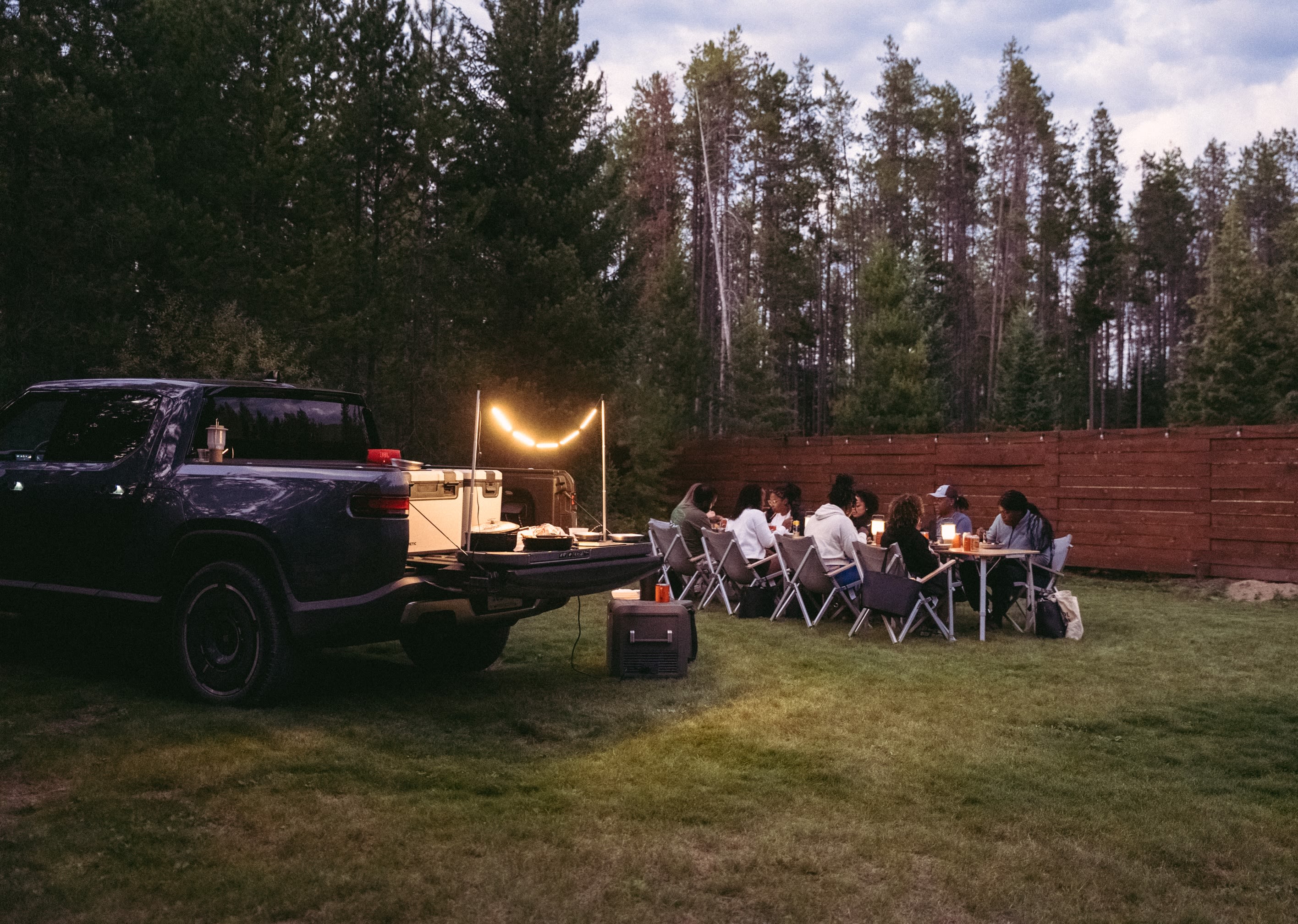
Photo: Camp Yoshi
What Outdoor Retail Can Learn
Frazier sees a similar opportunity emerging in outdoor retail.
Rather than imagining outdoor stores exclusively as places to purchase specialized equipment, he is interested in smaller, neighborhood-oriented spaces that combine commerce with culture and community.
His background in sneaker culture and streetwear informs that perspective.
He remembers boutiques as places where people gathered, discovered products, shared interests, and spent time together. The transaction was only one part of the experience.
He sees outdoor retail moving in a similar direction, particularly as independent shops create communities around running, hiking, cycling, and other activities.
A small store can become a meeting point. A café can become a gateway to the local trail network. A product assortment can introduce someone to an activity they might never have considered.
This creates an opportunity for retailers to offer something more meaningful than access to merchandise.
They can provide access to participation.
The distinction becomes increasingly important in a market crowded with technical products and competing claims of innovation.
As Frazier pointed out, consumers might not remember the precise material technology that kept them dry on a trip. They will remember being warm, comfortable, and happy.
Products matter, but their value ultimately comes from what they enable people to experience.
For outdoor retailers, the implication is that the most compelling store may not be the one with the broadest selection of equipment. It may be the one that most successfully helps people imagine what they could do with it.
A Different Definition of Adventure
Toward the end of the conversation, Frazier reflected on how his own relationship with the outdoors has evolved.
In the early days of Camp Yoshi, he was drawn to increasingly remote destinations and ambitious experiences. Over time, his attention shifted toward creating accessible opportunities closer to home.
Not everyone has the time, resources, or confidence to disappear into the wilderness for several days. A morning outdoors or a local day trip can be just as important as a first step.
He has also discovered that the most powerful transformations are often remarkably simple.
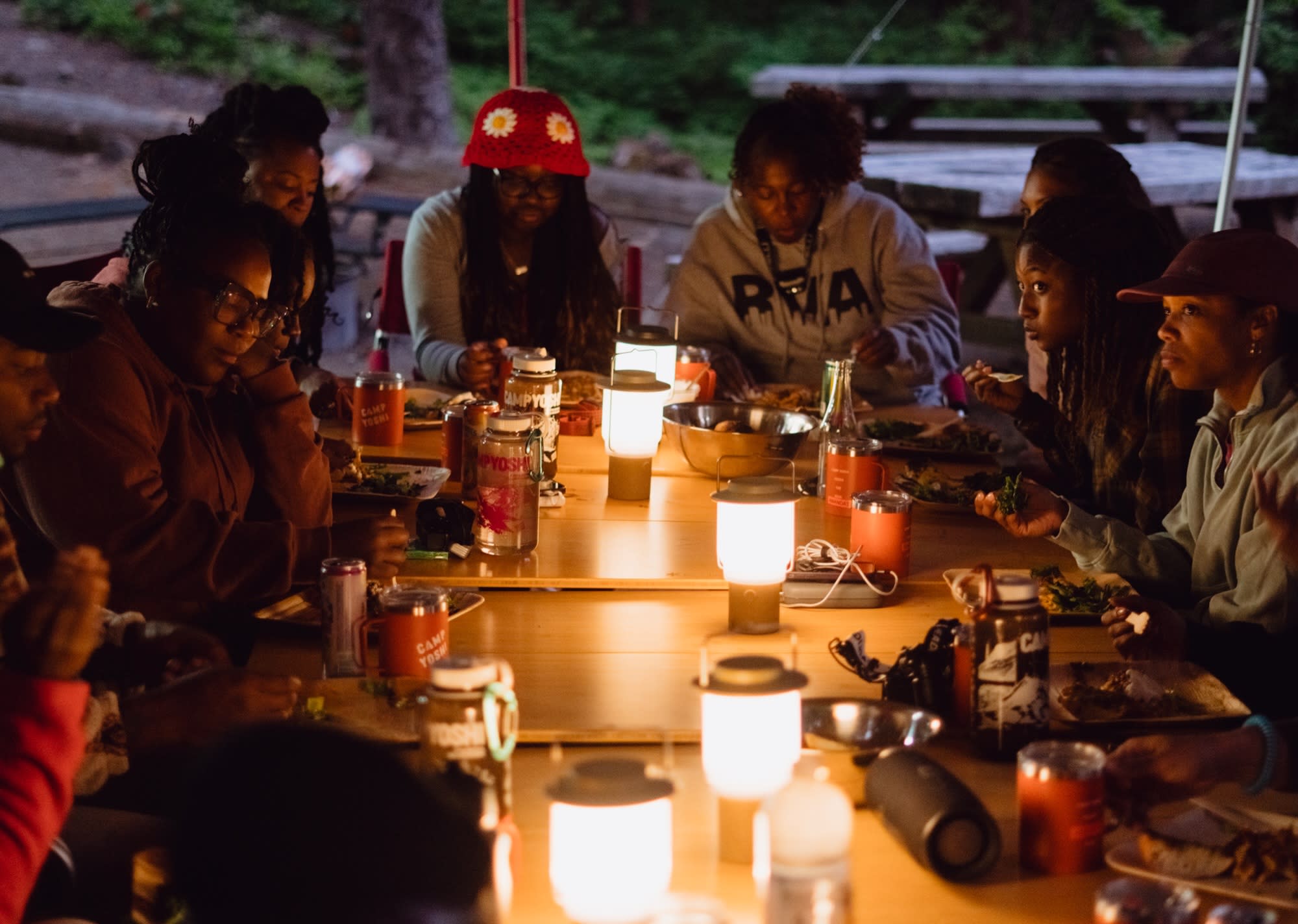
Photo: Camp Yoshi
One of his favorite moments is watching someone see the Milky Way for the first time.
The experience requires no specialized knowledge, no technical accomplishment, and no equipment beyond what is necessary to be comfortable and safe. Yet it can produce an extraordinary sense of wonder.
For Frazier, that reaction captures what Camp Yoshi is ultimately trying to accomplish.
When asked what he hoped the company might change over the next twenty years, he didn't describe an enormous outfitting business or a global network of destinations.
Instead, he imagined people who had discovered nature through Camp Yoshi passing that relationship on to their children, families, and friends.
The lasting impact would be measured not in trips sold but in traditions created.
It's a compelling alternative to an industry that has often encouraged consumers to define their relationship with nature through equipment, expertise, and accomplishment.
There will always be a place for difficult expeditions, technical innovation, and the pursuit of physical limits. Those experiences remain an important part of outdoor culture.
But they are only one part.
The larger opportunity may lie in recognizing that the outdoors can accommodate far more ways of being than the industry has historically celebrated.
As Siegel observed in the conversation, nature doesn't need to be something people conquer or prove themselves in. It can simply be somewhere they belong.
For Frazier, that idea is the foundation of everything Camp Yoshi is building.
The outdoors doesn't need to be earned. It needs to be experienced.
This article is adapted from a conversation with Rashad Frazier on WeekDays, the WeekEnds podcast hosted by Derek Siegel and Mateo Moreno. The episode explores Camp Yoshi, Frazier's cookbook Cook Out, the role of hospitality in outdoor recreation, and the future of outdoor culture.
Related Articles
November 17, 2026
tèmi Is Making Technical Outerwear Personal Again
Founder Gabriel Patterson is building tèmi around a deceptively simple idea: knowing who made your clothing should matter as much as what it can do.
Read →
November 14, 2026
The Great Outdoor Unbundling
Why outdoor shoppers are mixing specialist brands — Hyperlite, Senchi, NNormal, Yamatomichi, Satisfy and more — instead of buying everything from one label.
Read →
November 11, 2026
Shane Wallace on Why Culture Is Harder to Scale Than Commerce
Shane Wallace reflects on Active Ride Shop, skate culture, legacy brands, and the challenge of balancing authenticity, community, and commercial growth.
Read →