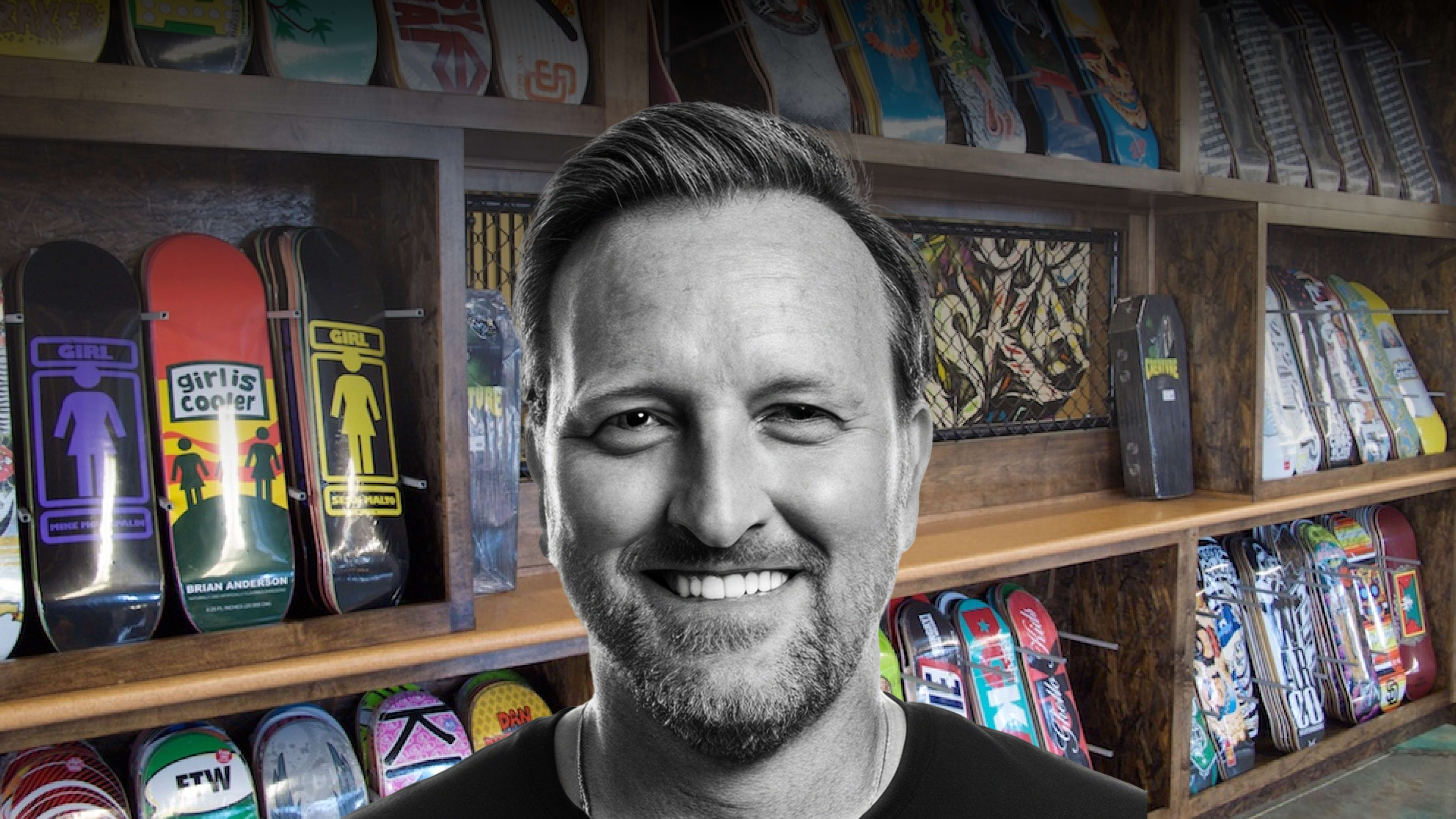
Shane Wallace on Why Culture Is Harder to Scale Than Commerce
by Derek Siegel
From building Active Ride Shop into a defining institution of skate culture to guiding legacy brands through a changing retail landscape, Shane Wallace joins WeekEnds WeekDays to discuss the tension between growth and authenticity, the enduring influence of core communities, and why the future of specialty retail depends on more than selling products.
In the early 1990s, a skate shop in San Dimas, California, became something more than a place to buy skateboards. There was a massive shoe wall, a skateboard counter, a pool table, and enough room in the back for kids to spend entire afternoons watching videos, meeting friends, and figuring out where they would skate next. Some came to shop. Others came to hang out. Many eventually became part of the store itself.
The shop was Active Ride Shop, and the person helping build it was Shane Wallace.
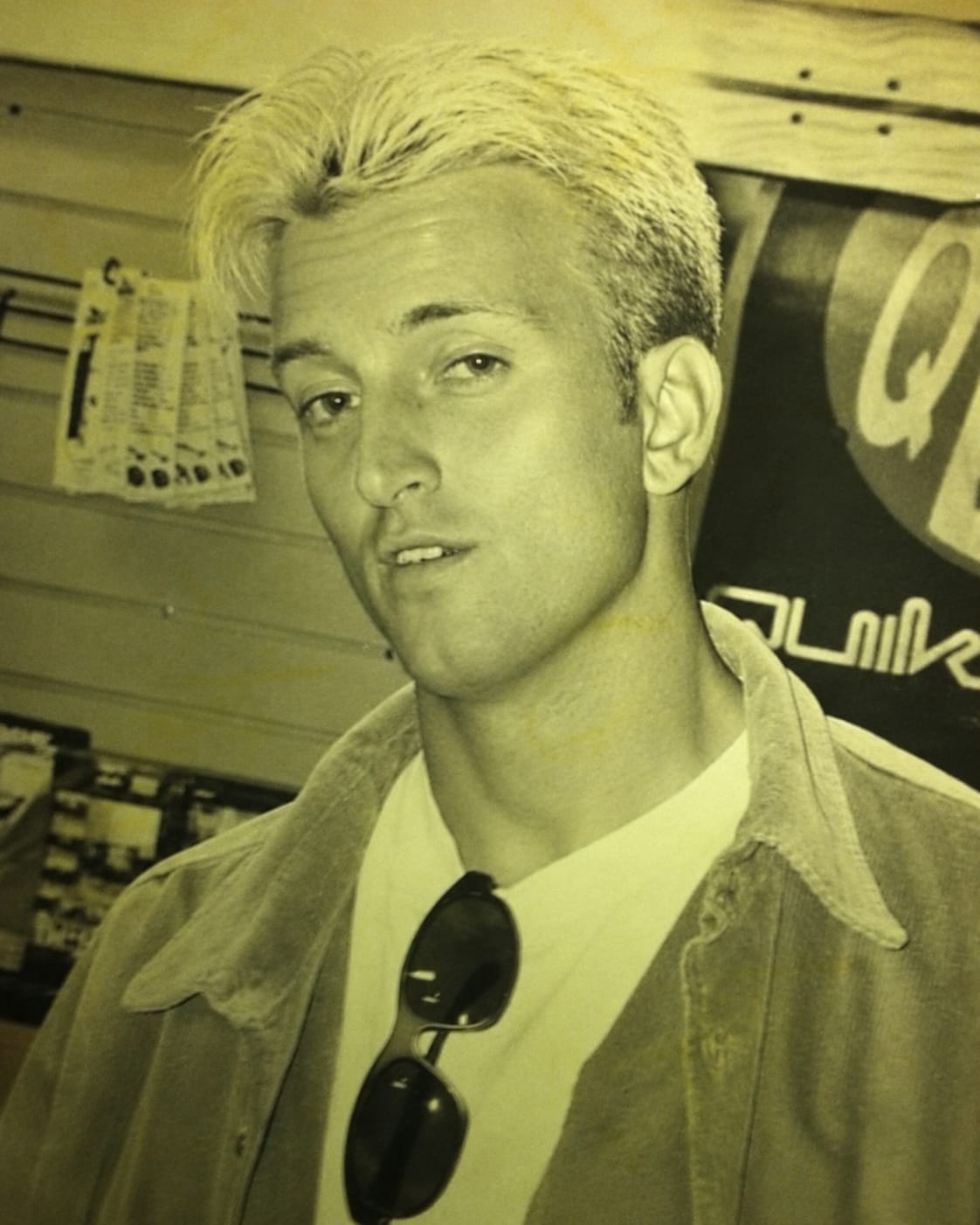
What began as a struggling family business selling sweatpants would become one of the most influential specialty retailers in American action sports. Active helped establish a model of retail in which community wasn't simply a marketing strategy. It was the foundation of the business, informing everything from merchandising and store design to athlete sponsorships and brand relationships.
More than three decades later, Wallace has experienced nearly every side of the industry he helped shape. After Active, his career took him through Reef, Reyn Spooner, Fox Racing, and now Pentland Brands, where he works with a portfolio of established brands, including Berghaus.
On this episode of WeekEnds WeekDays, Wallace joins hosts Derek Siegel and Mateo Moreno to discuss the evolution of skate and surf culture, the opportunities and limitations of specialty retail, the responsibility that comes with managing heritage brands, and the increasingly complicated relationship between commercial success and cultural relevance.
Underlying the conversation is a question that extends far beyond action sports: What happens when the communities that make brands valuable become smaller than the businesses built around them?
From Active Sweats to Active Ride Shop
Wallace's introduction to retail was less a carefully considered career decision than a matter of circumstance.
Growing up in Southern California during the 1980s, he was immersed in skateboarding at a moment when the sport was developing its own cultural identity. Surfing represented another aspiration, even for kids living inland, while snowboarding was beginning to emerge as a natural extension of the same attitude.
His father, a lifelong retailer, had opened a business called Active Sweats, selling sweatpants and athletic apparel. The concept struggled to find an audience, and Wallace began working behind the counter at fifteen, partly because he was the cheapest available labor.
"The business itself happened for me more by accident," Wallace recalls.
The turning point came after high school. While attending community college, Wallace was involved in a serious car accident on his way to surf. The resulting settlement left him with roughly $5,000, an amount that suddenly gave him the opportunity to invest in his father's struggling business.
Rather than continue selling athletic basics, Wallace proposed reorganizing the stores around the culture he understood: skateboarding first, snowboarding second, and surfing as a supporting lifestyle category.
There was one practical problem. They couldn't afford new signage.
"We don't have enough money to change the sign. So why don't we just take the word 'sweats' off of it and call it Active?"
Wallace personally took down the sign at the Rancho Cucamonga location, patched and painted the storefront, and began transforming the merchandise assortment.
The timing was unusually favorable. Skateboarding, snowboarding, and surf culture were converging, supported by a growing network of brands, athletes, magazines, and videos.
"It was emerging and raw and not really conformed," Wallace says of the period. He remembers the 1980s and 1990s as an era when the cultures surrounding these sports were developing alongside the businesses that would eventually commercialize them.
Active was positioned to participate in that expansion from the perspective of the consumer rather than the manufacturer.
But Wallace's ambitions went beyond selling the right products.
The Skate Shop as a Cultural Institution
Before Active became a destination, Wallace had experienced what a skate shop could represent from the other side of the counter.
He recalls spending afternoons at the counter near the iconic Pipeline Skatepark, studying the boards on the wall, collecting stickers, and waiting for professional skateboarders like Chris Miller to walk through the door. Seeing what a favorite skater wore could influence what Wallace wanted to buy the following week.
The store was a source of information, aspiration, and belonging. Products mattered, but so did the people who introduced them.
When Active opened its third location in San Dimas, Wallace deliberately recreated that environment. The larger store featured extensive merchandising, seating, a pool table, and a dedicated space where young skateboarders could congregate.
"We really turned the back half of the store into a community area," Wallace explains.
Kids would meet there before heading to nearby skate spots. Others would spend afternoons watching videos or helping around the store in exchange for stickers. The staff became familiar faces, and the store became a place to participate in skate culture even when nobody was making a purchase.
That environment eventually helped produce Active's influential professional skate team.
"Without that community area, we would never have developed the community that we developed," Wallace says, connecting the store's social environment directly to the skateboard team that emerged from it.
This is a distinction that has become increasingly important as retailers attempt to reinvent physical spaces around events and experiences. What Active created wasn't an experience added to a conventional retail model. The experience was already embedded in the culture the store served.
The commercial activity followed the community, rather than the other way around.
The Problem With Getting Bigger
Active's success created an opportunity to expand, and for a time, growth appeared to reinforce the model.
Wallace recalls that opening additional stores actually improved the business in certain respects. Managers and buyers were given meaningful responsibility, employees were trained to understand the culture, and each location developed its own relationships with local skateboarders.
"We actually got better the more we grew because we empowered people that probably didn't have the chance to be empowered in such jobs as store managers and buyers," he explains.
But there was a limit.
Looking back, Wallace identifies three stores as an especially effective size for the business. It provided enough scale to merchandise properly and build relationships with brands without sacrificing the intimacy of a local operation.
"Three was the magic number," he says. "We had such a great cultural control over three stores."
At roughly twenty stores, Active could still maintain its identity, but the organizational demands were becoming difficult to reconcile with the original model.
"Once we got past about twenty stores, I could feel the pressure."
The contradiction is familiar to anyone who has tried to scale a culturally specific business. Growth provides resources, visibility, and purchasing power. It also introduces distance between the people making decisions and the communities those decisions affect.
The qualities that make a specialty retailer successful are not necessarily the qualities that make it easy to expand.
Wallace describes Active's eventual financial difficulties through a sports analogy.
"We were really good offensive players, but when it came time to play defense when the economy crashed in '08, '09, we kind of were clueless."
The company had become exceptionally good at opening stores, developing relationships, building culture, and creating demand. But when the economy deteriorated, it lacked the financial discipline and defensive capabilities required to respond quickly.
"We didn't know how to make the cuts quick enough and we didn't know how to really forecast out the cash flows and the overall business model."
The lesson wasn't that growth was inherently wrong. It was that the ability to build something culturally meaningful and the ability to operate it at scale are fundamentally different disciplines.
That realization would shape the next phase of Wallace's career.
From the Shop Floor to the Brand
After Active, Wallace moved to Reef, entering a corporate environment after spending much of his professional life as an entrepreneur.
The transition required learning how to work within an organization while preserving the instincts that had made him successful independently.
"I had to learn how to be an employee," he admits.
At Reef, he was given considerable autonomy to identify opportunities for growth. Two stood out: digital commerce and the largely untapped consumer market beyond traditional coastal surf communities.
Wallace recognized that the aspiration surrounding surf culture extended far beyond the places where people actually surfed.
He pursued relationships with national footwear retailers, including DSW and Shoe Carnival, while also investing in emerging digital channels such as Amazon and Zappos.
One of the products at the center of that strategy was Reef's bottle-opener sandal, a seemingly improbable combination of footwear and utility that became a recognizable artifact of surf culture.
Wallace recounts how the team focused on Amazon search visibility and customer reviews, eventually helping the sandal reach the platform's leading footwear sales position during his tenure.
"If we could build the most reviews at Amazon, we could dominate the footwear space."
The story illustrates a broader change in how brands reached consumers.
Active had grown by becoming a physical gathering place for a particular community. At Reef, Wallace was learning how a culturally specific product could reach a much larger audience through distribution, search algorithms, and digital merchandising.
Neither approach was inherently superior. But each demanded a different understanding of how culture becomes commerce.
What Makes a Legacy Brand Relevant?
Wallace's subsequent career at Reyn Spooner, Fox Racing, and Pentland Brands brought another challenge: how to modernize brands whose histories were central to their identities.
Unlike a startup, a legacy brand doesn't begin with a blank slate. Its reputation has been shaped by generations of customers, athletes, products, and cultural associations.
That history creates an advantage, but it can also become a constraint.
"One of the things that I have always done when I've made career choices is to sign up with brands that have legacy," Wallace explains.
He sees heritage as an asset that cannot simply be purchased or manufactured through a marketing campaign.
"Legacy opens doors and it opens conversations that nothing else can."
But history alone is insufficient. Wallace believes the challenge is to make a brand's original purpose meaningful to contemporary consumers.
"My hope is that I come in and bring authenticity to legacy and relevancy to that. And I think if you can combine legacy, authenticity and relevancy, that's where the magic really happens."
His approach begins with understanding why the business existed in the first place.
Whether the product is an Aloha shirt, a motocross helmet, or an outdoor jacket, he argues that its original purpose should remain relevant to the decisions being made today.
"You always have to start off with the foundation first," he says.
Wallace describes opening sales meetings by revisiting the founders' vision: why the product was created, what need it addressed, and why the company has endured for decades.
The challenge is balancing that foundation against the commercial demands of a modern business.
He observes that founders are often exceptionally good at recognizing a need and creating a product to address it, but less capable of building the operational systems required for long-term growth. The organizations that succeed them may develop those systems while gradually losing sight of the original purpose.
His ambition is to reconcile the two.
"Can we be entrepreneurial and remember the reason why we exist? And then can we also be responsible and be very operationally strong so we can continue to exist?"
A business must retain the entrepreneurial conviction that made it meaningful while developing the financial discipline that allows it to survive.
This becomes especially complicated when a brand belongs to a larger portfolio, where decisions must account for profitability, organizational structure, and markets far removed from the original community.
Yet Wallace rejects the idea that commercial discipline and cultural relevance are necessarily incompatible.
"The community and however you relate to them... they're the ones who vote and tell you if your business goes forward or not."
The community still determines whether the brand deserves to exist. The business simply needs to be structured well enough to continue serving it.
The Core Consumer Still Sets the Direction
One of the most consequential changes in outdoor and action sports has been the expansion of technical products beyond the activities they were originally designed to support.
Climbing jackets are worn in cities. Trail-running shoes become everyday footwear. Skateboarding apparel circulates among people who have never stepped on a skateboard.
For brands, this presents an enormous commercial opportunity. It also raises a question about where cultural legitimacy originates.
During the conversation, Moreno points to the importance of continuing to serve the climber, hiker, or skateboarder even as products reach a broader lifestyle audience.
Wallace agrees, emphasizing that influence often travels outward from the most committed participants in a sport.
"It's the actual climber and the actual person at the tip of the peak that's influencing the hiker. It's not in the reverse."
That hierarchy matters because it establishes the credibility behind the product.
The same dynamic existed in skateboarding during Active's formative years. Professional athletes influenced amateurs, who influenced a broader community of consumers. What has changed is the number of people capable of shaping those decisions.
Social media has introduced creators and influencers whose audiences sometimes rival or exceed those of elite athletes.
Wallace acknowledges their growing power but argues that the most accomplished athletes remain essential to the industries they represent.
"We all need stars to change the game," he says.
Their performance establishes the standards that products are designed to meet, while their achievements create the aspiration that draws others into the activity.
"The influencer kind of killed a lot of things," Wallace jokes, borrowing from the familiar refrain about video killing the radio star. "But they're powerful."
The broader audience may generate more sales, but the core community continues to provide the meaning.
For a technical outdoor brand, abandoning that relationship in pursuit of a larger lifestyle market risks weakening the very foundation that made expansion possible.
Can Big Brands Still Participate in Small Communities?
The relationship between independent retailers and major brands has become increasingly complicated.
When Active was growing, specialty stores played an essential role in introducing consumers to products and establishing cultural credibility. Manufacturers depended on those relationships for access to the communities they wanted to reach.
Today, the balance of power is different.
Large brands operate their own websites, flagship stores, social platforms, and direct consumer relationships. They can create experiences, distribute content, and sell products without relying on independent retailers to the same extent.
Wallace doesn't believe that makes major brands inherently less authentic.
He points to The North Face and Arc'teryx as examples of companies that continue participating in relevant communities through collaborations, events, and local support.
He recalls speaking with climbing gym operators who credited Arc'teryx sponsorships with helping sustain their businesses.
"As much as people may want to point out the larger brands being irrelevant or not important, it's not true," he argues. "They play a big part in the success of this industry."
The point isn't that corporate scale automatically produces cultural relevance. It's that scale can provide resources that strengthen a community when those resources are used responsibly.
At the same time, Wallace believes larger brands have an obligation to support the specialty retailers that helped establish their credibility.
"Our responsibility as brands is to really find a way to keep the lights on and give back to the small specialty stores."
He describes a Berghaus event at independently owned Neptune Mountaineering in Boulder, Colorado, featuring an expedition presentation with Leo Houlding. The gathering brought people into the store and demonstrated how a brand could contribute something beyond inventory.
Such relationships become increasingly important as the competitive advantages of large companies grow.
"The bigger the brand, the more responsibility we all have to really give back to the specialty guy that's trying to compete with these massive brands."
The question is no longer simply whether a brand can sell directly to consumers. It's whether doing so without supporting the broader retail ecosystem ultimately weakens the culture on which the brand depends.
The Economics of Discovery
Asked whether he would start a brand or a retailer today, Wallace chooses the brand.
His reasoning is primarily economic.
A new retailer must invest in inventory, physical space, digital infrastructure, and marketing while operating on comparatively limited margins. A brand can potentially retain more margin and reinvest it in growth without assuming the same obligations associated with multibrand retail.
Yet his answer comes with an important qualification.
"If I had fun money, I'd love to open retail."
He describes the sensory experience of walking into a great shop: the smell of new shoes, rubber, jackets, or surf wax. These details may seem insignificant, but they represent something digital commerce cannot reproduce.
"You walk into a surf shop and it smells like surf wax and you can't get that on a website."
The internet has made purchasing products extraordinarily convenient. It hasn't necessarily made discovering them more meaningful.
Siegel raises the dilemma facing contemporary specialty retailers, including WeekEnds. As launching a brand becomes easier, consumers encounter an expanding universe of products with increasingly similar positioning and presentation.
The opportunity for a retailer is to provide context—to explain why a particular product matters, how it relates to a broader culture, and what distinguishes it from everything else.
But providing that context requires time, expertise, and physical or editorial infrastructure that the traditional retail margin may struggle to support.
Wallace sees the future of retail developing along two connected paths: digital efficiency and physical experience.
"Retail has an entertainment experiential model that's happening," he explains, noting that retailers able to execute that model effectively and continually evolve can still find success.
Successful stores will need to create reasons for people to visit that go beyond the availability of products. Brands, meanwhile, will need to think more carefully about distribution, offering distinct products and experiences through different channels rather than treating every point of sale as interchangeable.
The paradox is that the cultural value of specialty retail may be increasing at precisely the moment its conventional economics are becoming more difficult.
Wallace recognizes the difficulty of making the model work, but he also expresses admiration for those who continue trying.
"The ones that pull it off today are heroes," he says. "It's not easy."
The Difference Between Popularity and Relevance
The conversation eventually turns to the brands Wallace believes are getting the balance right.
He singles out Satisfy, recalling seeing the running brand at The Running Event in San Antonio and being struck by its ability to command attention near much larger competitors.
"They were fifty feet away from Nike ACG and handing them their lunch," he recalls.
For Wallace, Satisfy's appeal reflects the combination of a distinctive product and a community that genuinely identifies with it.
"That's what community and disruptive distinctive product does."
He also points to continued enthusiasm surrounding Stüssy, a brand he has followed since the late 1980s, and to the reception of recent Berghaus events.
What connects these examples isn't a particular aesthetic or marketing strategy. It's the ability to make people care enough to participate.
That quality is becoming harder to manufacture as the tools for launching and promoting brands become more accessible.
Wallace describes a growing sea of sameness across outdoor and action sports. Digital platforms and emerging technologies have made it possible for companies to reach audiences with unprecedented efficiency, but those advantages are available to nearly everyone.
"I think the idea of sea of sameness is going to catch up to a lot of brands here in the next few years," he predicts.
The result is an industry capable of producing more brands, more content, and more products without necessarily producing more cultural distinction.
In that environment, the combination of a compelling product and a committed community becomes even more valuable.
Technology may accelerate a business, but it cannot independently explain why people should care about it.
Learning to Think With Both Head and Heart
Perhaps the most revealing part of Wallace's career is the evolution of his relationship with risk.
At Active, he was an entrepreneur accustomed to making decisions quickly, taking chances, and finding solutions through sheer determination.
Working within larger organizations required a different approach.
He describes the frustration of recognizing an opportunity but needing to build consensus, establish a business case, and secure alignment before acting.
"Being a successful entrepreneur for many years trained me to find solutions rather than challenges and barriers," he explains, describing a mentality of simply kicking down doors.
But operating within someone else's organization demands restraint.
"I'm a guest in their home, per se."
Experience has taught him the importance of patience and operational responsibility. It has also changed how he leads.
Where he once tried to exercise greater control, he now emphasizes giving colleagues the autonomy to develop their own strengths rather than expecting them to replicate his approach.
"As I've grown and have allowed people to really be the best versions of themselves instead of trying to make them the best versions of me, I've been more successful."
But Wallace is equally conscious of what can be lost when businesses become too cautious.
He observes that the cost of entering the industry has increased dramatically, making it harder for new entrepreneurs to take the kinds of risks that once defined action sports.
The result is a tendency to make more decisions with the head than the heart.
"As you get older and more experienced, you make more decisions with your head than your heart," he reflects.
He points to Patagonia as an example of a company that has managed to preserve a sense of conviction while building an enduring business.
"I would say Patagonia operates more with heart than head, and they're one of the best brands that's ever been created."
That distinction captures much of the tension running through the episode.
Financial discipline allows a company to survive. Cultural conviction gives people a reason to want it to.
Neither is sufficient on its own.
What Comes After the Golden Era?
Wallace speaks fondly of the 1980s and 1990s, when skateboarding, surfing, and snowboarding were still developing their commercial identities and independent retailers could exert extraordinary influence over the direction of the culture.
He believes the action sports industry has never fully recovered the energy of that period.
But his nostalgia isn't a rejection of the present.
After more than thirty-five years in the business, Wallace remains enthusiastic about emerging brands, new technologies, and the possibility of discovering something unexpected.
He has actively invested time in learning about artificial intelligence, partly because he refuses to let experience become an excuse for falling behind.
"You really do have to reinvent yourself or you become irrelevant."
He also recognizes that the industry has changed in ways that make some of its original models difficult to reproduce.
Active Ride Shop's early success depended on a particular combination of circumstances: an emerging culture, limited distribution, influential athletes, and a physical retail environment where young people could gather.
Those conditions no longer exist in quite the same form.
Yet the underlying principles remain remarkably consistent.
People still want to belong to something. They still look to committed participants for inspiration. They still respond to products that offer a distinctive point of view. And they still value places where shared interests become real relationships.
What has changed is the commercial machinery surrounding those impulses.
The challenge for the next generation of brands and retailers isn't to recreate the skate shops of the 1990s. It's to understand why those places mattered and build something equally relevant for the communities that exist today.
Wallace's career offers both a warning and a reason for optimism.
Growth can undermine the qualities that make a business special. Financial success can create distance from the culture that made it possible. But commercial scale, managed thoughtfully, can also provide the resources to sustain those communities for another generation.
And despite everything that has changed, Wallace remains convinced that the industry is still capable of producing something remarkable.
"There's magic still," he says. "That's what is so inspiring."
Perhaps that's the most important lesson from a career spent moving between the counter, the boardroom, and the communities that connect them.
The next great brand or retailer won't necessarily be the one that grows the fastest. It may be the one that understands why people cared in the first place—and remembers that reason long after the business becomes successful.
Watch the full episode of WeekEnds WeekDays featuring Shane Wallace today.
Related Articles
November 3, 2026
Maurizio Donadi on the Value of What Already Exists
Transnomadica founder Maurizio Donadi joins WeekEnds WeekDays to discuss vintage clothing, creative freedom, fashion archives, and the future of retail.
Read →
October 14, 2026
Mazama Designs Is Rethinking the Most Overlooked Piece of Outdoor Gear
Bend, Oregon-based Mazama Designs rethinks outdoor hydration through innovative reservoirs, modular systems, and thoughtfully engineered gear built to last.
Read →
October 12, 2026
Why Titanium Became an Outdoor Obsession
How titanium became an outdoor obsession, from ultralight gear to minimalist design, and the independent brands redefining premium outdoor equipment.
Read →