
Nocs Provisions Wants You to Look Closer
by Gene Han
The San Francisco optics company turned one of outdoor’s most utilitarian objects into something colorful, approachable and worth carrying everywhere.
There are pieces of outdoor equipment that announce themselves as gear. Technical shells, climbing hardware, trail shoes and backpacks tend to arrive with an entire vocabulary of performance attached to them.
Binoculars are different.

For decades, they largely occupied the margins: hanging from the necks of birders, sitting in glove compartments or getting pulled from a closet before a trip to Yellowstone. They were useful, certainly, but rarely objects anyone thought much about until they needed them.
Nocs Provisions saw something else.
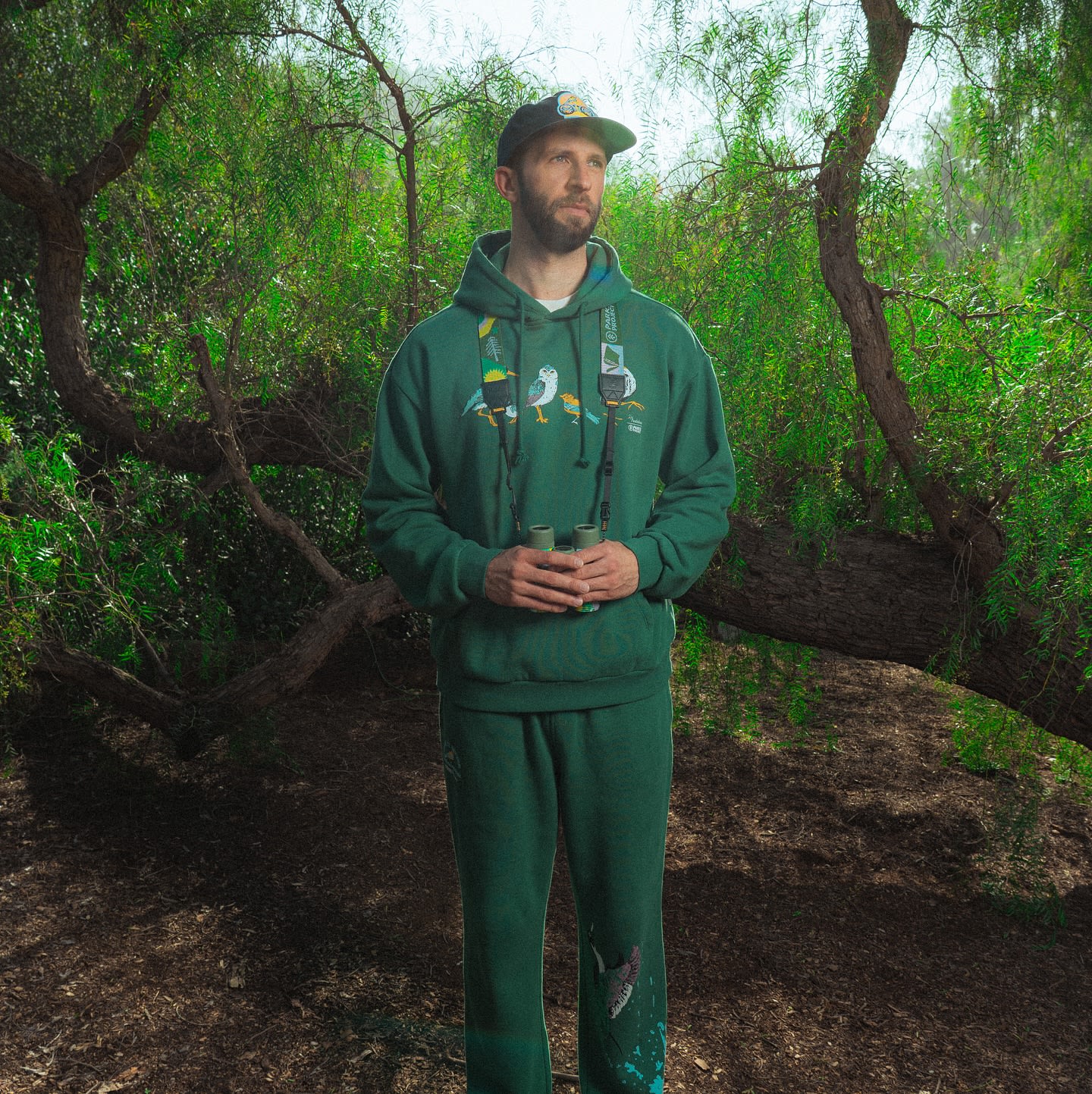
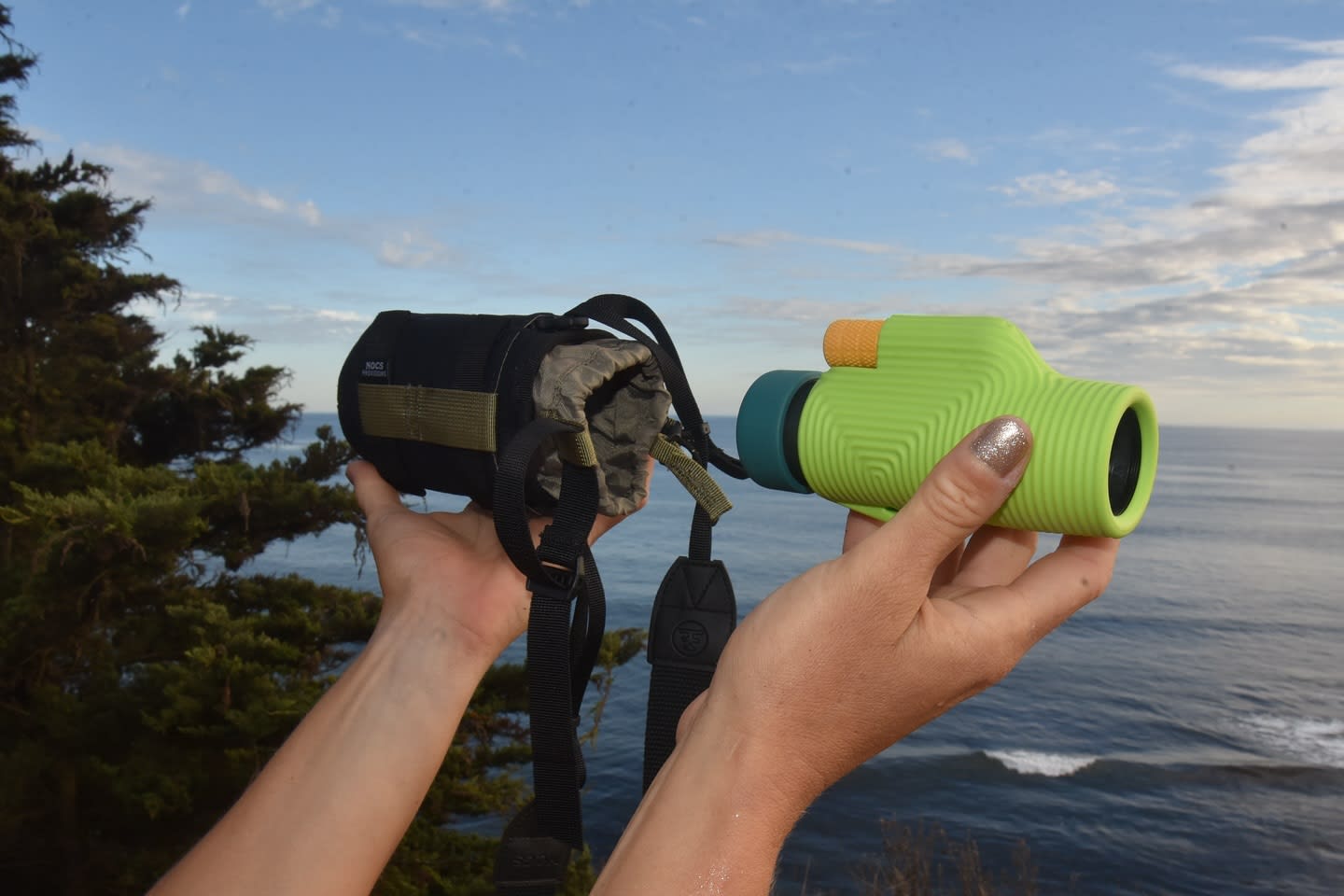
The San Francisco company has spent the past several years turning binoculars into an everyday outdoor object—something closer to a water bottle, camera or pocket knife than specialized equipment. Compact enough to throw into a pack, durable enough to leave in the truck and colorful enough that you might actually want to carry them around your neck.
It turns out that changing how binoculars look can also change who thinks binoculars are for.
Ten Blocks From the Ocean
Nocs began in San Francisco's Outer Sunset, ten blocks from the beach, inside a home its founders called the "Citadel of Excitement."
The original motivation wasn't ornithology. It was surfing.
Founder Chris McKleroy and friends wanted to see the swell from the house, so they bought a cheap pair of binoculars. Soon the binoculars started following them elsewhere—checking waves, scouting backcountry lines, camping and watching snowy plovers along Ocean Beach.
The problem was that the category seemed divided into two camps.
There were inexpensive compact binoculars that weren't particularly good, and there were serious optics that were expensive, heavy and designed with the visual language of traditional hunting and birding equipment.
Nocs imagined something between them: genuinely capable optics in a compact, waterproof package that didn't look like traditional binoculars.
The team sketched, modeled and produced more than twenty prototypes on a hand-built 3D printer in the Outer Sunset before working with an experienced optics manufacturer to develop what became the Standard Issue.
The technical challenge was optics.
The more interesting challenge was identity.
Making Binoculars Fun Again
Look at a pair of Nocs and the difference is immediate.
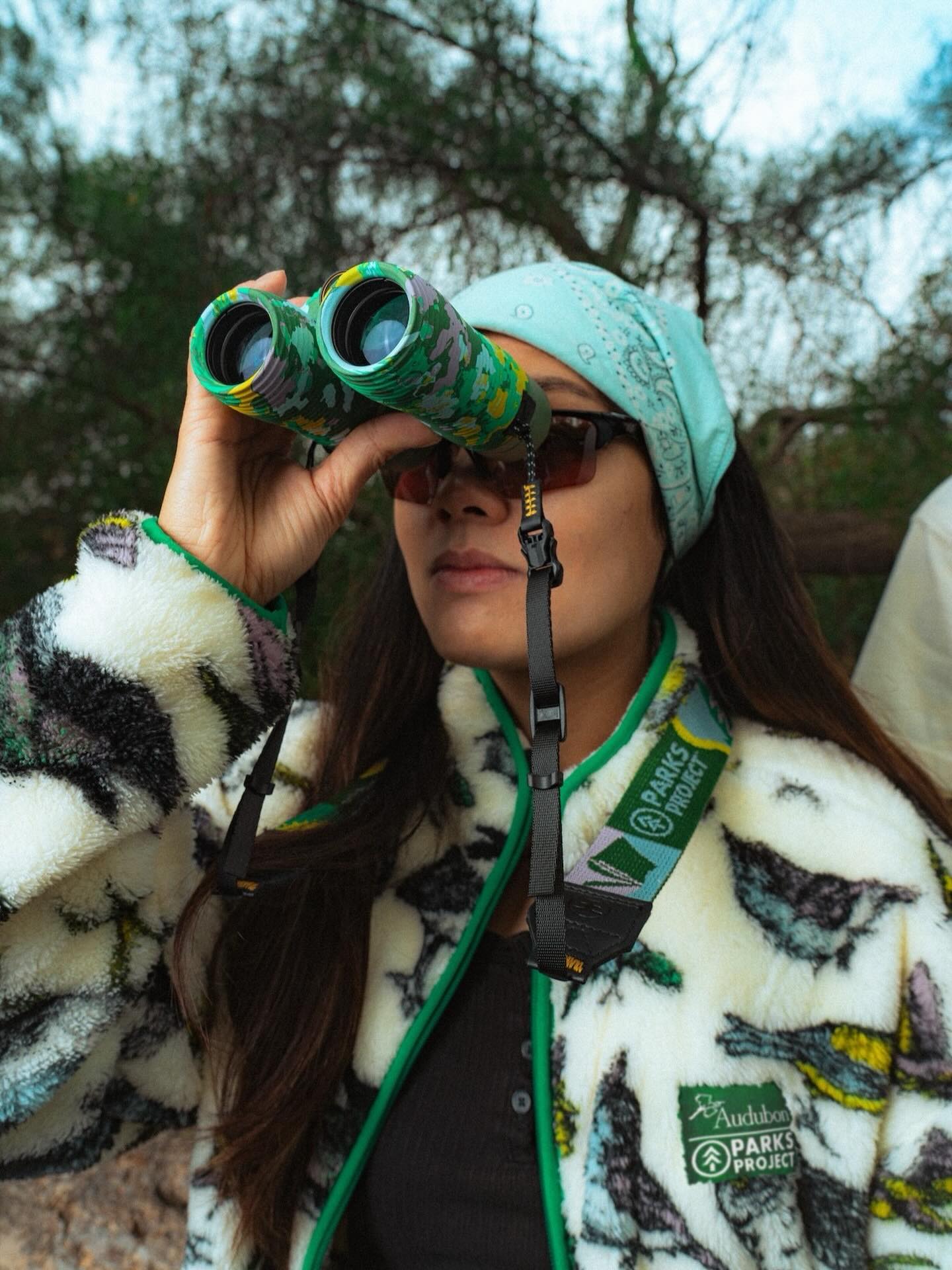
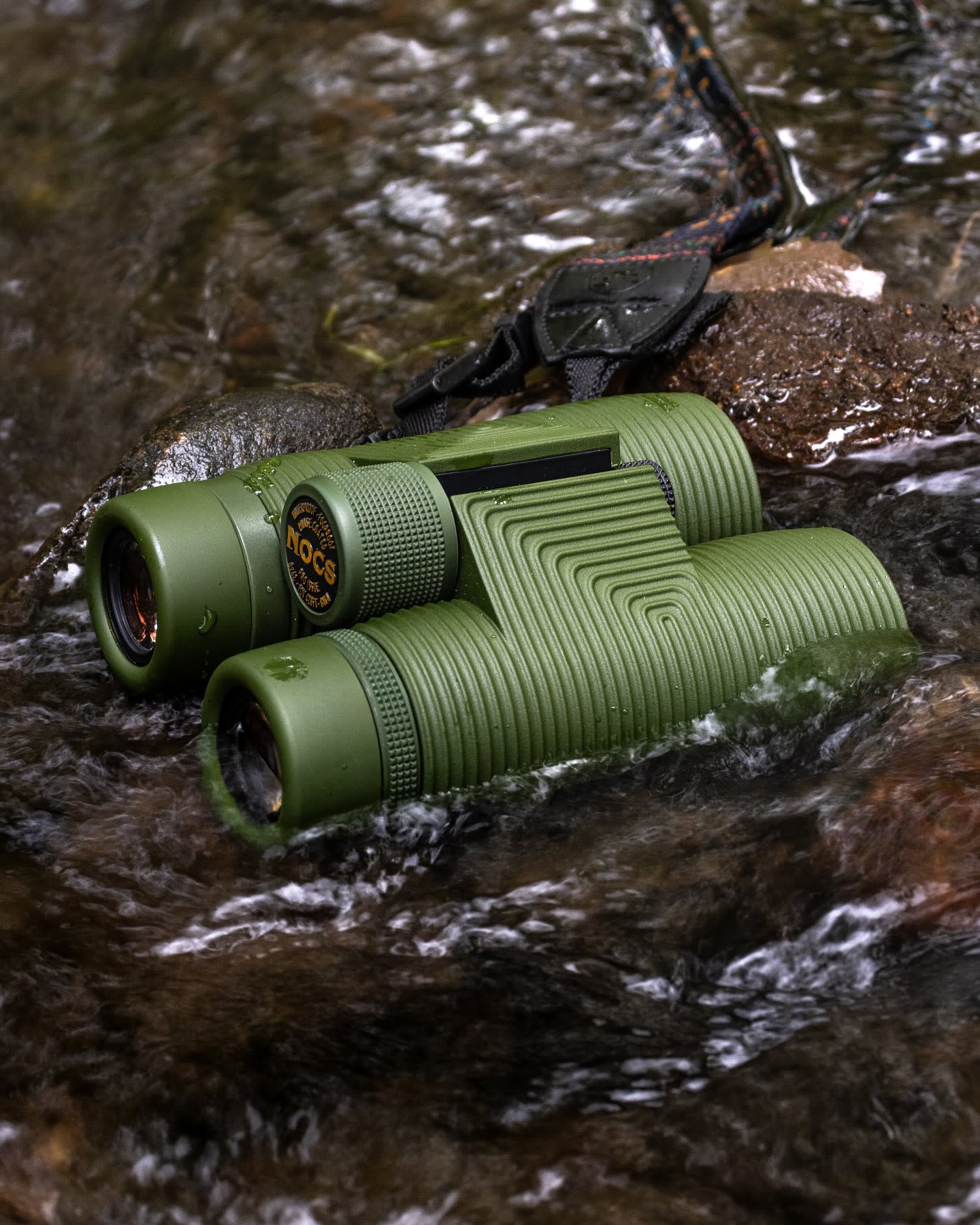
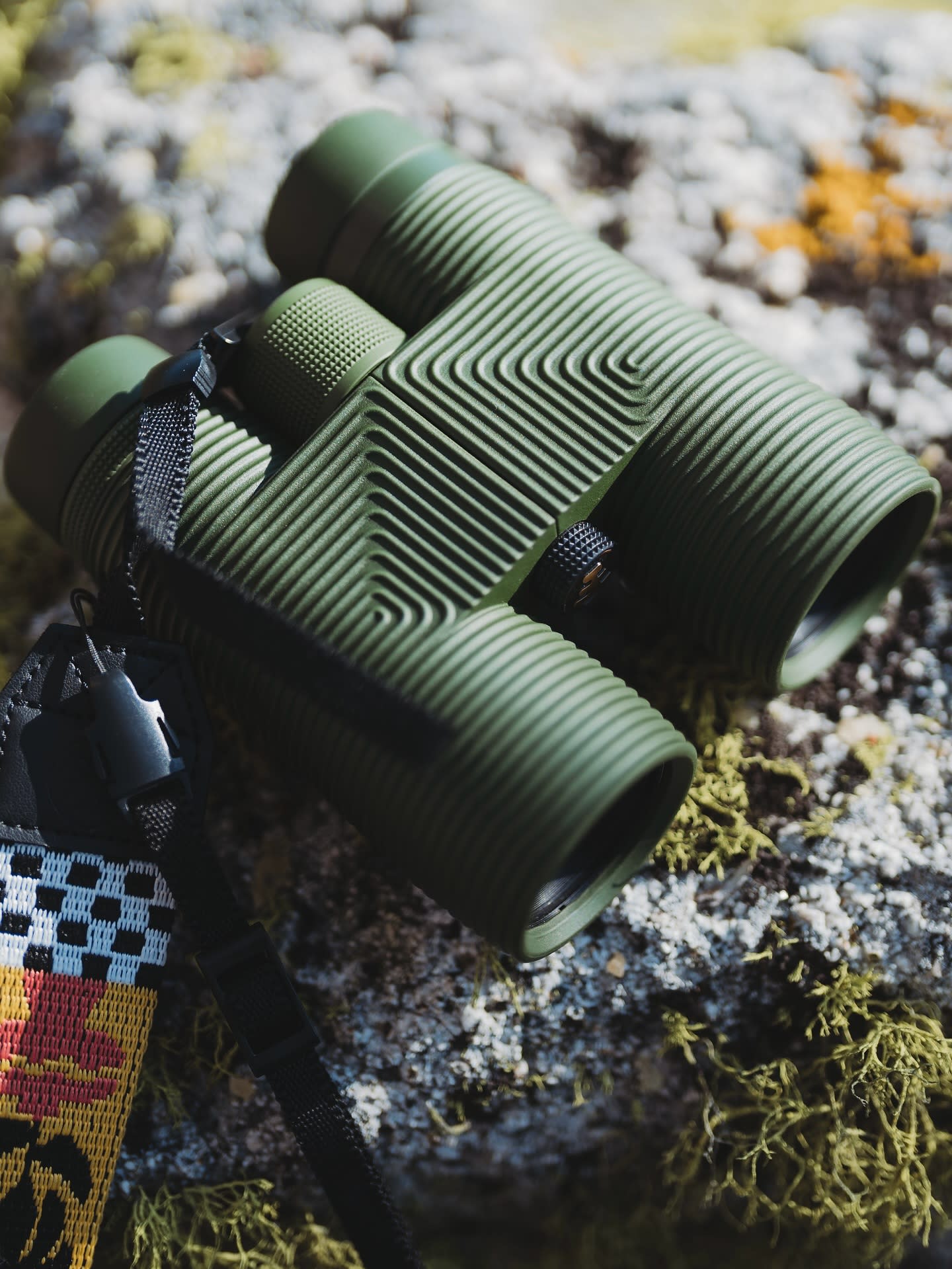
Instead of black rubber and military-adjacent styling, there are blues, oranges, greens, purples and yellows. The body is wrapped in a deeply textured grip that looks almost architectural.
The design pulls from an unlikely combination of references: vintage BMX mushroom grips, Frank Stella and the repeating-but-never-identical patterns created by sand dunes and ocean swells. The texture isn't purely decorative—it provides grip, accommodates different hand sizes and helps absorb impact.

It gives Nocs something surprisingly rare in outdoor equipment: recognizability from across the room.
That's important because Nocs isn't simply competing on magnification or lens coatings. It is competing for a place in someone's everyday kit.
The original Standard Issue 8x25 was built around that idea. It's compact, waterproof, nitrogen sealed against internal fogging and designed to survive being carried rather than carefully stored. Today, the Standard Issue remains under $100, while the broader collection stretches from the $79.95 Zoom Tube monocular to larger Field Issue and Pro Issue binoculars.
But the specifications only explain part of the appeal.
Nocs made binoculars feel less serious without making them less capable.
That distinction has become increasingly relevant as outdoor culture expands beyond the traditional categories that once defined it.
The New Naturalist
The timing has been good.
Birding has found a younger audience. Hiking has become intertwined with fashion. Surfing, camping, trail running and wildlife observation increasingly overlap inside the same cultural ecosystem.
Nocs fits comfortably between all of them.
On its website, the company organizes potential uses with considerably less seriousness than a traditional optics manufacturer: "Wave Finding," "Cosmic Gazing," "Line Scouting," "Creature Spotting," "Camp Adventuring," "Bird Watching" and "Bike Packing."
That language says something about the larger project.
You don't need to identify as a birder to own binoculars.
You just need to be curious about something far away.
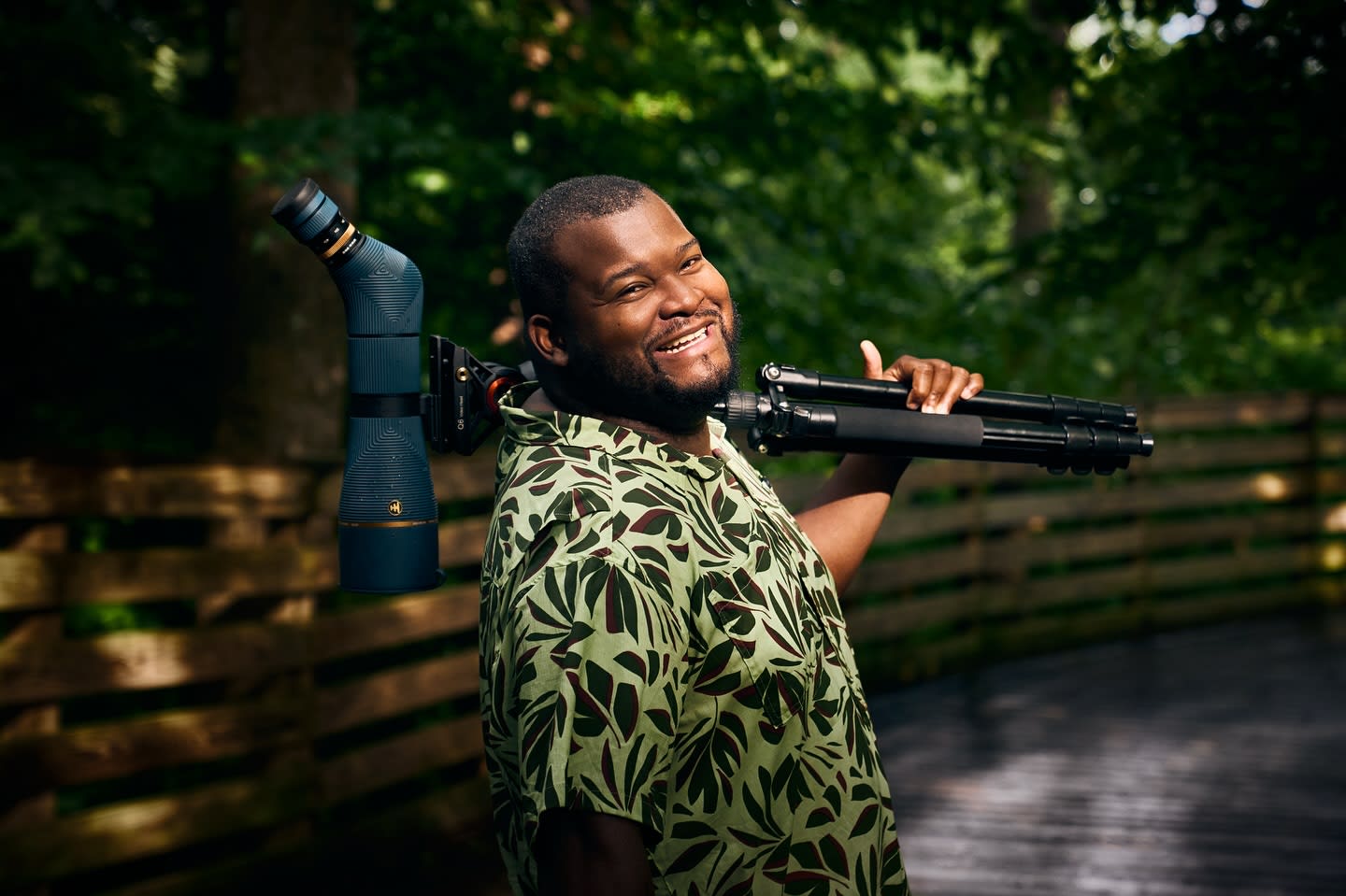
A surfer can check a break. A climber can study a route. Someone camping can watch an animal cross a distant ridge. A kid can look at the moon. A traveler can throw a monocular into a carry-on.
The binocular becomes less a tool associated with a particular activity than a tool for paying attention.
And that may be Nocs' most compelling contribution to outdoor equipment.
It took a product whose identity had become narrowly defined by its traditional users and widened the aperture.
Serious Enough for the Serious People
There's an interesting consequence to making technical equipment more approachable: eventually, the technical people start paying attention too.
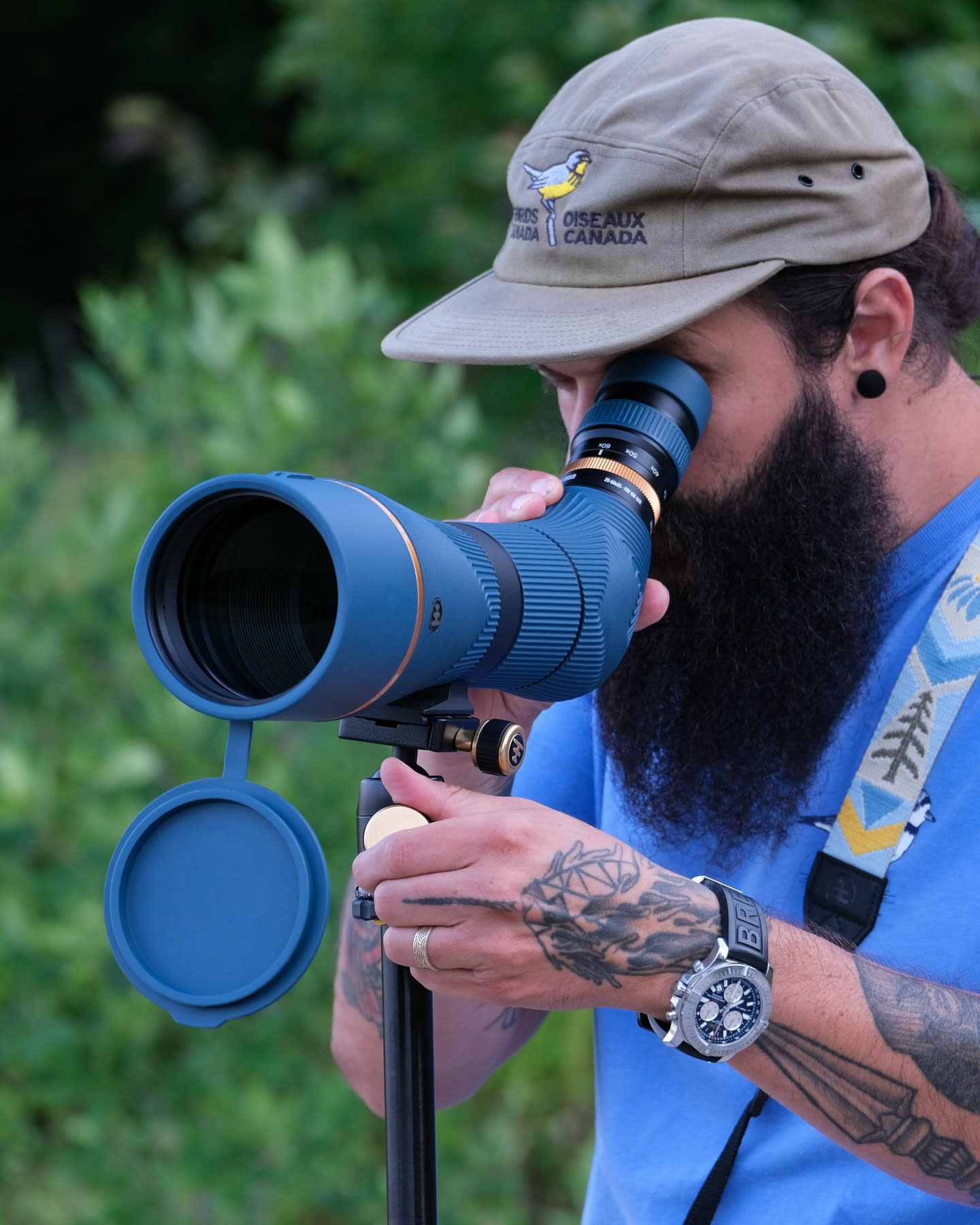
Nocs originally built its reputation around compact binoculars. But customers began asking for larger 42mm models—including naturalists, field scientists, hunters and experienced birders who had adopted the brand.
That demand eventually led to the Pro Issue.
According to McKleroy, Nocs hadn't originally planned to build a full-size binocular. The category already had plenty. But the company's customers kept asking for one, pushing Nocs into more performance-oriented territory.
It's a useful inversion of the usual outdoor-brand trajectory.
Instead of beginning with elite performance and eventually developing a lifestyle audience, Nocs built an accessible cultural identity first—and then discovered that serious users wanted in too.
Today the range extends from pocketable monoculars and 25mm binoculars through 32mm and 42mm models, giving the brand a legitimate optics system rather than a single design object.
Yet the products still look unmistakably like Nocs.

Optics as an Excuse to Pay Attention
There's also a philosophical idea underneath all the color.
Nocs describes its mission as helping people disconnect from technology and "look deeper in nature." Its binoculars are meant to encourage observation—the simple act of stopping long enough to notice what's happening around you.
It's an unusually appropriate proposition for the moment.
Outdoor recreation has become increasingly mediated by screens. Routes live on phones. Runs are uploaded to Strava. Campsites are booked through apps. Mountains become Instagram backgrounds. Even identifying the bird you're looking at increasingly involves pointing a phone toward it.
Nocs offers a wonderfully analog alternative.
Put something up to your eyes.
Look.
The company has extended that philosophy beyond product. Nocs has been a 1% for the Planet member since its early days and has supported organizations including the BIPOC Bird Club of Wisconsin, Feminist Bird Club, Hike Clerb and the California Academy of Sciences. The company says it has donated more than $100,000 to nonprofits helping underserved communities access the outdoors, along with thousands of binoculars for gear libraries and educational programs.
Its packaging is plastic-free, built from post-consumer recycled cardboard and printed with soy ink, while the company says it continues working on freight, warehousing and material changes intended to reduce emissions.
Those efforts reinforce the same idea as the binoculars themselves: observation can create attachment, and attachment can create stewardship.

See More
The best outdoor products sometimes do something beyond solving their stated problem.
They change behavior.
A camp chair makes you stay somewhere longer. A small stove turns a roadside pullout into lunch. A camera makes you notice light differently.
Binoculars make you look.
That is the quiet brilliance of Nocs Provisions.
The company didn't invent binoculars, nor did it need to. It simply looked at a familiar object and asked why it had become so visually conservative, culturally narrow and easy to leave behind.
Then it made one you'd actually want to bring.
Once it's in your pocket, the world suddenly contains more things worth stopping for.
A bird on a telephone wire. A breaking wave. A distant ridgeline. Something moving across the opposite side of a canyon.
The landscape hasn't changed.
You're just looking closer.
No products available.
Shop Nocs Provisions optics on WeekEnds today.
Related Articles

August 26, 2026
The Price Index (2026)
Explore the WeekEnds Price Index: how tariffs, global supply chains, logistics and rising production costs are reshaping the price of outdoor gear.
Read →
August 19, 2026
Why Repairability Is Becoming a Design Feature
Explore why repairability is becoming a core outdoor design feature, as brands rethink durability, longevity, modularity, and product lifecycles.
Read →
August 16, 2026
Outdoor Jackson and the New Outdoor Consumer-Creator
Outdoor Jackson on the new outdoor consumer, the rise of digitally native brands, fashion vs. function, social media, and the future of outdoor culture.
Read →