
Outdoor Jackson and the New Outdoor Consumer-Creator
by Derek Siegel
The argument started with baggy pants.
When we asked Jackson Ensley—better known as @outdoorjackson—what the weirdest thing happening in outdoor culture was right now, he didn't need much time: baggy hiking pants. To Jackson, the pants themselves aren't really the interesting part. They're a visible fault line running through outdoor culture.

On one side is the traditional outdoor consumer: someone who may have spent decades hiking, climbing, skiing, fishing, or backpacking and tends to evaluate equipment through performance, durability, weight, materials, and technical credibility. On the other is a rapidly growing generation that might discover hiking through TikTok, a trail shoe through fashion, or Arc'teryx because someone was wearing a shell on the subway.
The first group tends to look at oversized hiking pants and ask: Why would you want all that fabric? The second asks: Where can I buy them?
Jackson sees the divide constantly. Kawa Club became his example of a product whose baggy climbing pants were adopted by hikers and amplified by influencers. To Jackson, the reaction to them illustrates how differently the old and new outdoor markets think about products.
But the bigger story isn't pants. It's that outdoor culture is changing faster than many of the companies selling to it seem to realize.
Outdoor Jackson Wasn't Supposed to Be the Business
Before Outdoor Jackson became a media platform, Jackson was trying to start an outdoor brand.
He had spent nearly two years working on Tarantula, developing samples and trying to figure out how to break into fashion. Traditional streetwear didn't interest him much. Outdoor apparel did, in part because there was something fundamentally different about designing a jacket, backpack, or hiking pant: a brand couldn't survive entirely on graphics and cultural signaling. The product actually had to do something.
But getting a company off the ground was slow. So between samples, Jackson started making videos.
Then something unexpected happened. He says Outdoor Jackson reached 100,000 followers during its first month. One of roughly his first ten videos eventually accumulated around 15 million views. What had begun almost as a side project suddenly revealed something much larger: there was an audience looking for outdoor products, but it wanted someone to talk about them differently.
Jackson hadn't necessarily invented new information. He had changed the format.
Traditional gear media might spend fifteen minutes explaining every technical detail of a jacket. Jackson could introduce a brand, explain why it mattered, point out what was interesting, and move on. Fast, opinionated, social-native—and not necessarily a replacement for the exhaustive gear review, but something that happens before it.
Discovery Has Moved Upstream
Ask Jackson whether outdoor brands understand how people discover products today and his answer is simple: "No. No, not at all."
His argument is that there is now a disconnect between how many outdoor companies communicate and how younger consumers actually find things. A person might see an unfamiliar shoe in a Reel, encounter the brand again through a creator, search the name, read a review, find a retailer, and eventually buy it.
Discovery might happen in ten seconds. Validation might take ten minutes.

Jackson describes creators like himself as increasingly occupying the top of that funnel. Traditional outdoor media hasn't disappeared; its role has shifted. A publication like Field Mag might once have introduced someone to a brand. Now, Jackson argues, the consumer may encounter the brand through social media first and turn to editorial coverage afterward as validation.
That's a meaningful change because twenty years ago, outdoor taste moved roughly downstream: magazine to retailer to brand to consumer. Jackson thinks that order has inverted.
"Today, I think it's the opposite. I think it's the consumer chooses what's cool and then the brands have to work backward."
The internet gave consumers distribution. A person buying a pair of trail shoes can also photograph them, review them, criticize them, make them go viral, or introduce them to another hundred thousand people. Consumers became creators, creators became media, and brands increasingly became observers trying to keep up.
The New Outdoor Consumer
Jackson's entire thesis rests on the idea that the outdoor market isn't simply getting larger. It's getting different.
He cites industry research suggesting that a remarkably large portion of the American outdoor market entered the category relatively recently. In the conversation, he frames roughly 40 percent of the broader U.S. outdoor market as new within the past six years, while noting that the figure covers activities beyond hiking—including running, cycling and fishing.
Whether every category follows the same trajectory isn't really the important part of his argument. The cultural shift is already visible, and running offers a preview.
Brands like Satisfy and Bandit don't communicate like traditional sporting-goods companies. They're digitally native, visually distinctive, culturally fluent and capable of existing simultaneously as performance brands and fashion brands. Jackson thinks hiking is several years behind.
His prediction is that the hiking market in three to five years will look much more like running does today: legacy giants serving a massive mainstream audience alongside a rapidly expanding ecosystem of smaller, digitally native "neo-brands."
These consumers may arrive through entirely different doors. Someone discovers trail running through a run club. Someone else sees a pair of technical shoes in a fashion editorial. Another person notices an Arc'teryx jacket walking through Brooklyn and then actually starts hiking.
The distinction between "real outdoor consumer" and "fashion consumer" becomes much less useful when the person wearing the shell to a coffee shop also takes it hiking on Saturday.
Fashion and Function Aren't Opposites
This is where outdoor culture still gets strangely defensive. There remains a persistent idea that technical credibility and aesthetics exist on opposite ends of a spectrum: if something looks too good, maybe it isn't serious enough.
Jackson thinks that's backwards.
For the products he's developing at Tarantula, he describes functionality as the starting point. Fashion isn't the reason the product exists. Looking good is simply another requirement.
The product has to perform, and it has to look good. If someone owns three rain jackets, Jackson wants his to be the one they reach for because it works and because it's the coolest one in the closet.
That sounds obvious until you look at how much outdoor equipment still resembles something hanging in a specialty shop in 2007. There's a reason for that too: the traditional consumer often wants it.
Jackson has learned from his own comment sections that explicitly discussing "fashion" can trigger resistance among longtime outdoor consumers. There remains a perception, he says, that fashionable products can't be truly functional—and that truly functional products shouldn't look particularly fashionable.
The emerging generation doesn't seem particularly interested in choosing. They want both.
The Most Valuable Outdoor Media Might Be Education
There is another problem with entering the outdoor world through Instagram or TikTok: you only know what you've seen.
A new hiker may recognize Arc'teryx, Salomon and The North Face not because they've compared hundreds of products, but because those are the brands their algorithm has already validated. Jackson sees enormous opportunity in simply expanding the map.
Some of his most successful videos are almost comically straightforward: here are three outdoor brands you've never heard of. Maybe they're from Scandinavia. Maybe New Zealand. Maybe China.
For an experienced gear obsessive, this can seem basic. For someone who entered outdoor culture six months ago, it's a door opening.
Jackson argues that many new consumers don't lack interest. They lack context. They want to understand this world, but their knowledge is largely determined by what appears on their timeline.

That makes education one of the most powerful forms of marketing available to smaller brands. You don't necessarily need to outspend a multinational company. You need to explain why your product matters—again and again and again.
As Jackson puts it during the conversation, once the visual language and aesthetic of a brand are established, "the only thing left to do is educate."
Build the Product Before You Buy the Audience
We gave Jackson a hypothetical: you're starting an outdoor brand and someone gives you $100,000. You can spend it on product development or distribution and content. Which do you choose?
Product development. Immediately.
Jackson's reasoning is almost a useful correction to everything else he believes about media. Yes, distribution has changed. Yes, content matters. Yes, branding matters. Yes, creators can make an obscure product globally visible overnight. But none of that rescues a bad product.
In fact, Jackson argues that distribution has become comparatively cheap. Anyone can publish, and a compelling brand with a distinct voice can potentially reach millions without buying traditional media. The difficult part is still making something worth buying.
That philosophy is carrying into Tarantula. Jackson describes three central ambitions for the brand: unique design, innovative materials and fair prices. He talks about avoiding unnecessary overproduction, working responsibly with factories, and resisting the assumption that a technically credible jacket has to cost $500.
More interestingly, he's building the company in reverse. Most brands make products and then search for customers. Jackson already has the customers.
What Happens When the Audience Comes First?
This might ultimately be the most interesting experiment behind Outdoor Jackson.
Jackson spent years trying to develop a brand before accidentally building a large media platform around the exact consumer he wanted to serve. Now Tarantula can potentially emerge from that audience rather than chase one afterward.
And Jackson intends to use it. He talks about livestreams, Story polls and directly asking customers what they liked, what they didn't and what they want next. The first few products are planned, but after that he wants the community involved.
"I want those people to tell me what they want and I will make it for them."
It's a radically different feedback loop from traditional product development. Design, manufacture, wholesale, retail, customer feedback, repeat—the social era can collapse that cycle, allowing founder and customer to effectively occupy the same room every day.
But that only works if there is actually a community on the other side.
Followers Aren't Community
"Community" may be the most abused word in outdoor marketing. Jackson doesn't think it's meaningless. He thinks it's misunderstood.
A brand with 50,000 followers doesn't necessarily have a community, and neither does a creator with a viral video. Reach is not participation.
The distinction becomes obvious when an account can generate millions of views without generating meaningful loyalty, conversation, or sales. A real community talks back. It has opinions, participates, and stays.
Crucially, Jackson thinks it has to be cultivated intentionally rather than retrofitted once a brand decides it needs "community" in its marketing deck. That's harder than acquiring followers, but it is also considerably more valuable.
The Next Great Outdoor Brands Might Not Look Like Outdoor Brands
Jackson points to the rise of what he calls "neo-brands": digitally native outdoor companies with strong visual identities, direct relationships with consumers and an intuitive understanding of social distribution.
He thinks they're only getting started.
By the end of our conversation, we asked what outdoor trend he believes is just beginning. Not baggy pants. Not Gorpcore. The brands themselves.
Jackson believes the next decade could see today's young, sharply branded independent companies become some of the dominant names serving this new generation of outdoor consumers.
The interesting part is that they may not win by abandoning everything the traditional outdoor industry understood. Quite the opposite.
The fundamentals remain remarkably familiar: make something useful, make it well, explain why it matters, earn people's trust, listen to the people using it, and keep improving it.
What changes is everything surrounding those fundamentals—the aesthetic, the distribution, the media, the people deciding what's cool, and the path someone takes into the outdoors in the first place.
Outdoor Culture Is Still Getting Bigger
Our final question to Jackson was simple: does outdoor culture get bigger from here?
"Definitely."
His reasoning comes back to education. There are people entering outdoor culture who want products, brands and experiences that don't quite exist for them yet. Trail running has already demonstrated what can happen when technical performance collides with fashion, design, community and digitally native storytelling.

Jackson expects hiking and backpacking to follow.
And that might be the bigger lesson behind Outdoor Jackson. The outdoors isn't becoming fashion, it isn't becoming social media, and it isn't abandoning the hardcore users who built much of its culture. It's accumulating new layers: more people, more aesthetics, more entry points, more brands, and more definitions of what an "outdoor person" looks like.
Twenty years ago, someone might have discovered a jacket in the pages of a magazine and eventually worn it into the mountains. Today, they might discover it on TikTok while sitting in Brooklyn, wear it to a coffee shop, learn about the company from a creator, read a gear review, join a run club and eventually find themselves standing at a trailhead.
The destination hasn't necessarily changed. The route there has.
Jackson's bet is that the outdoor companies that understand those new routes first will define what the next generation of the industry looks like.
Watch the full WeekEnds WeekDays ep. 2 with @OutdoorJackson today.
Related Articles
October 1, 2026
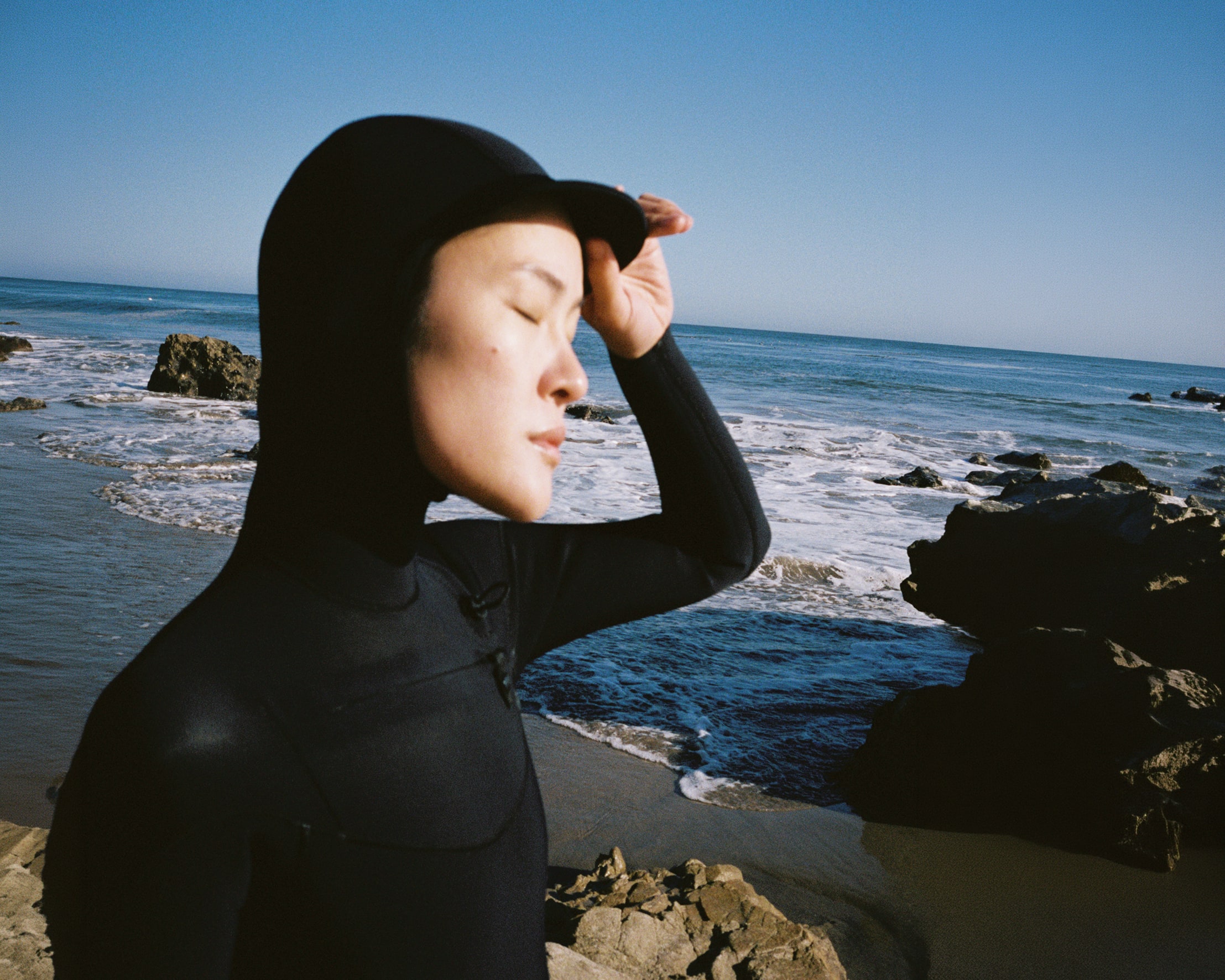
Vampire Surf Club Wants You to Stay Out Longer
Vampire Surf Club blends luxury fashion and technical surfwear, creating sun-protective gear designed to keep surfers in the water longer.
Read →
September 24, 2026
Nur Abbas is Designing Ultralight
Nur Abbas, founder of Gnuhr, explores ultralight as a design philosophy built around utility, reduction, experimentation and genuine innovation.
Read →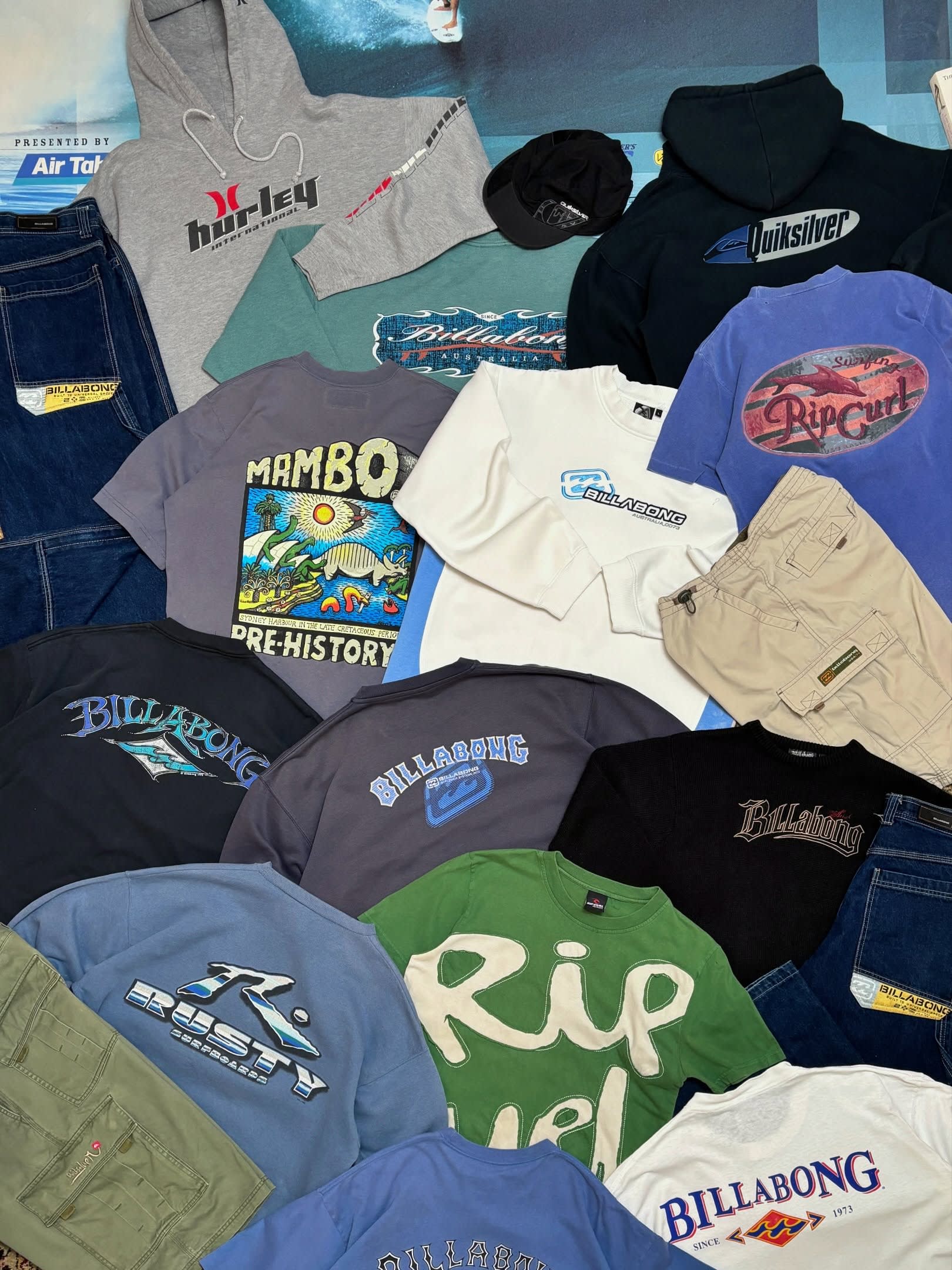
September 21, 2026
When Surf Brands Were Weird: The Lost Surf Brands of the '90s
Explore the forgotten surf brands of the ’90s and Y2K—and why their strange graphics, subcultures and vintage pieces resonate again today.
Read →