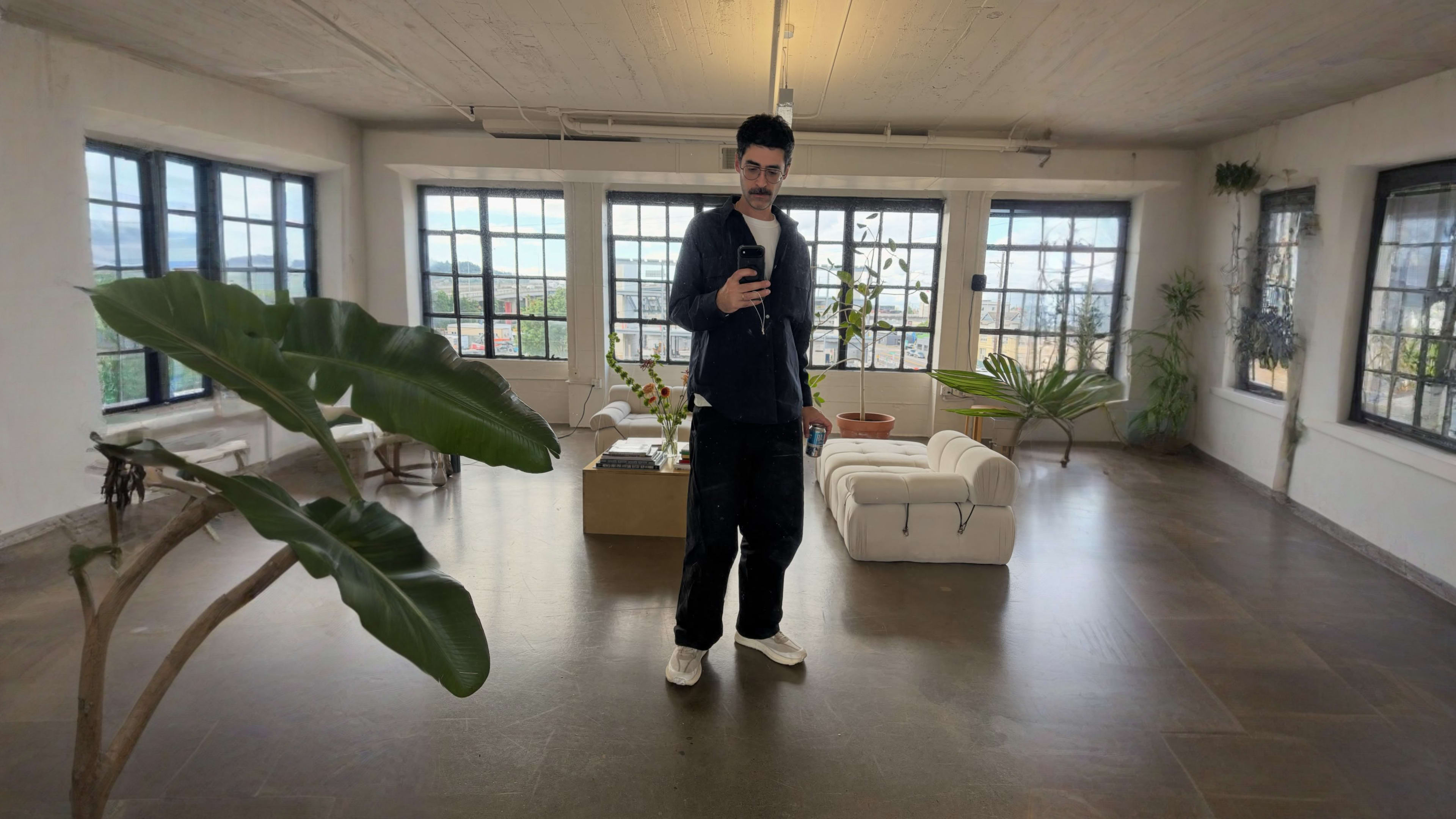
Nur Abbas is Designing Ultralight
by Derek Siegel
After years inside Louis Vuitton, Gucci, Nike and Yeezy, Nur Abbas is building a different model for making things—one where small teams, physical experimentation and genuine invention matter more than scale.
Nur Abbas has spent enough time inside very large companies to understand what scale makes possible. He has also seen what it can take away.
Over a career that has moved through luxury fashion, sportswear and performance design—including Louis Vuitton, Gucci, Nike and Yeezy—Abbas has experienced nearly every version of the modern apparel company. Today, from his studio in Portland, Oregon, he is deliberately building something much smaller.
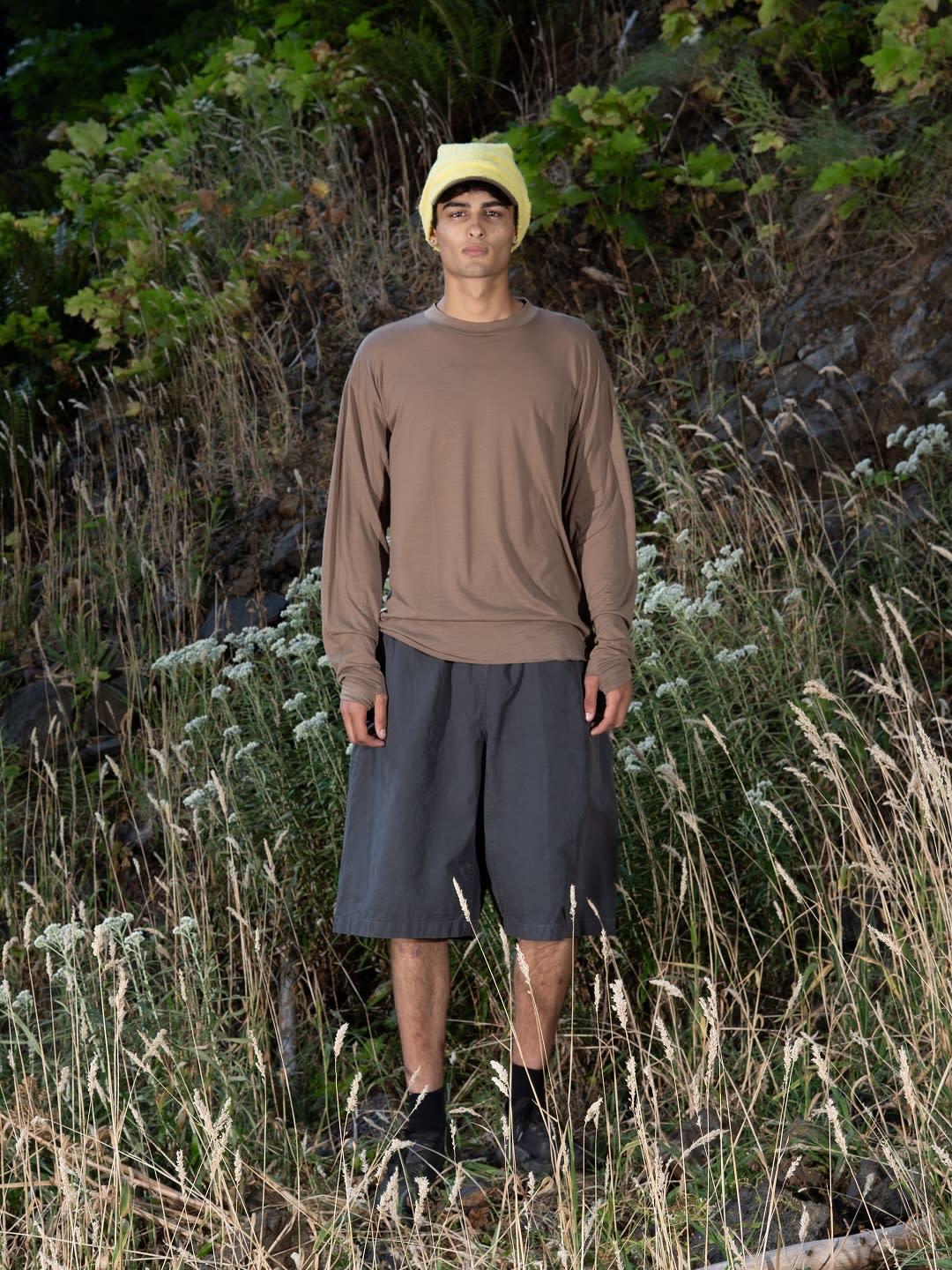
Through Gnuhr, his ultralight-oriented outdoor label, and Only Light, his design studio, Abbas is exploring what happens when the distance between an idea and the person actually making it becomes very short.
Speaking on the latest episode of WeekEnds WeekDays podcast, Abbas kept returning to one idea: balance. Between creativity and process. Fashion and function. Natural and synthetic materials. Independence and scale.
And perhaps most importantly, between having an idea and actually getting something made.
The Advantage of Being Small
At a large company, Abbas says, enormous amounts of energy can disappear into simply maintaining the organization.
He had already worked inside major European fashion houses before moving to Oregon to join Nike. But Nike showed him another level of corporate scale: thousands of people, enormous organizational systems and layers of coordination required before a product ever reaches the consumer.
The contrast with his current studio is intentional. Meetings are kept to a minimum. Emails are kept to a minimum. The objective is to direct as much energy as possible toward the product itself. It has also allowed Abbas to return to being what he wanted to be in the first place: a designer.
Large organizations have a tendency to push experienced designers toward management. A small studio can reverse that trajectory. Instead of managing the people making things, Abbas can keep making things.
That matters because fragile ideas often need protection. Abbas compares an early design idea to a sapling: subject it to too many reviews, opinions and compromises too early and it may never develop far enough to reveal whether it was good.
Some of the studio’s best experiments began as ideas that a larger organization might have dismissed immediately. The point isn't that every strange idea works. It is that it has the opportunity not to.
“If there’s no pressure for everything to work,” Abbas explains, failure itself becomes useful information.
The Bedroom Producer Era of Product Design
Something else has changed: it has become dramatically easier for small groups of people to build brands.
Abbas compares what is happening in product design to what laptops did to music production in the 1990s. Musicians who once needed studios, labels and expensive equipment could suddenly produce music from bedrooms.
Apparel is experiencing its own version of that shift. A designer no longer necessarily needs a showroom or traditional wholesale infrastructure to begin. Instagram provides distribution. Shopify provides commerce. Digital tools provide much of the infrastructure that once belonged almost exclusively to larger companies.
The difficult part is still the physical object.
“You’ve still got to move atoms around,” Abbas says.
Fabric needs to be cut. Seams need to be sewn. Hardware needs to function. Products need to survive actual use. That physical constraint is partly why Abbas has embraced manufacturing close to home.
After spending time in Los Angeles, he discovered a manufacturing ecosystem that was more capable than he expected. Those factories might not always possess the specialized knowledge of factories he had worked with in Italy or Asia, but proximity created another advantage: he could be there.
A designer physically working through a problem alongside a factory can sometimes accomplish more than a technically perfect specification sent halfway around the world. The result is a different relationship between design and manufacturing. The factory isn't simply where the design gets produced; it becomes part of the design process.
Design Has to Work for Someone
Abbas spent much of his career in fashion, and he remains deeply influenced by it. But performance clothing eventually offered something he felt fashion sometimes lacked: an objective standard.
Does it work?
Fashion is largely governed by taste. Silhouettes change. Proportions change. Colors change. The definition of what looks right moves with culture. Outdoor equipment doesn't entirely escape those forces, but it introduces another measurement.
A jacket either keeps you warm or it doesn't. A fabric either survives thousands of miles or it doesn't. A rain shell either keeps water out or it doesn't.
That difference fundamentally changes the design process.
Abbas describes design as a service. Even when designing for himself, he isn't entirely free. When Only Light works for another company, the studio is accountable to the client. When Gnuhr develops a product, it is accountable to the person eventually using it.
That is one distinction Abbas draws between art and design. Art doesn't necessarily have to answer to anyone. Design eventually has to work for someone.
What Does “Innovation” Actually Mean?
Few words have been stretched further by the outdoor industry than technical and innovation. Put an unusual seam on a pair of shorts and it becomes innovative. Make a jacket from nylon and it becomes technical.
Abbas wants the definitions to be harder. For him, innovation should approach invention—not simply something that looks different, but something that actually works differently.
One example is Gnuhr’s Tubular T-shirt.
Abbas developed a method of folding and cuffing fabric that simplified the construction of a T-shirt, reducing cutting and sewing. The company pursued a utility patent for the construction and, according to Abbas, recently received it.
That distinction matters to him. Pattern cutting is an extraordinarily mature discipline. Humans have been developing methods of turning flat textiles into clothing for centuries, and most contemporary experimentation rearranges seams or adjusts existing construction principles.
Finding a genuinely different method is rare.
Abbas describes the Tubular almost jokingly as one of the few original things he has done in his career. But even then, he hesitates over the word original.
Ideas Might Be Discovered, Not Invented
Abbas has an unusual way of thinking about creativity: “Do I create the ideas or do I discover them?”
The distinction sounds philosophical, but it has practical consequences. He compares design to science. A scientist doesn't create a law of physics; they discover something that was already possible. Abbas wonders whether useful design ideas work similarly.
The Tubular construction existed as a possibility before Gnuhr made it. Someone, eventually, could have found it. Abbas happened to get there first.
The creative process, then, becomes less about waiting for inspiration and more about increasing the probability of discovery. Keep cutting, sewing, prototyping and testing, and eventually you uncover something.
“It’s almost like mining,” Abbas says. “If you keep digging, you keep going, you’re going to find something eventually.”
That philosophy explains much of how the studio operates. Creativity isn't treated as something mystical. It is treated as work.
Why Ultralight Became More Radical Than Fashion
Abbas's interest in ultralight equipment didn't begin only because the products were lighter. They looked strange, and that mattered.
He remembers seeing Hyperlite Mountain Gear’s white Dyneema packs roughly a decade ago. Against the visual language of conventional outdoor equipment—and even fashion—they seemed almost absurd. Why would anyone make a backpack designed for wilderness use white?
Then people actually used them. The dirt, creases and wear became evidence of experience. The thing that initially seemed impractical became part of the product's visual identity.
Abbas had a similar reaction to a transparent Zpacks rain skirt. A low-resolution product image of someone standing outside wearing a transparent skirt over shorts felt, to him, more visually radical than much of what fashion was producing at the time.
Fashion frequently talks about breaking rules. Ultralight equipment was breaking them almost accidentally.
Its designers weren't necessarily trying to create unusual silhouettes. They were removing weight, eliminating unnecessary construction and experimenting with unfamiliar materials. The aesthetics emerged from those constraints.
That made ultralight particularly interesting to Abbas. It introduced genuinely new visual information into clothing.
Stop Adding Hardware
One of the studio's recurring questions is whether a component needs to exist at all.
Zippers are an obvious example. YKK dominates the category because making a reliable zipper is extraordinarily difficult. Rather than attempting to redesign every complex mechanism, Abbas often asks whether the product can simply avoid the mechanism.
Can the zipper disappear? Can the closure be built into the pattern? Can one material perform several jobs?
This philosophy becomes particularly visible in Parcel, a bag project Abbas and his team launched last year. Rather than assembling the bags from standard catalog components, the studio developed the hardware itself. Straps were knitted to create variable widths. EVA compounds were adjusted. Components were designed around the specific needs of the product.
Gnuhr's Footprint camp sandal takes the approach even further. The entire sandal is 3D printed from one material, with the mechanics required for the pieces to snap together incorporated directly into the design.
That capability created another unexpected opportunity. While developing a shirt, the team couldn't find a button it liked, so it designed one. Then the studio began considering who could manufacture it and eventually realized the answer was sitting in the next room.
Using the same 3D-printing infrastructure developed for footwear, Abbas says the studio recently produced roughly 10,000 buttons itself.
It is a tiny detail with larger implications. A small apparel company can now design a piece of hardware, prototype it and manufacture thousands of units without leaving its own studio. The bedroom-producer moment Abbas described earlier is beginning to extend into atoms.
Fashion Has Always Been Open Source
Abbas also questions another assumption about design: that everything needs to appear entirely original.
Fashion already operates like an unofficial open-source system. Everyone looks at everyone else. Designers borrow materials, constructions, silhouettes and ideas. Outdoor companies adopt the same fabrics. Dyneema spreads. Polartec Alpha spreads. A new construction appears and eventually becomes part of the industry's vocabulary.
Culture advances through iteration. The strange part is how rarely anyone admits it.
Brands tend to erase the references and present each result as something generated internally. Abbas would rather make parts of that process visible.
Gnuhr credits fabric suppliers, for example, because the mill often deserves much of the credit for whatever makes a supposedly “technical” garment technical. There is a commercial risk to that transparency—someone else can discover the same supplier—but Abbas sees another side. If Gnuhr sends business toward a mill, that can strengthen its relationship with the mill.
Openness doesn't necessarily weaken the company. It can strengthen the ecosystem around it.
He extends that philosophy to the people making the products themselves. Fashion, Abbas argues, could learn something from film credits.
The celebrated designer is only one participant in a complicated network of pattern cutters, technicians, developers, manufacturers and other designers. A movie acknowledges those people at the end. Fashion generally doesn't.
Abbas and his studio have been thinking about how to change that.
The Problem With Staying Small
There is, however, a contradiction at the center of the small-studio model.
Being small makes Gnuhr fast. It can also make it slow.
An idea can move from a conversation on the trail to the cutting table almost immediately. There are no presentations to schedule or committees to convince. But eventually someone has to buy fabric and pay a factory.
For an independent apparel company, Abbas says one of the least glamorous challenges is also one of the most consequential: cash flow.
Gnuhr can develop something quickly and then lack the capital to produce enough of it. Products sell out, which from the outside can look like a desirable scarcity strategy. Sometimes the explanation is considerably simpler.
“We couldn't afford to make more than that.”
For Abbas, that is one reason growth still matters. Not growth for its own sake, but growth as access.
Larger orders can unlock better factories, more specialized materials, improved supplier terms and economies of scale. Some textile mills simply can't justify working with extremely small quantities.
The objective isn't necessarily to become enormous. It is to become large enough to make the things you want to make.
Between Hemp and Polyester
That tension appears in materials, too.
Asked what material currently interests him most, Abbas resisted choosing one. Instead, he described another balancing act.
On one side are natural materials like hemp, cotton and Ventile—materials with long histories, familiar relationships to the body and potential environmental advantages. On the other are highly engineered synthetics capable of performance that natural fibers simply cannot reproduce.
Gnuhr's Heatwave puffer, for example, uses a synthetic insulation that Abbas says performed better in laboratory testing than the team initially expected. It is polyester, and that creates a tension Abbas doesn't think needs to be resolved through an easy answer.
The future of outdoor clothing may not be natural or synthetic. The interesting work may happen between them.
For Abbas, balance doesn't mean finding the mediocre point in the middle. It means maintaining the productive tension between two competing ideas.
The Umbrella Problem
Near the end of the conversation, Siegel asked Abbas which piece of outdoor equipment most desperately needed to be redesigned from first principles.
It was surprisingly difficult to answer.
Outdoor equipment has matured. Backpacks have been reconsidered endlessly. So have insulation, base layers and shells. Every year brings another round of refinement, but the improvements become increasingly incremental.
The overlooked opportunities may be hiding in objects that nobody thinks about very much.
Then Abbas looked at the rainy Portland weather outside.
Maybe the umbrella.
He owns vintage British umbrellas that operate almost identically to a contemporary carbon-fiber Montbell umbrella. Materials have changed dramatically. The fundamental mechanism hasn't.
For someone fascinated by discovering ideas hiding inside familiar objects, that is exactly the sort of problem worth noticing. And it reveals something larger about Abbas's approach to design.
The next interesting piece of outdoor equipment may not arrive because someone adds another feature, another material or another piece of hardware. It may come from someone asking why the object needs to work the way it does at all.
After decades of making clothes, Abbas says the expanding number of independent brands and talented designers has made him more aware of how much remains unresolved. Rather than making the field feel exhausted, that abundance seems to have had the opposite effect.
There are still things to discover. You just have to keep digging.
Watch the full WeekEnds WeekDays episode with Nur Abbas today.
Related Articles
September 21, 2026
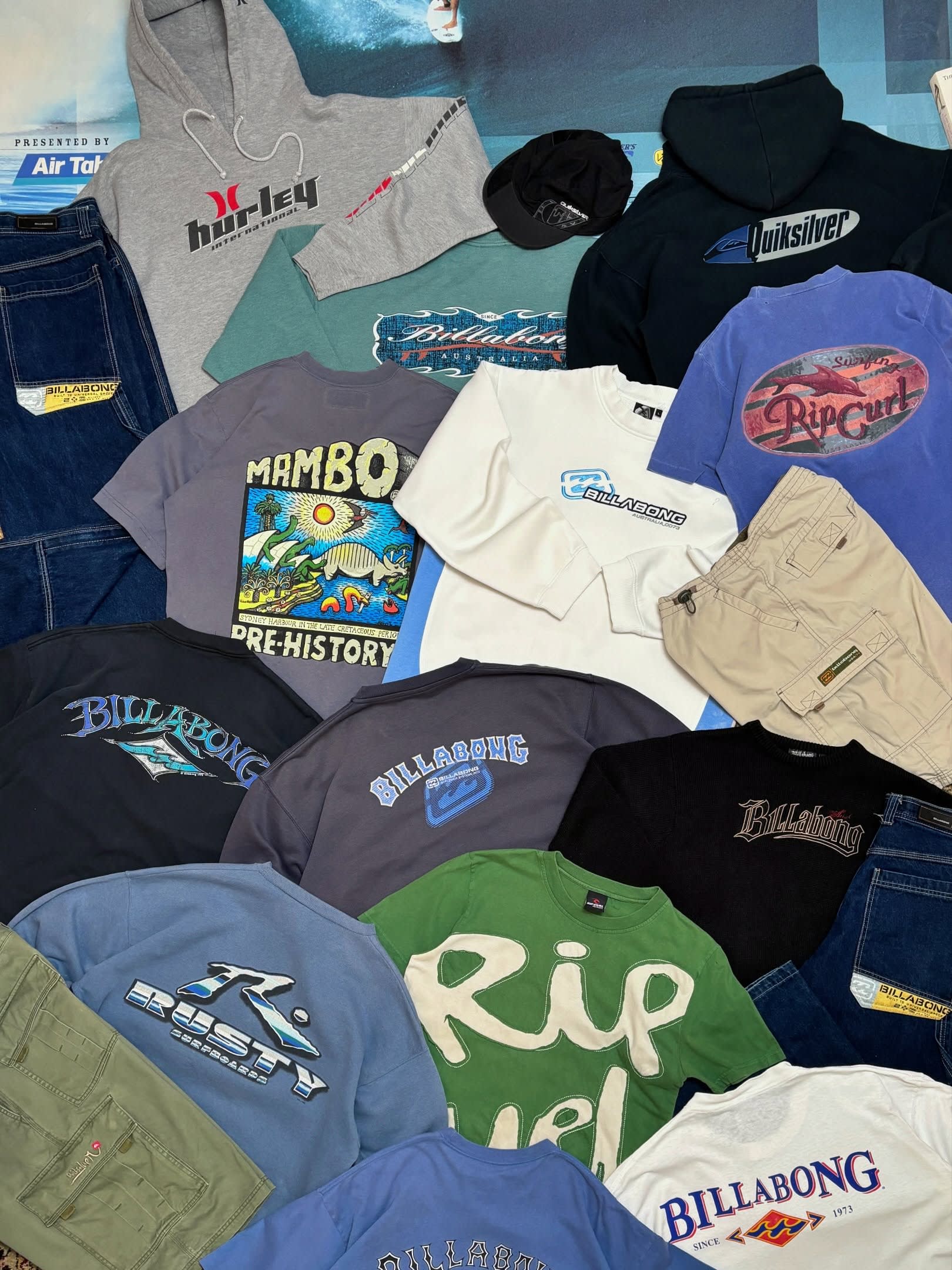
When Surf Brands Were Weird: The Lost Surf Brands of the '90s
Explore the forgotten surf brands of the ’90s and Y2K—and why their strange graphics, subcultures and vintage pieces resonate again today.
Read →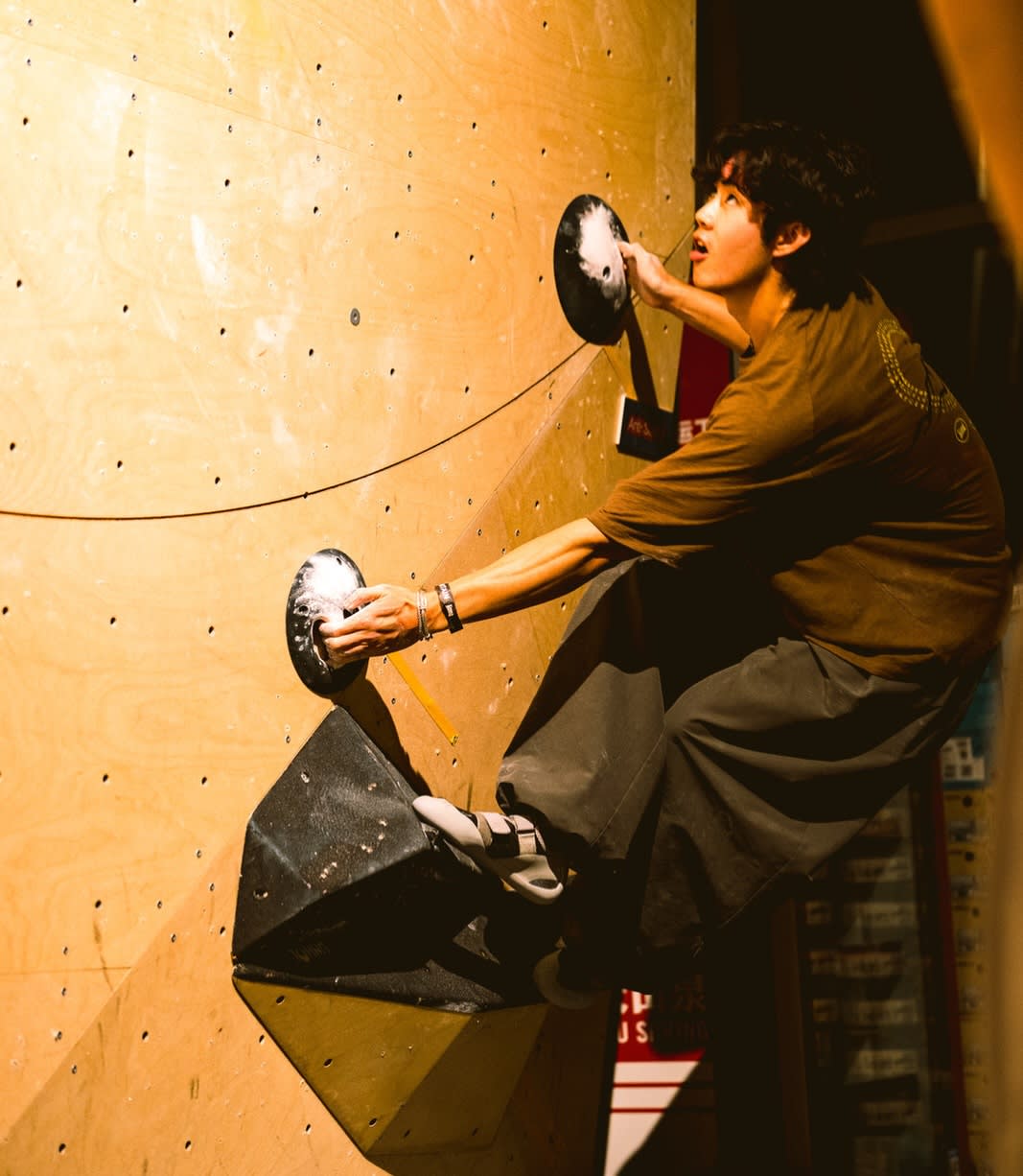
September 17, 2026
Saturn LA Is Building Outdoor Clothing From the Outside In
Saturn LA founder Ryan Cheung talks climbing, streetwear, Chinese outdoor design, independent brands, and the future of technical clothing on WeekEnds WeekDay
Read →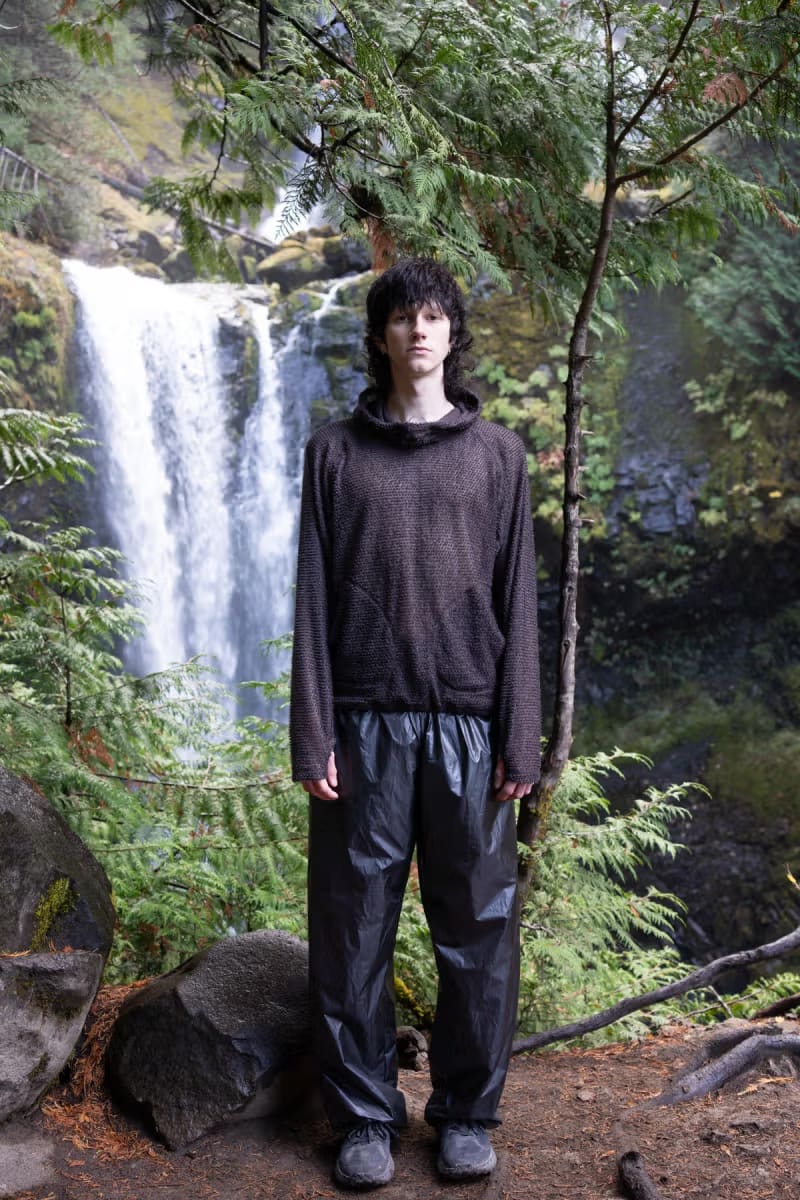
September 16, 2026
The People Designing the New Outdoors
Meet the designers, makers, editors and community builders reshaping outdoor culture, from Gnuhr and CAYL to Field Mag, USAL. Goodlids and more.
Read →