
Vampire Surf Club Wants You to Stay Out Longer
by Gene Han
The waves were still good when Nicola Morgan realized she had a problem. She was surfing Honolua Bay in Maui with her partner, hours into one of those sessions that makes leaving the water feel irrational. The conditions were good, the crowd was thin, and there was no obvious reason to paddle in.
Except Morgan's legs were burning.
Sunscreen had done what sunscreen eventually does during a long day in the ocean: disappeared. The Hawaiian sun had taken over from there, leaving Morgan with one of surfing's more frustrating negotiations. The waves were telling her to stay. Her skin was telling her to leave.
She paddled in, but the question that followed would eventually become Vampire Surf Club: Why should good waves end because your gear isn't doing enough?
Morgan went looking for something she could wear the next time. She wanted more coverage and serious sun protection, but she didn't want the typical rashguard. Nothing she found felt quite right, which was particularly frustrating because Morgan knew clothes.
Before Vampire Surf Club, she had spent more than fifteen years working in luxury fashion, including time at Givenchy, Lanvin, and The Row. She understood fabrics and construction. She understood how small changes in proportion could completely change the way a garment looked and moved. Now she was looking at surfwear and wondering why she couldn't find something that combined those ideas with the realities of spending hours in the ocean.
Back home in Venice Beach, she stopped looking and started making it herself.

Built for Another Hour
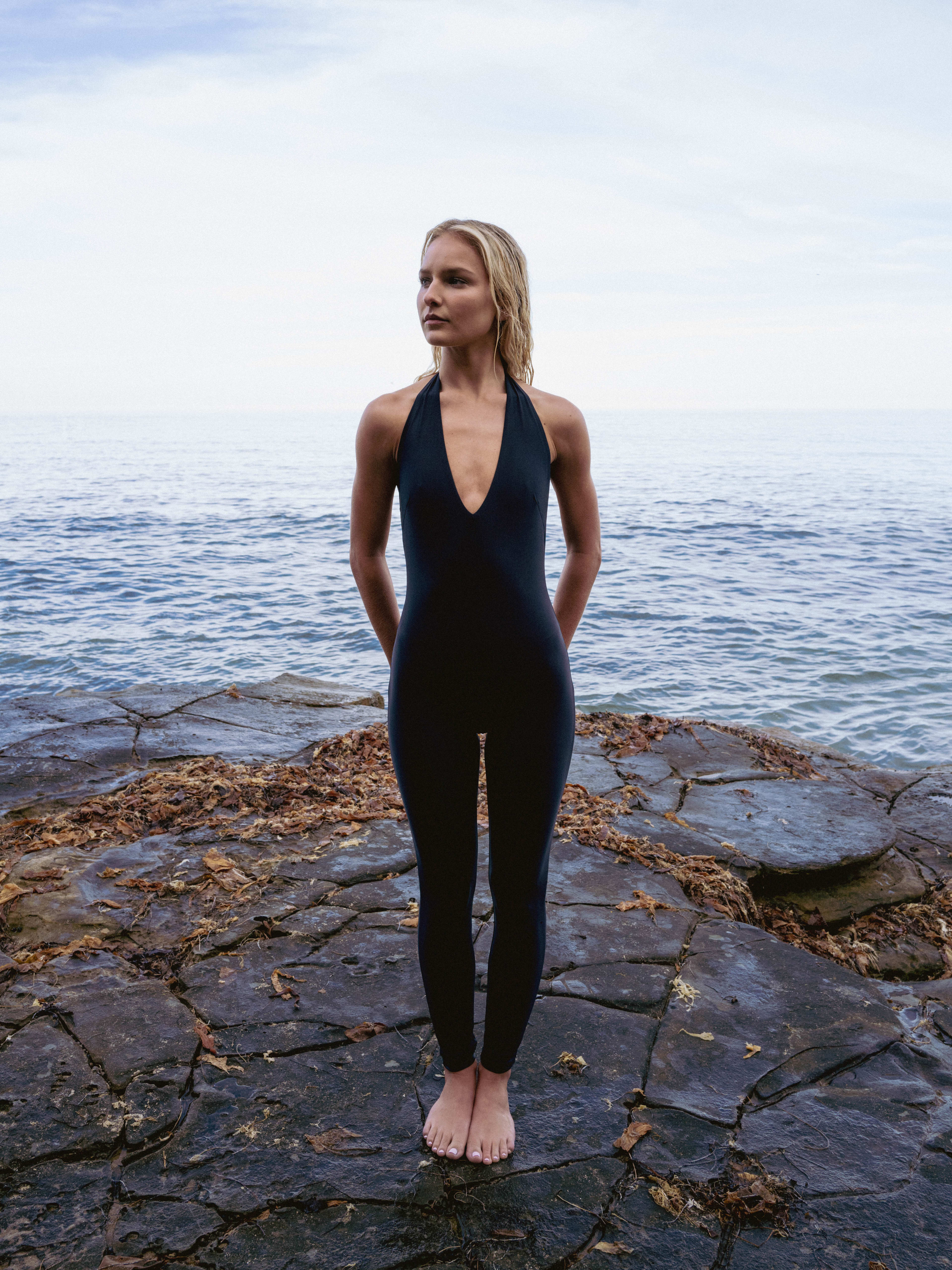
The first Vampire Surf Club pieces followed a simple premise: cover more skin without changing how it feels to surf.
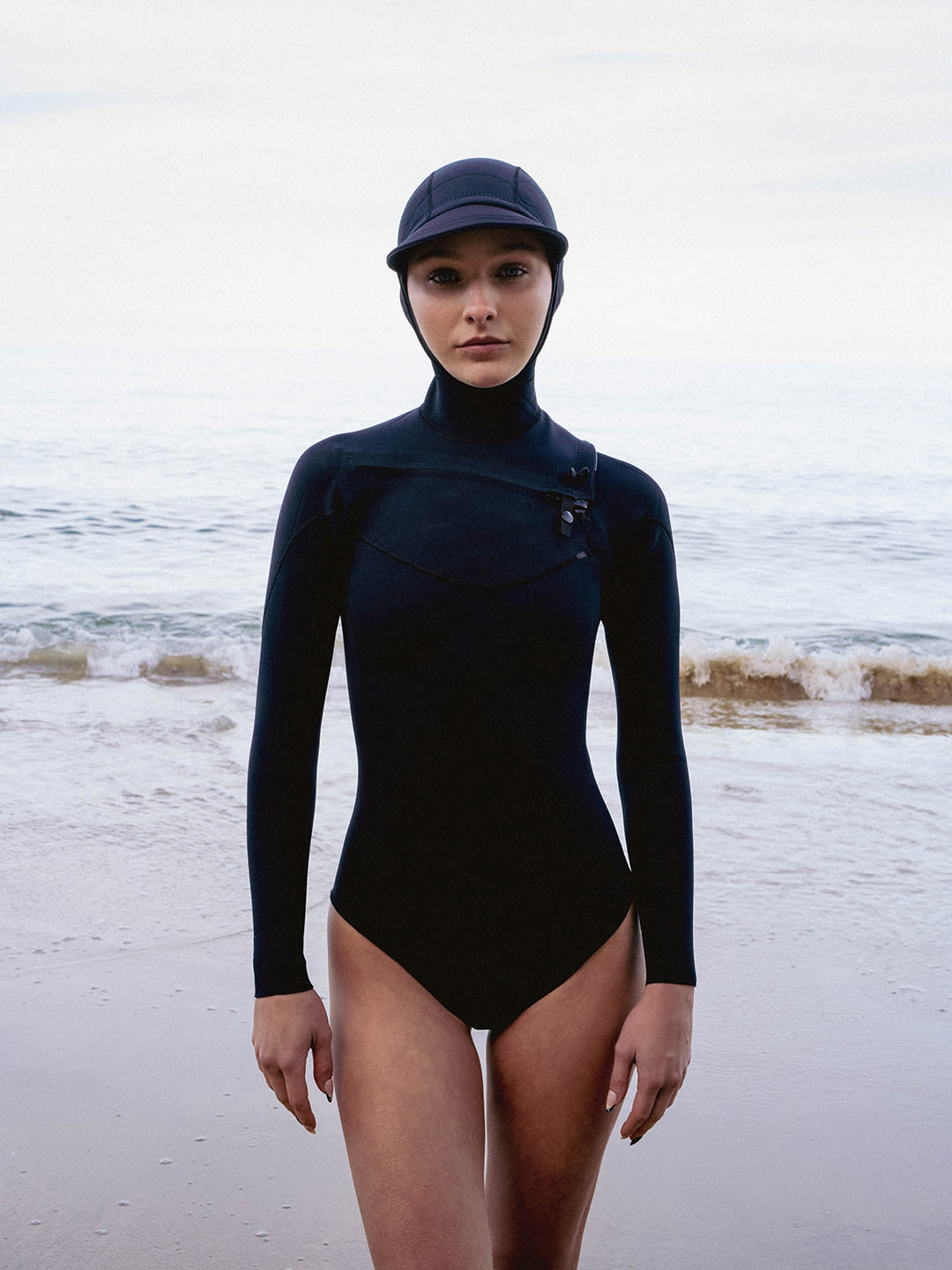
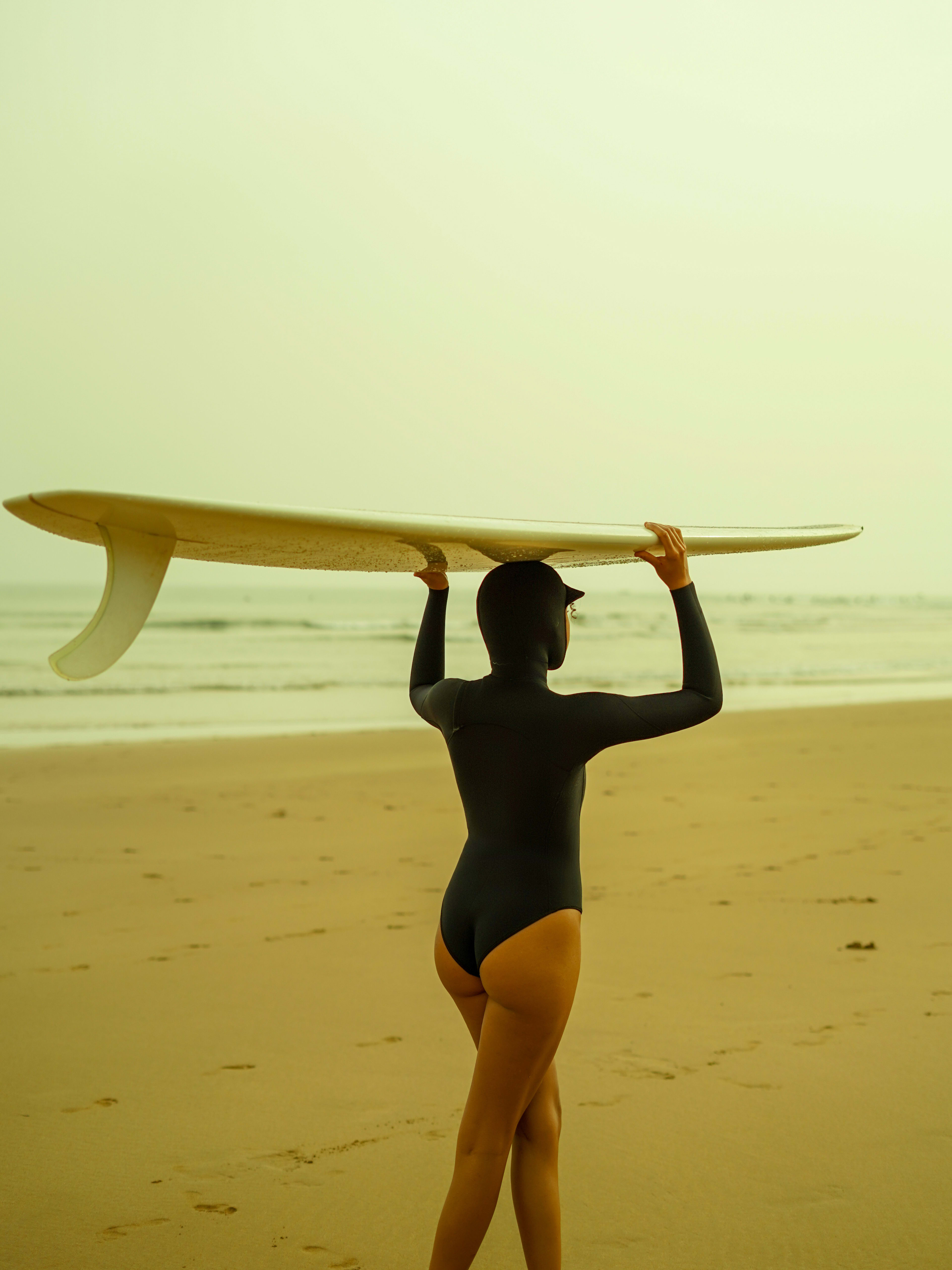
That meant UPF50+ fabrics designed to block 98 percent of UV radiation. Long sleeves. Leggings. Bodysuits. Hooded rashguards that extend protection over the head and neck. Springsuits and modular separates built around the same idea.
The technical specification matters, but what it buys you matters more: time.
Another hour in the lineup. Another set rolling through. Another afternoon when the wind unexpectedly stays down. Another session where you're thinking about the waves instead of how badly you're going to burn.
It's a subtle shift in perspective that gets to the heart of Vampire Surf Club. The product isn't really sun protection. The product is more time outside.

Making Protection the Look
Morgan did something else with all that coverage. She made it look good.
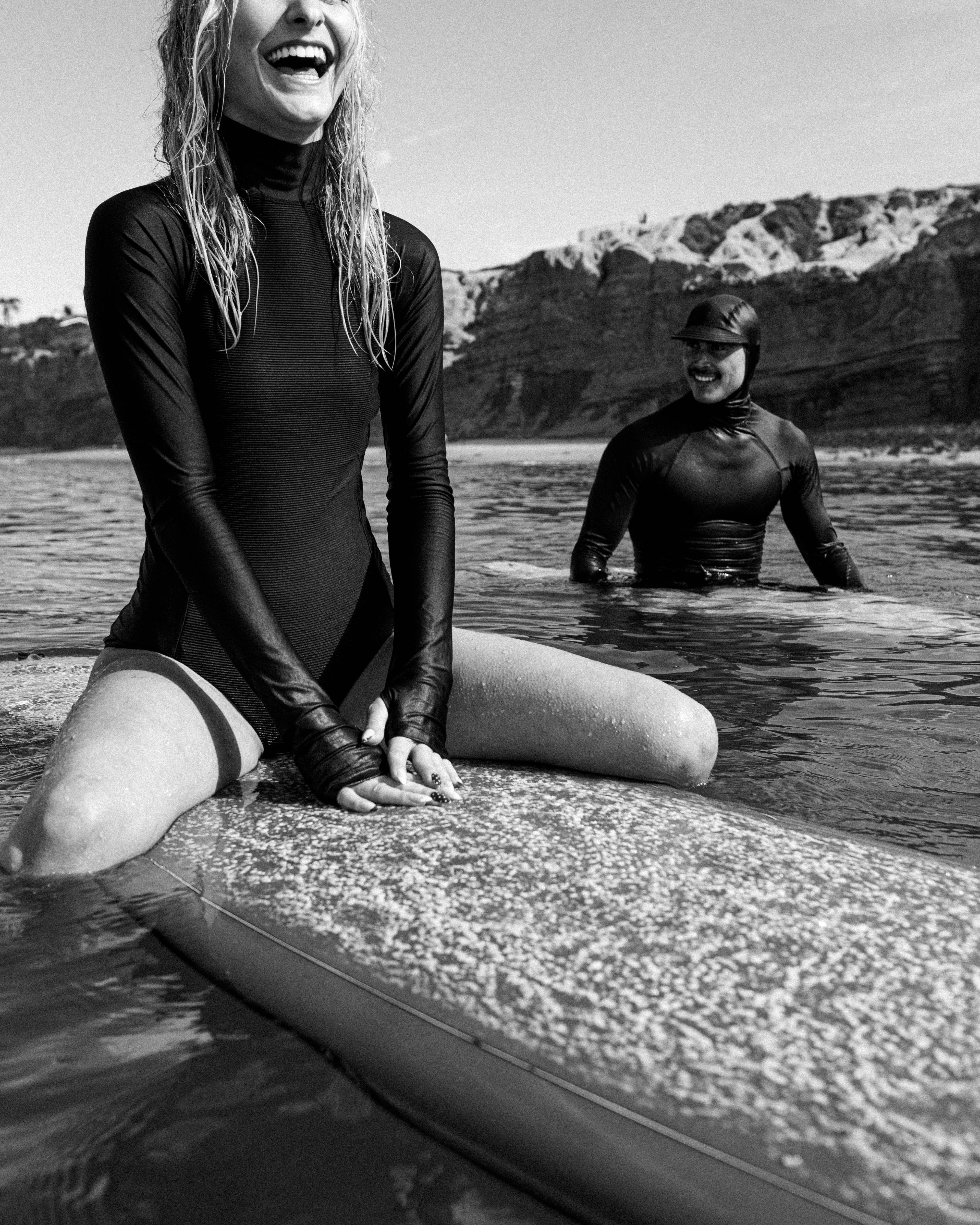
Vampire Surf Club doesn't really look like conventional surf equipment. Black dominates. Branding is restrained. Silhouettes are clean and occasionally severe. A hooded rashguard can feel almost architectural, while full-coverage suits look intentional rather than purely functional.
Morgan brought the attention to cut, proportion, fabrication, and construction she developed in fashion to surfwear, treating sun protection itself as a design opportunity.
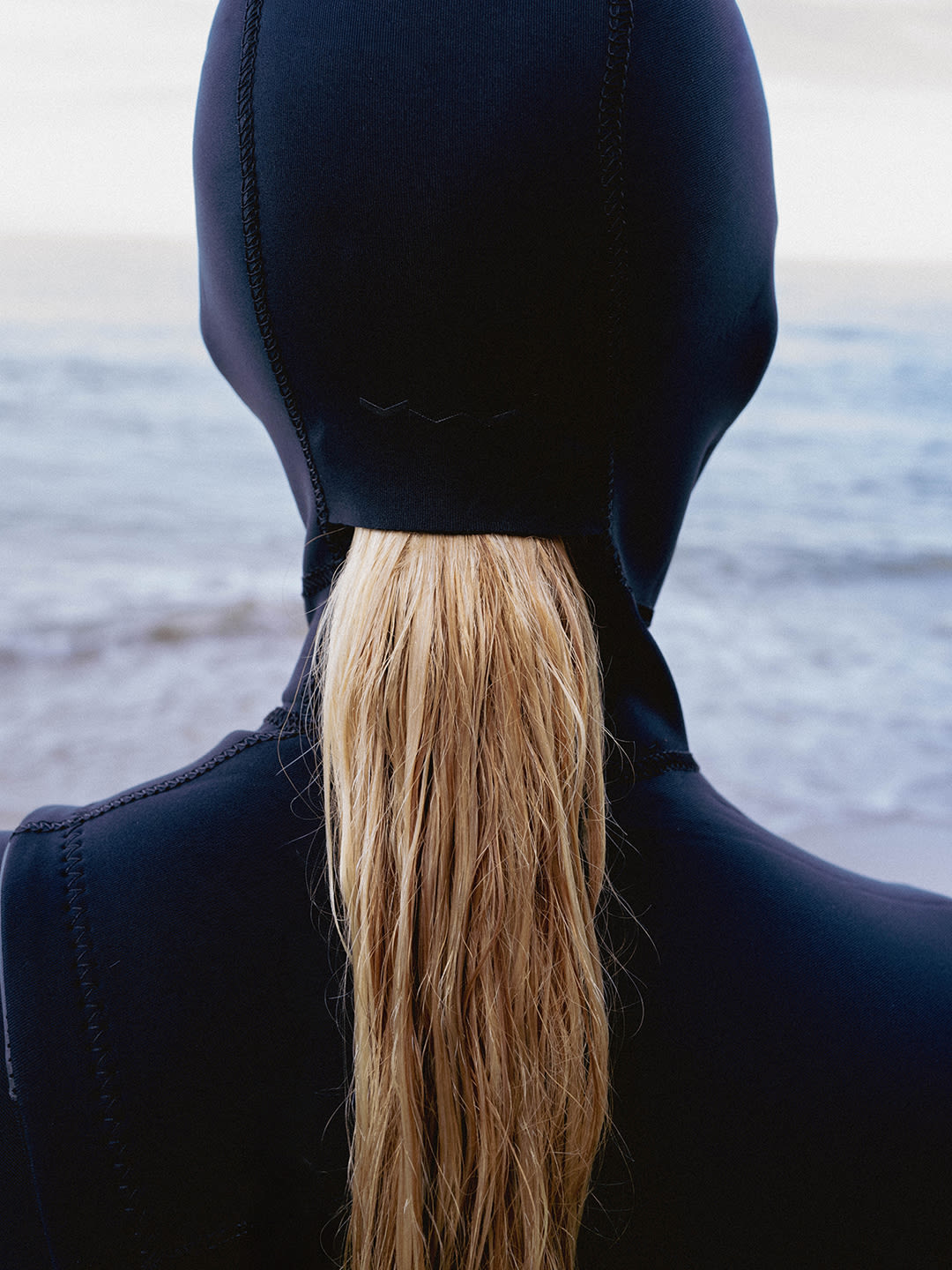
A hood becomes both sun protection and silhouette. A long sleeve stops looking like something you're wearing because you should and starts looking like something you're wearing because you want to.
That's the cleverness of Vampire Surf Club. The brand isn't asking surfers to choose between looking good and protecting themselves from the sun. It makes protection the look.
But this isn't luxury fashion cosplaying as outdoor gear. These clothes are designed to be surfed in. Hours of paddling, salt, sun, and repetition are the baseline, and anything that can't take that doesn't make it into the collection.
The brand uses high-performance Italian fabrics made with ECONYL regenerated nylon yarn alongside premium limestone-based neoprene sourced from Japan. Pieces are developed slowly, tested in the water, and produced in limited quantities.
Morgan's fashion background shows up less as decoration than as an obsession with details. A seam isn't simply a seam if it starts bothering you halfway through a three-hour session. A beautiful silhouette isn't particularly useful if you can't paddle in it. And sustainable materials don't mean much if the finished garment needs replacing every season.
The result sits somewhere between clothing and equipment, which is increasingly where some of the most interesting outdoor products live.
Make Less. Make It Better.
Vampire Surf Club brings an almost old-fashioned standard to surfwear: make things people keep.
Outdoor brands have become remarkably good at convincing us that adventure requires constant upgrades: a new jacket, another pack, a slightly lighter tent, a different pair of shoes, another seasonal color of something we already own.
Vampire Surf Club takes a deliberately slower approach. Make fewer things. Make them well. Make them useful enough—and desirable enough—that people keep reaching for them.
It's not a particularly revolutionary idea. In fact, it's probably one of the oldest ideas in outdoor equipment.
Good gear should last.
And when something works exceptionally well, it eventually becomes part of the ritual. The jacket hanging by the door. The board you always grab. The pack permanently covered in dust. The wetsuit you instinctively reach for when the forecast turns.
The best gear acquires a history: wax stains, repairs, faded fabric, scratches from rocks you remember falling on. Eventually, you stop thinking about the product entirely.
It simply becomes the thing you bring.
Surfing After Dark
Then there's the name.
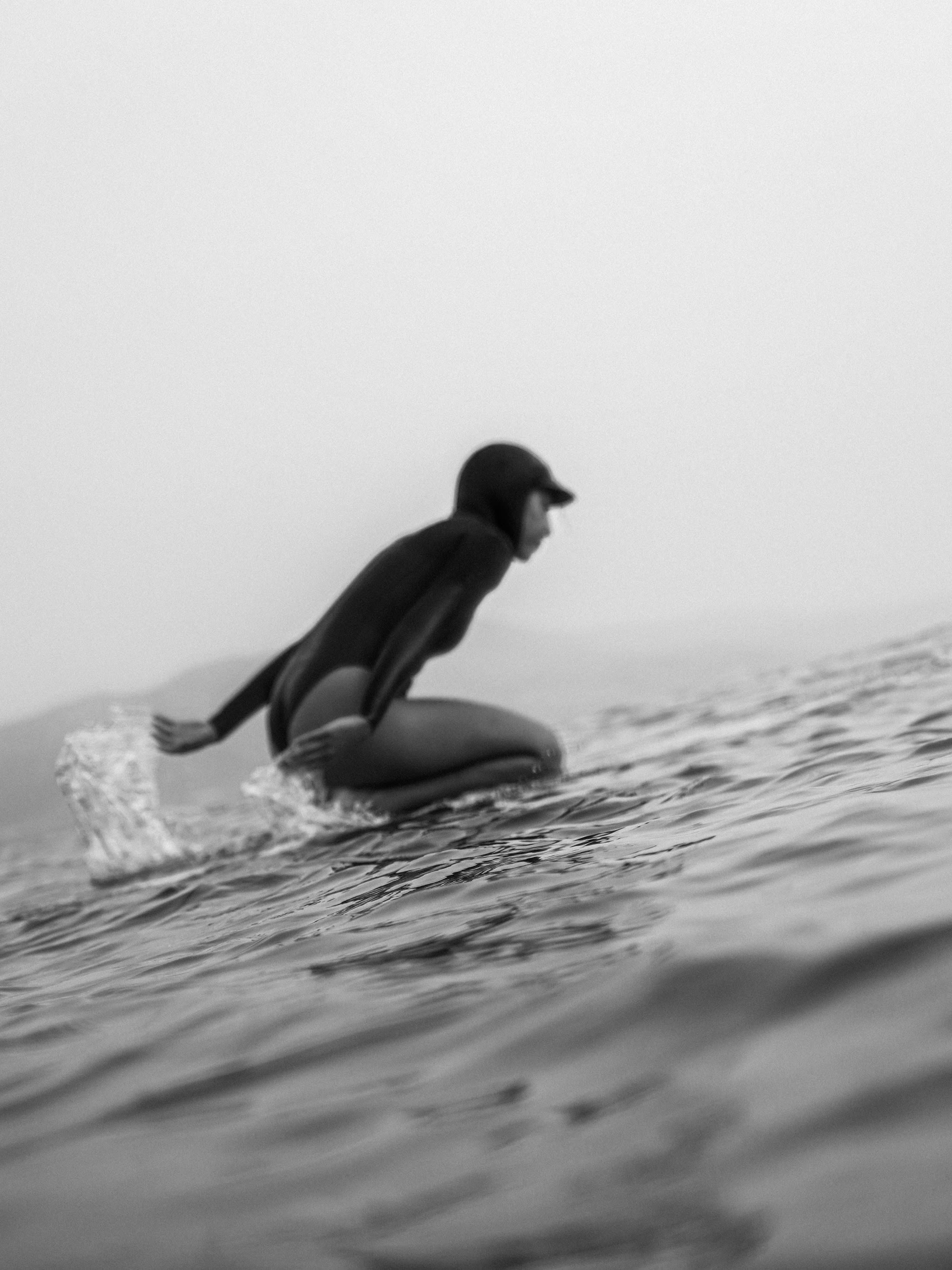
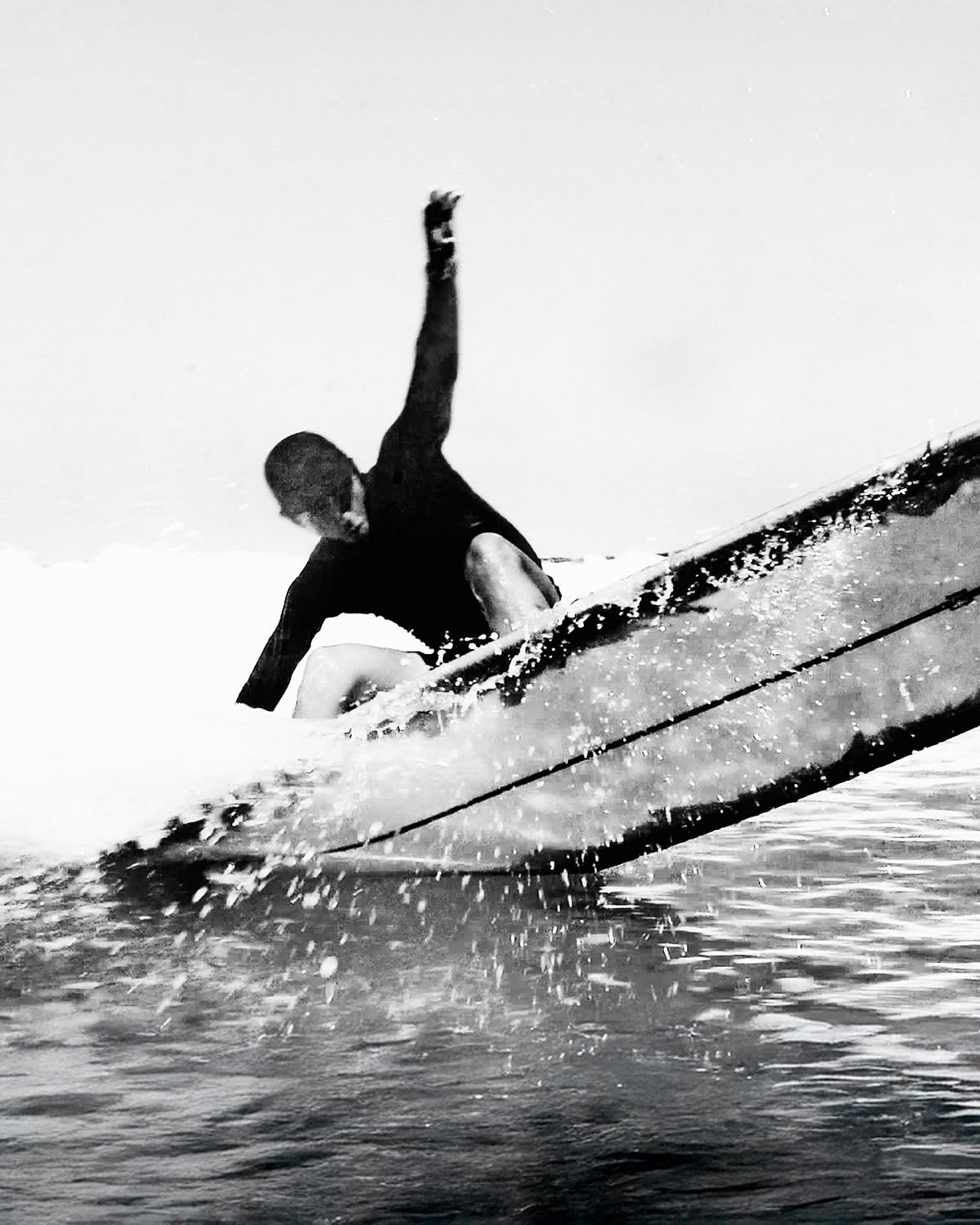
Vampire Surf Club sounds more like an underground band, an art collective, or a surf gang that only paddles out after midnight than a company built around UV protection. That's precisely why it works.
There's something wonderfully contradictory about a brand dedicated to people who organize their lives around the ocean naming itself after creatures famous for avoiding sunlight.
But the joke also points toward a larger shift happening in surf culture.
For decades, surfing romanticized exposure: endless summer, endless beach days, tan skin as evidence of a life well lived. Spend enough years outside, though, and your relationship with the sun changes.
You still want the endless day. You just don't necessarily want the evidence of it permanently written across your skin.
Vampire Surf Club proposes a different kind of surf uniform: cover up, stay out, keep surfing.
Instead of communicating sun protection through warnings, SPF numbers, and something vaguely medical, the brand turns it into an identity. Being the person completely covered in the lineup suddenly looks pretty good.

The Club Beyond the Clothes
The more interesting part of Vampire Surf Club may eventually be everything surrounding the product.
Through its journal, the brand documents surfers, filmmakers, environmental advocates, and ocean communities from California to Hawaiʻi to Morocco. Stories move between skin cancer and hyperpigmentation, ocean etiquette, female surf culture, filmmaking, environmental advocacy, and the communities that form around particular breaks.
It suggests a broader ambition. Vampire Surf Club isn't simply interested in selling people what they wear while surfing. It's interested in the culture that exists between sessions—the people, places, rituals, health, art, and ideas that accumulate around a life organized by the ocean.
That's where the second half of the name starts to carry weight.
The Surf Club.
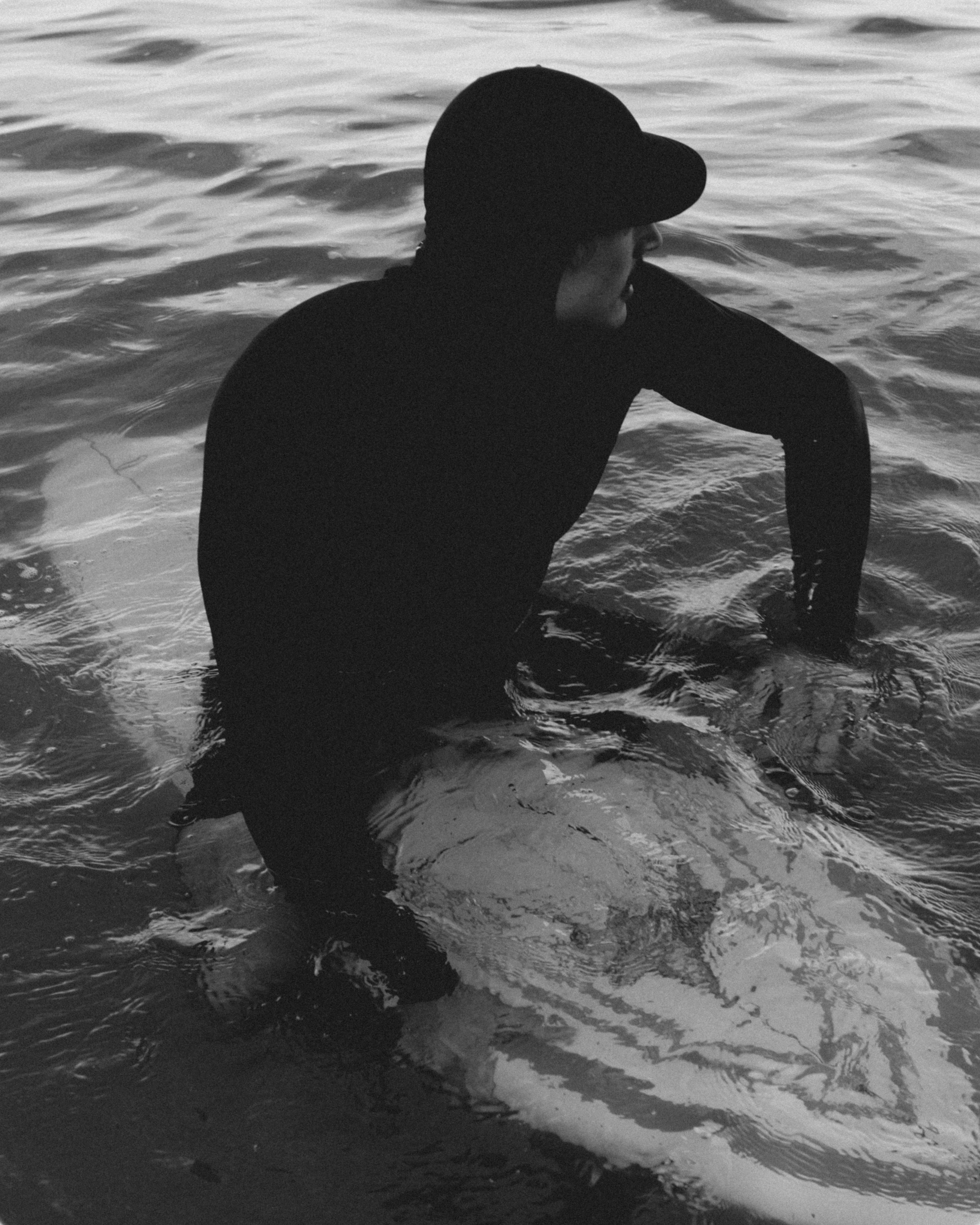
Not necessarily a clubhouse with membership cards, but the loose kind of club outdoor culture has always created. People standing beside cars in wetsuits before sunrise. Someone checking the wind every twenty minutes. Boards stacked against a wall. Coffee after the session. The same faces appearing whenever the forecast turns good.
The product might introduce you to the brand. The culture gives you a reason to stick around.
Stay Out Longer
Surfwear has spent decades bouncing between two poles. There is performance equipment: practical, technical, often designed with little concern for anything beyond function. And there is surf fashion: clothing inspired by surfing that may never actually touch the ocean.
Vampire Surf Club is finding territory somewhere between them.
The pieces are legitimate equipment, but they're also objects of design. They suggest a future where technical apparel doesn't have to announce its technicality, where protection doesn't have to feel like a compromise, and where durability and aesthetics aren't separate considerations.
More importantly, the brand begins with a question that feels familiar across almost every outdoor pursuit: How do we stay out here a little longer?
For Morgan, the answer started on a sunny day at Honolua Bay.
The waves were good. There was nowhere else she particularly wanted to be. The only problem was that eventually, the sun was going to force her out of the water.
So she built something that might let her stay.
That's a pretty good reason to make a piece of gear.
No products available.
Shop Vampire Surf Club on WeekEnds today.
Related Articles

September 24, 2026
Nur Abbas is Designing Ultralight
Nur Abbas, founder of Gnuhr, explores ultralight as a design philosophy built around utility, reduction, experimentation and genuine innovation.
Read →
September 21, 2026
When Surf Brands Were Weird: The Lost Surf Brands of the '90s
Explore the forgotten surf brands of the ’90s and Y2K—and why their strange graphics, subcultures and vintage pieces resonate again today.
Read →
September 17, 2026
Saturn LA Is Building Outdoor Clothing From the Outside In
Saturn LA founder Ryan Cheung talks climbing, streetwear, Chinese outdoor design, independent brands, and the future of technical clothing on WeekEnds WeekDay
Read →