
The Rain Jacket After Fifty Washes
by WeekEnds
Waterproof jackets are designed to survive the weather. But how well do they survive the washing machine? As outdoor brands move away from forever chemicals, a new question is emerging: who is responsible for keeping technical clothing technical?
A rain jacket has a peculiar relationship with water. It is designed to withstand hours of driving rain, blowing snow, and relentless mountain weather, yet one of the most consequential things that happens to it may take place inside a washing machine.
Most people don't think about washing a waterproof jacket until something appears to go wrong. Water stops beading on the shoulders. The fabric darkens around the cuffs. The jacket feels clammy during a hike, and the person wearing it begins to suspect that the expensive waterproof membrane has finally given up.

Photo: Finisterre
The natural response is often to wash the jacket less, worried that detergent, agitation, and repeated laundering will only accelerate its decline.
But the opposite may be true.
Dirt, sweat, body oils, sunscreen, and other contaminants can interfere with a jacket's ability to repel water. In some cases, washing restores performance rather than diminishing it. A garment that appears to be failing may simply need cleaning, while one that looks perfectly intact may be losing its ability to manage moisture.
This distinction is becoming increasingly important as the outdoor industry moves away from the fluorinated chemicals that helped define modern waterproof clothing.
For decades, durable water-repellent treatments were expected to perform with relatively little attention from the consumer. Newer PFAS-free alternatives introduce different maintenance considerations, while independent outdoor brands are exploring alternative fabric systems, repair programs, and approaches to garment longevity.
The question is no longer simply how waterproof a jacket is when it leaves the factory.
It's how waterproof that jacket remains after fifty washes, hundreds of miles, and years of ordinary use.
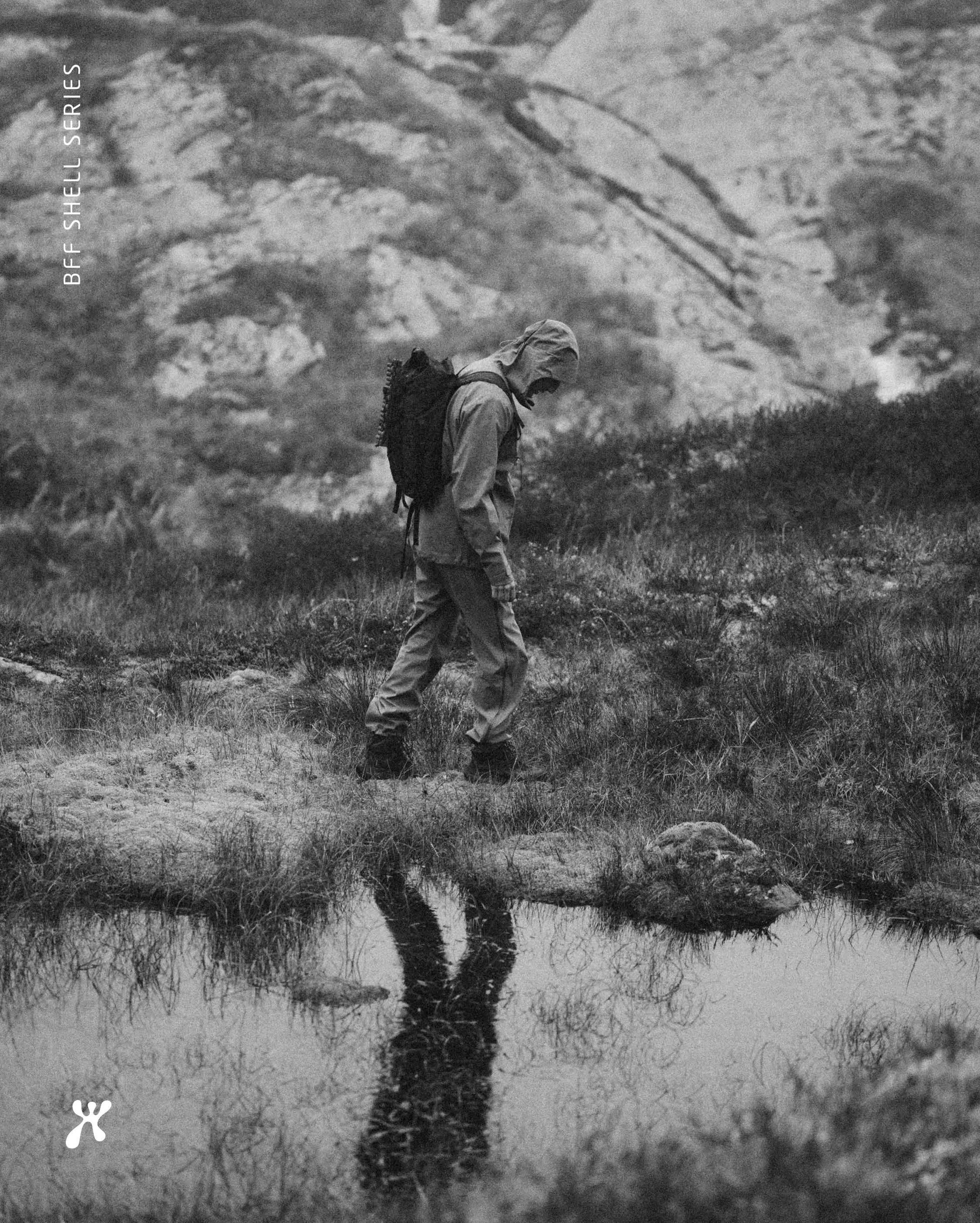
Photo: Houdini
Waterproof and Water-Repellent Are Not the Same Thing
To understand why a rain jacket can appear to fail without actually leaking, it helps to separate two technologies that are frequently mistaken for one another.
In a conventional waterproof-breathable shell, the membrane or waterproof coating provides the principal barrier against rain. The outer face fabric is typically treated with a durable water repellent, commonly called DWR, that encourages water to form droplets and roll away rather than soak into the textile.
These systems perform different jobs.
The membrane is intended to prevent external water from passing through the garment, while the DWR helps keep the outer fabric from becoming saturated. When the treatment loses effectiveness, the fabric begins absorbing water, a phenomenon known as wetting out.
The jacket may suddenly feel heavier and colder. Moisture vapor escaping from the body can become less efficient as the outer fabric becomes saturated, and condensation can accumulate inside. The resulting dampness is easily mistaken for rain penetrating the membrane.
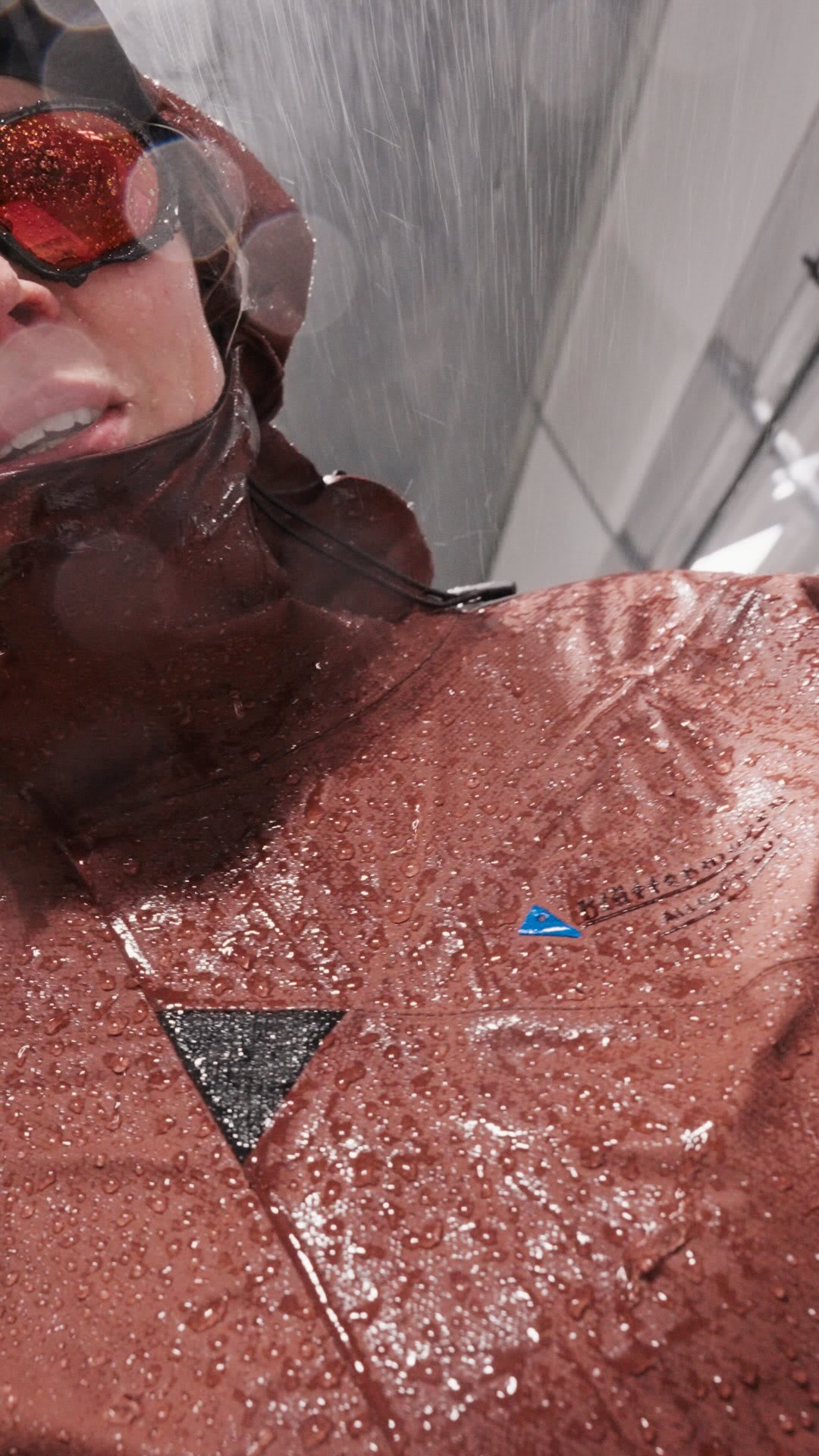
Photo: Klättermusen
But wetting out does not necessarily mean the waterproof barrier has failed.
That is an important distinction for both consumers and manufacturers. One problem may be reversible through cleaning and reproofing; the other may involve damage to the membrane, coating, seam tape, or garment construction.
A jacket that no longer beads water may still be waterproof. It may simply be considerably less comfortable to wear.
And that raises an uncomfortable question about the way waterproof performance is marketed.
If the experience of staying dry depends on two separate systems, one of which requires periodic maintenance, what exactly does a waterproof rating tell the consumer about the garment's useful life?

The Chemistry Is Changing
For much of the modern outdoor industry's history, fluorinated chemistry played a central role in durable water repellency.
Treatments using certain per- and polyfluoroalkyl substances, or PFAS, offered useful resistance to water, oils, and contamination. Their durability made them attractive for technical outerwear, where fabrics are exposed to abrasion, repeated folding, sweat, and unpredictable conditions.
But the environmental persistence of many PFAS has fundamentally changed the industry's relationship with these chemicals.
Manufacturers have been transitioning toward alternatives that avoid intentionally added PFAS, including hydrocarbon-based and other fluorine-free repellent systems. The shift represents a significant change in textile chemistry, but it also forces brands to reconsider how performance is maintained over time.
Water repellency, oil resistance, abrasion resistance, and wash durability are not interchangeable properties. A treatment can perform well in one category and less effectively in another.
The challenge is not simply finding a replacement chemical that makes rain bead on a new jacket. It is maintaining useful performance after the garment encounters sweat, sunscreen, skin oils, backpack straps, washing machines, and years of wear.
This is where smaller outdoor companies become particularly interesting.
Rather than treating waterproofing as a single technical problem with one industry-standard solution, independent brands have developed different philosophies about fabric construction, care, and repair.
Some have focused on fluorine-free membrane shells. Others have reconsidered whether a conventional membrane is necessary at all. Still others have made cleaning and reproofing part of the product's expected life cycle.
Together, they suggest that the next chapter of waterproof clothing may be defined as much by maintenance as by material innovation.
Photo: Houdini
Houdini: The Cost of a Cleaner Chemistry
Swedish outdoor brand Houdini approaches the problem from a different direction.
Where Páramo questions conventional waterproof construction, Houdini has worked within the membrane-shell category while emphasizing fluorocarbon-free treatments, material selection, and garment longevity.
The company's care guidance makes an important distinction between avoiding unnecessary washing and cleaning a garment when contaminants begin affecting its performance.
Houdini recommends airing garments when possible to reduce washing, but specifically advises cleaning shells exposed to salt water, heavy perspiration, or significant dirt. Those contaminants can compromise breathability and the effectiveness of the water-repellent surface.
This creates an interesting tension.
The environmental case for longer-lasting clothing often emphasizes reducing resource consumption. Washing uses water and energy, and laundering synthetic garments can release microfibers. But insufficient cleaning can also undermine the performance and longevity of technical equipment.
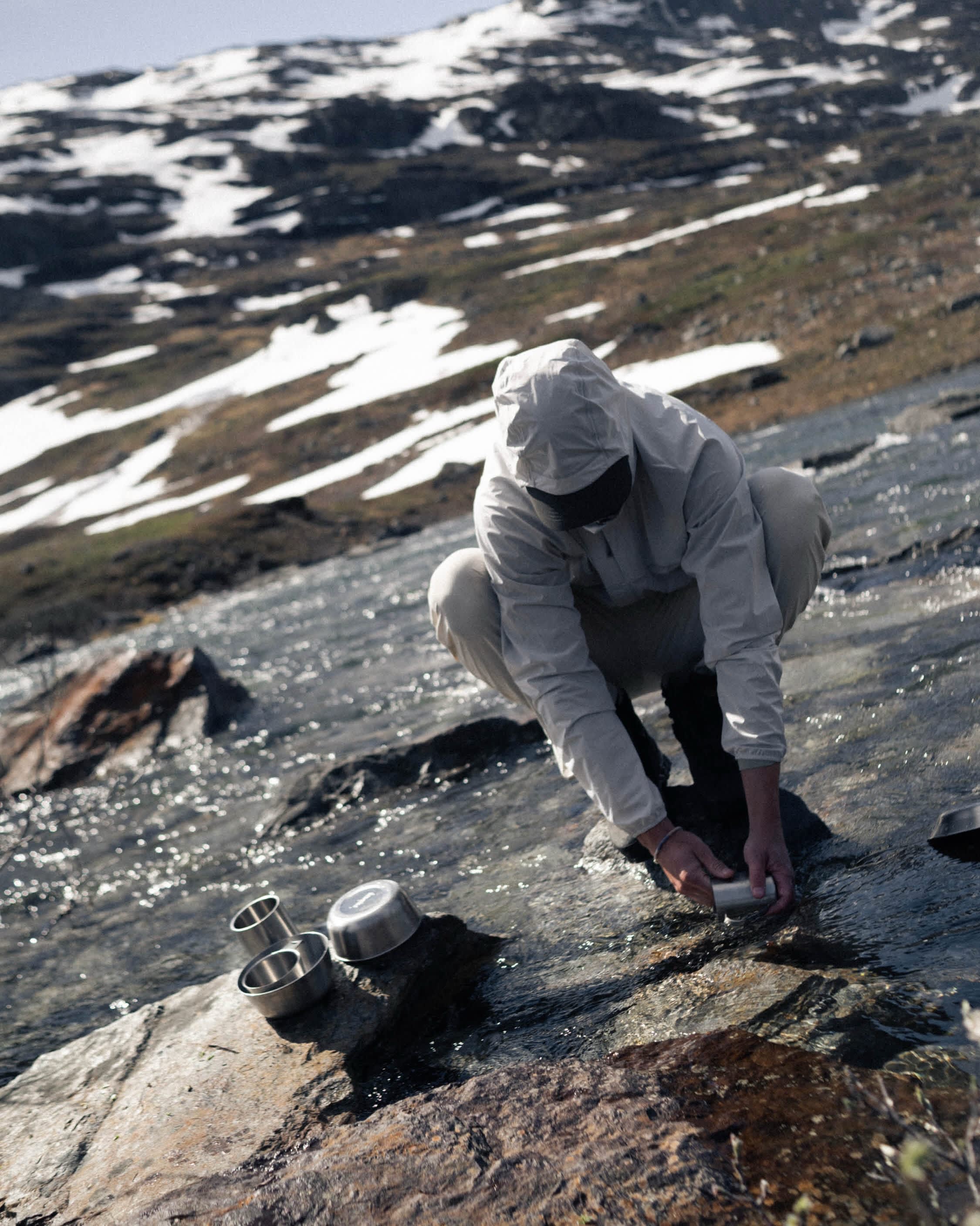
Photo: Houdini
The most responsible approach may not be washing as infrequently as possible. It may be washing appropriately, using the correct products and methods, to preserve the garment's useful life.
Houdini's approach also illustrates a broader challenge facing the industry. Removing fluorinated chemistry is an important material decision, but it does not eliminate the need for ongoing performance management.
A jacket can be manufactured with a more carefully considered chemical treatment and still require its owner to understand how that treatment works.
The environmental benefit ultimately depends on what happens after the purchase.
If a consumer maintains a jacket for ten years instead of replacing it after three, the consequences may be substantial. But that outcome requires a product capable of lasting, accessible maintenance instructions, and a consumer willing to follow them.
The most sustainable waterproof technology is not necessarily the one that demands the least maintenance. It may be the one that makes maintenance effective enough to delay replacement.
No products available.
Klättermusen: Durability Begins Before the First Wash
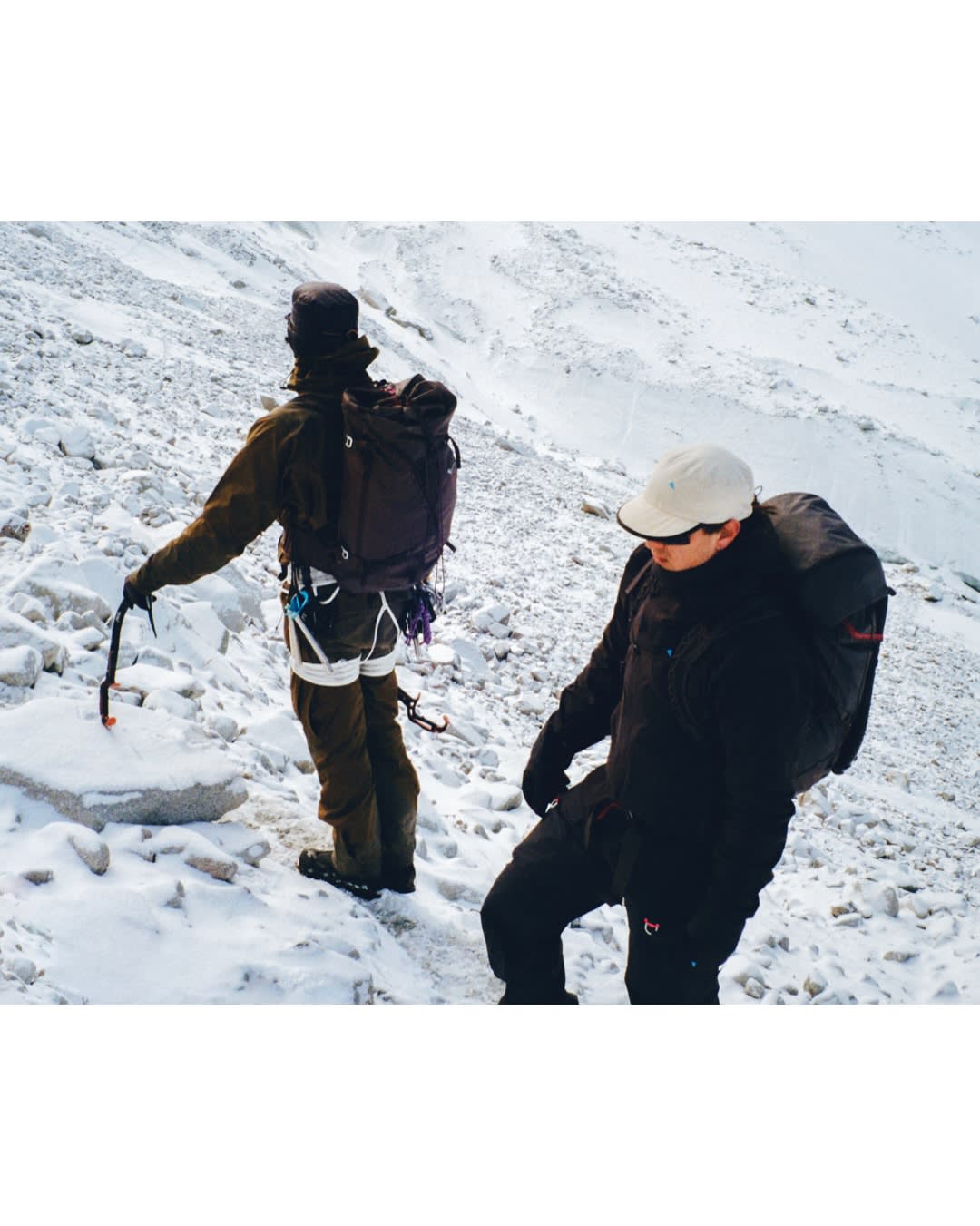
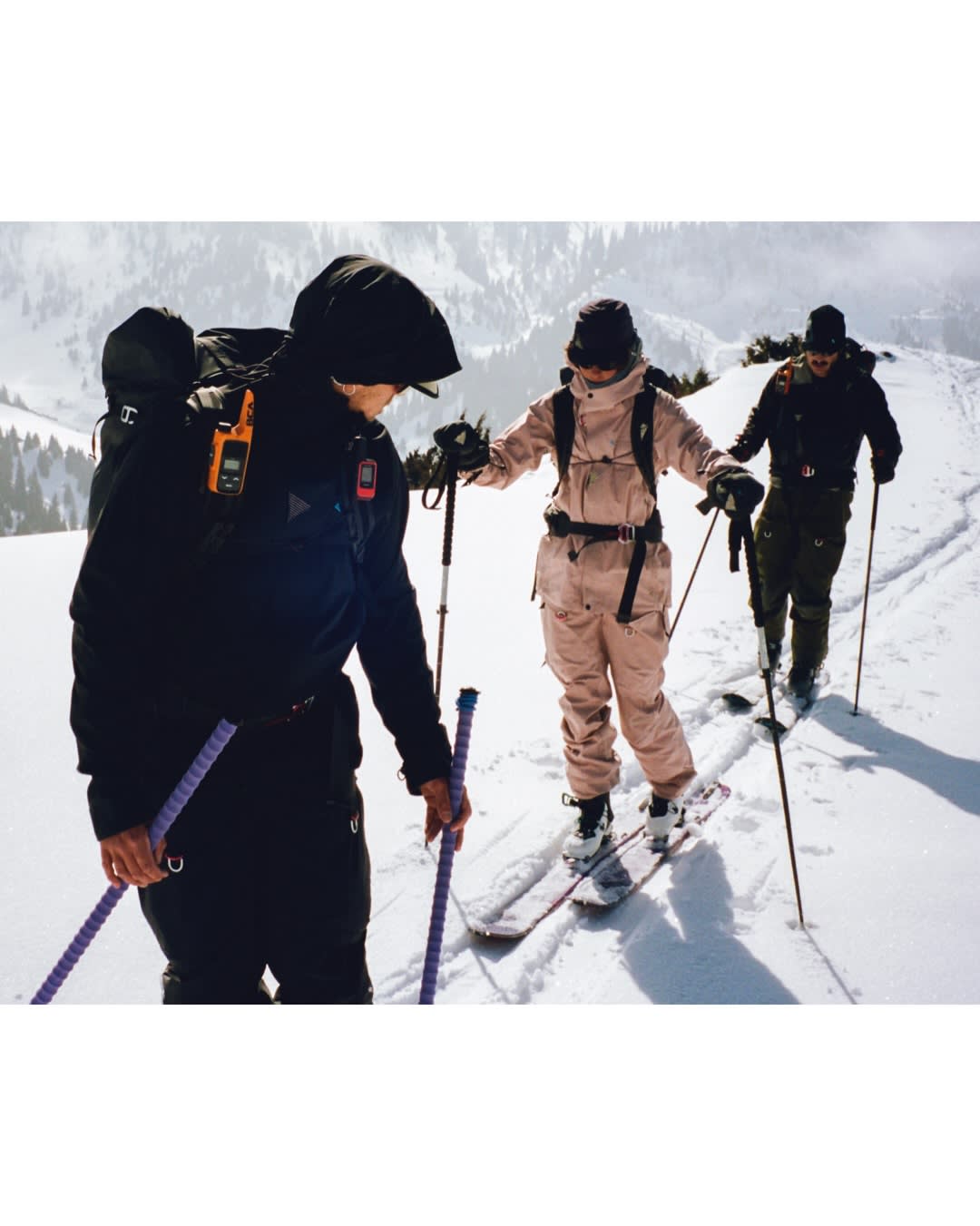
For Swedish mountaineering brand Klättermusen, the conversation extends beyond waterproof chemistry into the physical construction of the garment.
Its technical outerwear reflects a design philosophy in which fabric selection, reinforcement, patterning, and construction details are treated as essential components of durability.
That matters because the lifespan of a waterproof jacket is determined by considerably more than the performance of its DWR treatment.
A jacket can retain an effective waterproof membrane while suffering abrasion at the shoulders, delamination around high-wear areas, damaged seam tape, or failure at the zipper. Conversely, a garment may remain structurally sound long after its original water-repellent finish needs renewal.
These are different failure mechanisms, and they require different solutions.
Consider the shoulders of a jacket worn regularly beneath a loaded backpack. Repeated pressure and friction can wear the face fabric and its water-repellent treatment. Dirt and oils transferred from pack straps can further compromise performance.
Washing may remove contamination, while reproofing may restore surface repellency. But neither can reverse significant fabric abrasion or repair a damaged membrane.
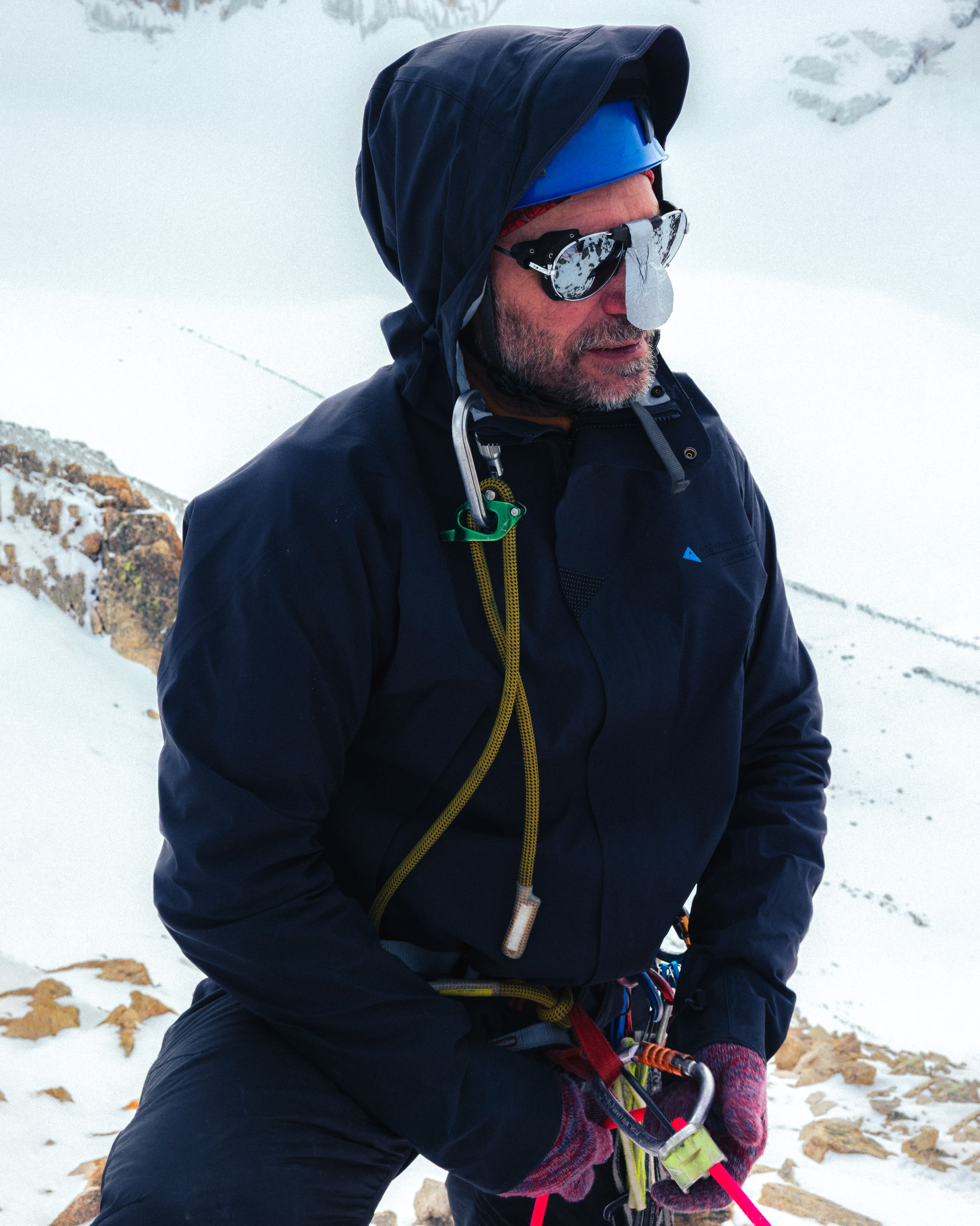
Photo: Klättermusen
The same distinction applies to the elbows, cuffs, and hem, where movement and repeated contact gradually affect the garment's construction.
Klättermusen's emphasis on technical construction offers a useful lens through which to examine these problems. Material selection and reinforcement can help manage mechanical wear, but they cannot eliminate the need to maintain water repellency.
A heavier or more robust fabric is not automatically more durable in every respect. It may resist abrasion better while introducing trade-offs in weight, comfort, drying time, or packability.
This is why the phrase built to last deserves closer scrutiny.
Lasting through what?
Fifty wash cycles? Five years of commuting? Hundreds of days beneath a backpack? Repeated exposure to salt water? An accidental tear against sharp rock?
A jacket can excel in one scenario and perform poorly in another.
True durability is not a single specification. It is the interaction between materials, construction, use, and maintenance over time.
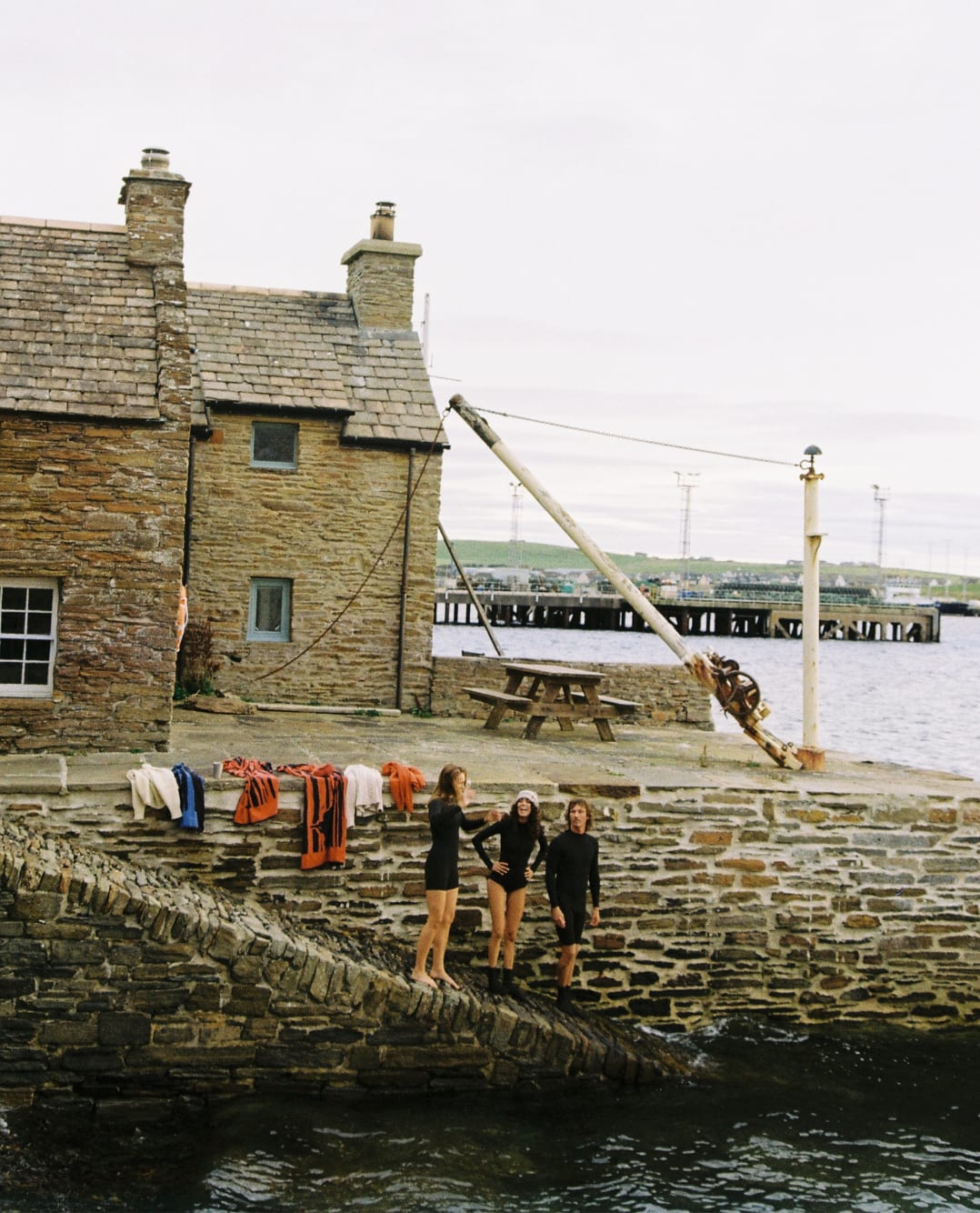
Photo: Finisterre
Finisterre: When Maintenance Becomes a Service
British coastal outdoor brand Finisterre introduces another dimension to the discussion: what happens when the manufacturer takes responsibility for helping consumers maintain their clothing?
Finisterre's relationship with wet-weather apparel is informed by the coastal environment, where wind, rain, salt, and repeated exposure place particular demands on garments.
The company recommends cleaning waterproof jackets and reproofing them when the face fabric begins wetting out. For regularly used garments, its guidance suggests that reproofing may become necessary after approximately a year, with subsequent treatment intervals depending on use and condition.
But Finisterre also offers professional washing and reproofing services, allowing consumers to send garments to the company rather than perform the process themselves. Its US service notes that results cannot be guaranteed on jackets older than five years, a reminder that maintenance has practical limits.
This may prove to be one of the more consequential developments in technical clothing.
For years, outdoor brands have invested heavily in communicating the sophistication of their materials. Waterproof ratings, breathability measurements, fabric weights, and proprietary technologies have become central to the way technical garments are sold.
But the instructions required to preserve those properties are often reduced to a small care label.
Finisterre's approach suggests an alternative relationship between manufacturer and consumer.

Photo: Finisterre
Instead of treating the sale as the end of the transaction, a company can treat the garment's ongoing performance as a service opportunity.
Professional cleaning, reproofing, seam repair, zipper replacement, and fabric patching can become part of the product experience.
This changes the economics of ownership.
A jacket that costs more initially but can be maintained and repaired for many years may offer better long-term value than a less expensive alternative that becomes difficult to restore.
The reverse can also be true. If professional maintenance becomes expensive or inconvenient, the theoretical advantages of repairability may not translate into actual consumer behavior.
The important question is whether the service meaningfully extends the product's useful life.
For independent outdoor brands, this creates an opportunity to compete on something other than new-product performance.
A company can differentiate itself through what happens five years after the purchase.
No products available.

The Problem With Fifty Washes
There is a reason fifty wash cycles make an appealing benchmark.
They provide a simple way to think about the difference between initial performance and long-term durability.
A new jacket might demonstrate impressive water repellency, breathability, and resistance to rain. But how much of that performance survives repeated laundering?
And what happens when the same jacket is washed, reproofed, worn beneath a backpack, exposed to salt and sweat, and washed again?
The answer is more complicated than measuring whether water beads on the fabric after a predetermined number of cycles.
A meaningful test would need to distinguish several independent variables.
First, there is the durability of the original DWR treatment. How quickly does water repellency decline under standardized laundering and abrasion?
Photo: Klättermusen
Second, there is recoverability. Can cleaning restore the existing treatment, or does the jacket require an additional water-repellent product?
Third, there is the underlying waterproof barrier. Does the membrane or coating maintain its resistance to water penetration after repeated washing, flexing, and wear?
Finally, there is the garment itself. Do seams, zippers, adhesives, reinforcements, and fabric surfaces remain functional?
These questions are related, but they are not interchangeable.
A jacket could lose much of its original water repellency while retaining an intact membrane. Another could continue beading water while developing a leak through a damaged seam. A third might maintain excellent technical performance but become uncomfortable because its fabric has stiffened or its construction has deteriorated.
The more useful question may be how well each garment performs after fifty washes when maintained according to its intended care system.
That would reveal not only the durability of the original technology but also the effectiveness, cost, and complexity of keeping it functional.
No such comparative test has been conducted for this article. The distinction matters: manufacturer specifications and care recommendations explain how products are intended to perform, not necessarily how they compare after years of use.
Photo: Klättermusen
The Hidden Cost of Staying Dry
Outdoor consumers have become accustomed to comparing the purchase prices of technical jackets.
A $200 rain shell competes with a $400 alternative, which competes with an $800 flagship model promising some combination of lower weight, greater breathability, more sophisticated construction, or superior protection.
But the purchase price is only one part of the ownership equation.
A jacket that requires periodic cleaning and reproofing carries ongoing costs in time, materials, water, energy, and effort.
Those costs may be relatively modest, particularly when maintenance can be performed at home. But they become more meaningful when compared across several years of ownership.
There is also the question of how easily consumers can recognize when maintenance is necessary.
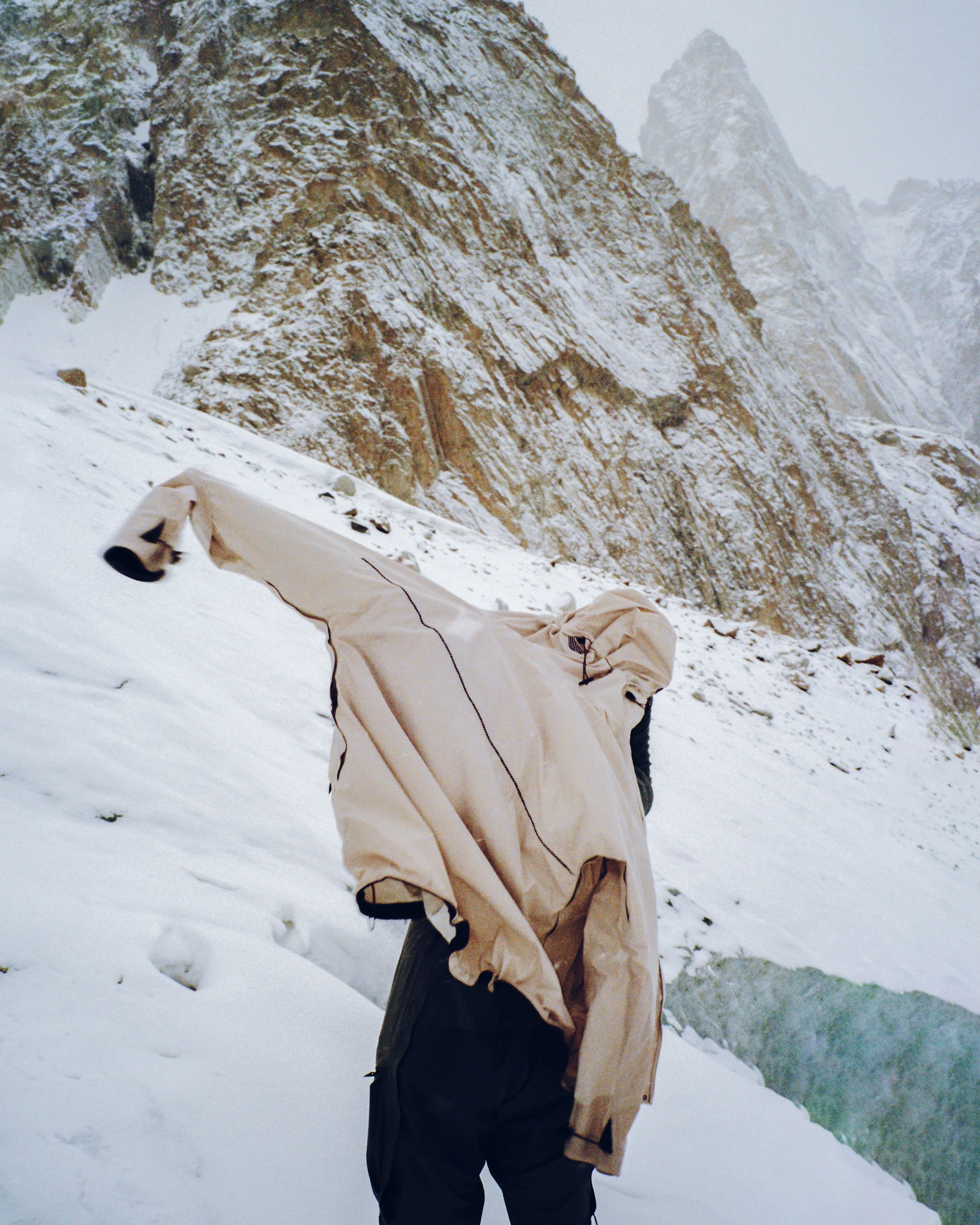
Photo: Klättermusen
A garment that requires an obscure treatment, specialized cleaning procedure, or manufacturer-only repair service may be technically maintainable without being particularly convenient to maintain.
Conversely, a product designed around readily available cleaning agents, replaceable components, and straightforward repair procedures may remain useful for much longer than its initial specifications suggest.
Alpkit, another British outdoor company, offers a useful example of the broader repair-oriented approach. Its repair services reflect the idea that extending a product's life requires infrastructure beyond the product itself.
This points toward a more comprehensive definition of technical performance.
Instead of evaluating a rain jacket solely by its waterproof rating, consumers could reasonably consider the ease of cleaning, the availability of replacement parts, the repairability of its construction, and the cost of restoring its performance.
A jacket's maintenance requirements are not separate from its design.
They are part of the design.
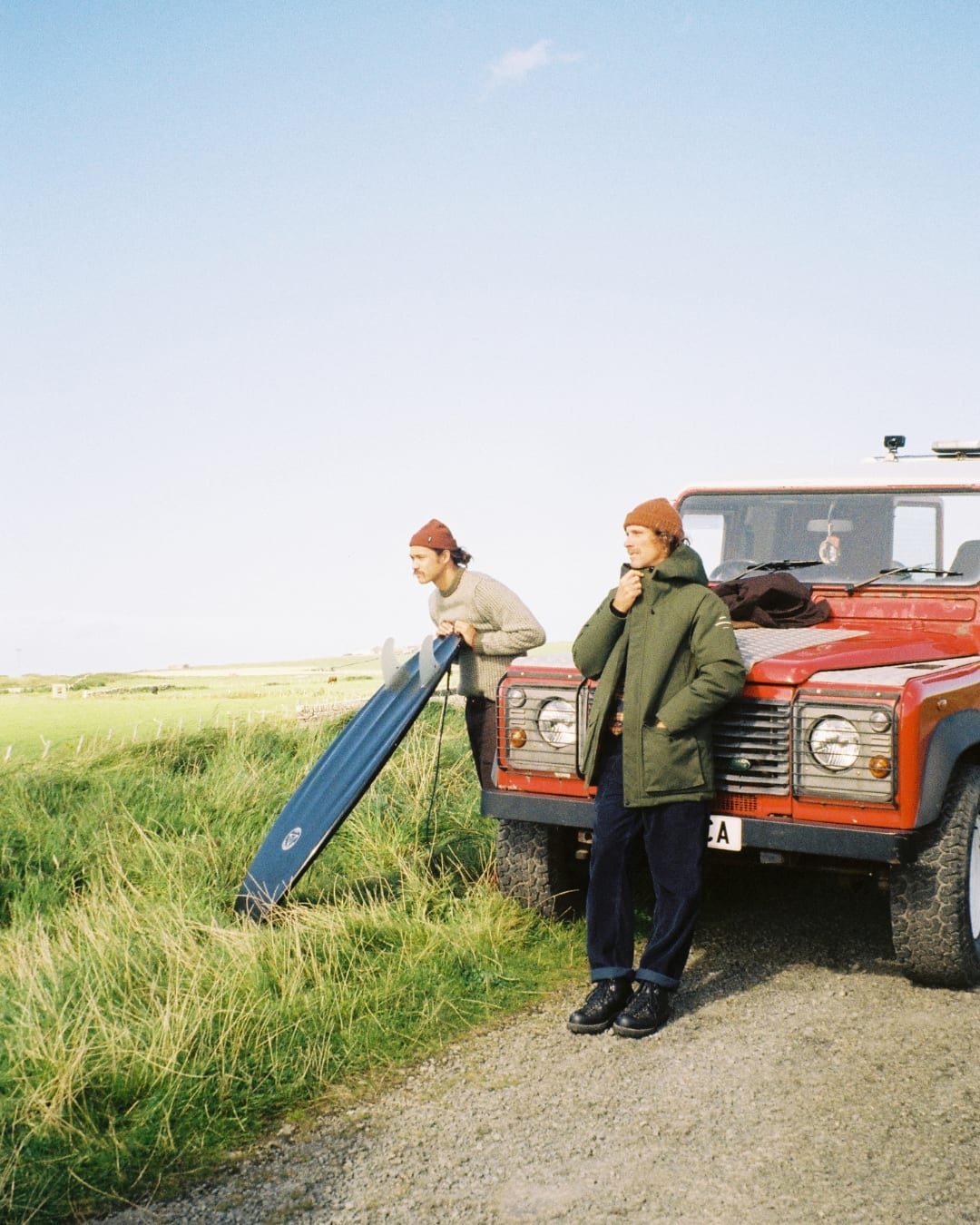
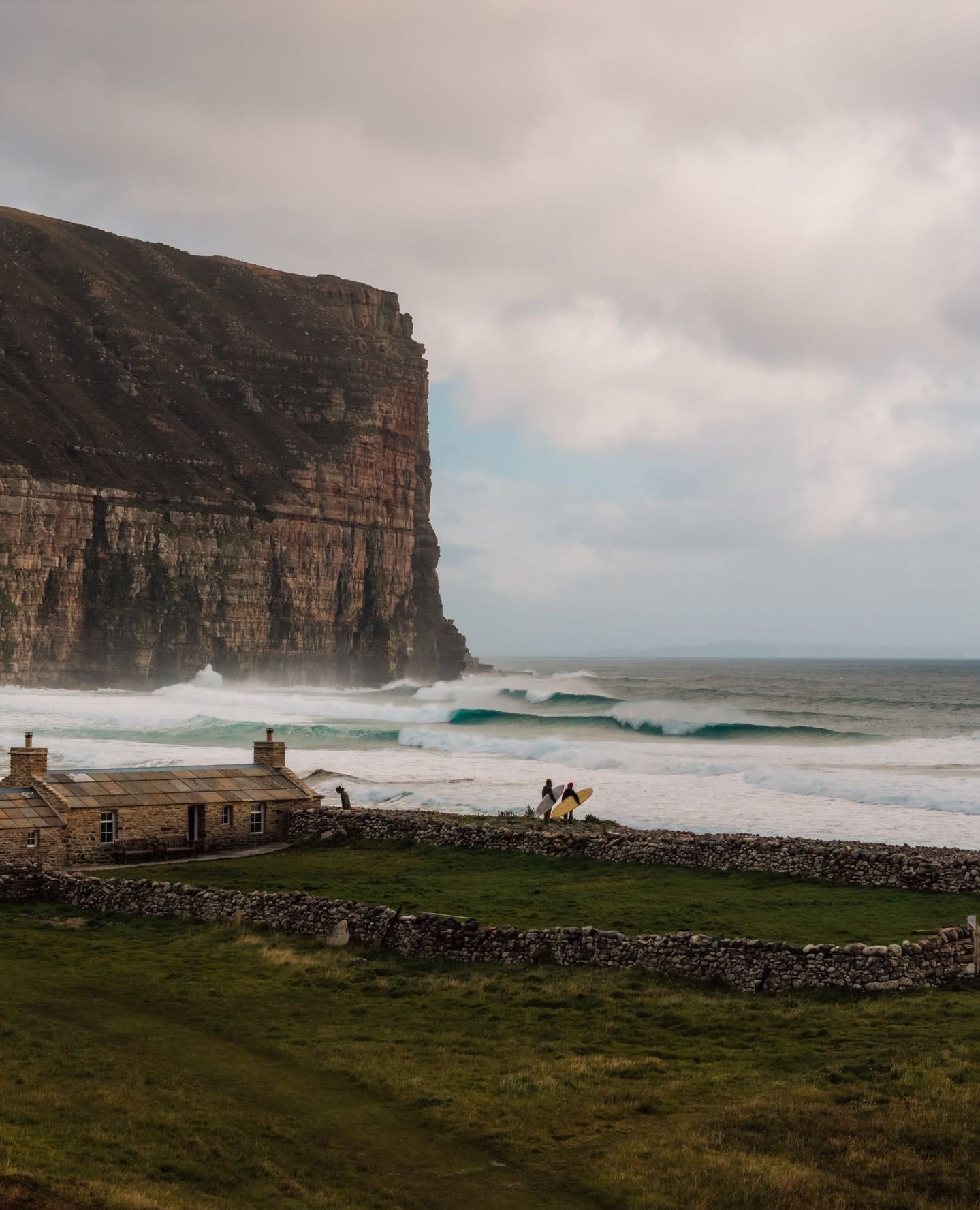
A Different Definition of Durability
The transition away from PFAS has forced the outdoor industry to reconsider one of its most familiar assumptions: that waterproof performance should be delivered by a durable chemical treatment that requires relatively little attention.
Newer technologies are changing that equation, but the implications extend beyond chemistry.
Houdini emphasizes fluorocarbon-free shell construction alongside appropriate cleaning and care. Klättermusen's technical design approach invites closer examination of the relationship between physical construction and material longevity. Finisterre demonstrates how a brand can support ongoing performance through professional maintenance services.
None of these approaches eliminates the compromises inherent in waterproof clothing.
A jacket designed for low weight may sacrifice some resistance to abrasion. A heavier garment may offer greater robustness but prove less comfortable during high-output activity. A membrane-free system may offer advantages in moisture management while requiring a different approach to weight, insulation, and maintenance.
What these companies share is an acknowledgment, whether explicit or implicit, that technical performance does not remain static after purchase.
A jacket is exposed to friction, contamination, laundering, weather, and the accumulated consequences of ordinary use. Its performance changes, sometimes reversibly and sometimes permanently.

Photo: Finisterre
The industry's next challenge is to make those changes more understandable and manageable.
That means designing garments that can withstand repeated care, explaining when maintenance is necessary, making repairs practical, and distinguishing temporary performance loss from irreversible material failure.
It may also require changing how durability is measured and communicated.
The most impressive waterproof jacket is not necessarily the one that sheds water most dramatically when it is new. It may be the one that can be cleaned, restored, repaired, and worn repeatedly without losing the qualities that made it useful in the first place.
A rain jacket should be able to survive the rain. But if it is going to remain part of someone's outdoor life for a decade, it also needs to survive everything that happens between storms.
The future of waterproof clothing may depend less on how long a jacket can go without being washed, and more on how many times it can be washed and still work.
No products available.
Shop rain jackets on Weekends today.
Related Articles

November 21, 2026
Finding Your Own Way: CJ Lowe on Outdoor Culture, Identity, and Building LOWE
The founder of LOWE on how outdoor culture became social currency, authenticity in a crowded market, and finding your own way through fashion and identity.
Read →
November 19, 2026
The Outdoors Doesn't Have to Be Earned: Rashad Frazier on Camp Yoshi, Hospitality, and the Art of Belonging
Rashad Frazier is challenging the outdoor industry's obsession with technical expertise. His alternative: good food, good company, and belonging.
Read →
November 17, 2026
tèmi Is Making Technical Outerwear Personal Again
Founder Gabriel Patterson is building tèmi around a deceptively simple idea: knowing who made your clothing should matter as much as what it can do.
Read →