Why Titanium Became an Outdoor Obsession
by Gene Han
How a metal once associated with aerospace engineering became the defining material of a new outdoor aesthetic—and shorthand for minimalism, durability, and premium equipment.
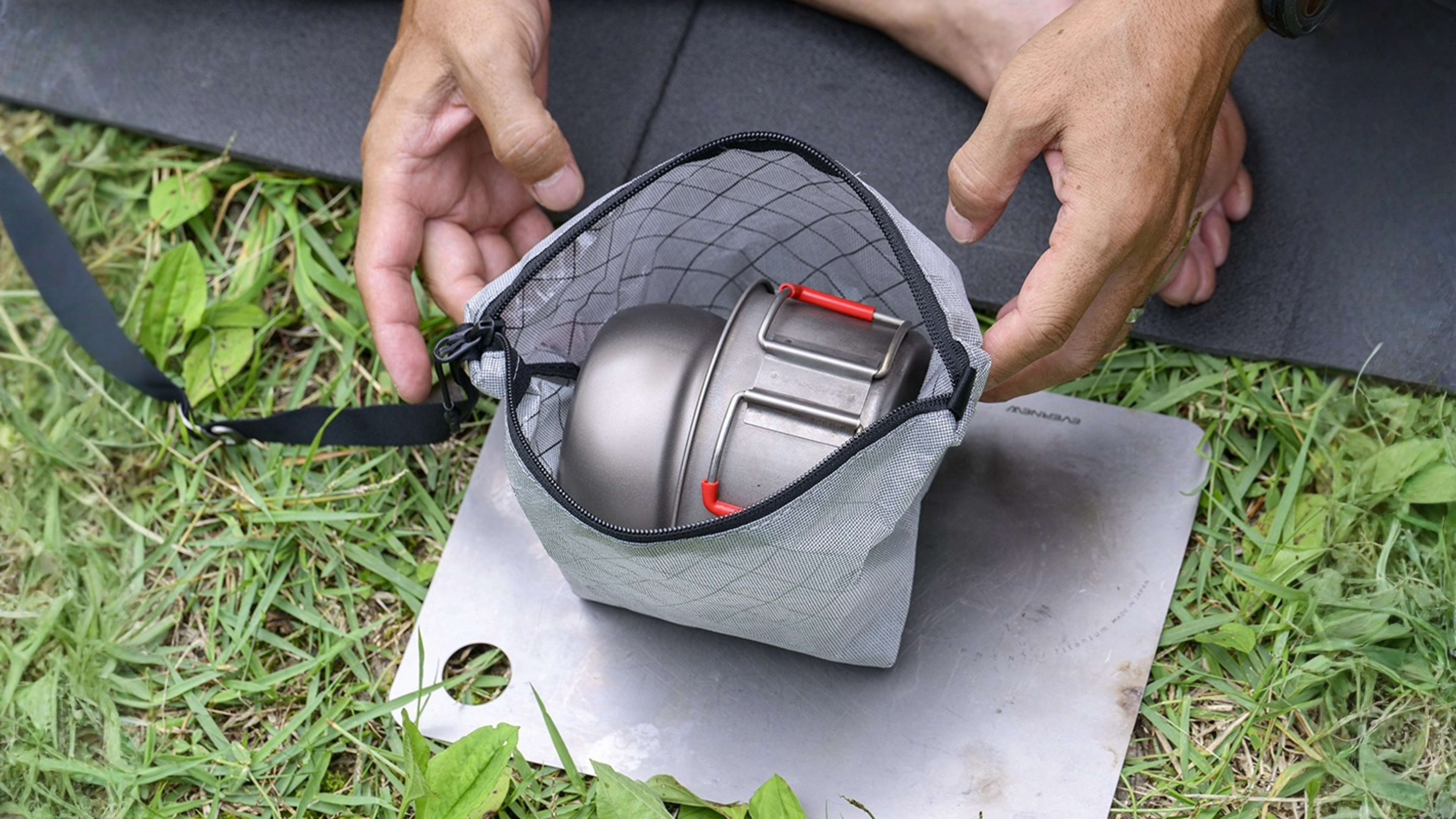
There is something strangely compelling about a titanium cup. It doesn't look particularly special. It has no elaborate finish, no decorative details, and almost nothing that could be described as unnecessary. It's just a thin-walled vessel with a muted metallic surface, a folding handle, and a weight that seems disproportionate to its strength. Yet somewhere along the way, this unassuming piece of camping equipment became one of the most recognizable objects in contemporary outdoor culture.
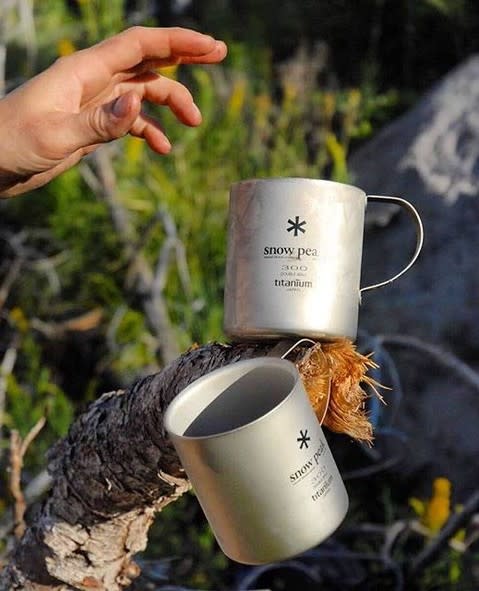
A titanium mug from Snow Peak is no longer simply something to drink coffee from. It sits on desks, appears in carefully composed campsite photographs, and travels between the backcountry and the city with little distinction. The same material now appears in ultralight cookware, tent stakes, wood-burning stoves, cutlery, bicycle components, and increasingly elaborate pieces of equipment that seem designed to last indefinitely.
Titanium has become more than a material. It has become a visual language.
For a generation of outdoor enthusiasts increasingly interested in owning fewer, better things, titanium represents a particular ideal: equipment reduced to its essential form, engineered for performance, and beautiful precisely because it refuses to look decorative. Its appeal is partly scientific, partly cultural, and partly the result of a handful of independent outdoor brands that turned a specialized industrial metal into an object of desire.
But the most interesting question isn't why titanium works so well outdoors. It's why we became so obsessed with it.
THE BEAUTY OF LESS
Titanium's practical advantages are well established. It has a high strength-to-weight ratio, resists corrosion, and performs reliably in demanding environments. Its density is roughly 45 percent lower than steel, though the strength of a finished product depends on the particular alloy, geometry, and manufacturing process. For backpackers counting every gram, the attraction is obvious. A titanium cooking pot can be remarkably light without being excessively fragile, while a set of titanium tent stakes can withstand years of exposure to wet soil and changing weather.
But material performance alone doesn't explain the fascination. Aluminum is lighter by volume, stainless steel is generally more affordable, and both can be excellent choices for outdoor equipment. Titanium occupies a more particular position. It offers a combination of properties that manufacturers can exploit to create durable, lightweight objects with an unusually restrained appearance.

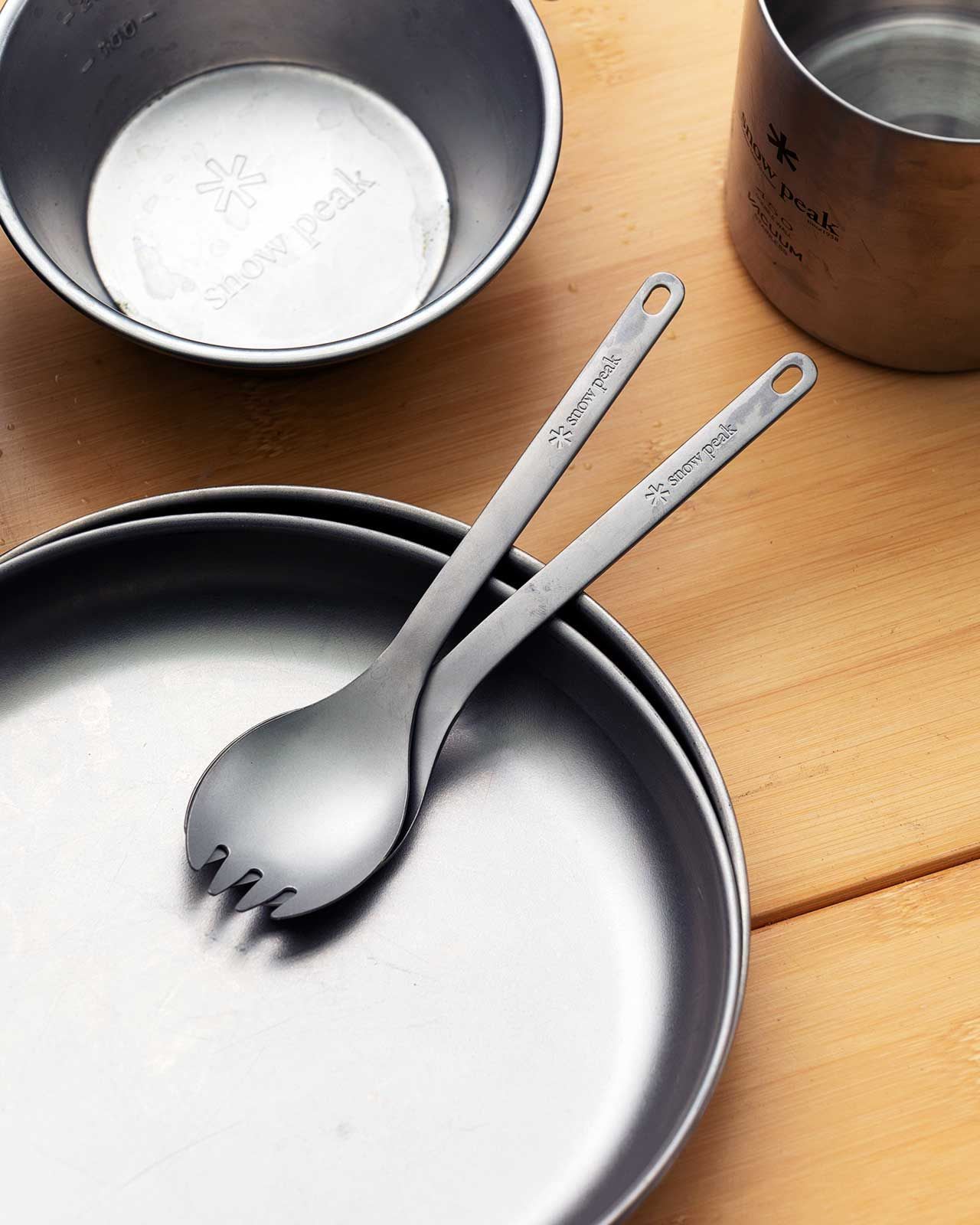
Snow Peak helped establish the cultural template. Founded in Japan in 1958, the company built its reputation around meticulously considered outdoor equipment, treating the campsite as an environment worthy of the same design attention as the home. Its titanium cups, plates, and cooking vessels embody that philosophy. The forms are familiar, almost anonymous, but the proportions, construction, and material choices make them feel deliberate.
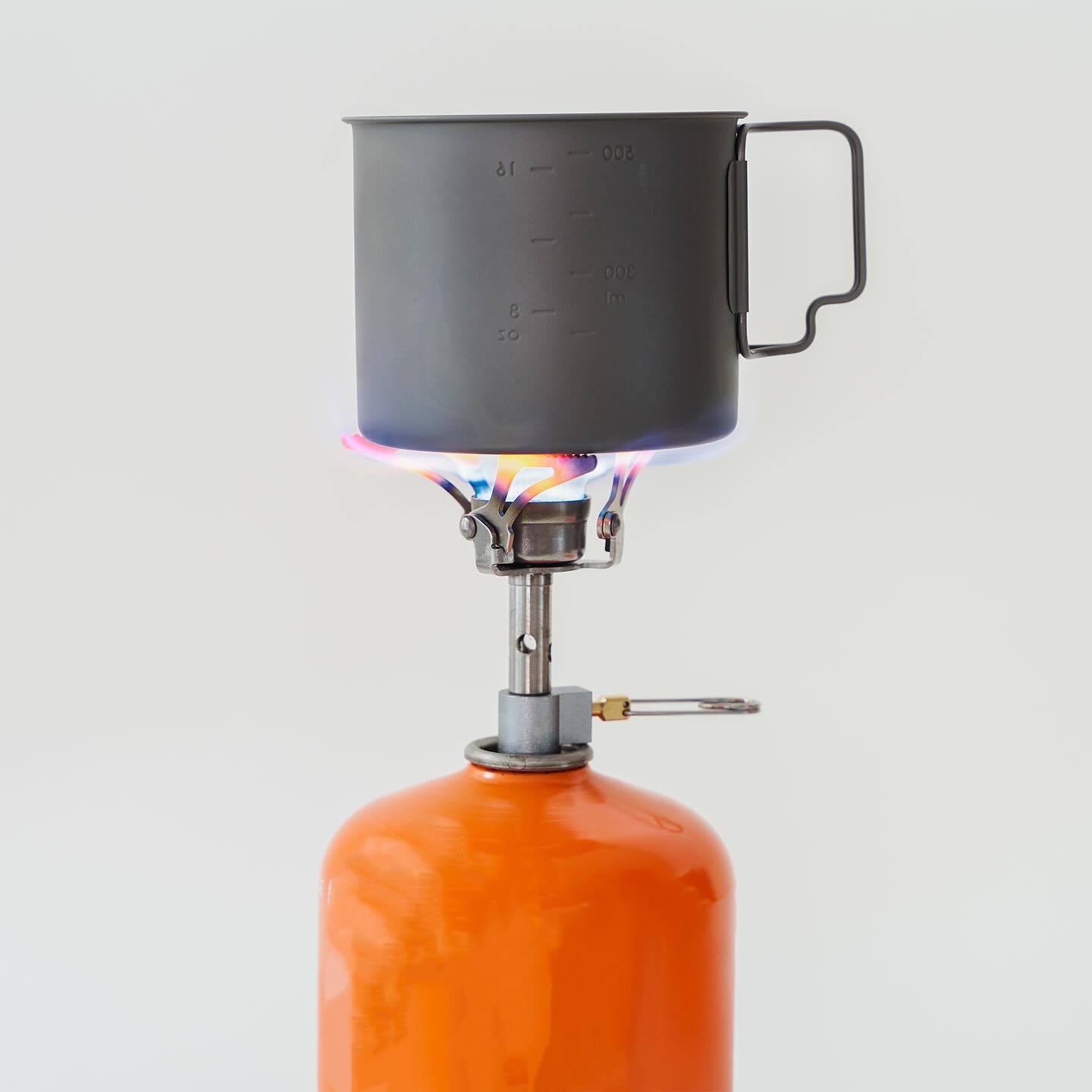
Japanese manufacturer EVERNEW approaches the same material from a more technical direction. Its exceptionally thin titanium cookware prioritizes weight savings and functional simplicity, appealing to hikers for whom a few grams can influence an entire packing system. TOAKS similarly helped make titanium cookware a staple of ultralight backpacking, offering straightforward pots, mugs, and utensils that emphasize utility over ornament.
Together, these brands illustrate two sides of titanium's appeal. One is the pursuit of performance through reduction. The other is the aesthetic pleasure that reduction produces.
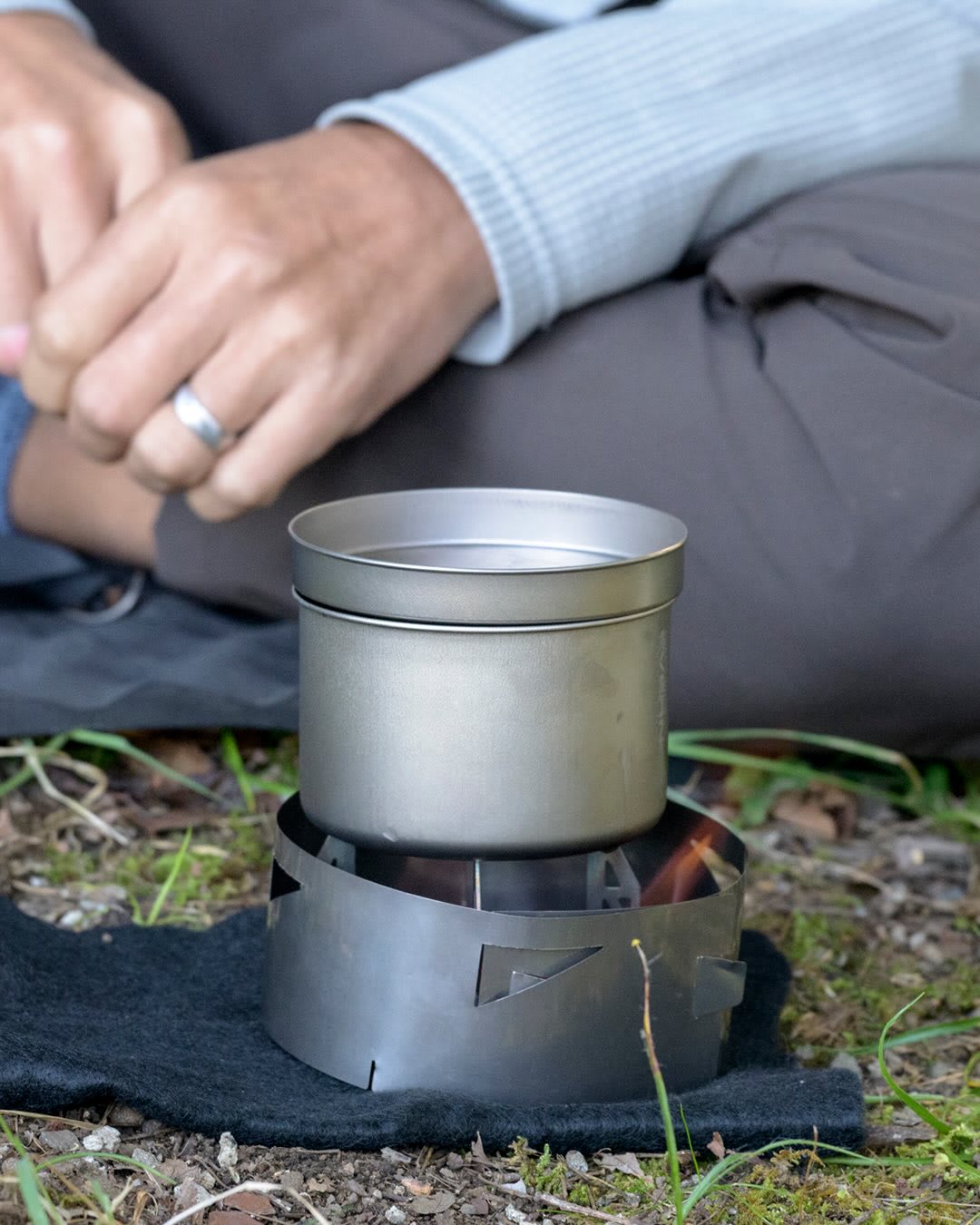
A titanium pot looks the way it does because unnecessary material has been removed. Its handles fold because they need to. Its walls are thin because weight matters. Its finish is understated because elaborate coatings offer little functional advantage. What emerges is a kind of accidental minimalism, where engineering decisions create an aesthetic that feels remarkably contemporary.
THE OBJECTS THAT MADE THE MATERIAL
Titanium didn't become culturally significant through a single revolutionary product. Its reputation accumulated through small, carefully engineered objects that found their way into the daily rituals of outdoor life.
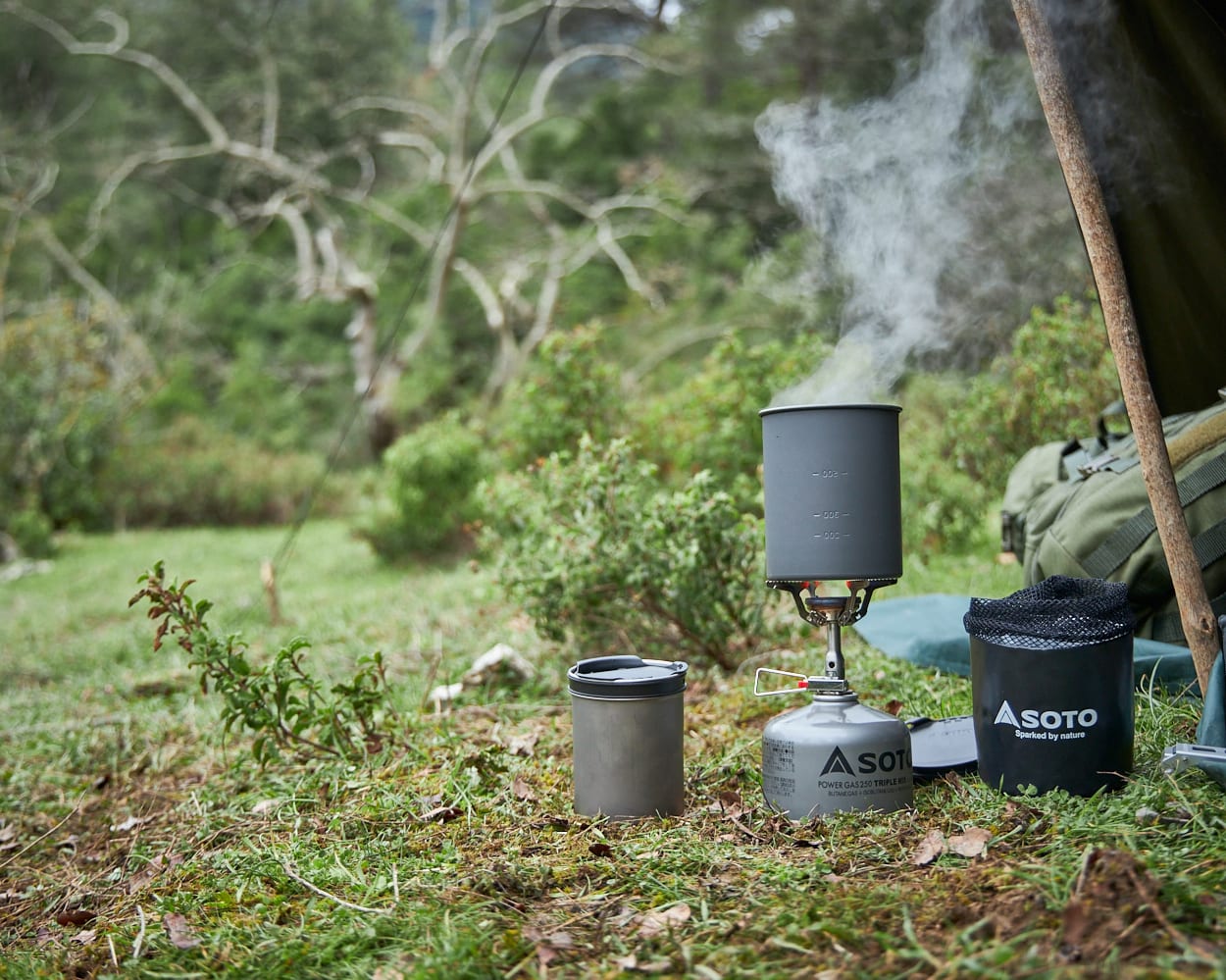
Consider the camping stove. For most people, a stove is simply a means of heating water or preparing food. For the ultralight community, it is a problem involving combustion, fuel efficiency, stability, packability, and weight. The best solutions often look like miniature pieces of industrial sculpture.
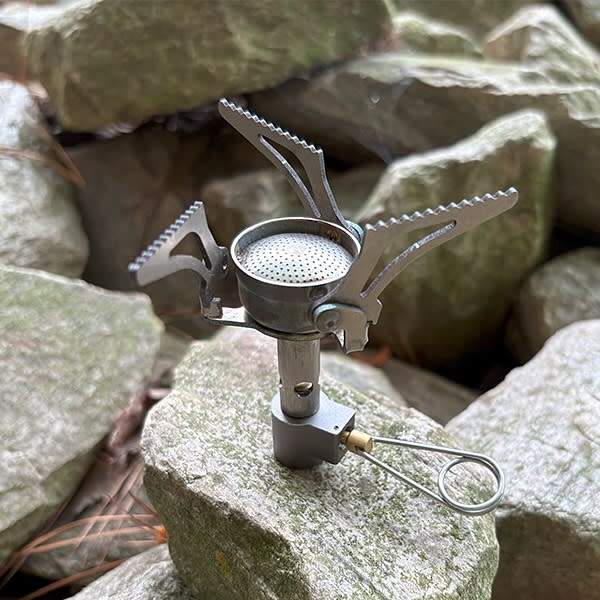
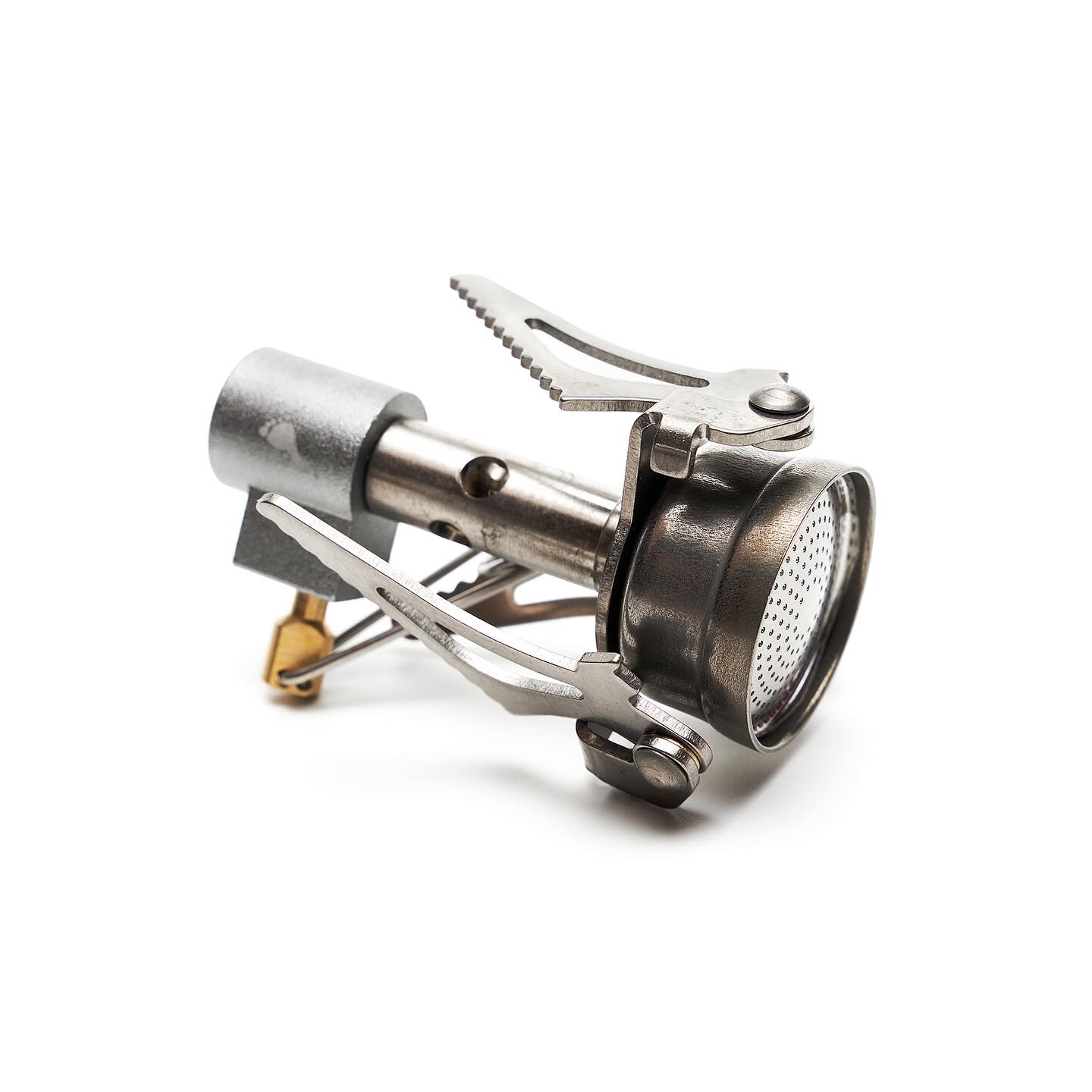
Japanese specialist SOTO has built its identity around precise combustion engineering, while companies like VARGO have pushed titanium into compact stoves, cookware, tent stakes, and other essentials. Vargo's titanium wood-burning stoves are particularly revealing: thin sheets of metal transformed into collapsible structures that can turn fallen twigs into a functioning cooking system.
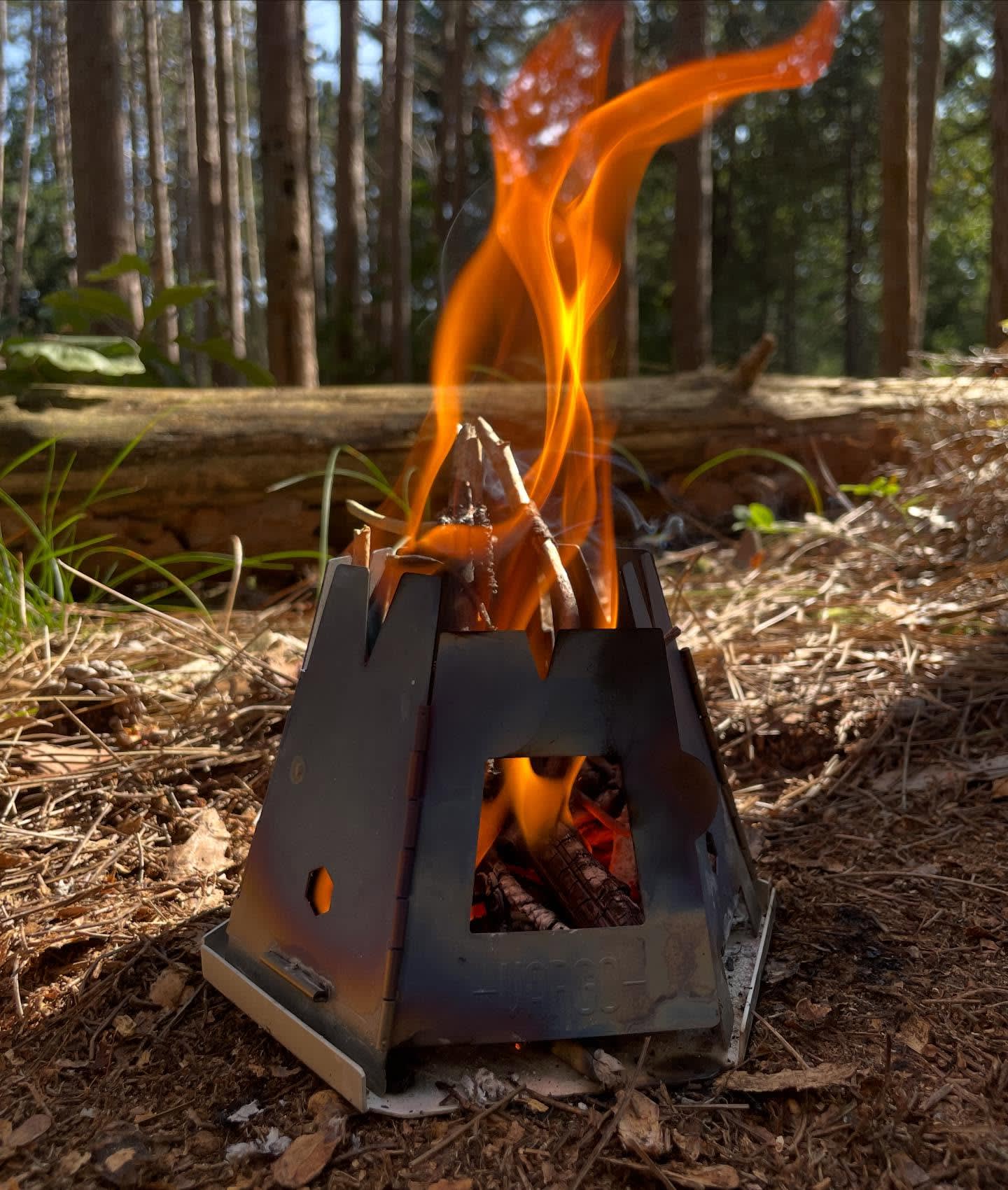
The appeal is not simply that these objects are lightweight. It's that they make their own engineering visible. There is an almost architectural quality to a folding titanium stove, where every panel, hinge, and opening serves an identifiable purpose.
The same sensibility runs through the products of Firebox Stove, whose folding stove systems have developed a following among people who enjoy the mechanics of outdoor cooking as much as the meal itself. Titanium versions reduce weight while preserving the satisfying ritual of assembling a small, self-contained fire.
These are objects that invite interaction. They fold, nest, stack, and transform. Their usefulness is immediately apparent, but so is the pleasure of handling something that has been thoughtfully made.
And that tactile relationship matters. Outdoor equipment is among the few categories of contemporary consumer products where mechanical simplicity can still feel like a luxury. In a world increasingly dominated by sealed electronics and disposable accessories, a titanium stove or cup offers a different proposition. You can see how it works. You can repair or replace some components. You can understand its limitations. There is very little between the user and the object.
THE JAPANESE INFLUENCE
It's difficult to separate titanium's contemporary appeal from the broader influence of Japanese outdoor design.
Japan's outdoor equipment culture has long treated camping as more than an exercise in survival or athletic performance. There is a strong emphasis on the rituals surrounding outdoor life: preparing coffee, arranging a cooking area, setting up shelter, and creating a temporary sense of home in an unfamiliar landscape. Equipment is judged not only by what it accomplishes but by how it feels to use.
Snow Peak is the most internationally recognizable expression of this philosophy, but it exists within a much wider ecosystem of manufacturers and enthusiasts who take extraordinary interest in materials, construction, and small functional improvements.

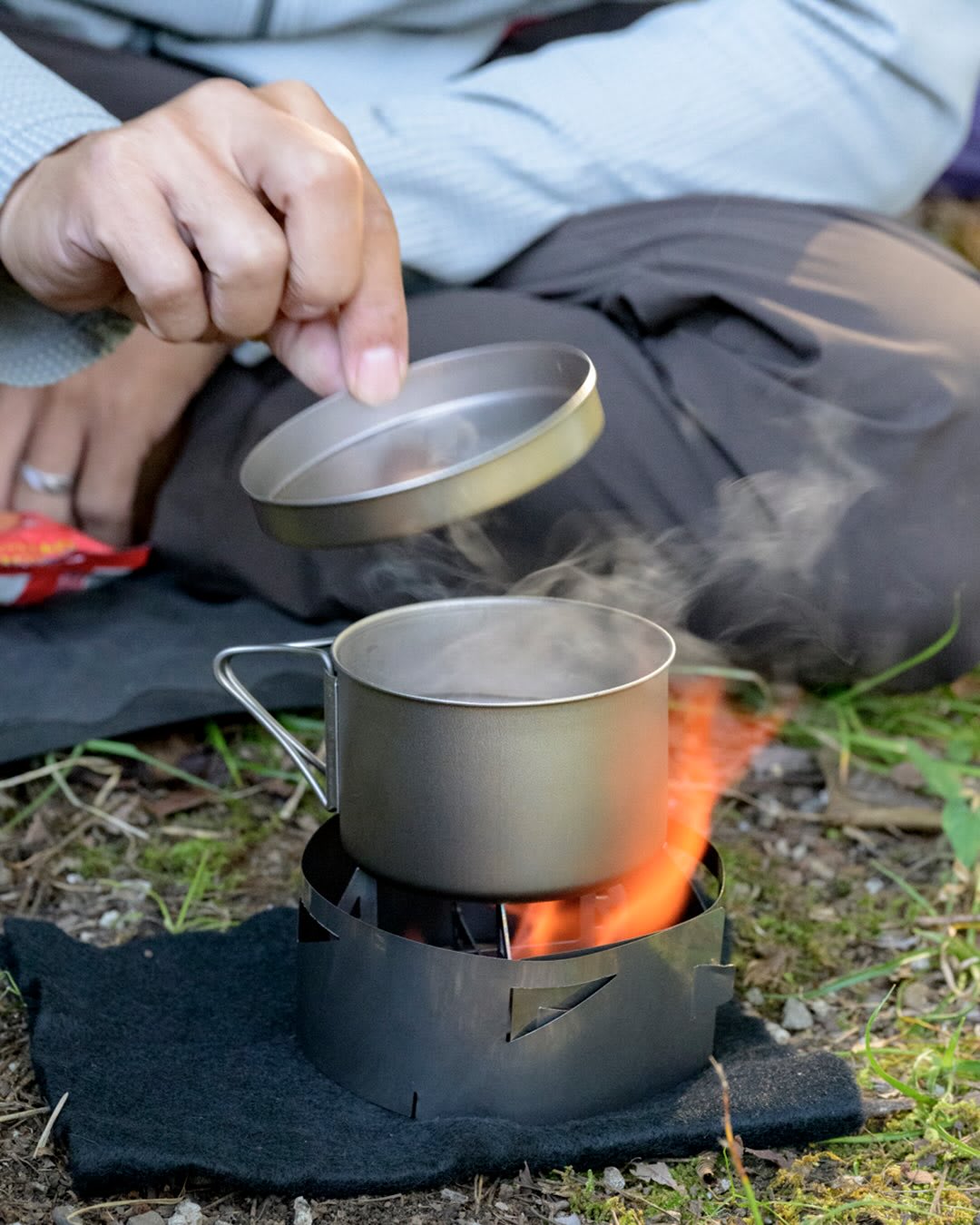
EVERNEW's titanium alcohol stoves and cooking systems represent a particularly Japanese form of technical refinement. The products are compact, often remarkably simple, and designed around the logic of an integrated system. A pot, stove, stand, and fuel container can become a carefully nested arrangement where wasted space is treated almost as seriously as wasted weight.
What makes this approach influential is the absence of a hard boundary between engineering and aesthetics. The beauty of the object emerges from its construction rather than being applied afterward.
That idea resonates far beyond Japan. In contemporary design culture, visible function has become a desirable aesthetic in its own right. Exposed fasteners, unfinished metals, modular components, and industrial surfaces now appear across furniture, fashion, accessories, and architecture. Titanium fits naturally into this world because it already looks like what designers are trying to communicate: precision, restraint, and permanence.
It also ages differently from many conventional consumer products. Uncoated titanium doesn't rely on a painted surface to maintain its identity. Scratches can become part of the object's history rather than evidence that its decorative finish has failed. Some titanium objects develop heat-induced color changes, creating blue, purple, or gold tones through surface oxidation.
The result is equipment that can become more personal with use. A cup carried across hundreds of campsites develops a history. Its marks are not necessarily imperfections to conceal, but reminders of where it has been.

WHEN ULTRALIGHT BECAME A DESIGN MOVEMENT
Titanium's rise also reflects a broader transformation in backpacking culture.
Ultralight hiking began as a practical response to the weight of traditional outdoor equipment. By reconsidering every item in a pack, hikers discovered that carrying less could fundamentally change the experience of moving through the landscape. Lighter loads meant greater mobility, less physical strain, and the possibility of covering longer distances with fewer resources.
Over time, however, ultralight backpacking developed an aesthetic and culture of its own.
Independent brands such as Zpacks, Gossamer Gear, and Hyperlite Mountain Gear helped normalize an approach to equipment defined by weight-conscious materials, modularity, and aggressive simplification. Their identities are not centered on titanium specifically, but they helped create the environment in which a titanium spoon could become a meaningful purchase decision.
In this world, materials are no longer invisible. They are central to the conversation. Hikers debate fabric constructions, carbon-fiber supports, aluminum hardware, and the precise weight of individual components. Titanium belongs to this vocabulary because its performance can be expressed numerically while its appearance communicates the same philosophy visually.
A titanium spoon weighing a fraction of a conventional utensil might offer only a marginal improvement to the overall weight of a backpack. But its significance extends beyond those saved grams. It signals participation in a culture where equipment is selected deliberately and where every object must justify its presence.
This is the point at which performance becomes identity.
The minimalist backpacker and the design-conscious urban consumer may have very different reasons for purchasing the same titanium cup, but both are responding to a shared ideal: the belief that a well-designed object can do more with less.
THE PREMIUM PARADOX
Of course, titanium's reputation for minimalism contains an obvious contradiction. The material often commands a premium precisely because producing simple-looking objects from it can be difficult and expensive.
Titanium is relatively abundant in the Earth's crust, but converting titanium-bearing minerals into usable metal requires energy-intensive industrial processes. Fabrication can also be demanding. Titanium's behavior during machining, forming, and welding creates challenges that don't exist to the same degree with more familiar materials.
The resulting products can cost considerably more than comparable equipment made from stainless steel or aluminum.
This is where titanium becomes something more complicated than a practical choice.
A $50 titanium mug doesn't necessarily make better coffee than a $10 stainless steel mug. Titanium cookware also has limitations. Its relatively poor thermal conductivity compared with aluminum can create hot spots when cooking, making it less forgiving for preparing elaborate meals. For boiling water, this may be irrelevant. For frying food, it can be a meaningful disadvantage.

And while titanium has an impressive strength-to-weight ratio, that doesn't mean every titanium product is inherently stronger, lighter, or more durable than every alternative. Design, wall thickness, alloy selection, and manufacturing quality remain decisive.
Yet these compromises rarely diminish the enthusiasm.
In some ways, they reinforce it. Titanium belongs to a category of premium equipment where the appeal lies as much in the specificity of the material as in its universal superiority. A carefully made titanium object communicates that someone considered the details, understood the trade-offs, and chose a particular solution.
It's the outdoor equivalent of a mechanical watch: an object whose engineering, materiality, and emotional appeal can exceed the practical demands of its primary function.

FROM BACKCOUNTRY EQUIPMENT TO EVERYDAY OBJECT
Perhaps the clearest evidence of titanium's cultural transformation is how comfortably it now exists outside the wilderness.
The titanium cup has become an everyday carry object. Compact cutlery sets live in work bags. Camping vessels appear in home kitchens. Lightweight carabiners and small accessories migrate from technical equipment into fashion-adjacent environments, where their material properties become part of their appeal.
Independent gear makers have helped accelerate this shift by producing objects that sit somewhere between outdoor equipment, industrial design, and collectible hardware.
Keith Titanium is particularly representative of this evolution. Rather than treating titanium as a specialized material reserved for a few ultralight essentials, the brand has developed an extensive range of titanium drinkware, cookware, tableware, and accessories. Its products extend the material's appeal beyond the traditional backpacking kit, making titanium a viable choice for everything from camping kitchens to everyday dining.
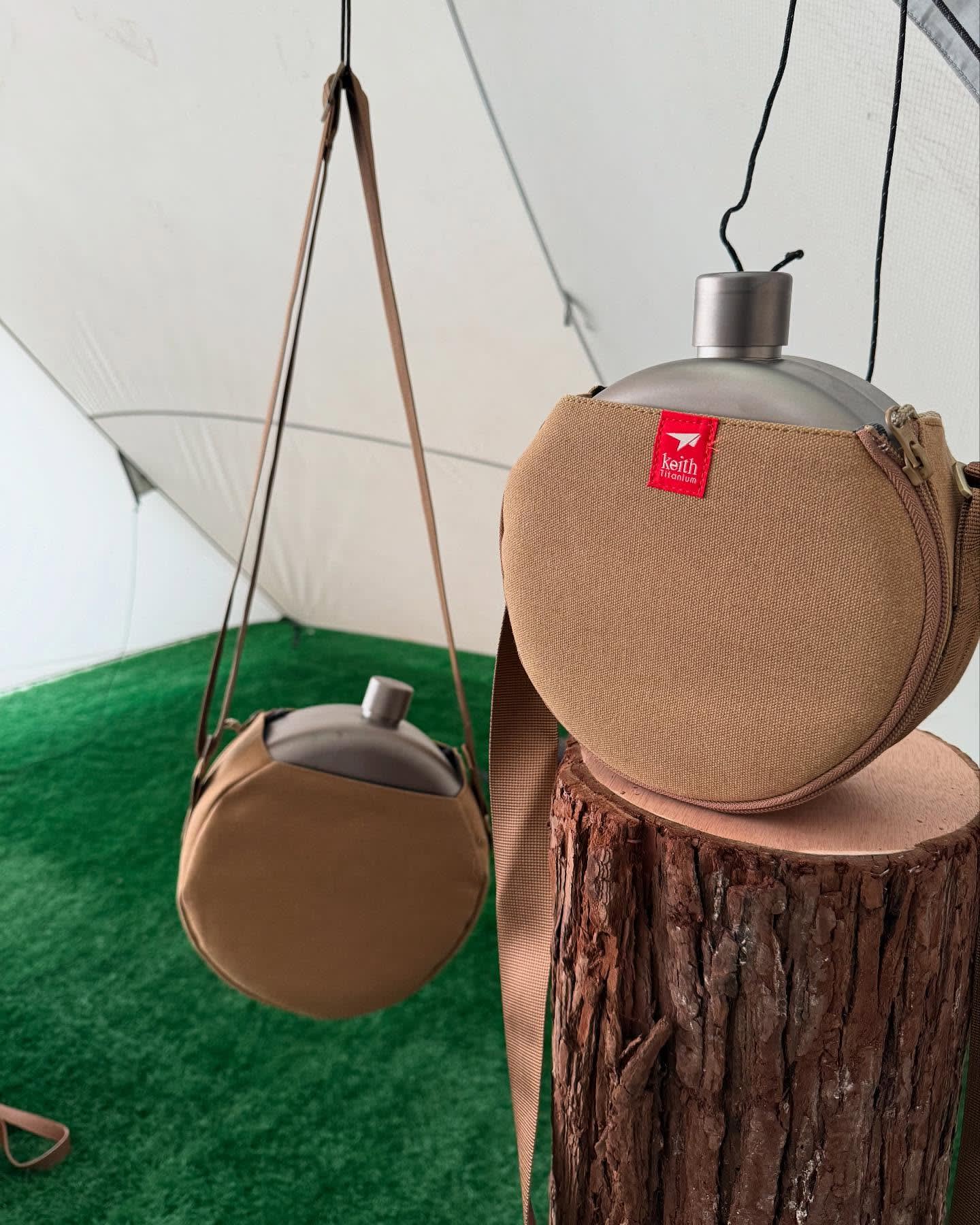
Where Snow Peak often frames titanium within a broader philosophy of outdoor living, Keith Titanium places the material itself at the center of its identity. Cups, bottles, plates, bowls, and cooking vessels share a consistent visual character: muted metallic surfaces, simple silhouettes, and an emphasis on functional construction. The result is a collection of objects that feel equally appropriate on a remote campsite or a carefully considered kitchen shelf.
This material-first approach reflects a larger shift in how consumers understand premium equipment. The distinction is no longer necessarily between products designed for the outdoors and products designed for the home. Instead, it is increasingly between objects considered temporary and those intended for long-term ownership.
Smaller everyday-carry specialists such as Big Idea Design and CountyComm have cultivated a similar audience for titanium pens, tools, containers, and pocket-sized hardware. Not all of these objects need titanium to function. That is part of what makes the trend revealing. The material itself has become a reason to buy.
The appeal crosses into a wider cultural interest in products that feel permanent rather than seasonal. As more consumers become skeptical of disposable goods and rapidly changing aesthetics, titanium offers the promise of something stable. Its surface is recognizable, its properties are tangible, and its design language is largely immune to the usual cycle of colors and finishes.
But permanence should not be confused with sustainability. Titanium's durability may support long product lifespans, but its primary production carries significant environmental costs. Whether a titanium product represents a better environmental choice depends on how it is manufactured, how long it is used, and what it replaces.
A titanium cup kept for twenty years tells a different story from one purchased simply to join a collection of nearly identical cups.

THE MATERIAL BECOMES THE MESSAGE
Outdoor equipment has always been shaped by advances in materials. Gore-Tex changed expectations around weather protection. Carbon fiber transformed the relationship between strength and weight. Dyneema helped redefine what ultralight shelters and packs could look like. Each material introduced new possibilities, but also new ways for brands to communicate performance and technical sophistication.
Titanium occupies a slightly different place in this history.
Its most recognizable products are often remarkably ordinary. A cup. A spoon. A pot. A tent stake. Objects whose basic forms have existed for generations.
The innovation isn't necessarily in what they do, but in how completely their material defines their character.
For Snow Peak, titanium helps express a philosophy of refined outdoor living. For EVERNEW and TOAKS, it enables increasingly efficient cooking systems. For Keith Titanium, it provides the foundation for an entire family of functional everyday objects. For Vargo and Firebox Stove, it makes intricate mechanical equipment more portable. Across the wider ultralight community, it represents a commitment to reducing equipment to what matters.

The material connects these different philosophies without requiring them to look identical.
And that may be why titanium has developed such an enduring appeal. It sits at the intersection of several ideas that increasingly define contemporary outdoor culture: performance without excess, design without decoration, and equipment intended to become more meaningful through use.
There is also a quiet irony in its success. A material celebrated for helping people carry less has become something people want to collect. The pursuit of simplicity has produced its own form of consumption, complete with limited releases, specialized accessories, and an ever-expanding vocabulary of premium essentials.
Still, the original attraction remains understandable. Pick up a well-made titanium cup and its appeal becomes immediately apparent. It feels almost impossibly light. It is cool to the touch, quietly industrial, and entirely unconcerned with looking luxurious.
In an industry that frequently equates innovation with adding more features, titanium suggests another possibility.
Sometimes the most desirable object is the one that seems to have almost nothing left to remove.
Related Articles

October 8, 2026
Dust Wants Trail Running to Feel Dirty Again
Meet Dust, the San Francisco trail running brand blending Western-inspired style, technical performance, and a fresh approach to outdoor apparel.
Read →
October 1, 2026
Vampire Surf Club Wants You to Stay Out Longer
Vampire Surf Club blends luxury fashion and technical surfwear, creating sun-protective gear designed to keep surfers in the water longer.
Read →
September 24, 2026
Nur Abbas is Designing Ultralight
Nur Abbas, founder of Gnuhr, explores ultralight as a design philosophy built around utility, reduction, experimentation and genuine innovation.
Read →