
This Paint-Stained Cleveland Kid Is Making Art Like His Life Depends On It
by Gene Han
Terry Urban was digging quarters out of his couch to buy food. The Cleveland-born artist had burned out on fifteen years of DJing—Tokyo, France, New York's heavy drug scene—and was stepping over canvases on his apartment floor just to reach the kitchen. "My artwork is trash. What the fuck am I doing?" he remembers thinking.
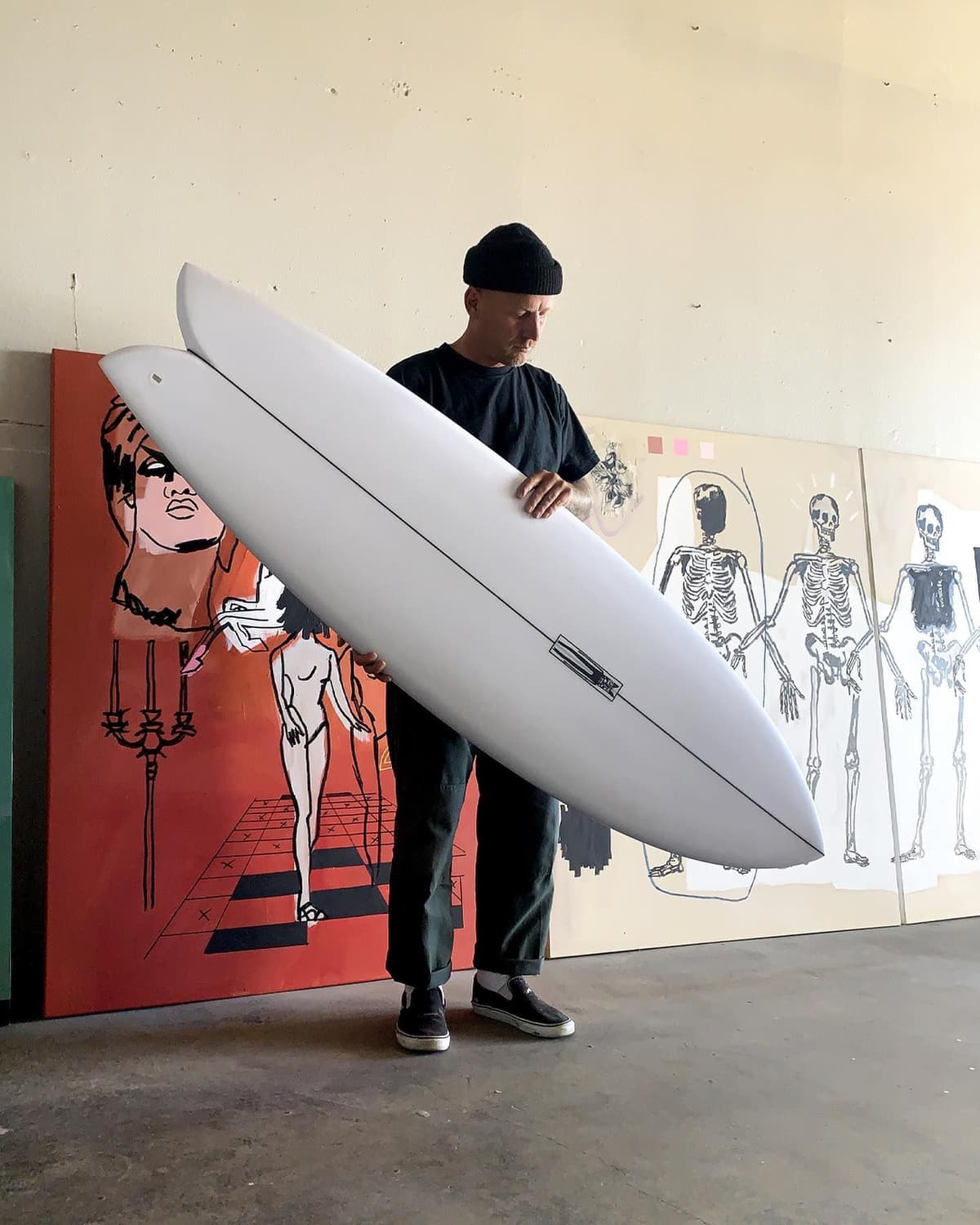
But that's exactly when art saved his life. Urban had put painting on the back burner during his DJ years, busy making remixes for major labels and traveling the world's club circuit. When the partying got too heavy and his body couldn't take it anymore, he turned back to what his artist father had shown him growing up in Ohio's rust belt.
It wasn't pretty at first. Urban was broke, painting on his floor, questioning everything. "I was digging quarters out of my couch to find food for that night," he told interviewer Tommy Moore for Daybreak. But he refused to take another dead-end job—too many years scraping snow off windshields at 6 AM had taught him he works better for himself.
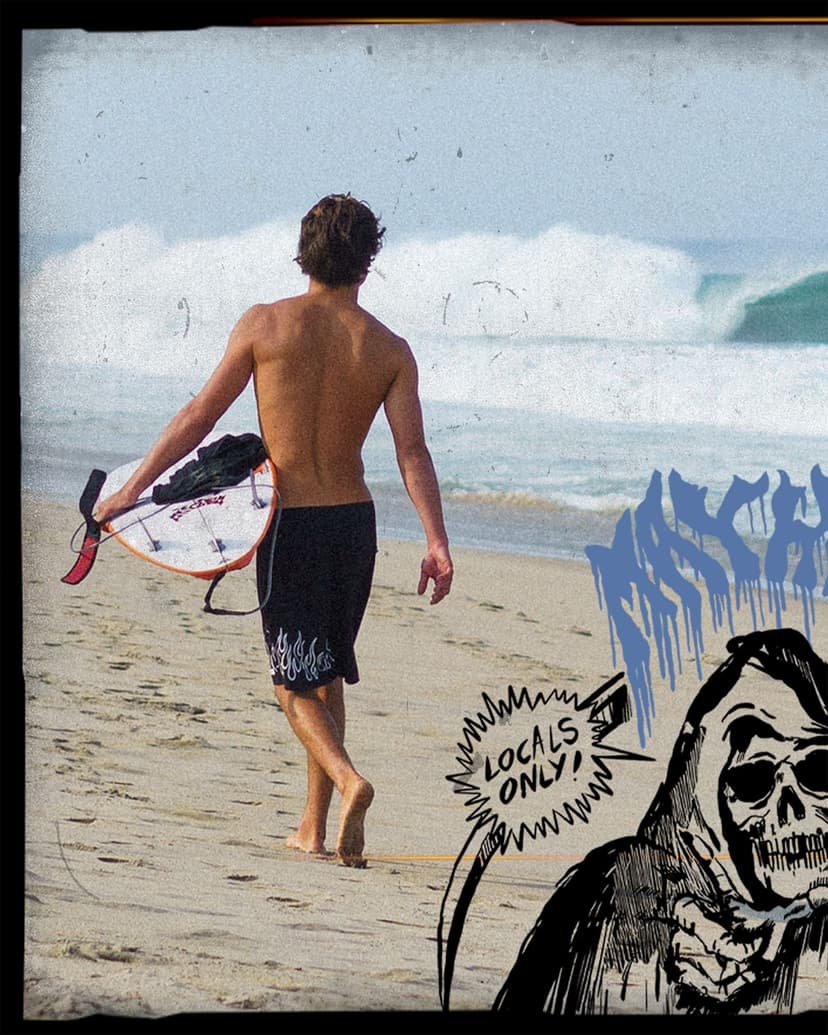
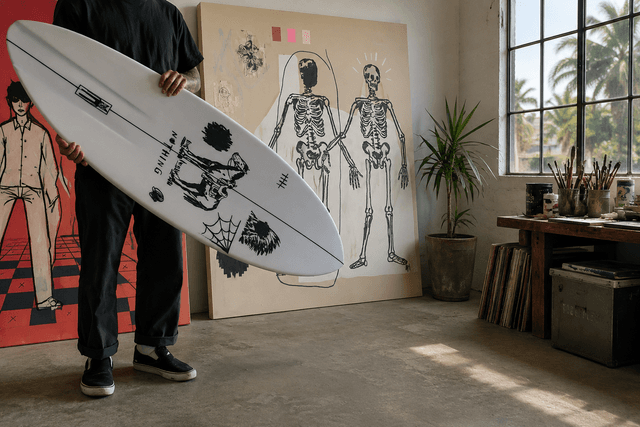
The move to Los Angeles changed everything. Urban discovered surfing, which he calls the thing that made his life better after art saved it. Now he surfs every morning and cranks out paintings nonstop—work that feels like a revolt against the man, rooted in his Irish construction family background of digging ditches and building things with their hands.
His paintings layer and unlayer themselves like stream-of-consciousness conversations. The characters look familiar but roughed up, like they took the same hard detours Urban did. There's punk energy mixed with blue-collar grit—no surprise from someone who painted trains and got busted by cops before finding his way to gallery walls.
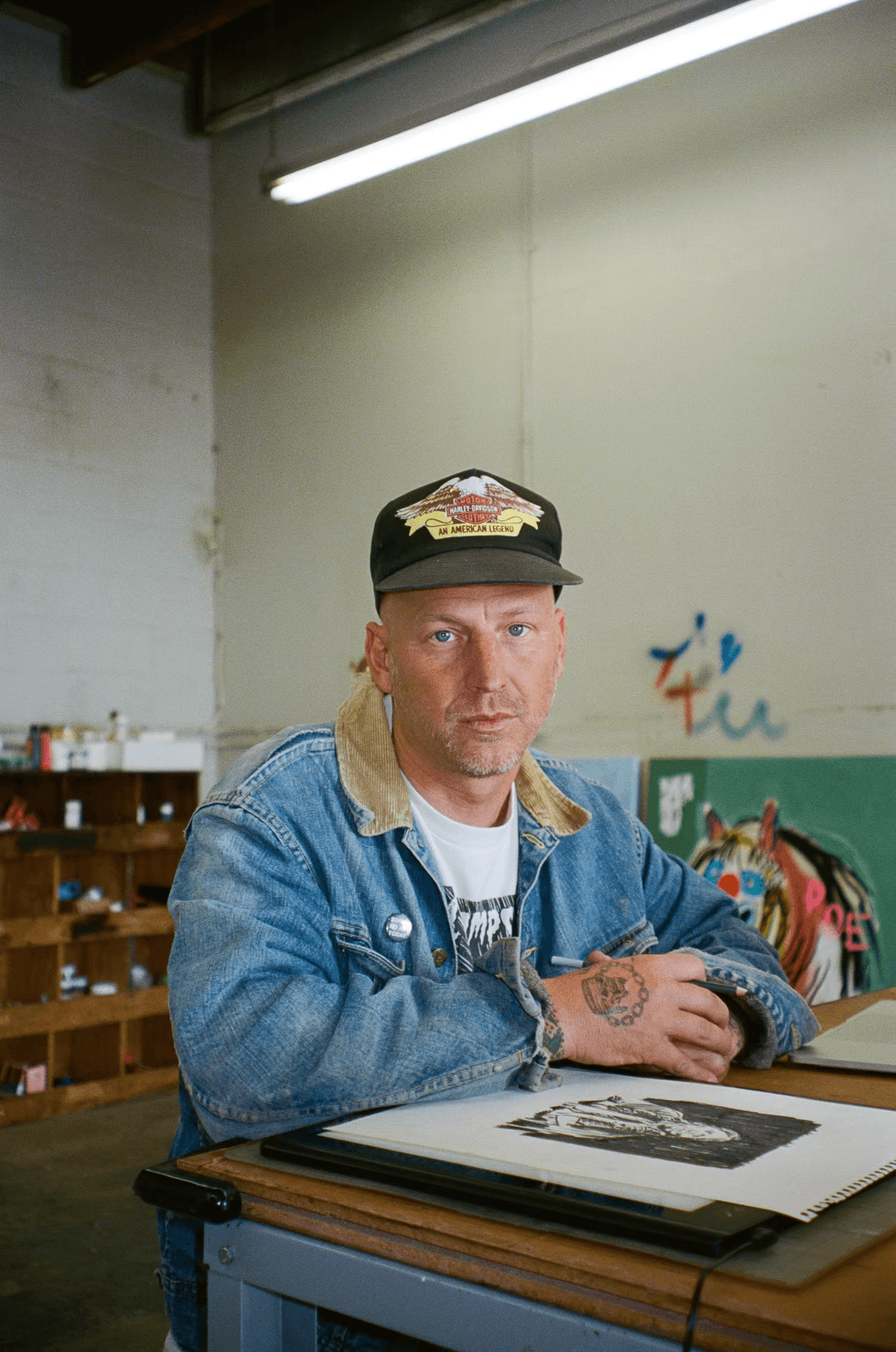
Urban launched Hood Beach this year, extending his canvas to clothes. The first drop sold out fast, proving that his blue-collar aesthetic translates beyond gallery spaces. "We're a blue collar steel train, dude," Urban says about Midwest work ethic. "We're born differently." That scraping-snow-at-dawn mentality gives him an edge that softer scenes might lack.
What strikes you about Urban's story isn't the redemption arc—it's the authenticity of someone who genuinely had no other choice. When you're choosing between quarters-from-the-couch poverty and making art work, the desperation creates something real. No trust fund, no safety net, just paint and the ocean and the relentless output of someone who knows what rock bottom looks like.
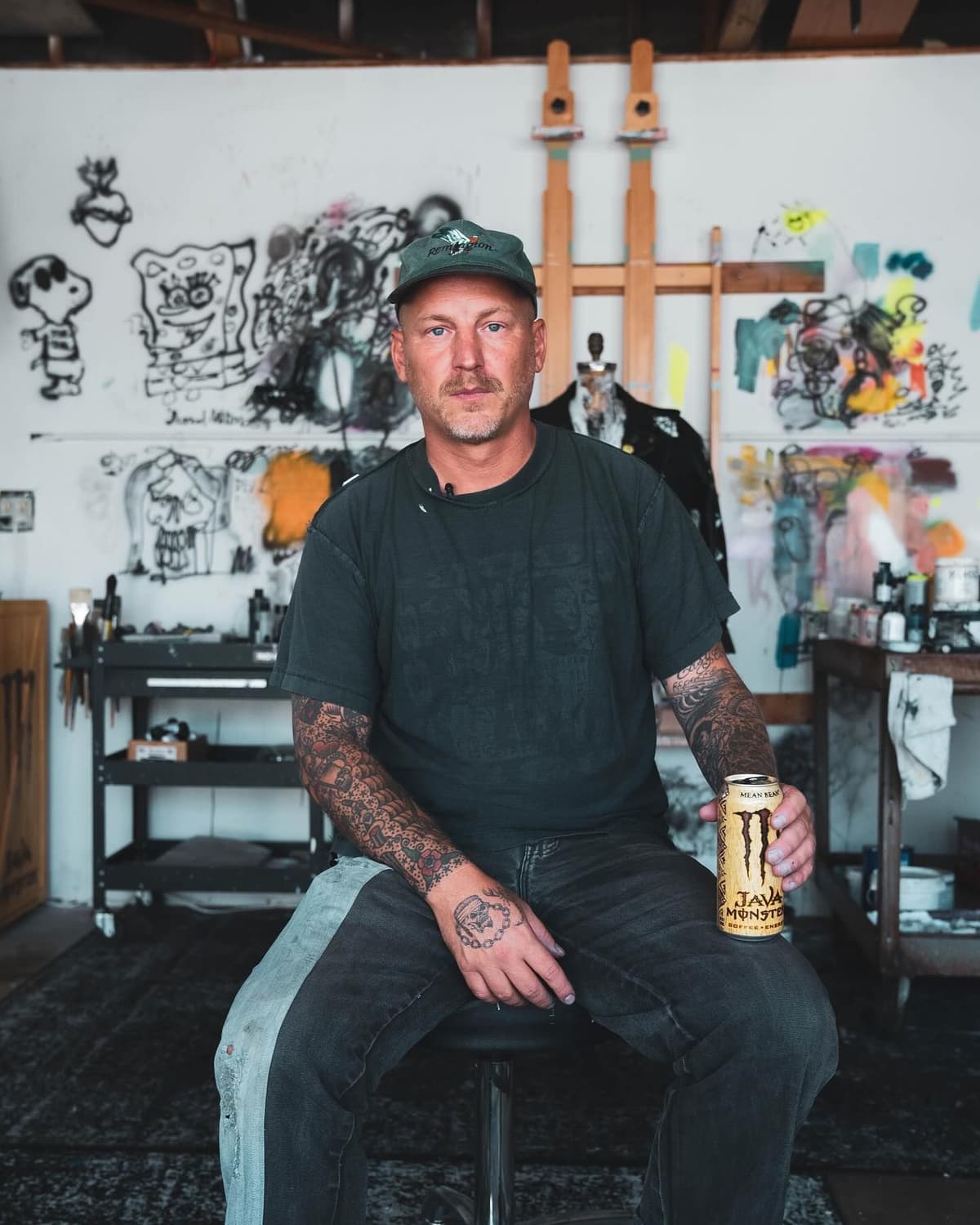
Urban's work stands out in LA's crowded art scene because it carries the weight of those lean years. Every piece feels necessary rather than decorative. Art saved his life, surfing made it better, and now he's making paintings for people who understand what it means to work with your back against the wall.
Related Articles

July 28, 2026
The Outdoor Store Isn't Dead. It Just Changed Its Job.
Independent outdoor retailers are redefining modern retail by creating memorable spaces, building community, and proving that discovery matters more than convenience.
Read →
July 27, 2026
Why Small Outdoor Brands Are Winning Attention
Discover why small outdoor brands are capturing consumer attention through authentic storytelling, thoughtful design, and community-driven growth over scale.
Read →
July 15, 2026
Blue Monte: The New Geography of Outdoor Culture
Discover how Blue Monte is redefining modern outdoor apparel with understated technical design, blending urban life, travel, and the outdoors into one seamless lifestyle.
Read →