
The People Designing the New Outdoors
by Derek Siegel
The next generation of outdoor culture isn't being shaped only inside the industry's biggest companies. It's coming from engineers, runners, climbers, fashion designers, editors, makers and community builders reconsidering what the outdoors should look and feel like — and who it should be for.
For a long time, outdoor design had a fairly predictable center of gravity. The largest companies had the largest design departments, with access to proprietary materials, athlete testing programs, factories, laboratories and enough development money to spend years refining a single jacket or shoe. Innovation generally moved outward from those companies.
That hierarchy is becoming considerably less clear.
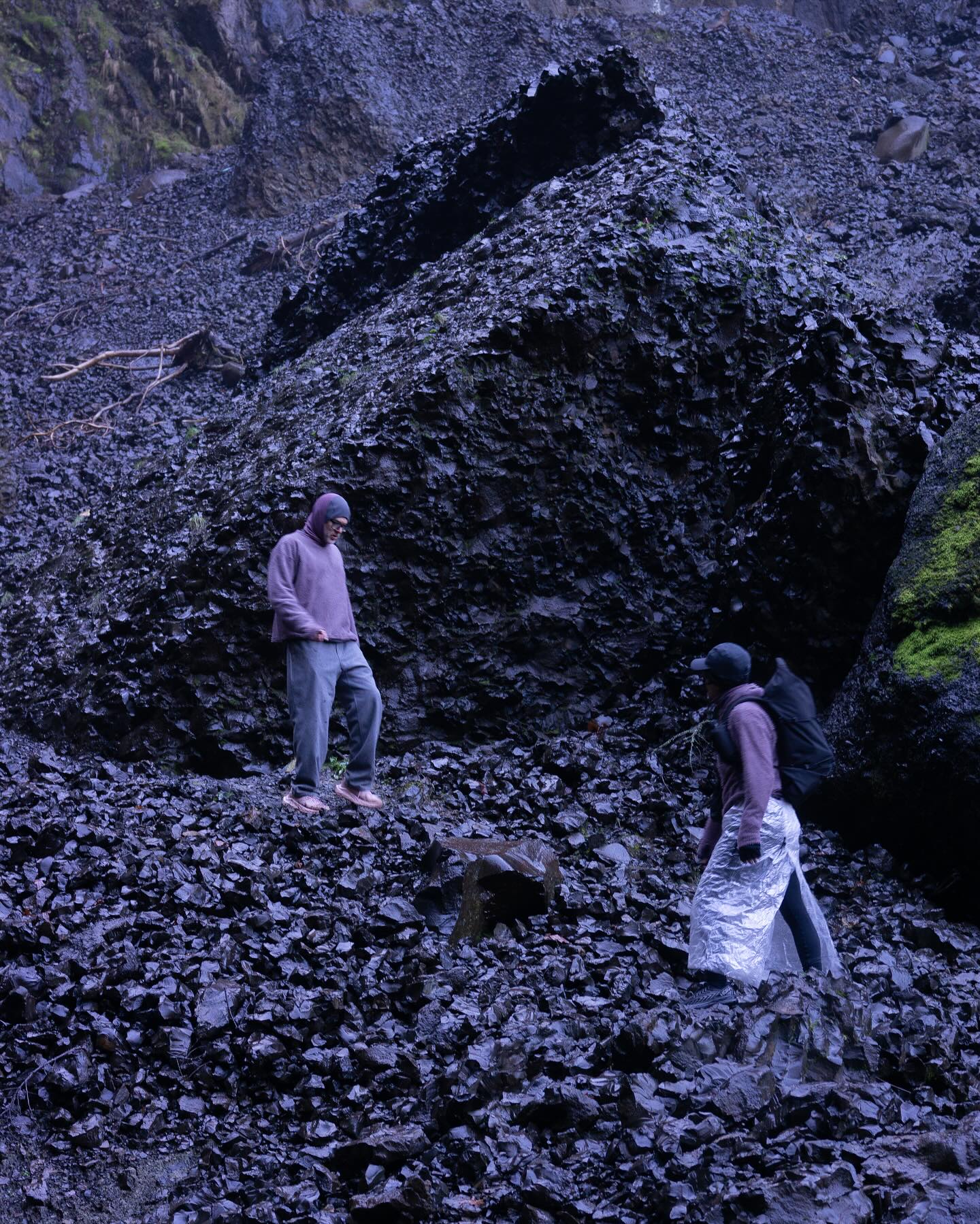
Some of the most interesting ideas in outdoor design today are emerging from much smaller operations: an aerospace engineer designing ski packs, former Issey Miyake designers making hiking clothing, an engineer in Seoul building ultralight backpacks, a group in Europe treating equipment almost like open-source software, or a New Zealand designer trying to see how far hemp can be pushed as a performance material.
Others aren't making products at all. They're designing publications, communities, stores, events and ways of getting people outside. The definition of the outdoor designer is expanding, and with it, the definition of the outdoors itself.
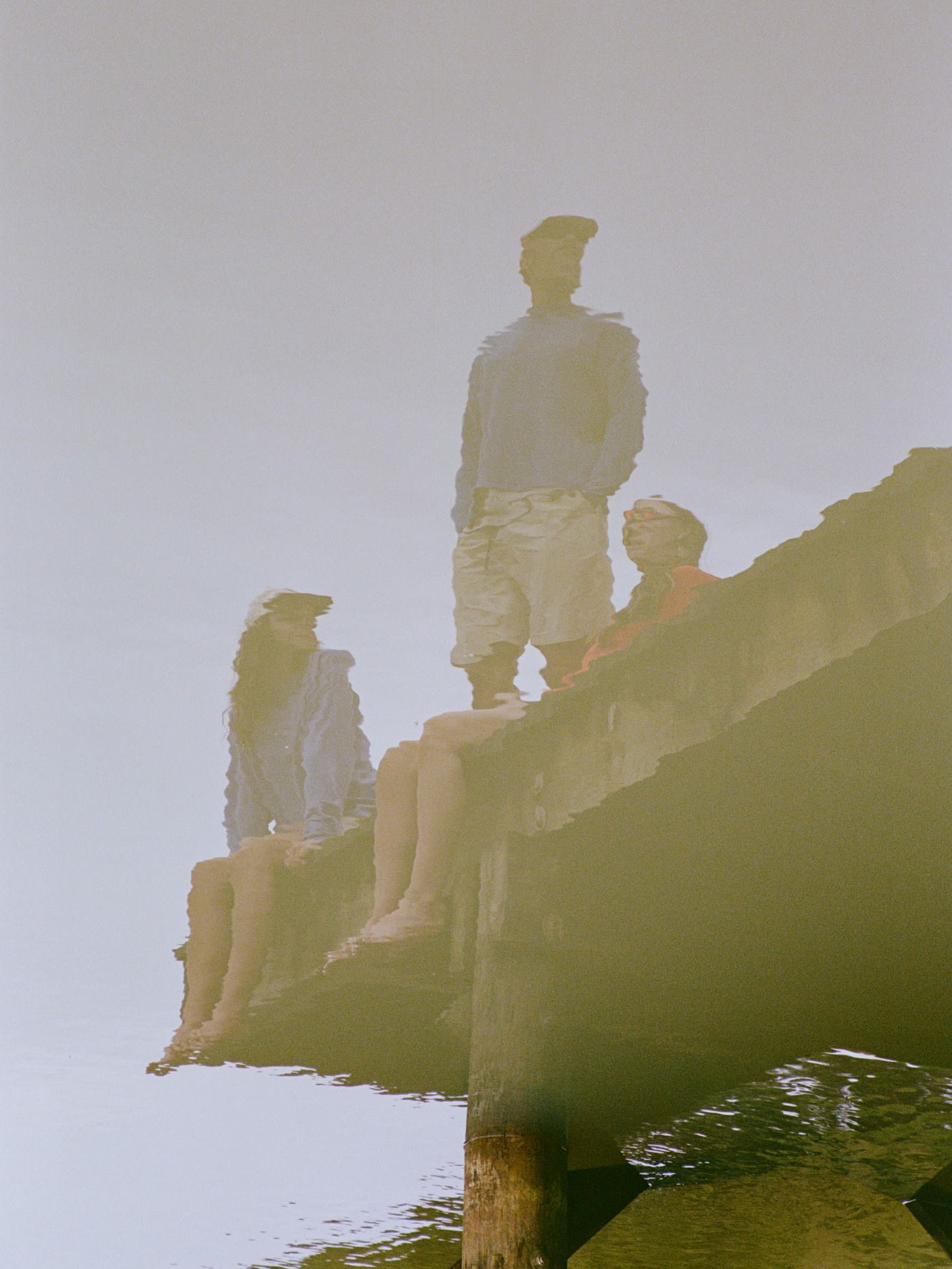
Nur Abbas — Gnuhr
Few designers represent the increasingly porous boundary between outdoor equipment, fashion and industrial design better than Nur Abbas.
Gnuhr approaches outdoor clothing almost as a continuing design experiment. Instead of treating familiar categories as fixed — shell, fleece, hiking pant, insulation layer — Abbas frequently begins with the activity itself. How does the body move? Where does heat accumulate? What actually needs protection? How little material can accomplish the job?
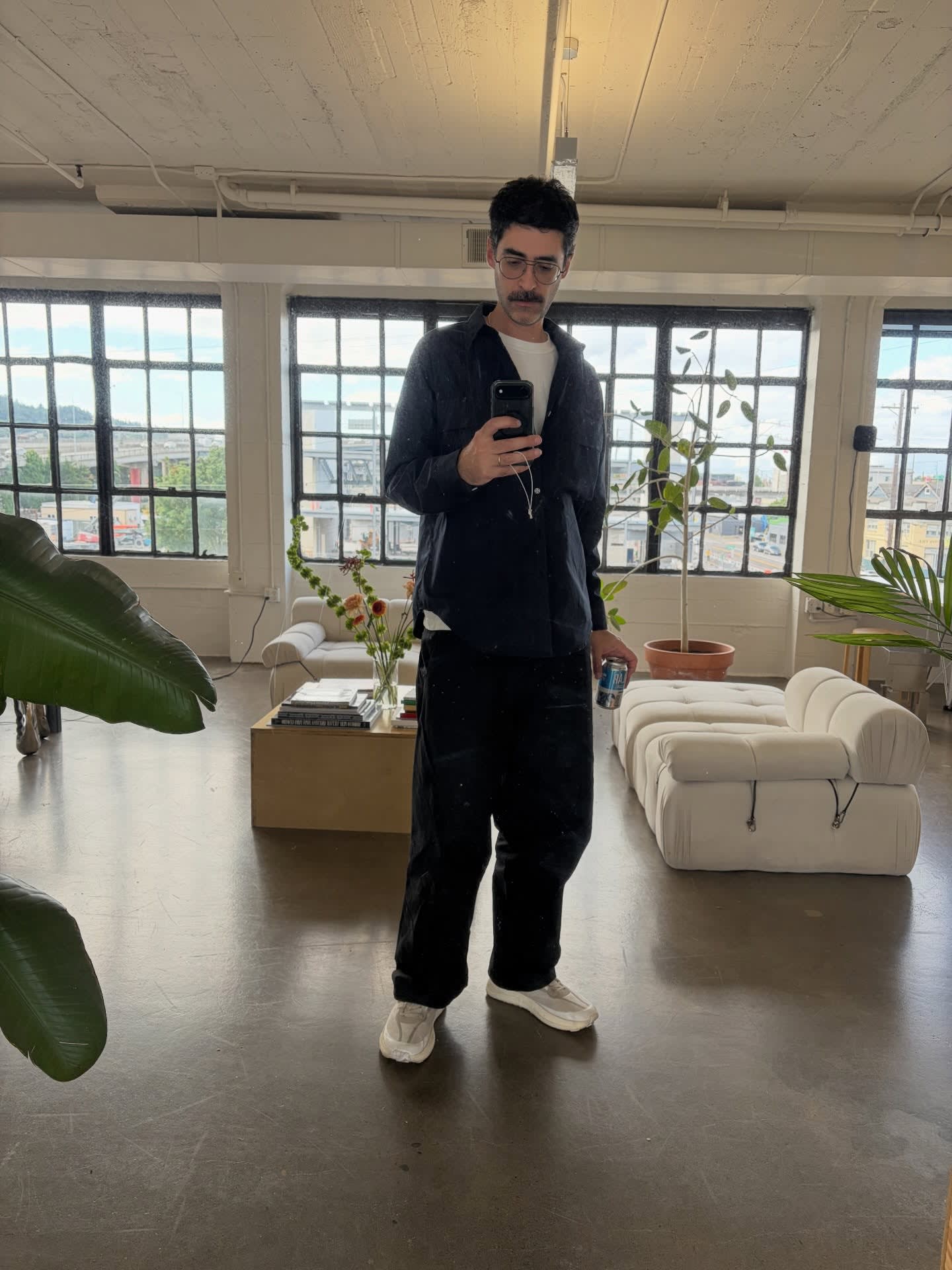
The resulting clothing can look unusual precisely because it hasn't necessarily started with the assumption that an outdoor jacket needs to resemble every outdoor jacket that came before it.
For decades, technical clothing accumulated conventions. Waterproof jackets acquired familiar pocket arrangements, running shorts converged around similar silhouettes and backpacks developed recognizable architectures. Some conventions exist because they work. Others exist because everyone stopped questioning them.
Abbas' work belongs to a generation beginning to separate the two.
Kyle Siegel — Raide
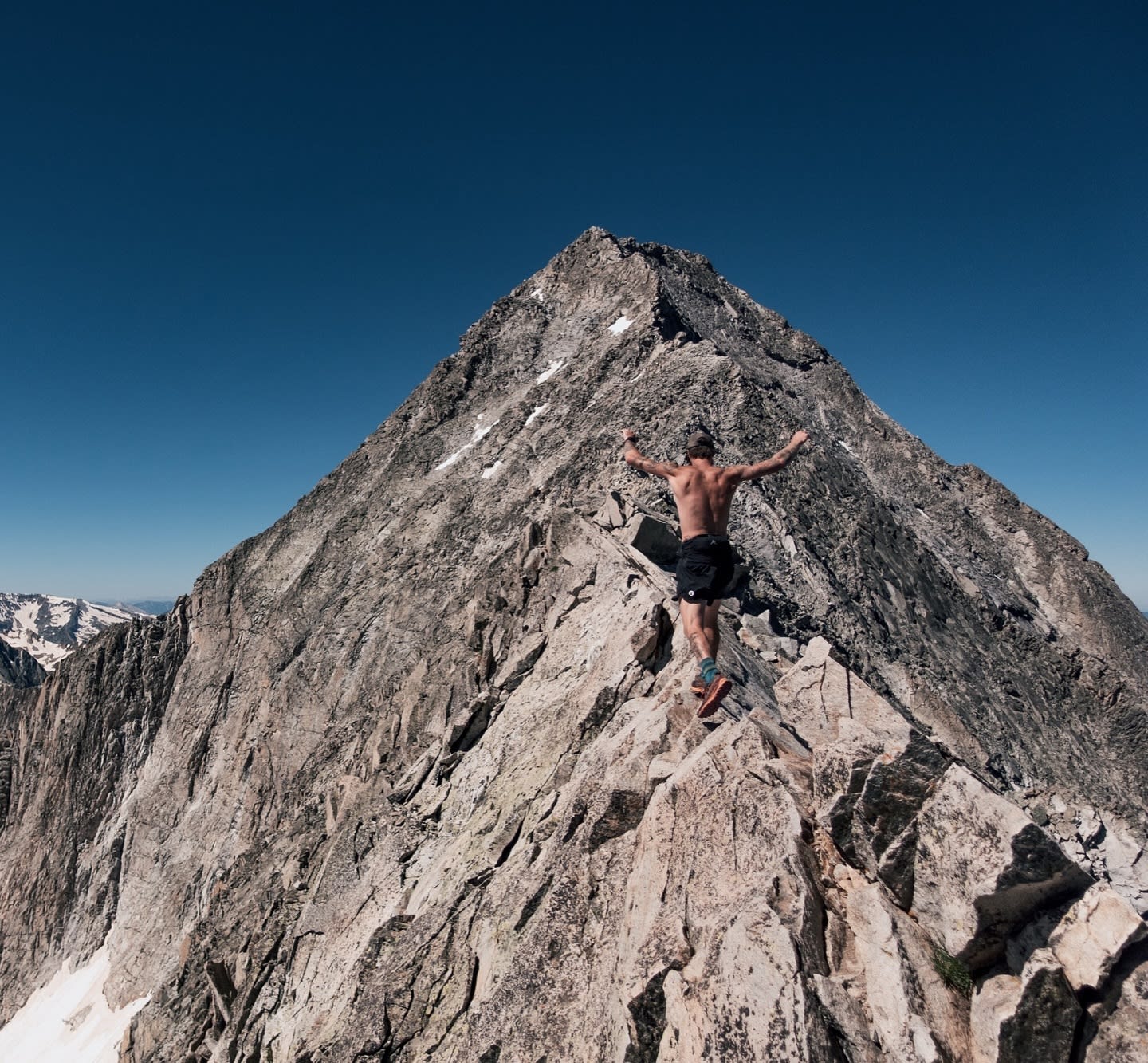
At Raide, Kyle Siegel approaches equipment with the mentality of an engineer and mountain athlete rather than a traditional apparel designer. Before starting the company, Siegel worked as an engineer at SpaceX. Raide began with ski-mountaineering packs and has expanded into running equipment and apparel.
The products reveal a recurring idea within this new generation of outdoor design: specificity can be an advantage.
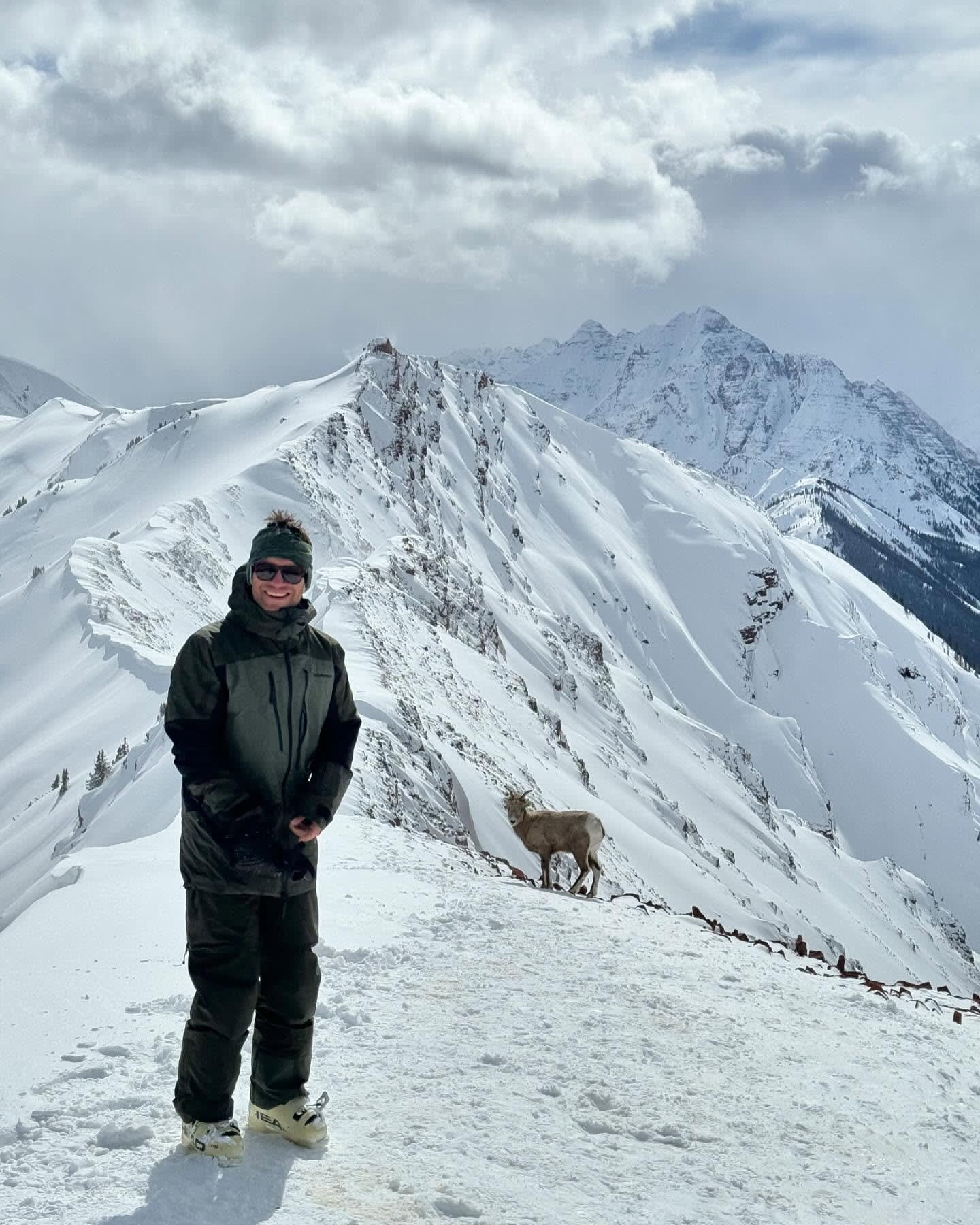
Designing for everyone tends to produce compromise. Designing for a particular person doing a particular thing allows products to become stranger, more specialized and sometimes considerably better. A pocket moves because someone actually tried reaching it while climbing. A seam disappears because it rubbed after six hours. A pack becomes narrower because scrambling through rock exposed a problem nobody noticed on a specification sheet.
The mountain becomes part of the design studio.
No products available.
Keita Ikeuchi & Mihoko Mori — and wander
Long before gorpcore gave fashion a convenient word for the collision between technical clothing and everyday dress, Keita Ikeuchi and Mihoko Mori were already working on the problem.
The two met while working at Issey Miyake and founded and wander in Tokyo in 2011 after becoming interested in hiking and struggling to find outdoor clothing they actually wanted to wear. Their proposition now sounds almost obvious, but at the time it wasn't.
Outdoor clothing had traditionally been designed around an implicit hierarchy in which function came first and aesthetics arrived somewhere afterward. Ikeuchi and Mori treated them as inseparable. Pattern cutting, color and proportion mattered, but so did water resistance, ventilation, weight and the position of a pocket underneath a backpack strap.
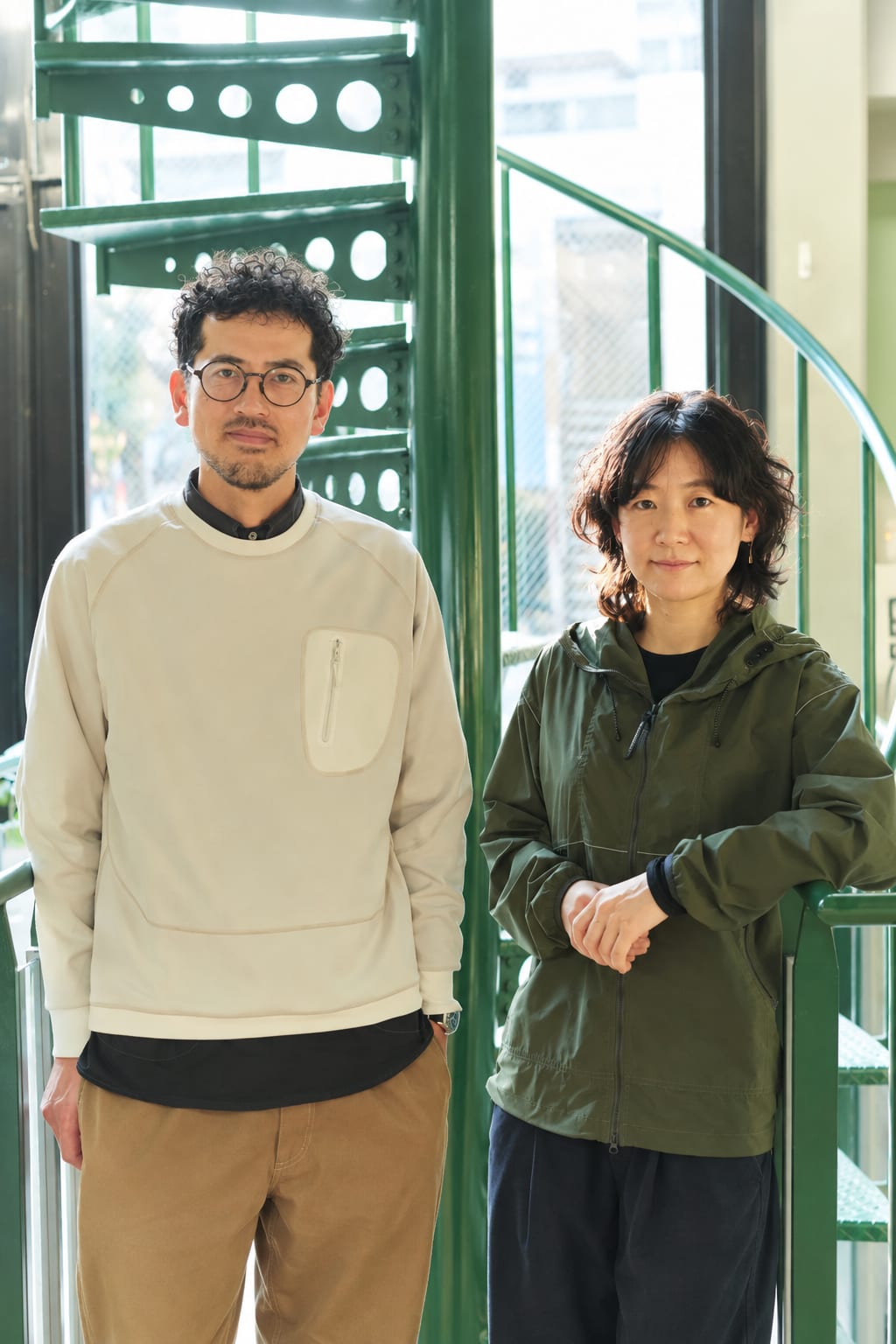
The clothing was tested outdoors because it was outdoor clothing. But it was expected to produce the same emotional response as a beautifully designed garment anywhere else. and wander helped establish an idea that now feels almost universal among independent outdoor labels: technical clothing could be fashion without becoming costume.
More importantly, the city and mountain didn't need separate wardrobes. The person living in Tokyo during the week and escaping outside on the weekend could be the same person in both places.
That person has since become one of the defining characters of contemporary outdoor culture. and wander understood them early.
No products available.
Kaname Nagaoka — South2 West8
Kaname Nagaoka demonstrates what happens when an outdoor brand moves in the opposite direction. Instead of designing for an increasingly broad idea of the outdoors, get extraordinarily specific.
Founded in Sapporo within the wider Nepenthes universe, South2 West8 eventually centered itself around Tenkara, the traditional Japanese method of fly fishing. Fishing became the design system, determining where pockets go and explaining oversized storage, rod holders, game pockets, webbing, mesh and other functional details. The landscape of Hokkaido influences color and material, yet the finished clothing remains unmistakably part of fashion.
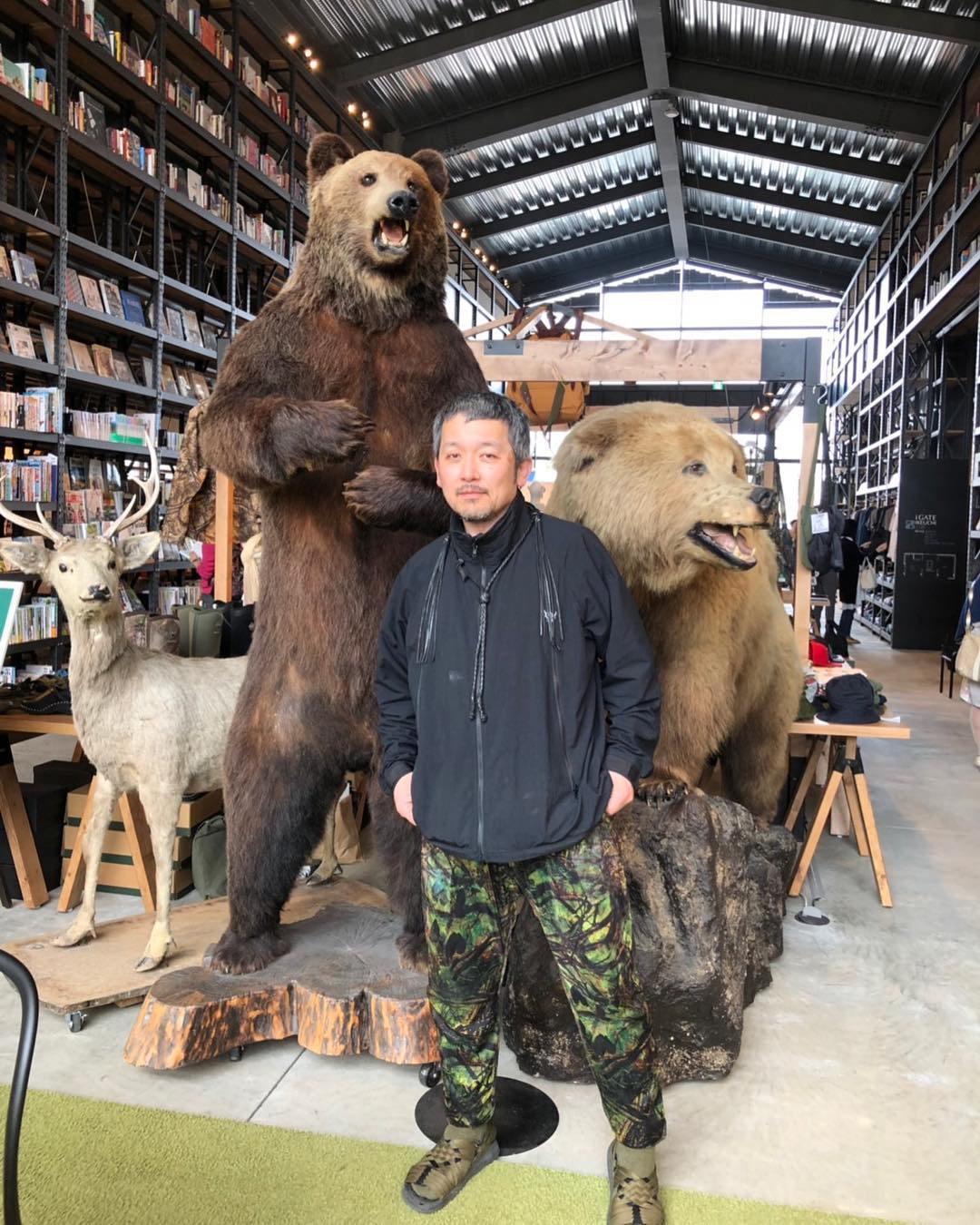
That's an important distinction. South2 West8 didn't take generic outdoor clothing and make it fashionable. It took the actual requirements of an outdoor subculture and allowed them to produce a different kind of fashion.
A fishing vest becomes a design language. A technical pocket becomes decoration because of its function, not despite it. The more specific the product becomes, the more culturally distinctive it can become.
No products available.
Euijae Lee — CAYL
Euijae Lee didn't study fashion. He studied engineering.
He became increasingly interested in climbing, hiking and cycling around Seoul, couldn't find the products he wanted in Korea, and eventually began making them himself. Those experiments became CAYL — Climb As You Love, and the engineering mentality remains visible in the products.
CAYL's backpacks in particular feel designed around problems rather than conventions. Where should something open? How quickly can it be reached? Where does the weight sit? How much structure is actually necessary? The resulting visual language often emerges from solving those problems rather than being imposed upon them.
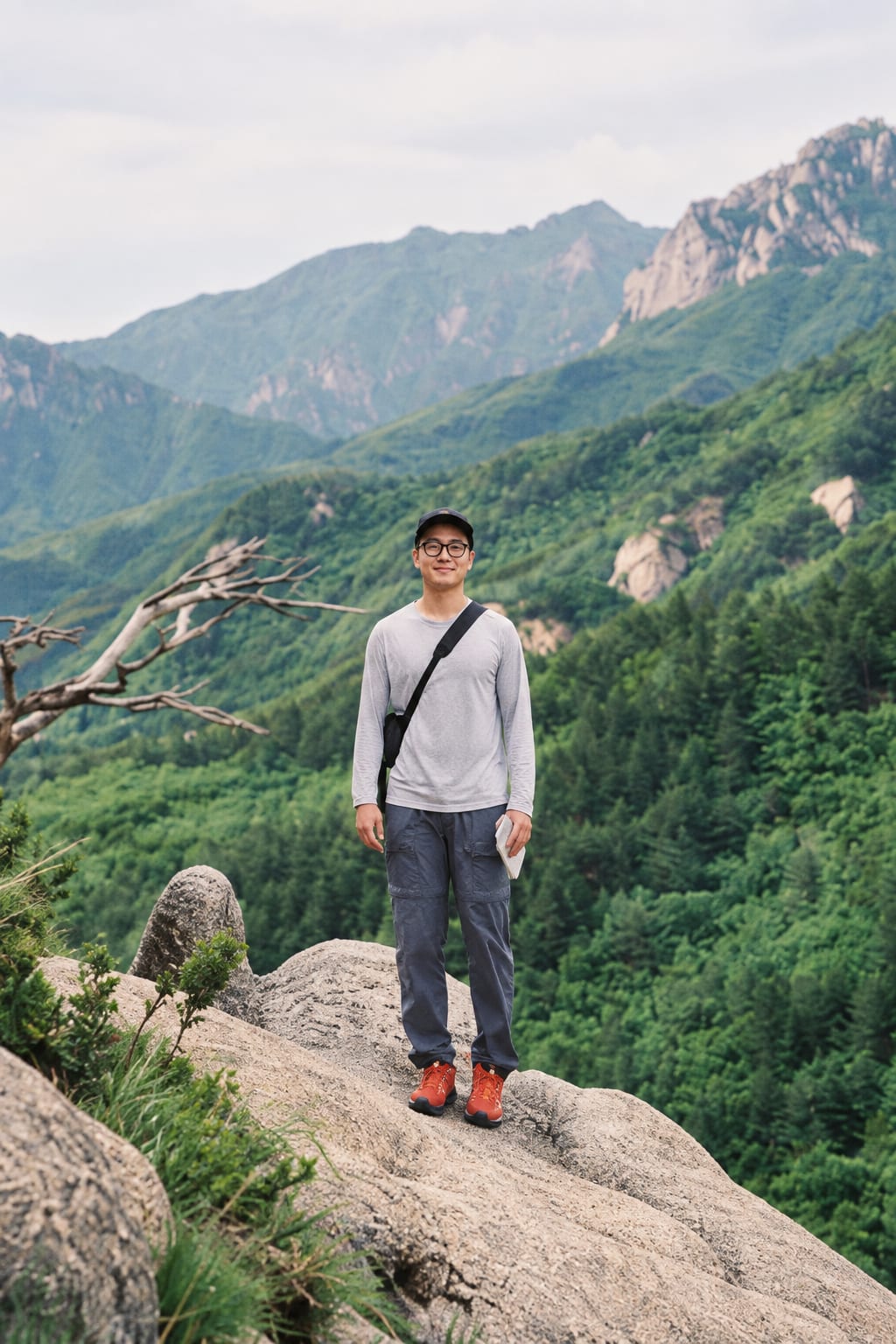
Function produces aesthetics.
CAYL also represents something larger happening in South Korea. Korea has possessed an enormous hiking culture for decades; what is increasingly visible internationally is an independent design culture developing alongside it.
CAYL sits within a generation of Korean companies interpreting outdoor clothing through Seoul, its surrounding mountains and the city's increasingly influential design culture. The clothing doesn't force a distinction between those environments. You can hike in it, run in it or take the subway in it.
That isn't a compromise. It's the point.
No products available.
Sangyup Lee — San San Gear
If CAYL begins with outdoor function and allows an aesthetic to emerge from it, Sangyup Lee pushes technical clothing somewhere else entirely.
Lee launched San San Gear in Seoul in 2019 after working in Korean skatewear. Its visual vocabulary pulls from technical apparel, but also alternative music, hip-hop, anime, skateboarding and internet culture. The result can be maximalist where traditional outdoor design often seeks restraint: pockets multiply, panels interrupt familiar silhouettes, synthetic fabrics are emphasized rather than hidden, and garments can appear closer to equipment from an imagined near future than conventional hiking clothes.
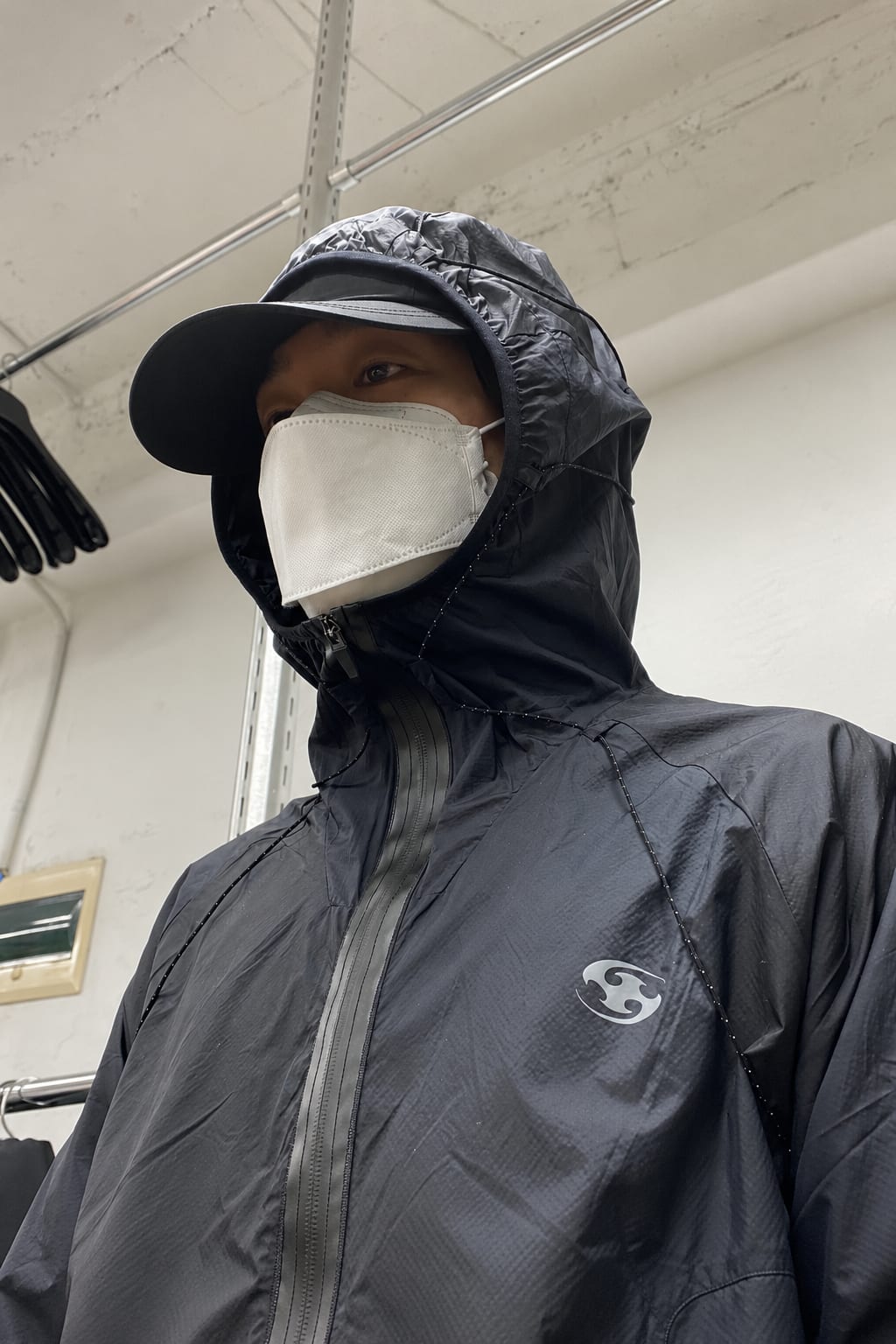
San San Gear isn't simply bringing fashion into outdoor clothing. It is questioning which cultures technical clothing is allowed to belong to.
For decades, outdoor design drew from a relatively narrow collection of references: mountaineering, skiing, climbing, expedition photography and Western wilderness. Lee's references come from somewhere else — Seoul, skateboarding, music, youth culture and the internet.
Technical apparel becomes raw material rather than a fixed genre.
No products available.
Caizhu Jo — Somewhere Outside
Also in Seoul, Caizhu Jo takes another route toward a similar conclusion. Somewhere Outside Hiking Club expands the definition of what an outdoor designer can reference in the first place.
Technical clothing is only one part of the vocabulary. There is cycling, fishing, graphic design, streetwear, everyday objects and the strange collection of things encountered between leaving an apartment in Seoul and eventually reaching a trail.
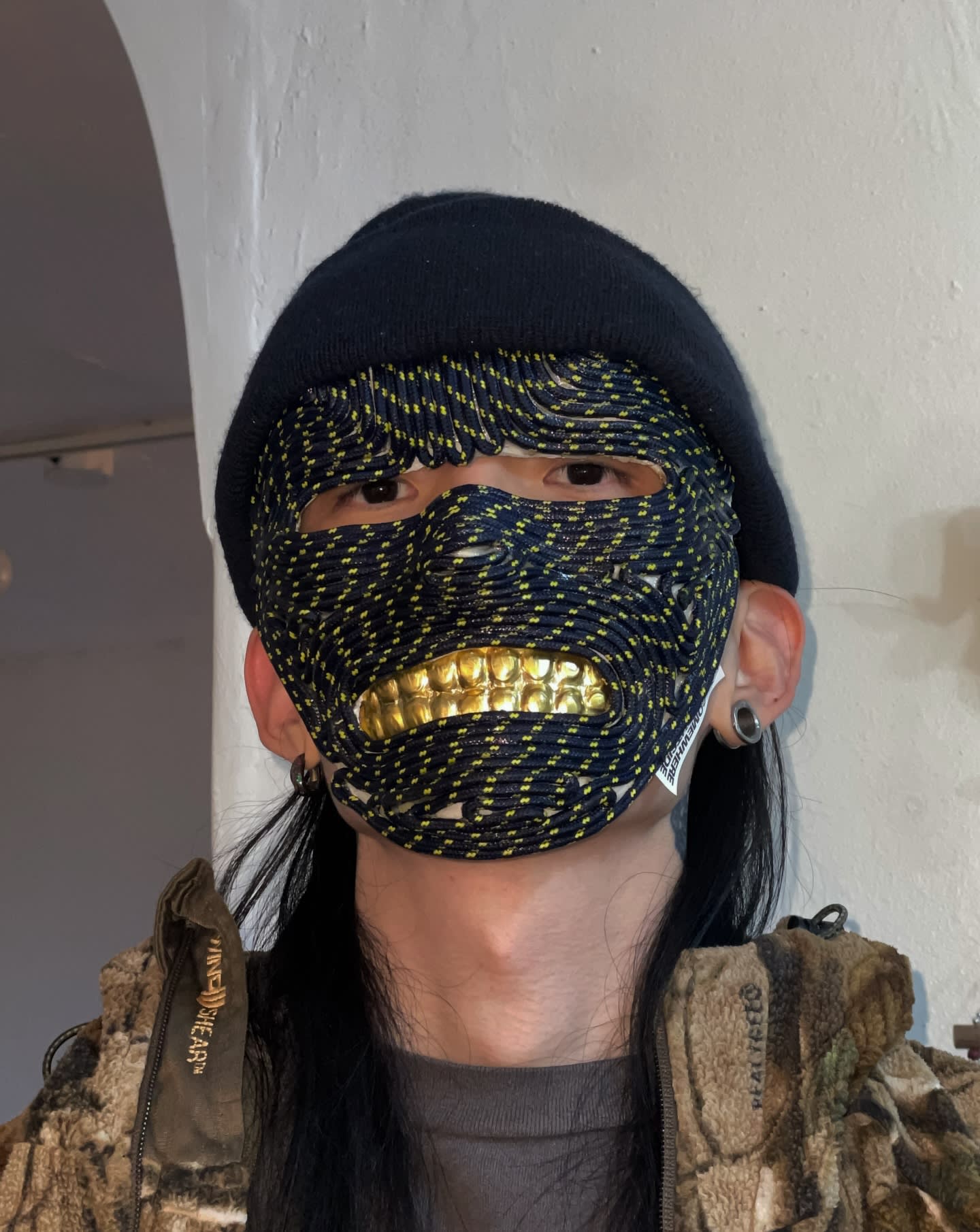
It reflects a larger change in outdoor culture. The outdoors no longer necessarily begins at the trailhead. Someone rides a bicycle to a train, walks through a city, buys coffee, takes a bus, hikes for four hours, returns home and wears much of the same clothing throughout the sequence.
Designing for that person requires a different understanding of performance. The product still needs to function outside. It just doesn't need to announce that fact constantly.
No products available.
Pietro Fareri & Yuri Kaban — Rayon Vert
If and wander represents one route into the new outdoors through fashion, Pietro Fareri and Yuri Kaban represent almost the opposite. They learned through making.
The longtime friends behind Rayon Vert developed their ideas through cycling, traveling and experimenting with equipment, eventually creating a process centered around prototypes, field use, repair and iteration. The approach resembles software development almost as much as conventional product design: make something, use it, discover what's wrong, change it, share what you've learned and make another.
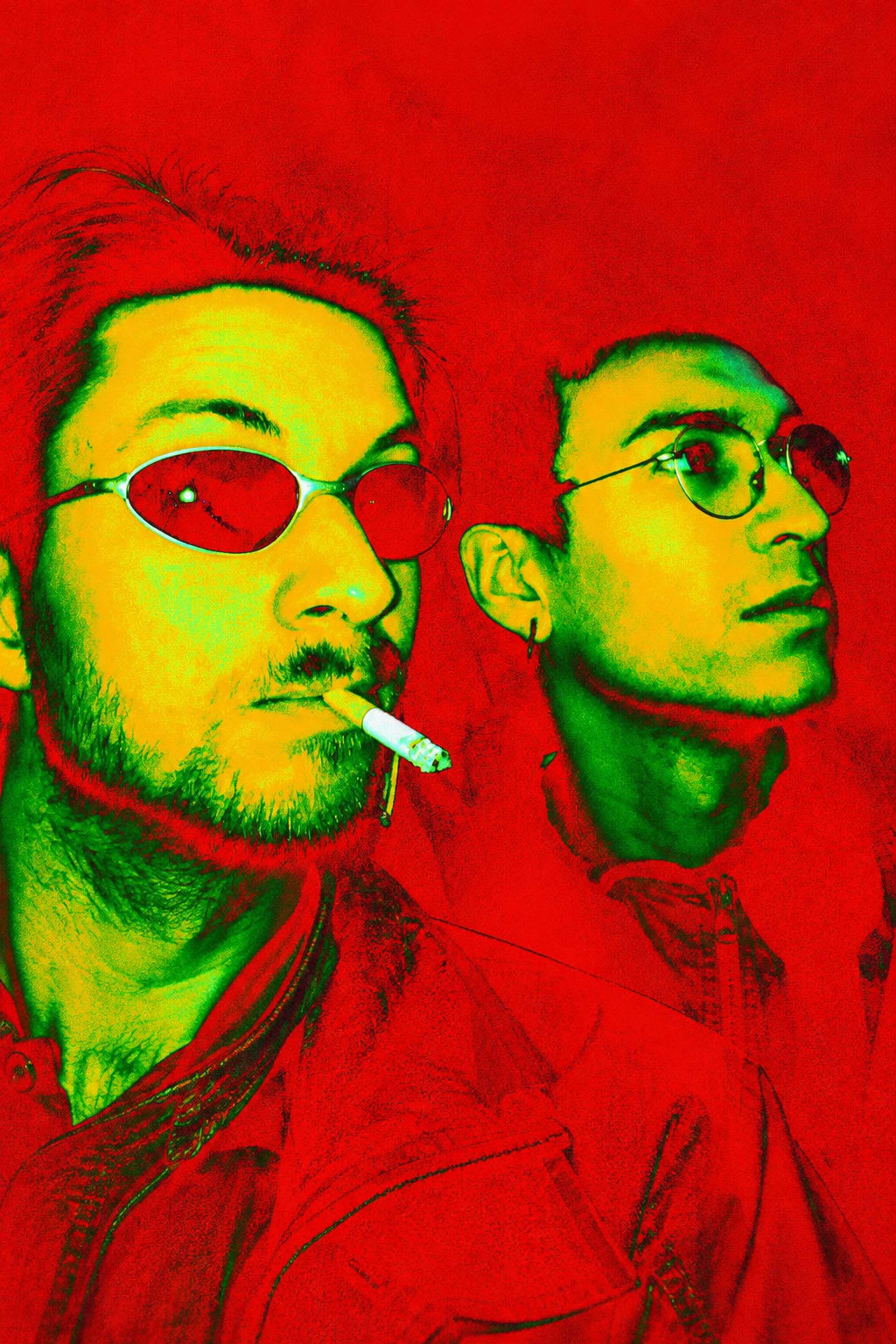
There is something deliberately unfinished about the philosophy, and that's precisely what makes it interesting. Traditional outdoor companies spend enormous amounts of energy presenting products as resolved solutions. Rayon Vert is comfortable exposing the process.
The prototype can be interesting. The repair can be interesting. The pattern can be interesting. Even failure can contain useful information.
Outdoor design becomes less about producing another object and more about continually learning how an object could be made better.
No products available.
Dane Watson — Goodlids
In New Zealand, Dane Watson begins with something else: a material.
Goodlids started around an initially narrow proposition — make a better hat — but the more consequential decision was what to make it from. Hemp.
Goodlids has since expanded the material across shirts, shorts, knitwear, outerwear and increasingly technical applications, turning what could have remained a headwear company into an ongoing investigation into how far a single natural fiber can be pushed.
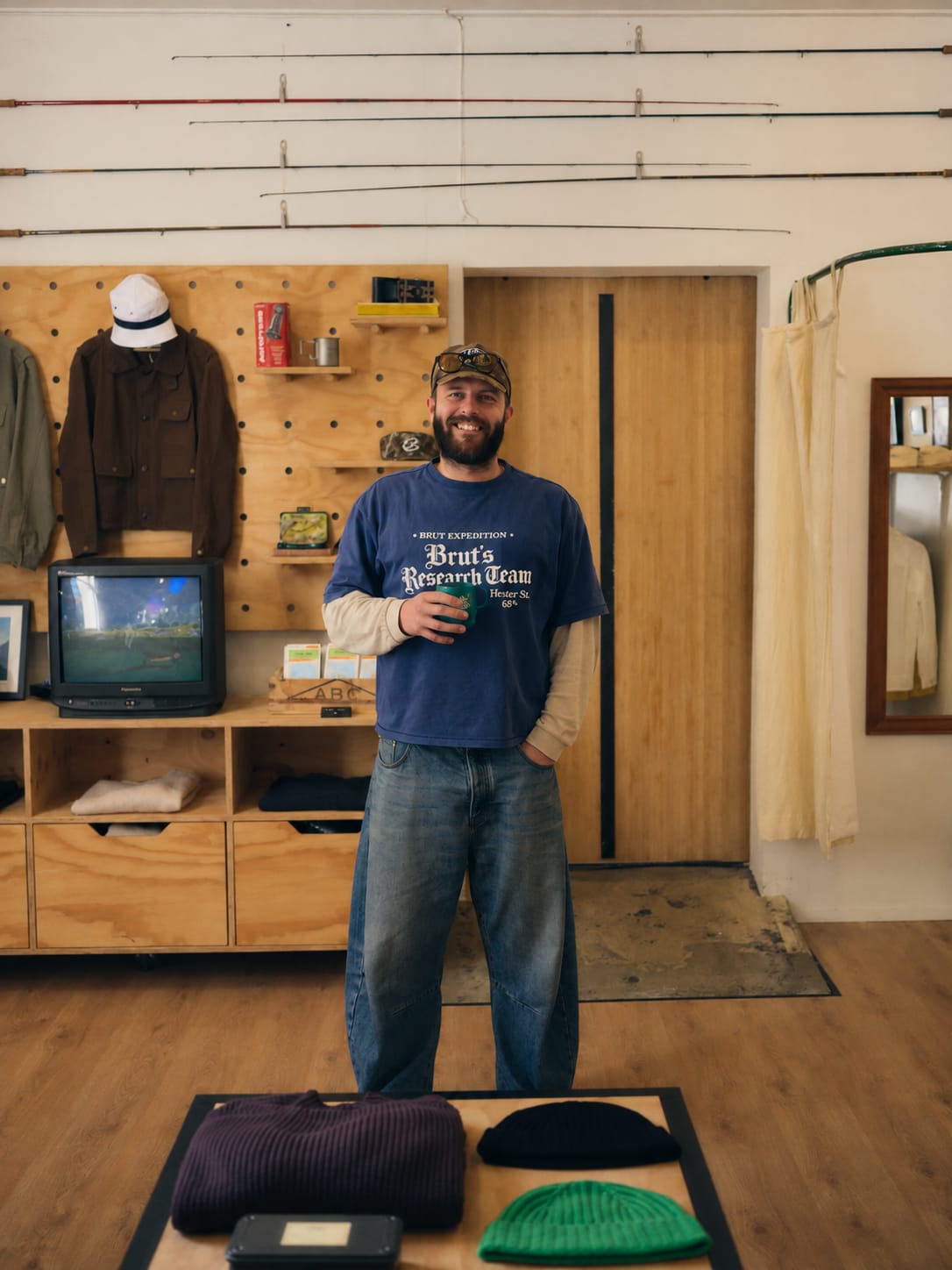
That reverses the conventional outdoor-development process. The traditional industry often begins with a performance requirement and searches for an increasingly engineered material capable of satisfying it. Goodlids asks another question: start with the material, then see what it can do.
Hemp is breathable and durable, but it also behaves differently from the synthetic textiles that have come to define modern outdoor clothing. It wrinkles, fades, softens and develops character. It begins to look increasingly like something you've owned rather than something you've just purchased.
Those qualities belong to a larger reconsideration of performance. How does something age? Can it be worn every day? Where did the fiber come from? Does it need to be synthetic? Will someone still want to wear it ten years from now?
Watson has also pushed beyond physical product through Outdoors Society, creating activities and experiences around trail running, bouldering, cycling, camping, gardening and other ways of being outside.
The evolution is revealing: the product begins as a hat, becomes a material system, then becomes a community.
No products available.
Brice Partouche — SATISFY
Brice Partouche has done as much as almost anyone in the last decade to demonstrate that technical running clothing could belong to a completely different cultural universe.
Satisfy pulled references from music, vintage clothing, counterculture and fashion into a category previously dominated by conventional athletic design. The significance wasn't distressed running shirts. It was permission.
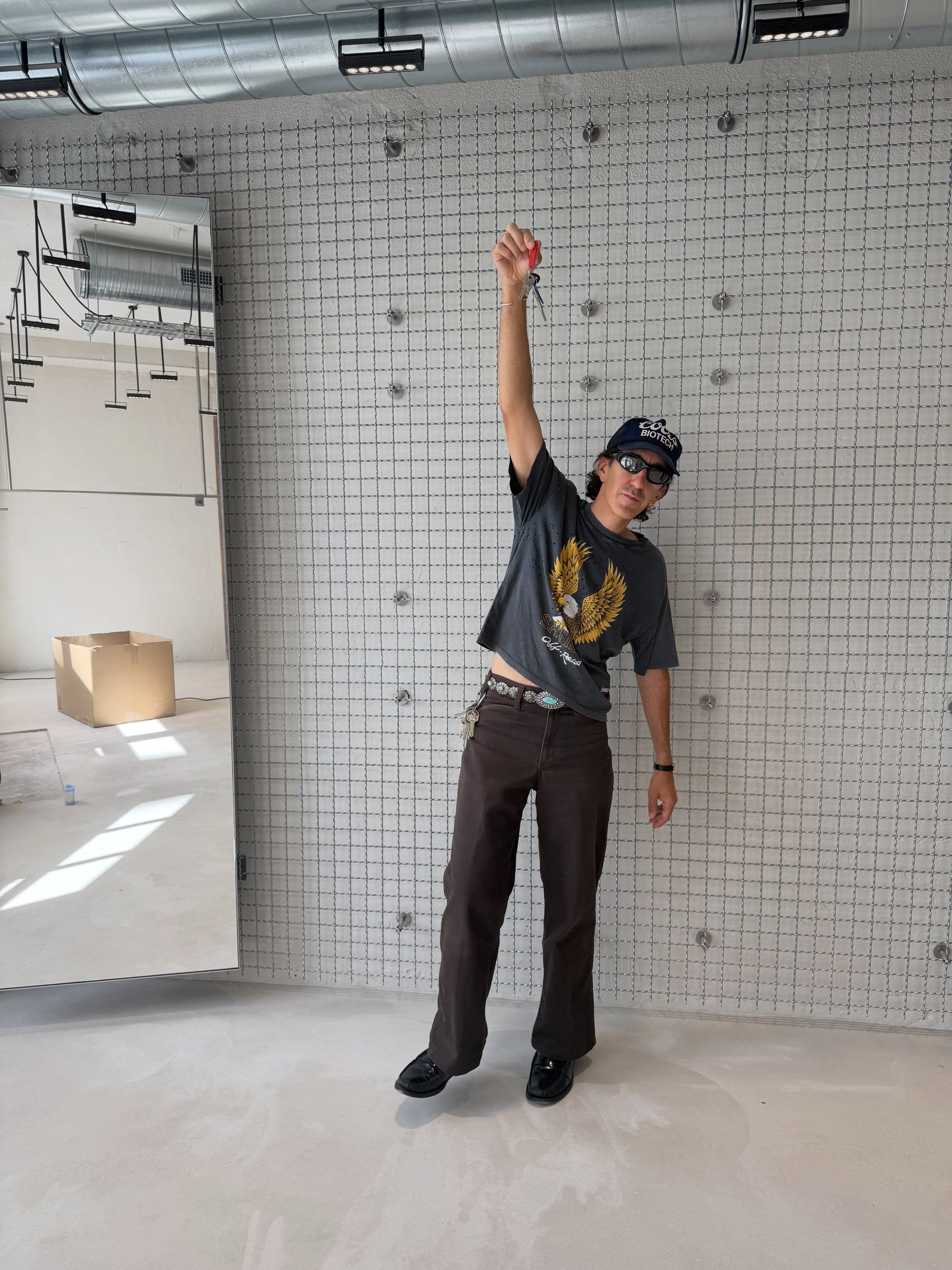
Running clothing could be emotional. It could age and use unexpected materials. It could be expensive for reasons beyond a new foam compound. It could possess a point of view.
A wave of independent running brands followed, not because they necessarily looked like Satisfy, but because Satisfy helped demonstrate that running could support multiple distinct design languages.
No products available.
Tom Daly & Max Vallot — District Vision
Tom Daly and Max Vallot pushed the cultural expansion of running from another direction with District Vision.
Eyewear became the entry point, but the broader project placed running equipment alongside meditation, publishing, industrial design and fashion. Again, the important idea wasn't a particular pair of sunglasses. It was context.
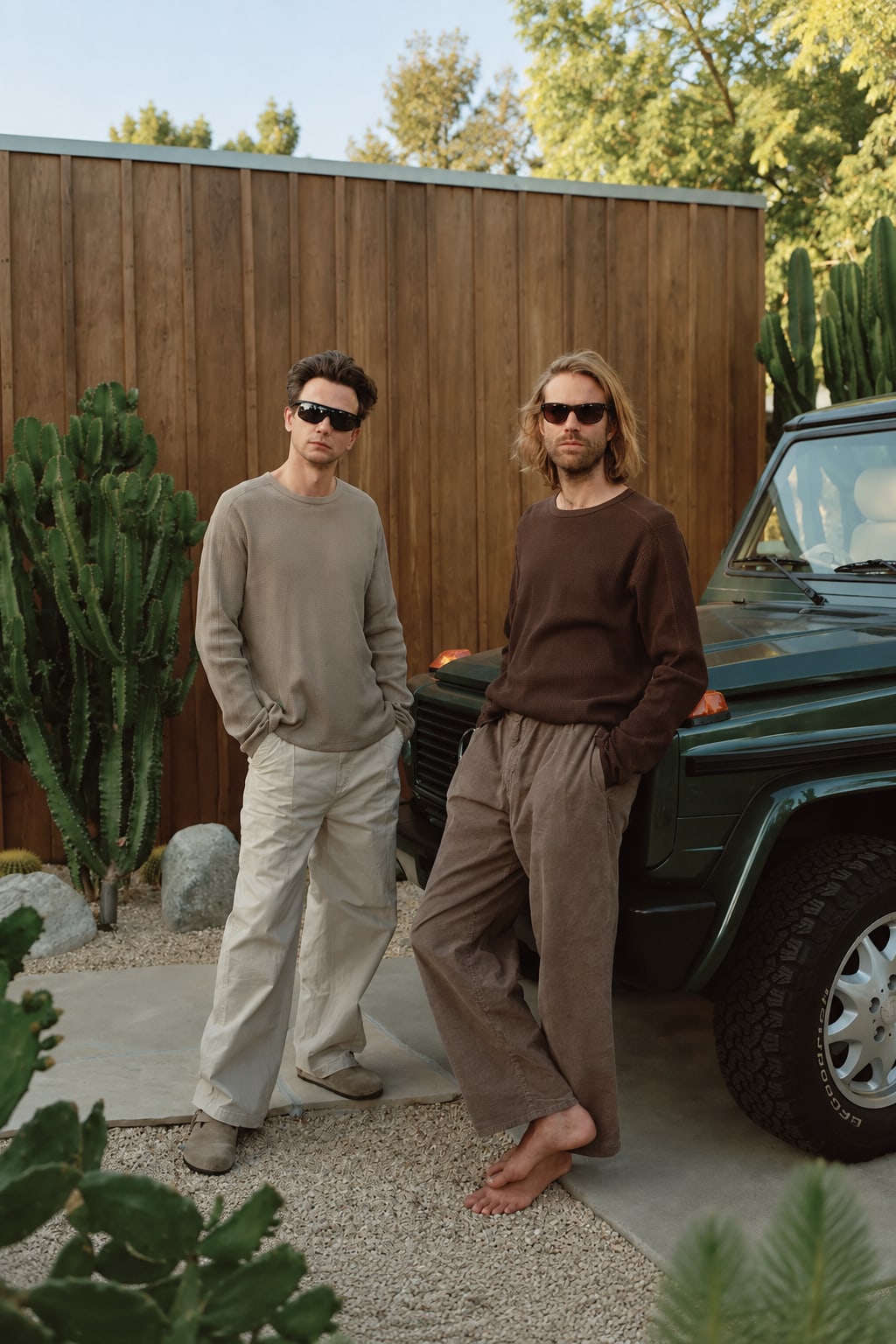
Performance equipment didn't have to remain inside the cultural boundaries established by sporting-goods companies. Running could coexist with furniture, architecture, books, music, wellness and fashion.
Once those references expanded, the products inevitably followed.
No products available.
Wai Tsui — Hiking Patrol
Stockholm's Wai Tsui represents another distinctly contemporary archetype: the curator becoming the designer.
Hiking Patrol began as an outdoor-focused social platform before evolving into a label itself. That trajectory would have been unusual twenty years ago. Today it makes complete sense.
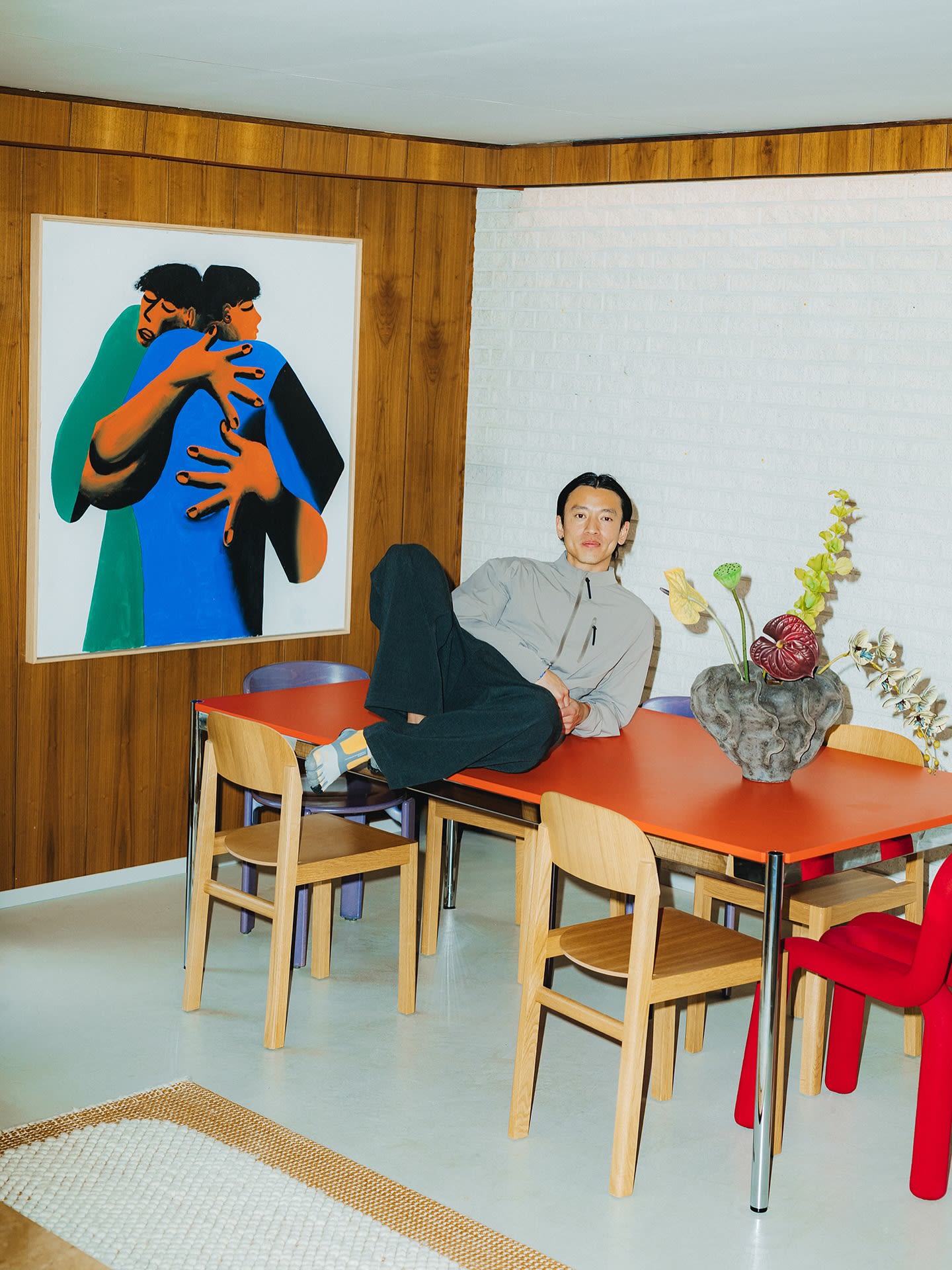
Someone can spend years documenting products, studying hiking culture, building a community and developing taste before making anything themselves. When they eventually become a designer, they enter the process with a highly developed understanding of what already exists.
Curation becomes research. Research becomes taste. Taste eventually becomes product.
No products available.
Graham Hiemstra — Field Mag
Not everyone designing the new outdoors is designing an object. Some are designing the culture around it.
Graham Hiemstra, founding editor of Field Mag, has spent more than a decade developing a version of outdoor media that treats design, style and aesthetics as fundamental parts of outdoor culture rather than distractions from it.
Field Mag emerged from a different geographic perspective than traditional outdoor media. Rather than speaking primarily from mountain towns to people who already considered themselves outdoors people, it addressed the person living in New York, Los Angeles or another city who might spend the week surrounded by architecture, fashion and design but still organize their weekends around climbing, camping, surfing or hiking.
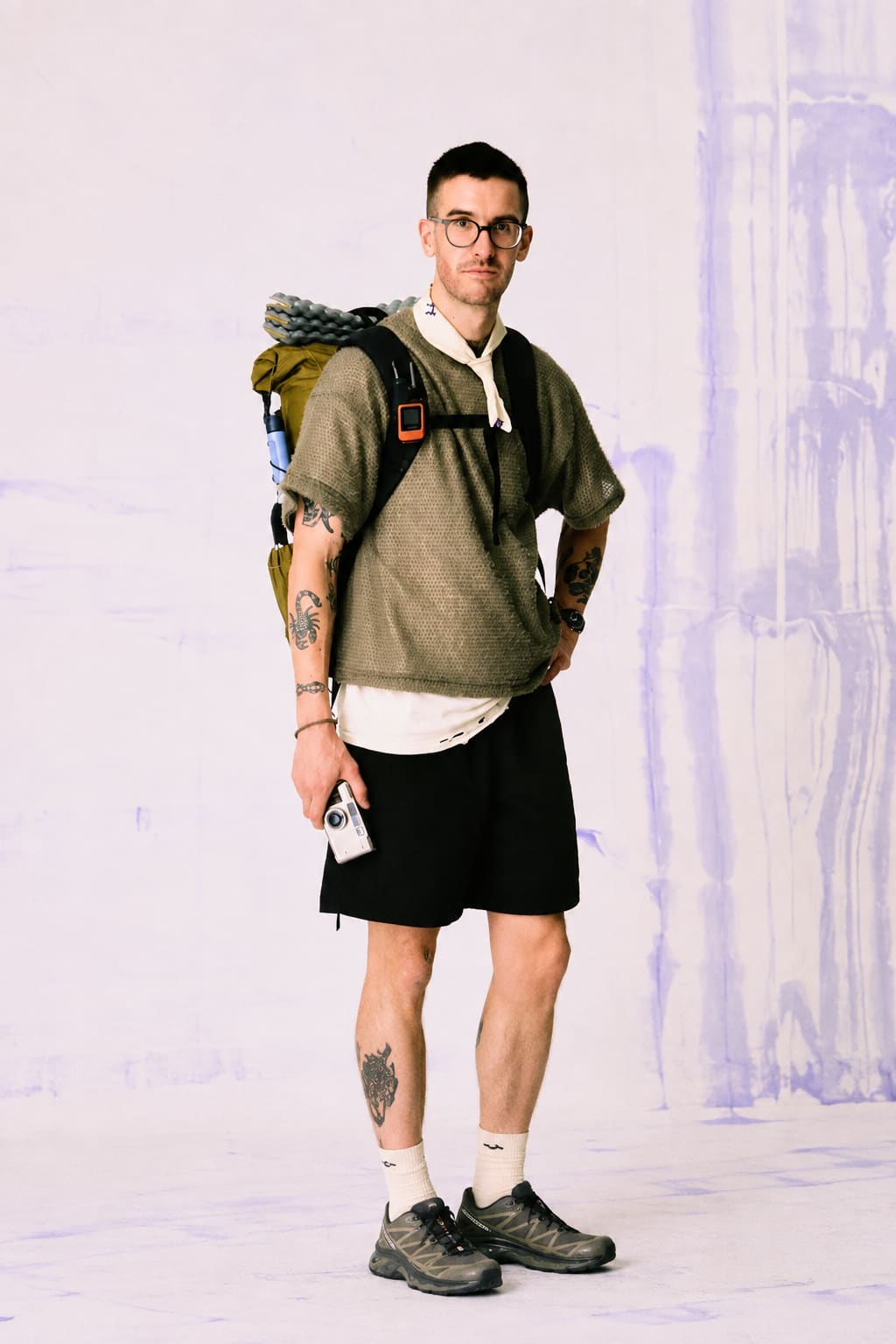
That distinction turned out to be important. Field Mag helped establish a visual and editorial language for the contemporary outdoors: technical equipment photographed with the attention normally reserved for furniture or fashion, cabins considered alongside tents, film photography alongside gear reviews, and tiny independent makers alongside multinational outdoor companies.
Hiemstra's influence isn't necessarily found in a particular jacket or backpack. It's found in what people have learned to notice: a beautifully constructed pack from a two-person workshop, the typography on an old climbing catalog, a Japanese tent, a strange piece of hardware, the architecture of a backcountry hut, or a pair of hiking pants that happens to look good in Brooklyn.
Publications can change design without manufacturing anything themselves. By deciding what deserves attention, they create references for the designers who come next.
The new outdoors isn't only being designed at the sewing machine. It's being designed through the edit.
No products available.
Michael Washington — USAL
Michael Washington is designing something even less tangible: participation.
Washington founded Los Angeles-based USAL around a simple observation: plenty of people wanted to spend more time outside without necessarily identifying as climbers, surfers, backpackers or any other established outdoor archetype. They were simply curious.
USAL built around that person. Its programming has stretched across hiking, surfing, fly fishing, foraging, astronomy, climbing, backpacking and creative workshops.
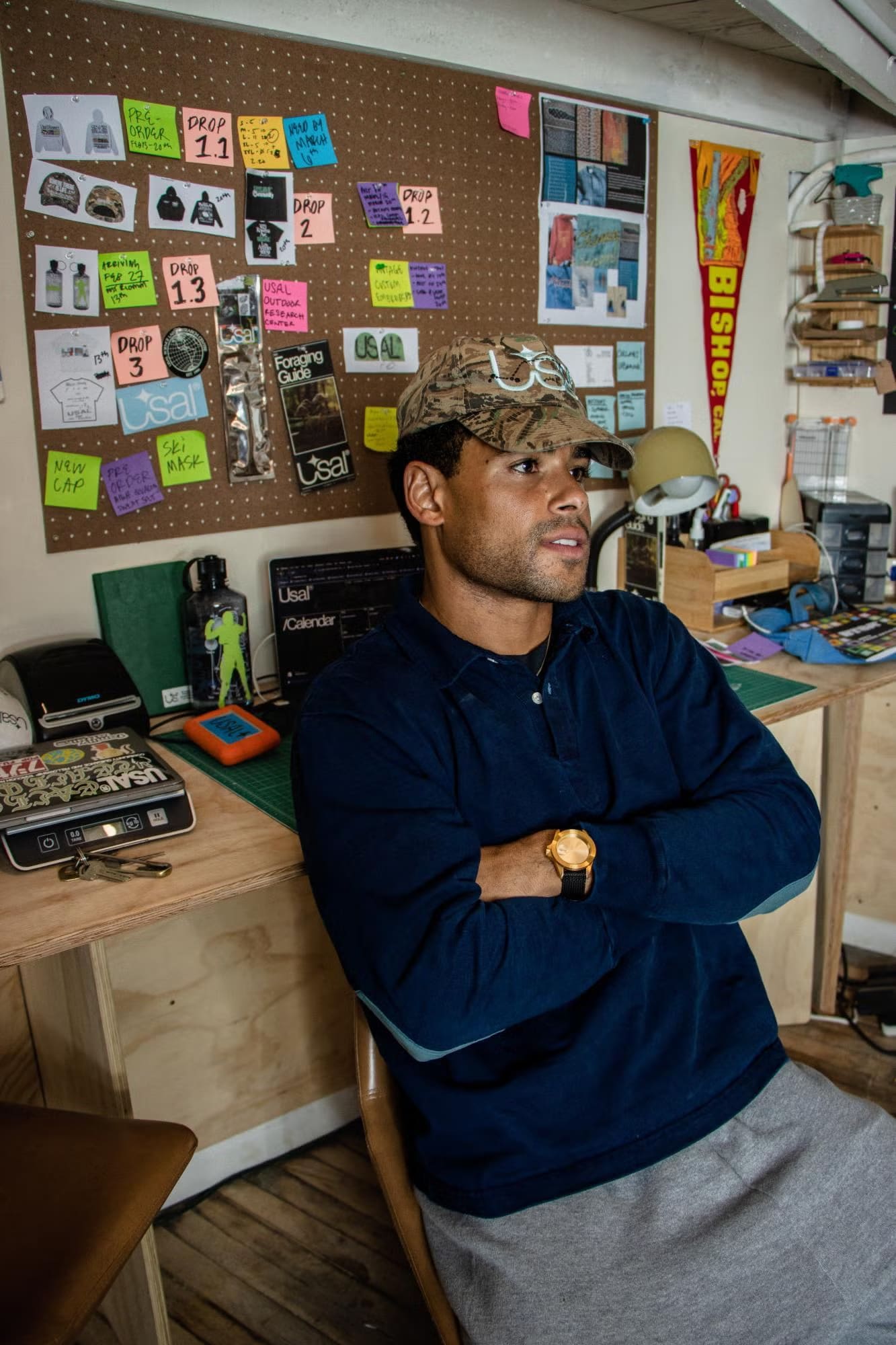
That represents a meaningful design problem: how do you design an outdoor organization for someone who doesn't know what they like yet?
You remove some of the barriers created by specialization. Instead of requiring someone to become a climber before joining a climbing community, create a place where they can simply try climbing, then perhaps fishing, surfing or mushroom foraging.
The product becomes the invitation.
That puts Washington alongside a different generation of outdoor designers: people designing systems for getting outside rather than equipment for doing it. Running clubs are becoming social institutions. Outdoor stores are becoming cafés and gathering spaces. Brands are organizing hikes, workshops and retreats. Retail spaces increasingly function as clubhouses. Publications host events. Communities become as important as products.
The outdoor industry's traditional unit of design was the object — a boot, tent, backpack or jacket. Washington's work suggests another unit: the experience.
No products available.
Designing Through Community
This same thinking is beginning to influence the actual development of products.
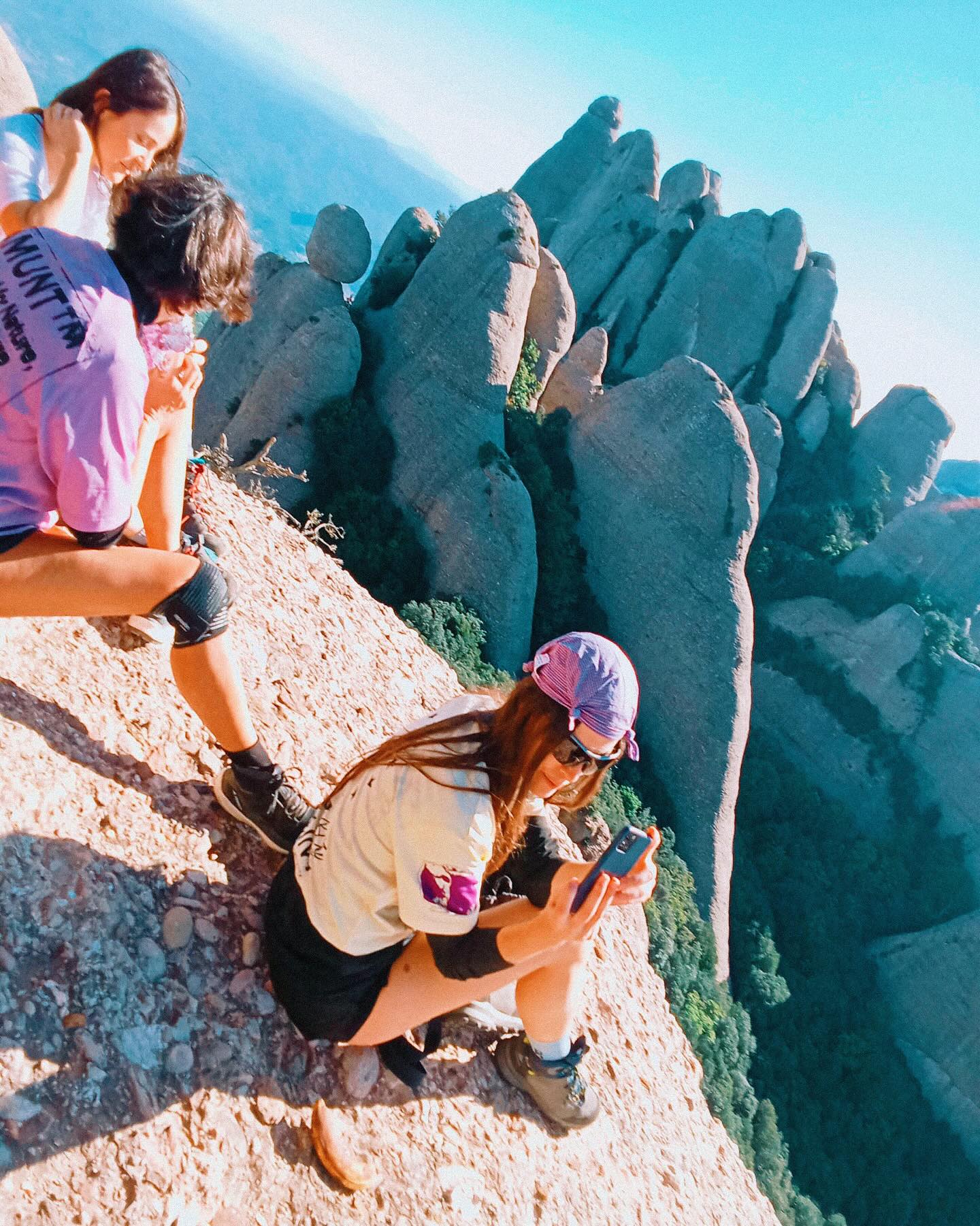
Barcelona's AMUNT, for example, organizes its design process around what it calls Field Studies. Instead of beginning with the conventional Spring/Summer and Fall/Winter calendar, a project begins with a need, activity and context.
Clothing enters that context. People use it. Problems emerge. The garment changes. Eventually it is released, but release doesn't necessarily mean the design process is finished.
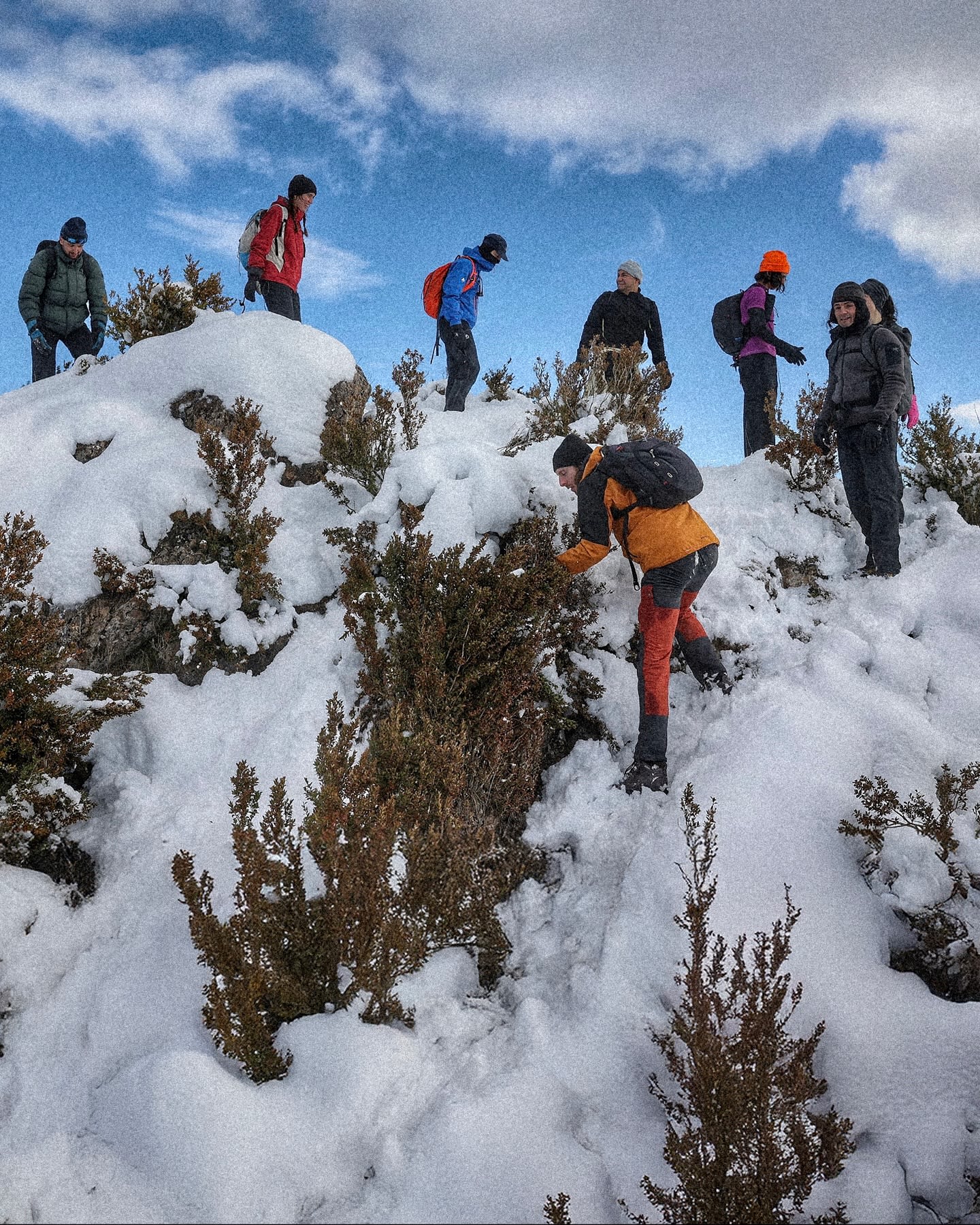
That's a subtle but important change. Nearly every outdoor company claims to test products. The more interesting proposition is that production itself doesn't represent the end of development.
A garment can remain unresolved, and the community can effectively become part of the design department. That model becomes particularly powerful for small companies.
A tiny brand doesn't need to pretend it has discovered the definitive hiking pant. It can make version one, listen, then make version two better.
China Starts Designing for Itself
Perhaps the largest change to the map of outdoor design is happening in China.
For decades, enormous amounts of outdoor manufacturing knowledge accumulated there while brand and design authority remained concentrated elsewhere. That division is weakening.
Companies including UPPERVOID, Repsycle, Loosend, An Ro Rau, Outopia and Blue Monte are developing products for an increasingly sophisticated domestic outdoor culture rather than simply manufacturing someone else's ideas.
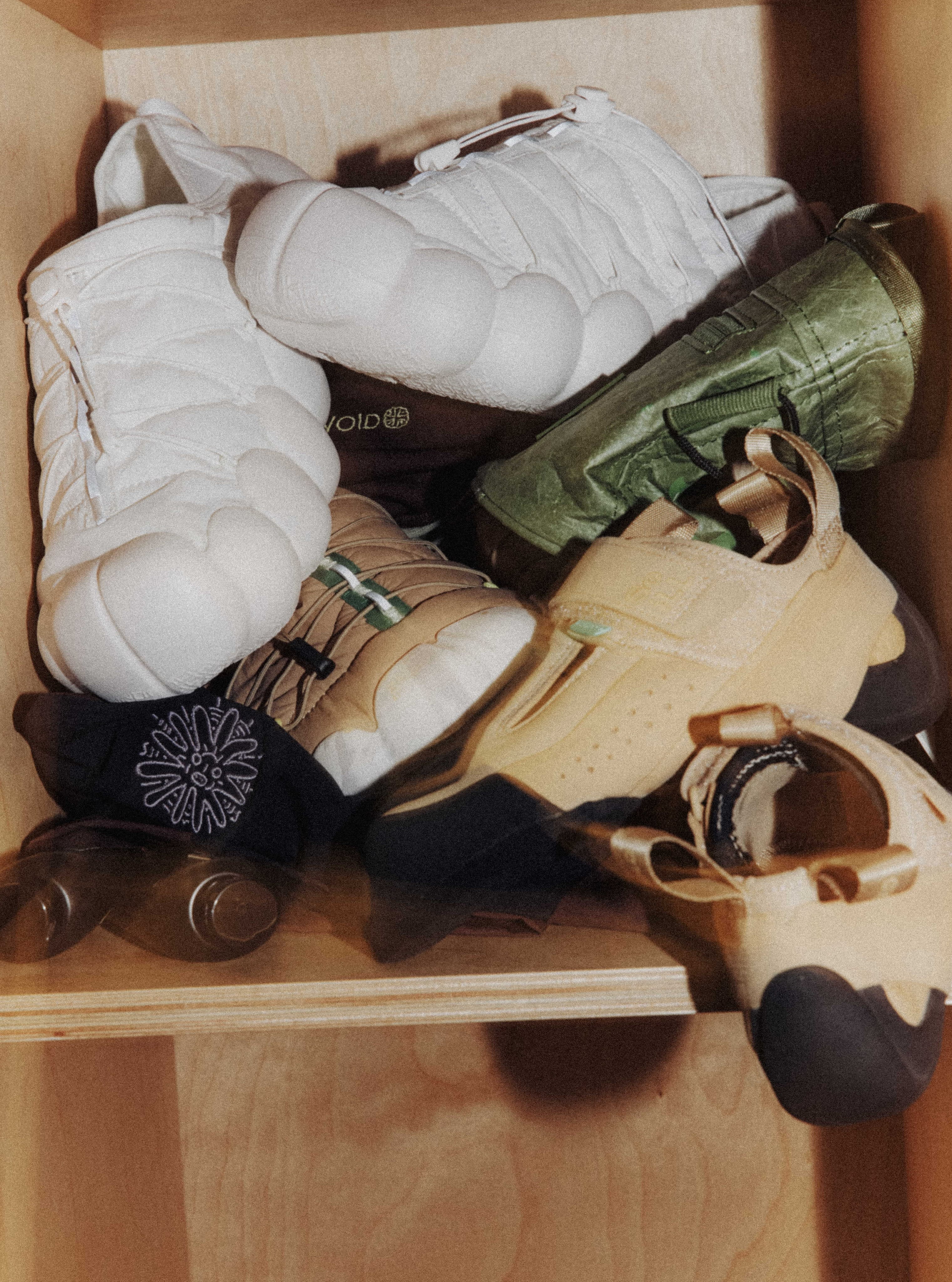
The designers behind these companies possess an unusual advantage: they exist beside one of the most sophisticated technical manufacturing ecosystems ever created. Materials can be sourced quickly, prototypes adjusted, hardware modified and factories treated as collaborators rather than distant suppliers.
China doesn't simply have an outdoor manufacturing ecosystem anymore. It increasingly has an outdoor design culture, and the products emerging from it don't necessarily need to imitate Portland, Vancouver or Annecy. They can respond to Chengdu, Shanghai, Shenzhen and Beijing.
The geographic center of outdoor design is becoming considerably harder to locate. That's probably healthy.
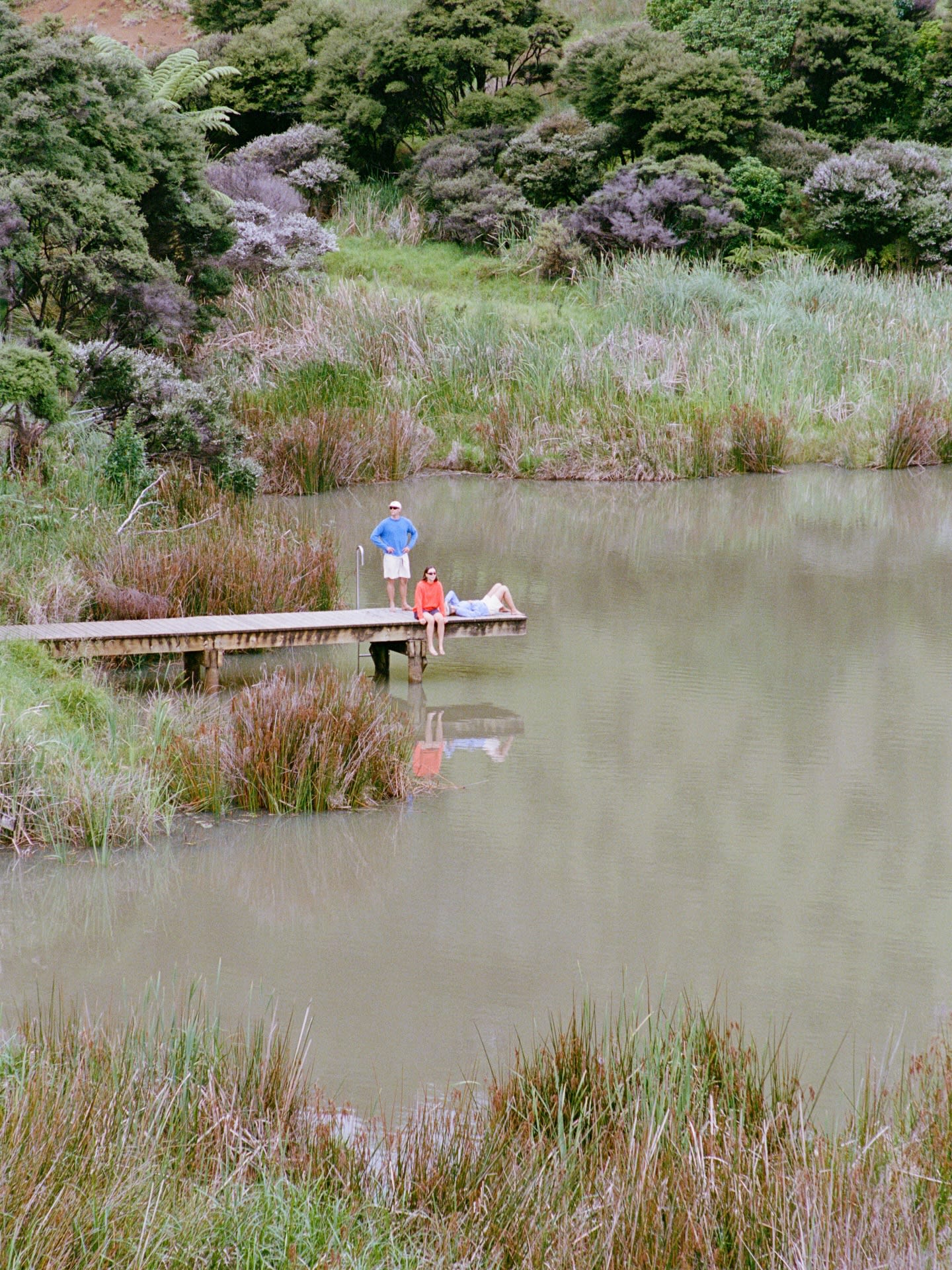
Materials Are Becoming a Design Language Again
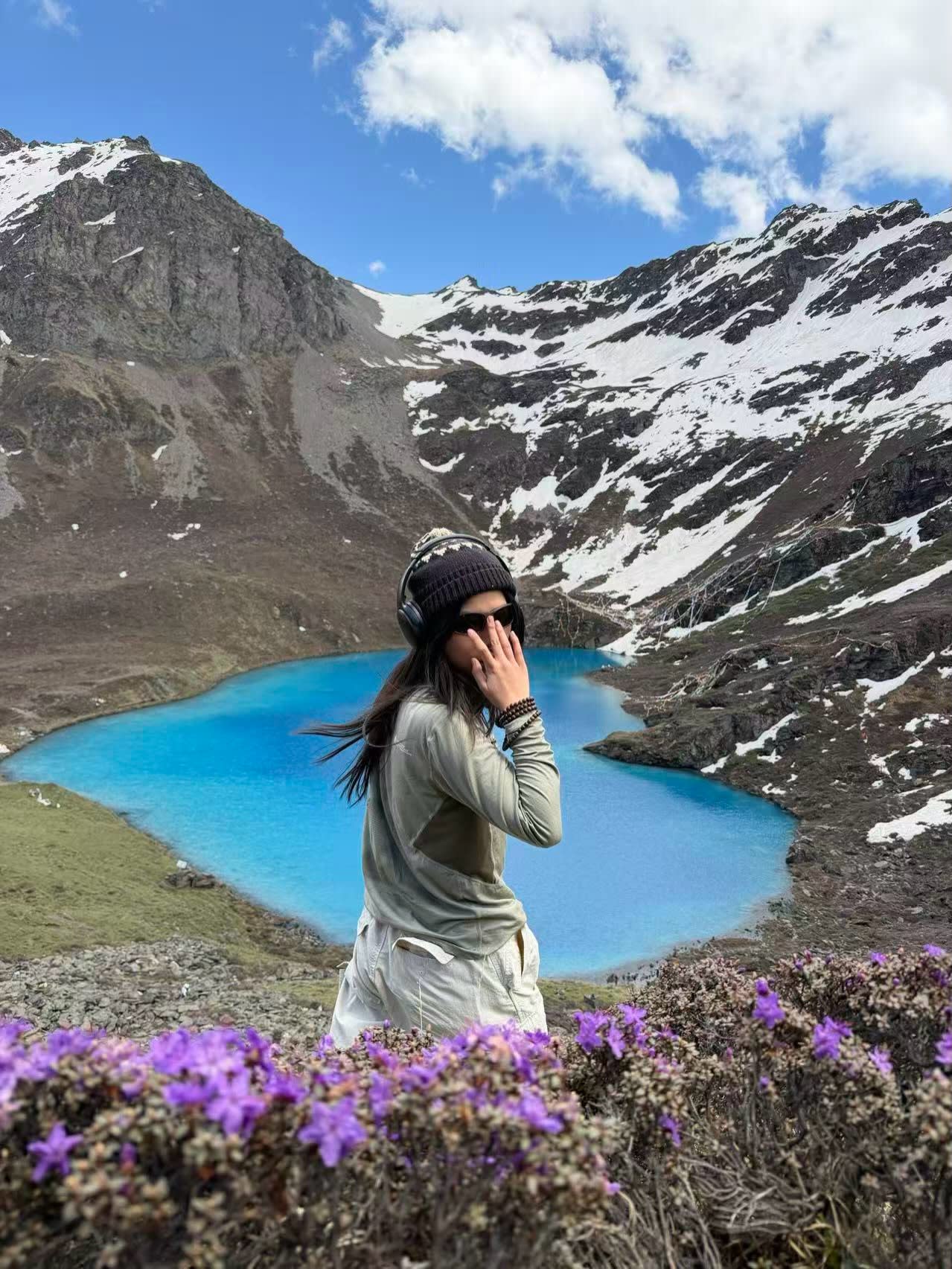
The changing geography of outdoor design is accompanied by another shift: materials are becoming visible again.
For much of the technical industry's history, materials were primarily communicated as specifications — waterproofness, breathability, denier, stretch, weight and insulation value. Those measurements still matter, but designers are increasingly interested in characteristics that are harder to quantify.
How something feels. How it fades. How it repairs. How it changes after five years.
A designer might choose cotton because of how it ages, wool because it regulates temperature without feeling synthetic, Dyneema because its translucency reveals the construction underneath, hemp because of the questions Dane Watson is exploring at Goodlids, or a knitted structure because it reduces the cutting and waste associated with conventional garment construction.
Material becomes more than technology. It becomes part of the personality of the object. You are supposed to notice it, touch it, wear it, repair it and watch it change.
The Return of the Maker
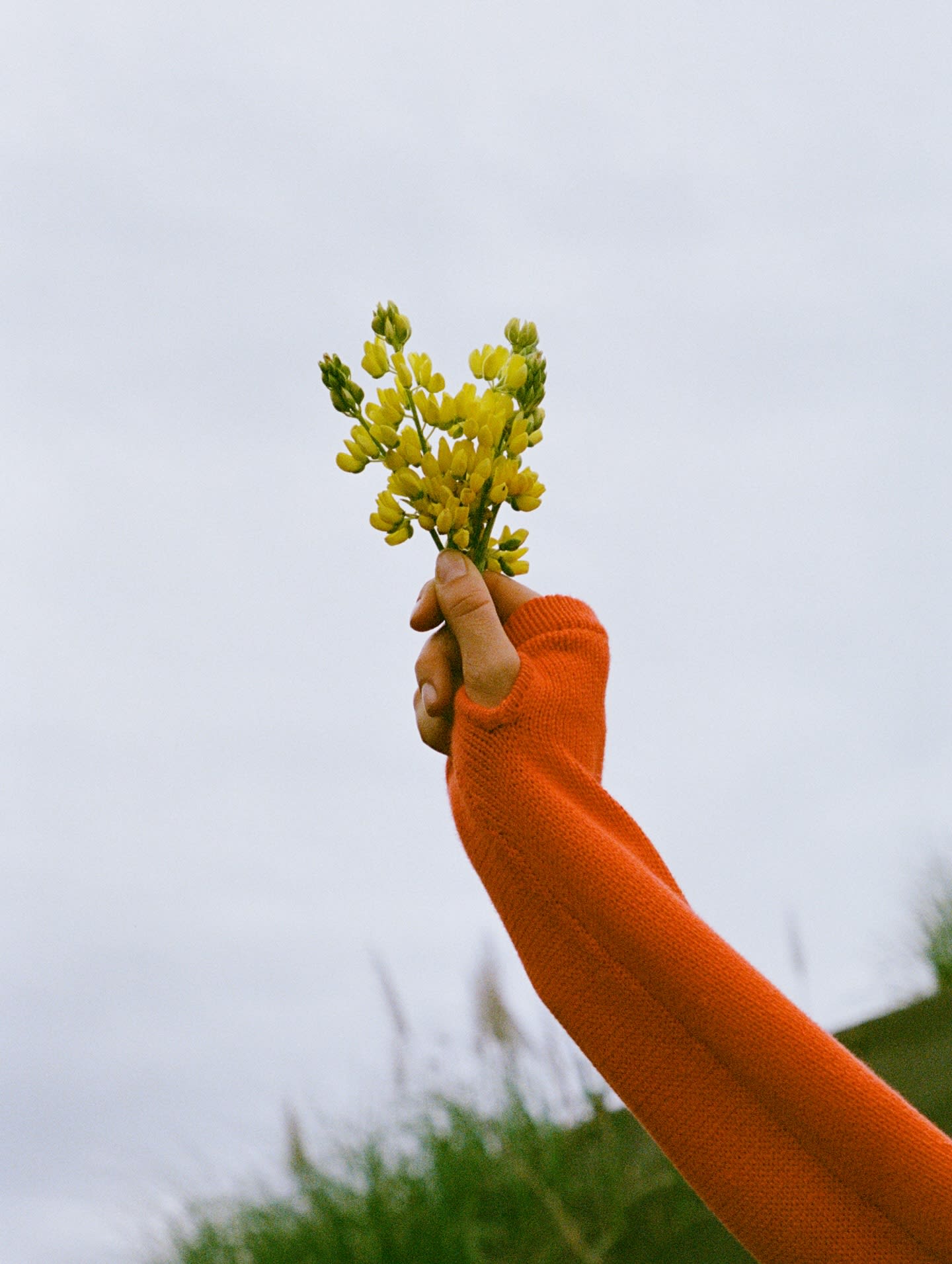
At the same time, something much older is returning: the person who simply makes things.
Small outdoor companies are rediscovering a model that existed long before global technical-apparel companies — designers working extremely close to the actual construction of their products. Sometimes they sew or pattern themselves. Sometimes they work directly with a local factory. Sometimes the company is effectively one person obsessing over a single object.
That proximity changes design. When the person deciding where a pocket belongs also understands how that pocket is stitched, different decisions become possible.
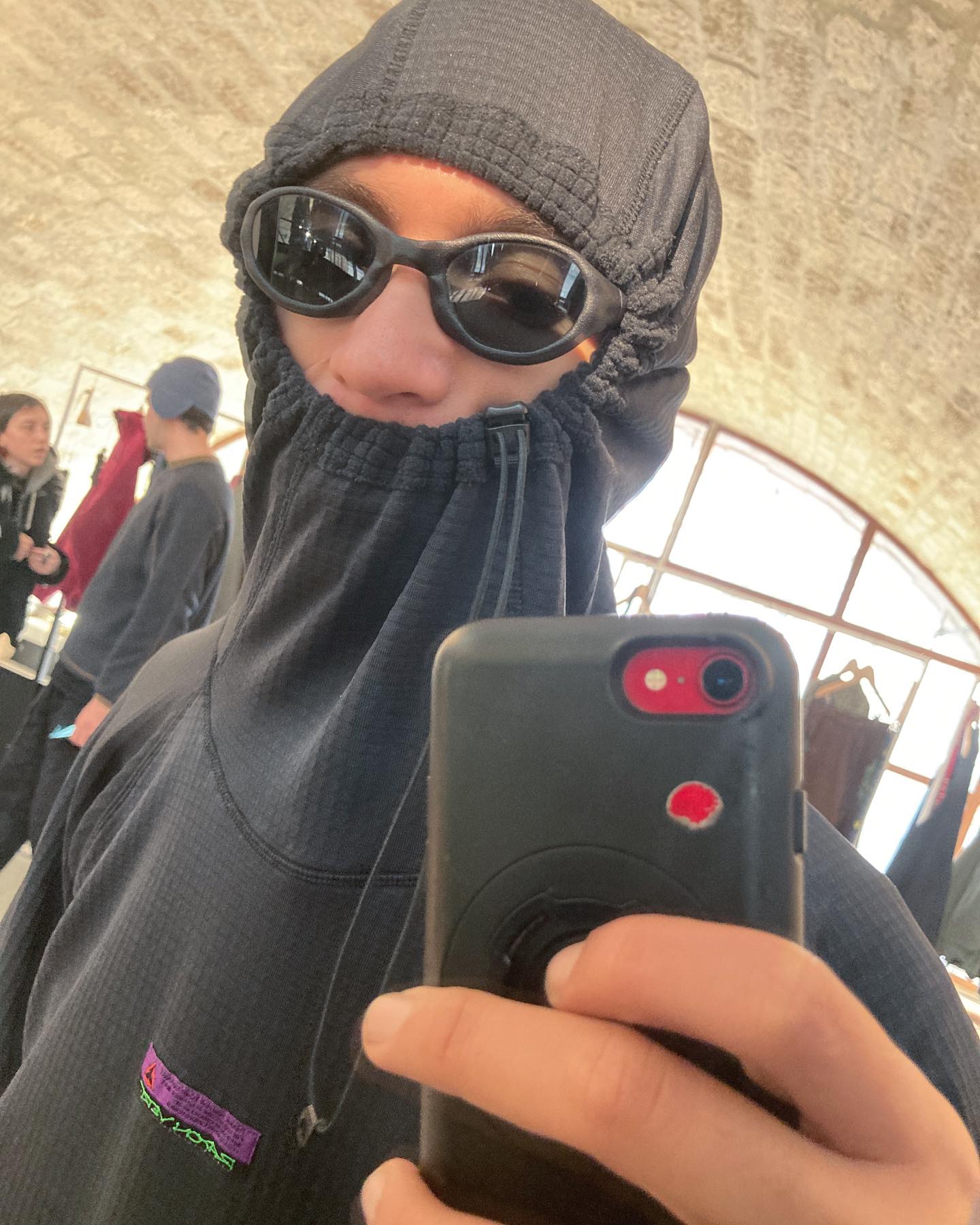
Construction stops being something that happens after design. Construction becomes design.
You can see versions of this thinking throughout cottage backpacking, independent climbing equipment, ultralight gear, small running labels and experimental apparel.
The interesting part isn't simply that small brands exist. They always have. It's that the infrastructure required to build one has become dramatically more accessible.
A Different Map of Outdoor Design
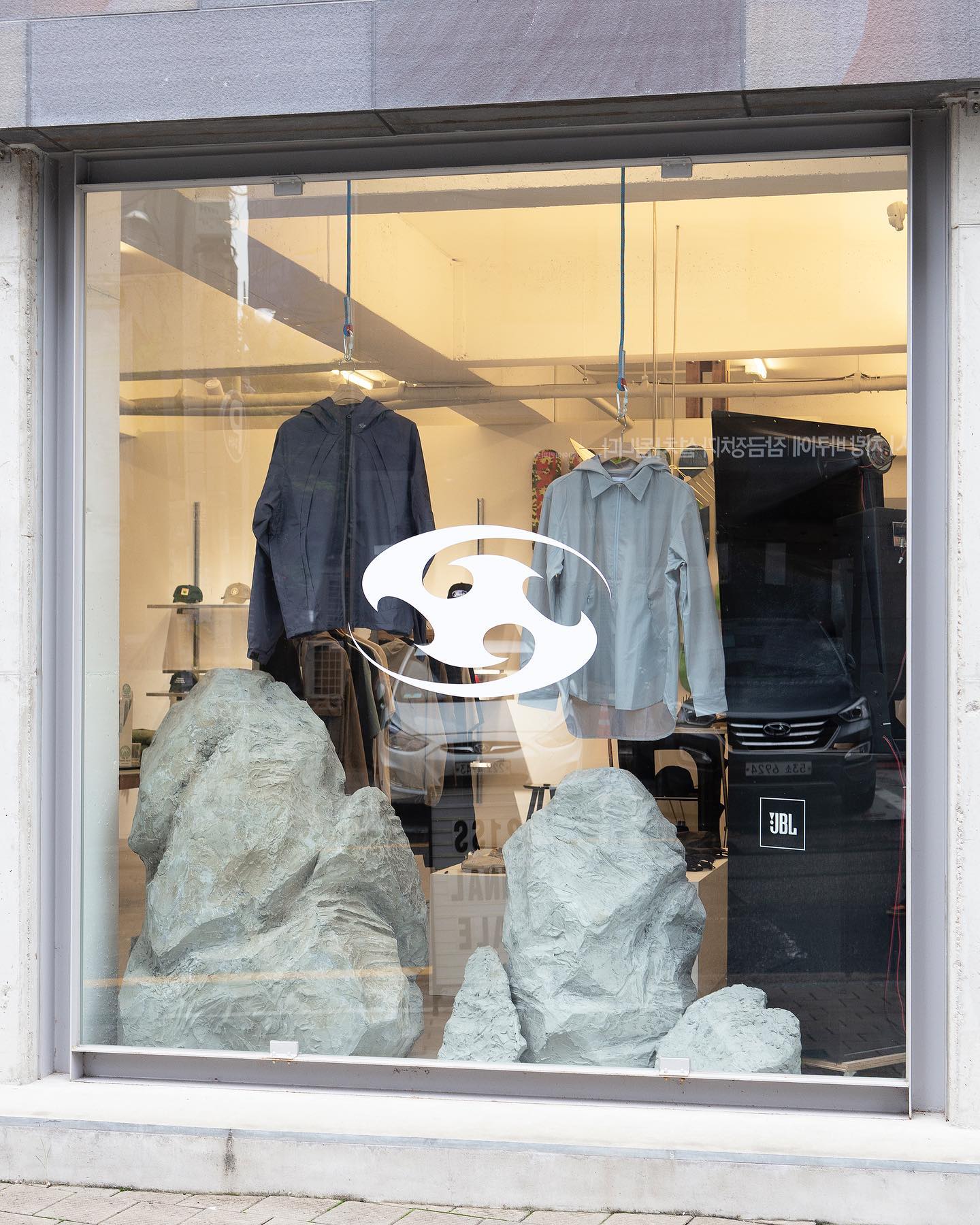
Put all of these people next to each other and it becomes difficult to describe them as a movement. That's precisely what makes the moment interesting.
Nur Abbas is questioning the architecture of technical clothing. Kyle Siegel is applying engineering to mountain equipment. Keita Ikeuchi and Mihoko Mori helped dissolve the boundary between fashion and functional outdoor clothing. Kaname Nagaoka built a design language around Tenkara fishing and Hokkaido. Euijae Lee turned his own climbing needs into CAYL.
Sangyup Lee pulled technical apparel into Korean youth culture. Caizhu Jo designs around everything that happens between the city and the trail. Pietro Fareri and Yuri Kaban treat outdoor equipment as an iterative experiment. Dane Watson is testing how far a natural fiber can become an outdoor system.
Brice Partouche gave running clothing a different cultural vocabulary. Tom Daly and Max Vallot expanded the context surrounding performance equipment. Wai Tsui moved from curating outdoor culture to producing it. Graham Hiemstra helps determine what the design world notices about the outdoors. Michael Washington is designing ways for people to participate in it.
Then there are the designers and communities behind AMUNT, UPPERVOID, Repsycle, Loosend, Answer4, SOAR, Goldwin 0, Klättermusen, Houdini, Snow Peak and dozens of operations too small to register as conventional outdoor companies at all.
They aren't moving in one direction. They're multiplying the number of directions available.
The New Outdoor Designer
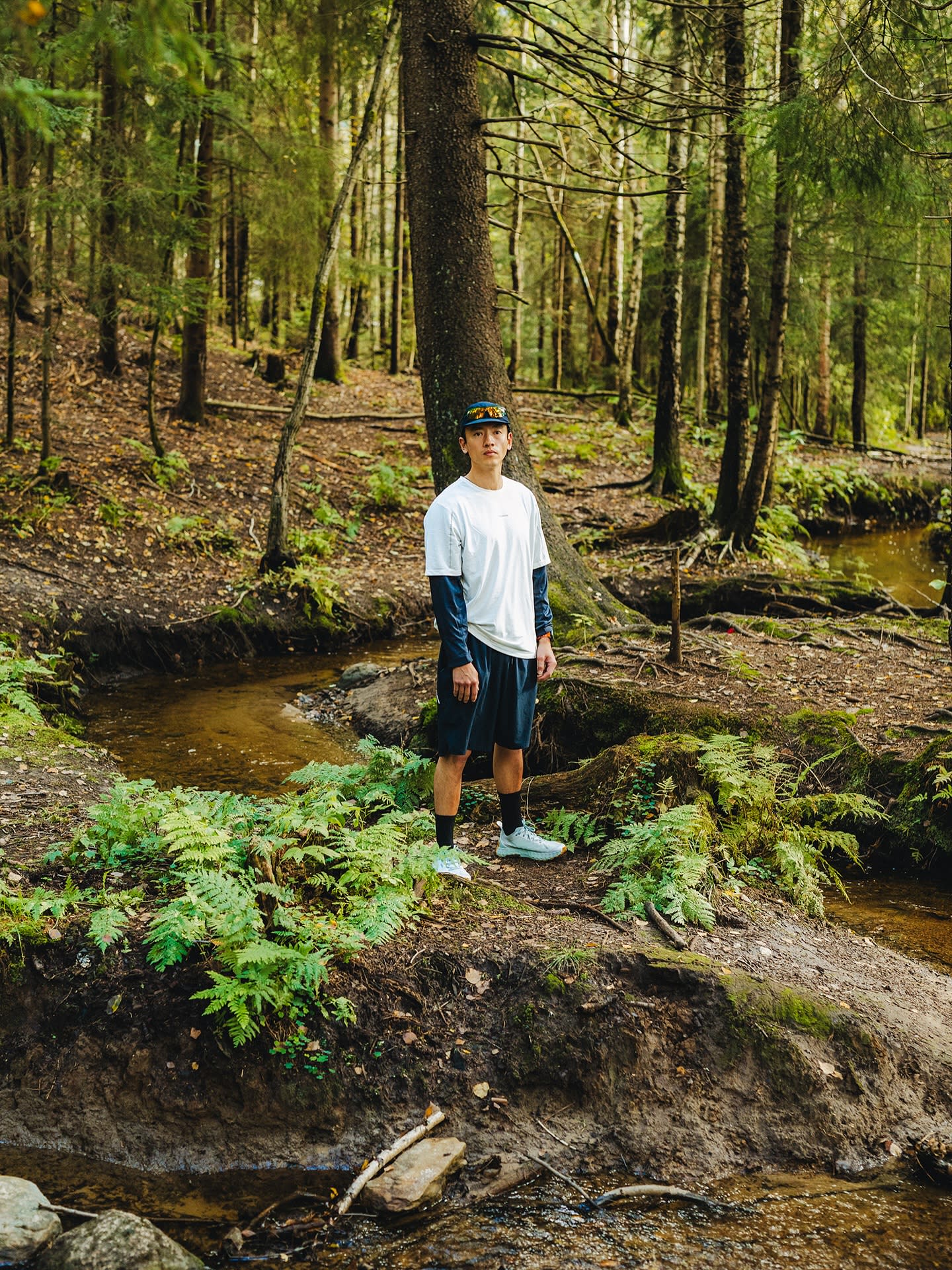
The emerging outdoor designer is difficult to define because increasingly there isn't one path into the profession.
They might have studied fashion, industrial design or engineering. They might have worked at a major sportswear company. They might be a photographer, graphic designer, climber, runner, pattern maker, factory owner, editor or community organizer. Or simply someone who became sufficiently annoyed with an existing piece of equipment that they decided to make a better one.
That diversity changes what gets designed.
Someone coming from aerospace engineering sees a backpack differently from someone coming from fashion. Someone coming from climbing sees pants differently from someone coming from tailoring. Someone in Chengdu sees outdoor culture differently from someone in Boulder. Someone obsessed with Japanese textiles asks different questions than someone obsessed with Dyneema.
Someone running an outdoor publication might recognize a cultural shift before the companies making the products do. Someone organizing hundreds of first-time outdoor experiences might understand barriers to participation that a product designer never encounters.
The industry once spent enormous energy trying to determine the optimal outdoor product. The new generation seems more interested in asking whether there needs to be an optimal version at all.
Outdoor Design Is Getting Personal Again
Perhaps the most significant shift isn't technological. It's authorship.
Large outdoor companies became extremely good at removing individual authorship from products. A jacket belonged to the brand. A backpack belonged to the brand. A shoe belonged to the brand. You rarely knew who actually designed it.
Independent outdoor companies reverse that relationship.
You begin to recognize the person behind the object: their climbing habits, graphic references, obsession with a particular fabric, the way they pack, the mountains they spend time in, the music they listen to, the publications they read and the things they think are wrong with existing equipment.
That makes outdoor products feel less like anonymous solutions and more like arguments. A designer is effectively saying: this is how I think you should move through the world.
You may disagree. That's precisely what makes the product interesting.
The New Outdoors
The future of outdoor design won't belong exclusively to small brands. Large companies still possess extraordinary manufacturing knowledge, research budgets, material access and engineering capabilities. Some of the world's most technically sophisticated products will continue to emerge from those systems.
But something has changed around them.
The tools required to design, prototype, manufacture, communicate and distribute outdoor products have become accessible to far more people. An engineer can design a ski pack. A fashion designer can rethink hiking clothing. A runner can reconsider a vest. A textile obsessive can reinvent fleece. A factory can become a collaborator rather than simply a supplier.
A publication can change what the industry pays attention to. A community can become a testing department. An event can become an outdoor product in itself. And one person can spend years thinking about a strangely specific problem that would never survive a corporate product meeting.
The result isn't one new outdoor aesthetic. It is hundreds of them, built around different materials, silhouettes, geographies, activities, communities and definitions of performance.
The old outdoor industry largely organized itself around categories: climbing, skiing, running, fishing, hiking.
The emerging one increasingly organizes itself around points of view.
For perhaps the first time in decades, it feels genuinely difficult to predict what outdoor design is supposed to look like next.
That's probably a good sign.
Related Articles
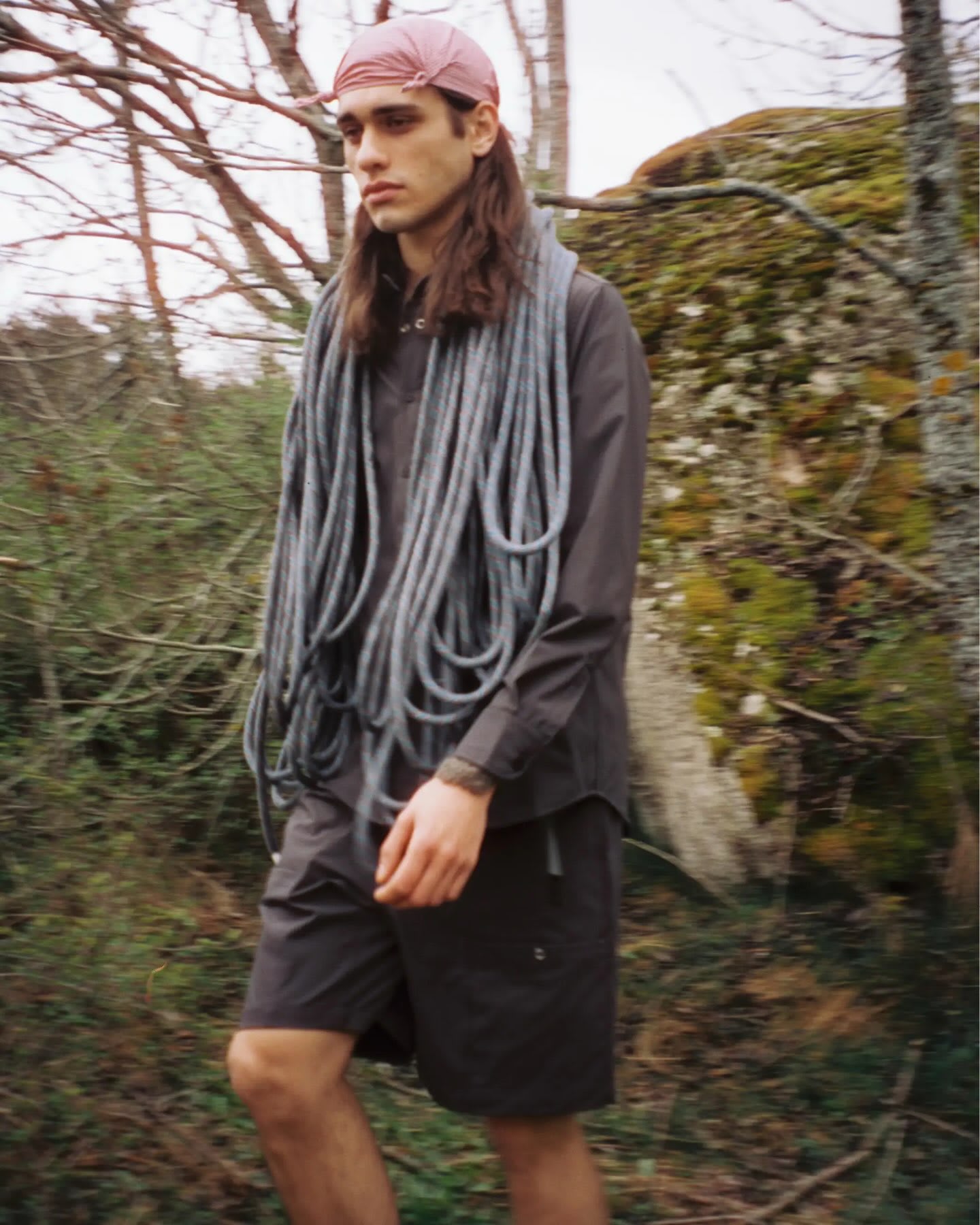
September 15, 2026
AMUNT Treats Outdoor Clothing as an Ongoing Field Study
Barcelona-based AMUNT develops technical mountain apparel through Field Studies, real-world testing and community feedback, connecting clothing, culture and life outdoors.
Read →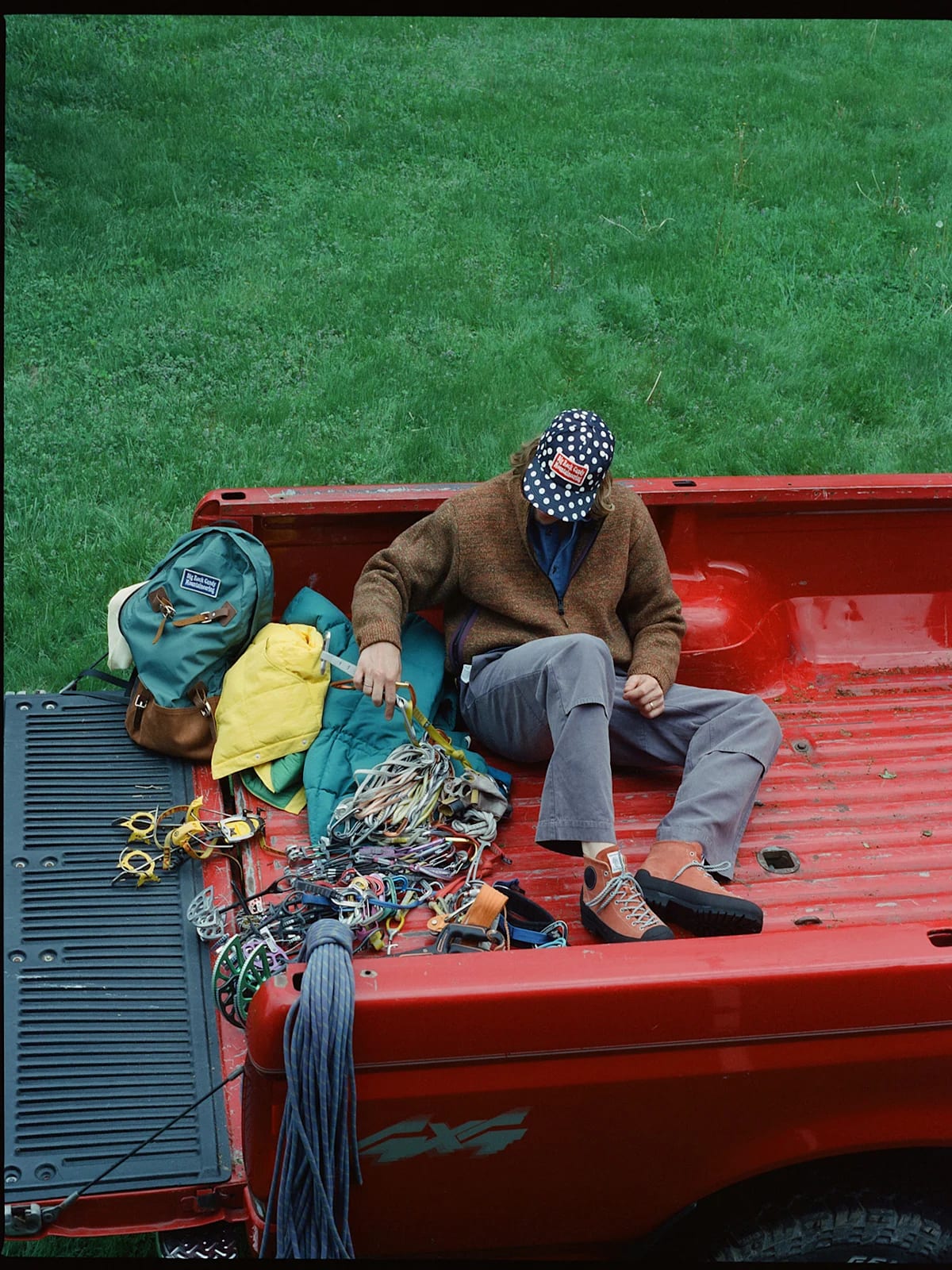
September 9, 2026
The New Outdoor is Old
Outdoor gear is looking backward. Explore how heritage design, natural materials, archival silhouettes and old-school functionality are shaping its future.
Read →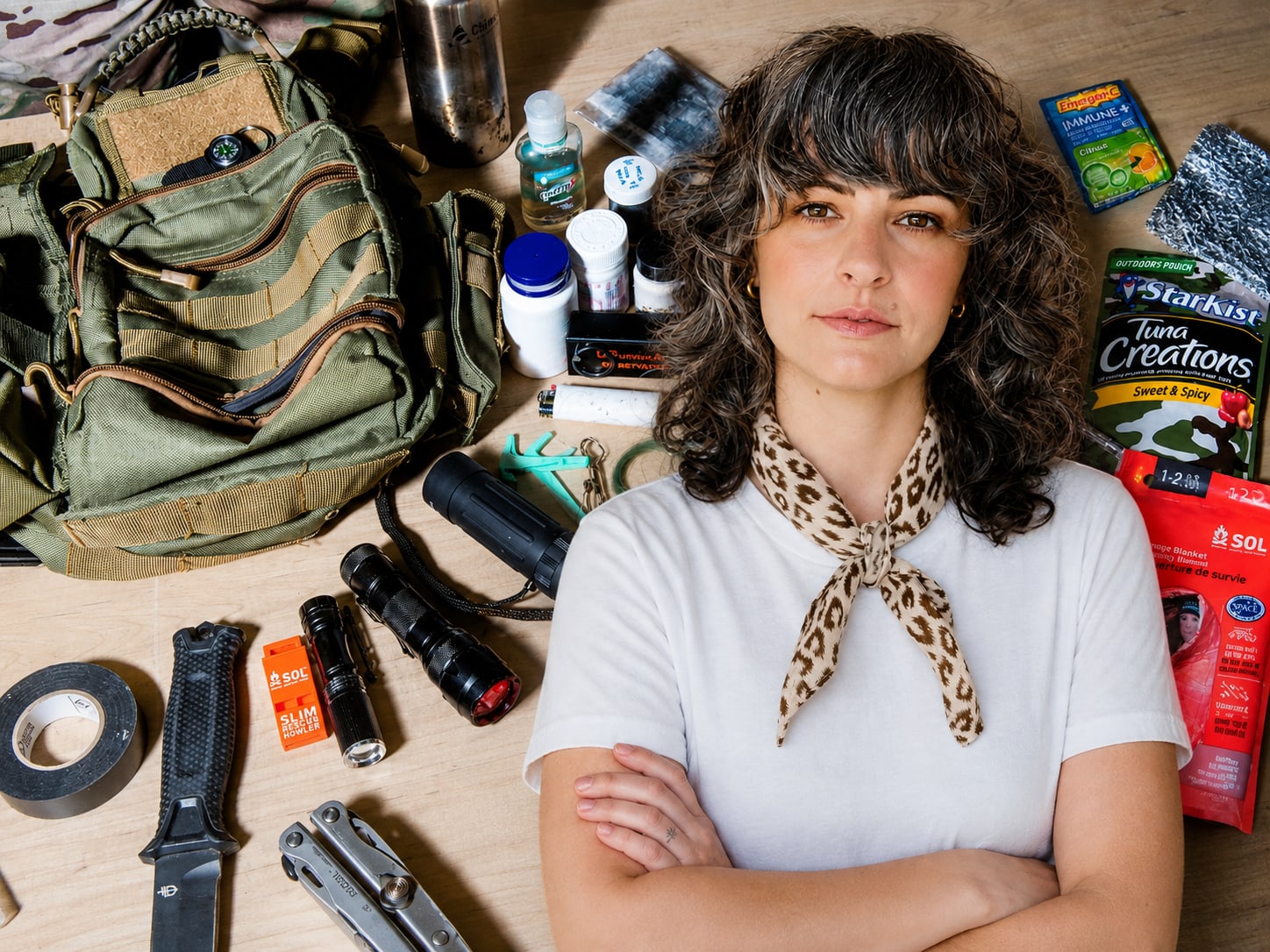
September 3, 2026
The Future of Outdoor Isn’t Another Trend
WeekEnds talks with RANGE founder Jeanine Pesce about the future of outdoor culture, from preparedness and independent brands to AI, human touch, and what comes after gorpcore.
Read →